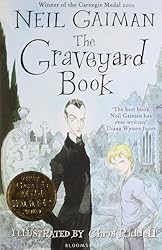
The Graveyard Book by Neil Gaiman

Neil Gaiman is one of those authors I keep reading about on other book blogs and I’ve been meaning to check out one of his books for ages just to see for myself. I didn’t think his books were probably the sort I’d like as I rarely read children’s or Young Adult books. Then recently I saw The Graveyard Book on display in my local library, my eye was caught by the cover, and I was curious enough to find out what makes Gaiman such a popular author, encouraged by the blurb from Diana Wynne Jones declaring: ‘The best book Neil Gaiman has ever written.’
When I began reading I wondered if is this book really is for children – it’s so scary:

There was a hand in the darkness, and it held a knife. The knife had a handle of polished black bone, and a blade finer and sharper than any razor. If it sliced you, you might not even know you had been cut, not immediately.

The knife had done almost everything it was brought to that house to do, and both the blade and the handle were wet. (page 3)

The Graveyard Book won the Newbery Medal and the Booktrust Teenage Book Prize 2009, and was nominated for both the 2010 Carnegie Award and the Kate Greenaway Award.

Intrigued I read on and I was soon hooked into the story of the baby who escapes a murderer (the man Jack) intent on killing his entire family, and who stumbles into the local disused graveyard where he is rescued by ghosts. Think of The Jungle Book but with ghosts looking after the baby rather than animals – and Neil Gaiman acknowledges his debt to Rudyard Kipling’s book. And like The Jungle Book, The Graveyard Book is episodic. The baby, named by the ghosts, Nobody Owens, or Bod for short, grows up looked after by his adoptive parents Master and Mistress Owens who had been dead for a few hundred years and numerous other occupants of the graveyard.

I was fascinated by this fantasy, coming of age novel. Bod is given the Freedom of the Graveyard and educated by the ghosts, learning all sorts of strange and wonderful things, such as the ability to fade from sight. Silas, who is neither dead nor alive appoints himself as his guardian, helped by Miss Lupescu, who is not what she first appears to be. He is only safe if he doesn’t leave the graveyard and of course as he grows up that is what he really longs to do.

It’s creepy, but never gory. There are ghouls as well as ghosts, ancient ghosts predating Christianity, a particularly scary pre-historic tomb guarded by the slithering Sleer awaiting the return of the ‘Master’ and a young witch, Liza buried in the unconsecrated section of the graveyard. Needless to say, Bod has many adventures before his past catches up with him.

Apart from the fantastic characters, all of which I could easily believe to be ‘real’, the graveyard itself is so well described that I had no difficulty imagining what it looked like, so I wasn’t surprised to see in the Acknowledgements that Audrey Niffennegger had shown Gaiman around Highgate Cemetery West.  I like all the details of the epigraphs on the headstones – in particular Mother Slaughter’s headstone. It is so ‘cracked, worn and weathered that all it now said was: LAUGH – which had puzzled the local historians for over a hundred years.‘

The Graveyard Book is ultimately about life and death, love and friendship, loyalty and the fight between good and evil. There is humour, sadness and suspense. Above all it is about growing up and the excitement and expectations that Bod has about life:

Bod said, ‘I want to see life. I want to hold it in my hands. I want to leave a footprint on the sand of a desert island. I want to play football with people. I want’, he said, and then he paused and he thought. ‘I want everything.’ (page 286)

It is an ideal book for Carl’s Once Upon A Time VIII challenge (my 4th book). I’ll certainly read more of Neil Gaiman’s books.
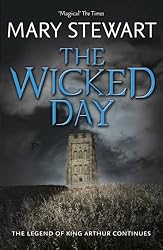
The Wicked Day by Mary Stewart

The Wicked Day is a sequel to Mary Stewart’s Merlin trilogy, telling the story of Mordred, King Arthur’s illegitimate son, who was foretold by Merlin as Arthur’s bane. It blends together fact and fiction as Mary Stewart explains in her afterword, Arthur was a real historical figure and she based her books on him using Geoffrey of Monmouth’s History of the Kings of Britain, written in the twelfth century and Sir Thomas Malory’s Le Morte d’Arthur, written in the fifteenth. Mordred, however, is probably as fictional as Lancelot.

I liked most of this book, the first part about Mordred’s early life is the best part. He grows up in the Orkneys, living with foster parents, until he is taken to the court of King Lot and his wife Queen Morgause as one of Lot’s bastard sons, unaware that Morgause, Arthur’s half-sister, is his real mother. This part of the book parallels the ending of The Last Enchantment but told from Mordred’s perspective.

All the characters from the legends are there, with the exception of Merlin – the High King Arthur, his beautiful Queen, Guinevere, his knights, Gawain and his brothers, Agravain, Gaheris and Gareth (Arthur’s nephews) and the sorceress, Morgause, still plotting against Arthur. Mordred is portrayed as a good person, courageous but misunderstood and controlled by his destiny:

If Merlin saw it written in the stars that you would be Arthur’s doom, then how can you escape it? There will come a day, the wicked day of destiny, when all will come to pass as he foretold. (page 240)

After a good opening third the book lost some of its appeal for me. Unlike the earlier books, The Wicked Day is narrated in the third person, which is probably why it seems less engaging to me. With the exception of the Epilogue, the passion and the magic are missing from the last part of the book which is a dry account of battles.

I wondered how Mary Stewart was going to resolve the story because in her version of it Arthur and Mordred, who is traditionally depicted as the villain, become reconciled to each other and Arthur acknowledges Mordred as his son and heir. Mordred is no villain, but not exactly a hero either. So, how come they ended up as enemies? She managed a plausible conclusion but I thought it was rather an anti-climax.

This is my third book for Carl’s Once Upon A Time VIII challenge and also qualifies for the Historical Fiction Reading challenge and the Read Scotland 2014 Challenge.

Added 17 May 2014:

Mary Stewart died in 10 May 2014 aged 97 – her obituary in The Telegraph describes her as an ‘author of romantic thrillers who wrote for love not money, and had an intuitive feel for the past.’

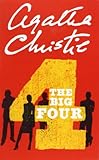
The Big Four by Agatha Christie

I’ve read a lot of Agatha Christie’s books, most of which I’ve really enjoyed, but I’m not too keen on her books that involve spies and gangs of international criminals who are seeking world domination. And The Big Four, first published in 1927, is one of those books.
Basically it’s a collection of short stories (derived from a series of stories that first appeared in The Sketch, a weekly magazine) in which Hercule Poirot and Captain Hastings lock forces with a vast organisation of crime led by four individuals, in the course of which they uncover the identity of the ‘Big Four’. The aim of the Four is ‘to destroy the existing social order, and to replace it with an anarchy in which they would reign as dictators.’  They are a Chinese man, Li Chang Yen, an American multi-millionaire, a French woman and ‘the Destroyer’, an Englishman. Poirot is convinced that they are behind everything:

The world-wide unrest, the labour troubles that beset every nation, and the revolutions that break out in some. There are people, not scaremongers, who know what they are talking about, and they say that there is a force behind the scenes which aims at nothing less than the destruction of civilisation. (page 25)

In the course of their investigations Poirot and Hastings find themselves in many dangerous  situations, all melodramatic and a little far-fetched, from which they miraculously escape certain death. The Big Four is action packed, with Poirot uncharacteristically chasing off after the criminals, still using his ‘little grey cells’ of course, whilst Hastings is knocked out and kidnapped, and Li Chang Yen threatens to abduct and torture Hasting’s wife, whom he had left behind in their ranch in the Argentine.

This is not one of my favourite Agatha Christie books. But perhaps it is not so surprising that The Big Four is far from her best. It was in  December 1926 that Agatha Christie disappeared after her husband, Archie Christie had told her he wanted a divorce and in 1927 she was still recovering from this. It was her brother-in-law’s suggestion that the last Poirot short stories she had published could be re-written to ‘have the appearance of a book‘ as a ‘stop-gap‘ – and the result was The Big Four, which, I think, suffers from being a loosely connected collection of episodes. Agatha explained in her Autobiography that Campbell Christie had helped her with linking the short stories as she was ‘unable to tackle anything of the kind.‘ (Autobiography page 365)

Knavesborough Stories by Dorte Hummelshoj Jakobsen

Recently Dorte Hummelshoj Jakobsen kindly made two of her short stories available to me (e-books) for review. They are both about the Gershwin family in Knavesborough, a fictional village in Yorkshire, namely Ding Dong Bell, the Kitten in the Well and Green Acres. I often find short stories lack the necessary depth to be convincing – either weak plots and/or characterisation, but these short stories are both convincing and satisfying. Maybe it helps that they are continuations of other stories, or in the case of Ding Dong Bell, the Kitten in the Well, a prequel.

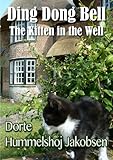
Ding Dong Bell, the Kitten in the Well goes back in time to Rhapsody Gershwin’s childhood in the early 1990s. Rhapsody is the vicar’s daughter first featured in The Cosy Knave. In this short story Rhapsody and her sisters are worried about the disappearance of the black kitten they have called Black Pete. The last time they had seen him was when they had played in old Ursula Abbot’s garden and they wondered if he had he got locked in her cottage. Ursula had died but as she was nearly ninety it wasn’t entirely an unexpected death … but she had been in good health. Is Ursula’s death connected to Black Pete’s disappearance?Rhapsody helps to solve the mystery.
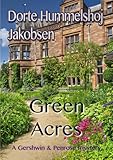
Green Acres* takes us to the latest in the Gershwin and Penrose Mysteries series. Green Acres, once a country mansion, has been converted into a home for the elderly. Rhapsody visits Rowan Dougal, a farmer who has broken his hip and is currently living at Green Acres. Lavinia Banbury staying in the room next to Rowan dies in her sleep. Nothing unusual in an old people’s home, but is her death really a natural one?

Green Acres* was originally published in the anthology The Red Shoes. This is a new and longer version.

I like these stories. They’re humorous crime fiction, with colourful characters all with quirky names. There’s no blood and gore and each story has an unexpected twist at the end. In other words, they are cosy crimes (if any crime could really be considered as ‘cosy’, that is).

Dorte Hummelshoj Jakobsen is Danish. After many years as a teacher she is now concentrating on a writing career, publishing in both Danish and English. As well as writing her cosy mysteries she has also written a full length psychological murder mystery novel, Anna Marklin’s Family Chronicles, which I thoroughly enjoyed too – see my post here.

Black Dogs by Ian McEwan

Black Dogs 001Black Dogs is one of Ian McEwan’s earlier books (his fifth), first published in 1992. The narrator is Jeremy who lost his parents in a road accident when he was eight and from then on he is fascinated by other people’s parents, particularly his in-laws, Bernard and June Tremaine. When he first met them they were living apart, barely on speaking terms. Starting from a shared belief in communism, they had separated when June turned to God after an encounter with evil in the form of two black dogs. What actually happened doesn’t become clear until the end of the book.

Jeremy is writing a memoir about their lives. The book shifts in time and perspective as he talks to Bernard and June separately. So it moves from Wiltshire, where he visits June in 1987 where she is living in a nursing home, to Berlin with Bernard, when the Wall came down in 1989. Then it moves back in time to 1981 at Majdanek where Jeremy met Jenny, Bernard and June’s daughter, during a visit to the death camp near Lublin in Poland; then to the present day (1989) at the family house at St Maurice de Navacelles in Languedoc in southern France; and finally to 1946 with Bernard and June, newly married on their honeymoon in St Maurice de Navacelles, where June had her encounter with the black dogs.

In 174 short pages the characters come alive, their ideas and meditations are revealed, and the places they inhabit are easily visualised. Black Dogs is a book that gets inside its characters’ minds. It centres around love, loss and longing. The incidents Jeremy describes are open to interpretation – June and Bernard are the extremities, neither seeming to be on the same wave length; Bernard a rationalist and a scientist, June a mystic and believer, seeing the same events through different perspectives. Jeremy is impatient with the difficulty of communication, seeing

an image of parallel mirrors in place of lovers on a bed, throwing back in infinite regression likenesses paling into untruth. (page 90)

The question of the black dogs hangs over the narrative – were they symbolic of evil, or an expression of Churchill’s term for depression, or real creatures? Their impact was immense however you look at it. Black Dogs is a book I really enjoyed reading and thinking about after I finished it. 

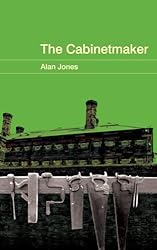
The Cabinetmaker by Alan Jones

When Alan Jones emailed me about reading his book The Cabinetmaker he described it as a gritty crime novel based in Glasgow that tells the story of a local cabinetmaker, Francis Hare, father of a murdered son, and John McDaid, a young detective on the investigation.

He went on to say that it contained some strong language, some sleazy police and a smattering of Glasgow slang, which did make me unsure I wanted to read it. But he also said that it combined Glasgow gang culture, sloppy policing and amateur football with fine furniture making and taking that into account I thought that it probably wouldn’t be your normal run-of-the mill crime fiction.

And I was right – it is different and I did like it, despite some of the language (which actually is no worse than in some other books) and there are no truly gruesome descriptions to put me off. In parts I thought it lost focus somewhat, the crime and justice aspects becoming a bit lost in a wealth of detail about football and furniture making, but apart from that it is a intricately plotted book which had me totally gripped. By the end of the book I realised that there is a purpose to those chapters beyond Alan Jones’s obvious love of football and furniture making. Within them lie the clues to what was really going on in Francis and John’s lives.

The Cabinetmaker follows John McDaid’s life from his first day as a detective up to his retirement in 2008, focussing on one crime – the killing of Patrick Hare, a student by a gang of thugs in Glasglow’s west end. The killers were tried but walked free.  From that point onward the story is of John and Francis and their search for justice.  Patrick’s death was a turning point in their lives and although they become friends through a shared interest in football and cabinet making, under pinning everything is their desire for justice.

There are many characters, including police and villains and at times some of them did begin to blur in my mind, with the exception of Francis, John and Sarah, Patrick’s girl friend, who all stand out as vivid and believable people. There are many twists and turns in the story, before the full truth is revealed. It’s a novel of loss and retribution.

Alan Jones (his pen name) is Scottish, living on the Clyde coast. I see from this interview on Omnimystery News that he is writing another book – I’ll be looking out for it.