The Wicked Cometh by Laura Carlin

‘We have no need to protect ourselves from the bad sort 
because we ARE the bad sort . . .’

Publication date 1 February 2018, Hodder and Stoughton

Review copy from the publishers, via NetGalley

My rating:  3 stars 

The Wicked Cometh is Laura Carlin’s debut novel.

The title of this book comes from Proverbs XVIII, 3: When the wicked cometh, then cometh also contempt, and with ignominy reproach.

The opening chapter sets the scene as The Morning Herald reports on the growing numbers of missing people in London in September 1831. So, you know straight away that this is a tale of wickedness and evil. It begins well, setting the scene with detailed descriptive writing full of vivid imagery, evoking the sights, smells, and sounds of life in the darkest and foulest corners of London in the 1830s.

It’s narrated in the present tense by Hester White, a young woman of eighteen. She grew up in a parsonage in Lincolnshire but she was orphaned at the age of 12 and went to live in London with Jacob, formerly her father’s gardener, and his wife Meg in a slum dwelling, just one room with a brick and dirt floor. I liked Hester, who originally came from a reasonably well-off family and was educated. She lives in hope of leaving London and escaping from her miserable life.

A way out presents itself when she is knocked down and injured by Dr Calder Brock’s carriage and whisked away to stay at his family’s country house, Waterford Hall near Stratford. Calder intends to use her as an experiment, to build up her physical health, and to give her the chance of improving her life he persuades his sister Rebekah to educate her. He wishes to prove that even those from the gutter can be educated and Hester exaggerates her ignorance in order to escape being sent to the London Society for the Suppression of Mendicity, a place of shame feared by the poor. Known as the ‘Dicity’ it was one step on the downward path either to transportation in the hulks or to the poorhouse.

So far, so good but the first part of the book moves very slowly and my attention began to wander as I thought the wicked were a long time in coming. But come they did in abundance in the latter part of the book and as the relationship between Hester and Rebekah develops they begin to uncover the sinister secrets of what is behind the mystery of the missing people. And it is a dark, gruesome and grim secret.

Overall, I’m rather torn about this book – parts of it I really enjoyed, even though it’s written in the present tense, which I don’t like. The characters are well-drawn and the settings are superb, but the slow pace failed to provide enough tension especially in the middle section. The suspense and drama increased rapidly towards the end, but the final twist seemed contrived and not very convincing. But I can see from Goodreads that other readers enjoyed this book far more than I did.

My thanks to the publishers for a review copy via NetGalley.

Amazon UK link
Amazon US link

The Confession by Jo Spain

Publication date: 25 January 2018, Quercus Books

Review copy from the publishers, via NetGalley

My rating:  4 stars 

The Confession is the first book by Jo Spain that I’ve read, so I didn’t know what to expect. But the blurb interested me and I’m delighted to say that I enjoyed this book and as this is Jo Spain’s fifth book I’ll be able to read more of her work. She is the author of the Inspector Tom Reynolds Mystery books, police procedurals based on the investigations of a Dublin-based detective team. The Confession is a standalone book.

Set in Ireland, it begins as Harry McNamara, a banker, recently cleared of multiple accounts of fraud, is brutally attacked in his own home in front of his wife, Julie. The attacker, JP Carney immediately goes to the police and confesses that he had killed Harry.  JP insists he doesn’t know the identity of the man he attacked and that he didn’t know what had come over him – it was as though he’d been possessed.

It’s narrated from three different perspectives – that of Julie, JP and DS Alice Moody, leading the investigation. So, was JP telling the truth, did he really know who Harry was and why did he attack him so viciously that he died after being in a coma for several days? What did he whisper in Harry’s ear as he left him at the end of the attack? And why did Julie just sit there watching?

These questions form the focus of the book, as Julie and JP go back over their lives, leading up to that fatal attack. At first it isn’t at all clear what had actually led up to JP’s attack on Harry, but it is clear that he hadn’t had an easy life, growing up with a mother suffering from mental health issues who left him with his shiftless father. Julie and Harry’s marriage was in difficulties, despite his wealth – he was unfaithful and she resorted to alcohol to compensate for his neglect. They’re all flawed characters and not very likeable. Alice Moody is, however, a likeable character, astute and suspicious of JP’s account right from the start.

There are several twists and turns before I began to see the light, after changing my mind about the truth of the matter, first leaning one way then another. But I hadn’t foreseen the final twist. The characters are well-drawn and the book is well paced. I didn’t find it thrilling or chilling after the opening chapter, but I was gripped by the story and I had to read it quickly to find out what really happened.

My thanks to the publishers for a review copy via NetGalley.

The Skeleton Road by Val McDermid

The Skeleton Road (Inspector Karen Pirie, #3)

The Skeleton Road by Val McDermid is the third of her DCI Karen Pirie novels. Investigating the identity of the skeleton found, with a bullet hole in its skull, on the rooftop of a crumbling, gothic building in Edinburgh takes Karen and her Historic Cases Unit into a dark world of intrigue and betrayal during the Balkan Wars in the 1990s.

It begins slowly, introducing rather a bewildering number of characters one after the other. It moves between the past and the present in Scotland, England and Croatia, told through different viewpoints, and interweaving the sequence of events in the past and the present in a way that I found rather disjointed. Dr River Wilde a forensic anthropologist, discovers that the skeleton is a male, he’d been dead between five and ten years and his dental work shows he was originally from one of the Eastern bloc countries.

It’s a complex story with several strands, including the search for war criminals through the work of two lawyers at the International Criminal Tribunal for the former Yugoslavia. Karen’s investigations take her to Oxford and then to a small village in Croatia, a place scarred by fear, where people have endured unspeakable acts of violence.

At times I thought I was reading an account of the wars and the search for justice and revenge rather than a murder mystery. Even given the traumatic events it describes I didn’t feel there was much tension in the search for the killer and I was able to figure out who it was fairly quickly. I enjoyed the sections focusing on Karen’s and her assistant DS James, ‘the Mint’ Murray’s detective work, and I liked all the details of her relationship with her partner, Phil (also a police officer, now working on a different team).  But I didn’t enjoy this as much as the first two Karen Pirie books – in fact I think the first book, The Distant Echo is by far the best.

  • Hardcover: 416 pages
  • Publisher: Little, Brown (11 Sept. 2014)
  • Language: English
  • ISBN-10: 1408704579
  • ISBN-13: 978-1408704578
  • Source: a library book
  • My rating: 3*

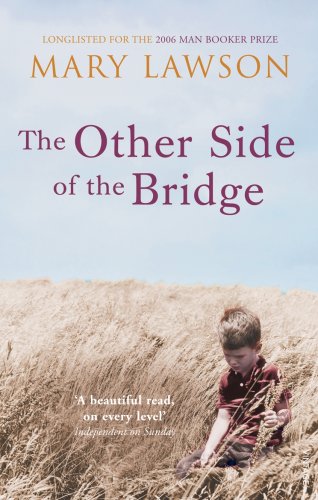
The Other Side of the Bridge by Mary Lawson

The Other Side of the Bridge

The Other Side of the Bridge is a beautiful book set in  in Northern Canada about two brothers, Arthur and Jake Dunn who grow up on a small farm near Struan (a fictional town) in the 1930s. The brothers are poles apart in nature. Arthur is older, shy but reliable and hardworking, whereas Jake, the younger brother is handsome, reckless, unreliable and a troublemaker. Their story spans the 1930s and 1940s as they grow up through the Depression years and the Second World War, up to the early 1960s.

It’s also the story of Ian, Dr Christopherson’s son, beginning in the late 1950s when he became infatuated with Arthur’s wife Laura. I think the dual time frame works well, moving almost seamlessly between the years, and the characterisation is excellent. I was totally engrossed in the story and able to visualise the scenery, including the Ojibway reserve where Ian’s school friend Pete lived:

He [Ian] cycled down Main Street to the outskirts of Struan, which took all of three minutes, and then out along the road to the Ojibway reserve, which took a further five. The reserve was spread along the shore of a bay, with a point of land jutting out into the lake between it and Struan, a symbolic barrier as well as a geographic one. The road ran out of pavement half a mile before it reached the reserve, and the land itself was so low it would grow nothing but bulrushes and bugs – black flies by the million in early summer then mosquitoes big enough to pick you up and carry you away. The reserve store, though where Peter Corbiere lived, was situated right down by the lake, which meant it got the benefit of the wind and was less buggy than the rest. Pete’s grandfather was sitting on the steps when Ian arrived, smoking and staring off into the woods. He had scars on his fingers from letting cigarettes burn down too far. (page 18)

There is much joy in this book mixed in with immense sorrow and pain. The title of the book refers to the time before and after a shocking incident on the bridge  – a roughly made bridge across the river that separated the Dunns’ and their neighbours, the Lintz’s farms. It was a shortcut that saved more than a mile. The River Crow was fifteen feet below the bridge as it boiled its way over rocks. That incident changed not only Arthur’s and Jake’s lives but its effect lingered on the their community the rest of their lives.

The Other Side of the Bridge is Mary Lawson’s second novel. I loved her first, Crow Lake (which I read ten years ago) and I love this one just as much. It’s one of the best books I’ve read this year. It was longlisted for the Man Booker Prize in 2006, which was won by Kiran Desai’s The Inheritance of Loss.

Reading Challenge: the 21st book I’ve read this year for Bev’s Mount TBR 2017 – a book I’ve had for 10 years.

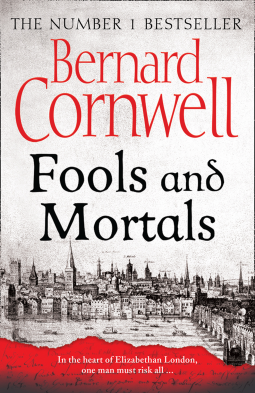
Fools and Mortals by Bernard Cornwell

Publication: 19 October 2017, Harper Collins

Source: Review copy from the publisher via NetGalley

My rating: 5*

Fair of Face by Christina James

Tina Brackenbury and her baby daughter Bluebell are dead …

Fair of Face

Fair of Face is the sixth novel in the DI Yates series and  I think it stands well on its own. It is not a book you can read quickly as there are plenty of characters and several plot threads that need to be kept in mind. It is an intricately plotted mystery, re-assessing a crime from the past whilst investigating a present day murder, set in Spalding in Lincolnshire. I  didn’t find it an easy book to review.

The book begins with Tristram Arkwright, a prisoner in HMP Wakefield. He works in the prison library and is secretly in correspondence with Jennifer Dove, a bookseller who regularly supplies the prison. Jennifer is bored and finds Tristram a welcome diversion. He, meanwhile, is planning an appeal against his sentence insisting he is innocent.

Tina’s 10 year old foster daughter, Grace Winter was staying with a friend, Chloe and arrives home as DI Tim Yates and DS Juliet Armstrong are beginning their investigations into the deaths of Tina and Bluebelle. Grace acts strangely and doesn’t seem very upset by the murders and asks to see the bodies. But Grace has had a difficult life as this isn’t the first murder that she has encountered. Four years earlier her mother, sister and grandparents had been killed at their farmhouse and Grace had escaped by hiding in a cupboard. Grace was then adopted by Amy Winter, and only later sent to live with Tina. Her friend, Chloe, also has a troubled background, with brothers who are regularly in trouble with the police. She is noticeably intimated by them and by Grace. As both girls are only 10 years old the police work with Social Services in order to question them

I struggled for a while to sort out the relationships between all the characters and the relationship between the opening chapters and Tina and Bluebell’s murders. The narrative switches between the first person present tense (Juliet) and the third person past tense, which I found a bit awkward until I got used to it. And I was confused by characters with similar names – Tom and Tim for example – regularly having to check who was who. I also failed to see relevance of Jennifer Dove’s character in the opening chapters. But despite these drawbacks I enjoyed the book and was eager to solve the mysteries.

My thanks to the publishers for a review copy of the book.

  • Paperback: 320 pages
  • Publisher: Salt Publishing (15 Oct. 2017)
  • Language: English
  • ISBN-10: 1784631086
  • ISBN-13: 978-1784631086
  • My rating: 3*