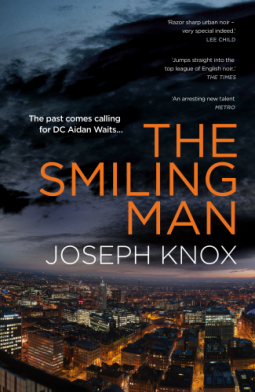
The Smiling Man by Joseph Knox


Transworld Publishers| 8 March 2018|392 p|e-book|Review copy|5*

Description

Painting as a Pastime by Winston S. Churchill

Painting is complete as a distraction. I know of nothing which, without exhausting the body, more entirely absorbs the mind.’

IMG_20180314_071428165.jpg

Unicorn|1 July 2013|Hardcover|96 pages|a gift|5*

I was delighted on Sunday when my son gave me Painting as a Pastime by Winston Churchill as a Mother’s Day present. I read it straight away and loved it. The cover shows Churchill’s painting of his home, Chartwell. Churchill was forty when he first started to paint at ‘a most trying time‘ in his life and art became his passion and an ‘astonishing and enriching experience‘.

It was in 1915, when he had left the Admiralty and although he was still a member of the Cabinet and of the War Council he knew everything but could do nothing. He had great anxiety and no means of relieving it, left with many hours ‘of utterly unwanted leisure in which to contemplate the frightful unfolding of the War‘. So, he began painting.

I was amused to find out that he took the same hesitant steps that I took – using a very small brush, mixed a little paint and then ‘made a mark about as big as a bean’ on his canvas.’ A friend arrived and told him to stop hesitating and showed him how to use a big brush and splash on the paint, which he did with ‘Berserk fury‘.

But Churchill begins, not by  writing about painting, but about the need for a change to rest and strengthen the mind:

… the tired parts of the mind can be rested and strengthened, not merely by rest, but by using other parts. … It is no use saying to the tired ‘mental muscles’ – if one may coin such an expression – ‘I will give you a good rest,’ ‘I will go for a long walk’, or ‘I will lie down and think of nothing.’ The mind keeps busy just the same.

What is needed are hobbies. And then he goes on to write about reading, and about handling books:

Peer into them. Let them fall open where they will. Read on from the first sentence that arrests the eye. Then turn to another. Make a voyage of discovery, taking soundings of uncharted seas. Set them back on their shelves with your own hands. Arrange them on your own plan, so that if you do not know what is in them, you at least know where they are.

But he considers that reading doesn’t provide enough change to rest the mind and that what is needed is something that needs both the eye and the hand – a handicraft. In his case painting fulfils that role. He talks about the fun of painting, the colours and the pleasure he found in not only in painting a picture, but also the pleasure he discovered in a heightened sense of observation, finding objects in  the landscape, he had never noticed before:

So many colours on the hillside, each different in shadow and in sunlight; such brilliant reflections in the pool, each a key lower than what they repeat; such lovely lights gilding or silvering surface or outline, all tinted exquisitely with pale colour, rose, orange, green or violet.

I agree that painting does relax the mind, but I love reading and can be thoroughly absorbed in a book so that I am unaware of the passing of time, just as I also know how quickly time passes  when painting (or in my case in trying to paint). As Churchill wrote:

Whatever the worries of the hour or the threats of the future, once the picture has begun to flow along, there is no room for them in the mental screen. They pass out into shadow and darkness. All one’s mental light, such as it is, becomes concentrated on the task. Time stands respectfully aside, and it is only after many hesitations that luncheon knocks gruffly at the door.

Reading this book was pure pleasure and has encouraged me to pick up my paints again.

One final extract:

Just to paint is great fun. The colours are lovely to look at and delicious to squeeze out. Matching them, however crudely, with what you see is fascinating and absolutely absorbing. Try it if you have not done so — before you die.

Painting as a Pastime was originally published in 1932, one of the twenty three essays in Thoughts and Adventures (whose American title is Amid These Storms).

Munich by Robert Harris

Munich

Munich is about  the 1938 Munich Conference and I found it absolutely fascinating  as I know very little about the period beyond the basic facts – PM Neville Chamberlain was trying to maintain the peace in the face of Hitler’s aims to expand German territory (but I was a bit vague about the actual details) and in 1938 came back from the Munich conference with a piece of paper signed by Hitler, proclaiming that it meant ‘peace for our time‘.

MunichAgreement

Munich is a mix of fact and fiction. Harris uses two fictional characters, Hugh Legat as one of Chamberlain’s private secretaries and Paul Hartmann, a German diplomat and a member of the anti-Hitler resistance to tell his story. Harris’ interest in the Munich Agreement began thirty years ago when he made a BBC TV documentary, ‘God Bless You Mr Chamberlain’ to mark the fiftieth anniversary of the conference in 1988. He has thoroughly researched the subject, consulting many books (listed in the Acknowledgements) and has seamlessly woven the facts into the novel. It has a a strong sense of place, based no doubt on his visits to what was once the Führerbau, now the Faculty of Music and Theatre and Hitler’s old apartment in Prinzregentenplatz, now used as a police headquarters.

Munich explores the moral dilemma of appeasement, and of making a stand. It portrays Chamberlain as a man of high moral principals, deeply concerned that the horrors of World War One should not be repeated and not as a weak appeaser easily fooled by Hitler. His objective was:

… to avert war in the short term, and then to try to build a lasting peace for the future – one month, one day at a time, if needs be. The worst act I could possibly commit for the future of mankind would be to walk away from this conference tonight. (page 267)

Reading this book has made me want to know more about Neville Chamberlain and I hope to read one of the biographies that Harris lists.

The fictional story of Hugh and Paul, who had been friends at university six years earlier adds additional tension and drama to the already tense story of the Munich conference. As in his earlier books Harris has captured the atmosphere and mood of the times, making me feel as though I’m there with the characters taking part in the action. The key characters are seen through Hugh’s and Paul’s perspectives – Chamberlain and Hitler – and others such as Mussolini, Goering and the other British politicians who travelled with Chamberlain to Munich.  Among the later was Lord Dunglass, described by one of Chamberlain’s secretaries as ‘one of the cleverest politicians she had ever encountered‘; she considered that he would ‘be Prime Minister one day‘. At the time it was inconceivable that a premier could sit in the House of Lords and her prediction was dismissed. However, Dunglass went on to inherit his father’s title and become the 14th Earl of Home and as Sir Alec-Douglas-Home (renouncing his peerage) he did indeed become Prime Minister.

I really like Harris’ straight forward writing style with no flashbacks, fly forwards or ambiguities. I learned a lot from this book and as far as I can tell (as I said I don’t know much about the period) it is an accurate version of what happened at Munich. It is a dramatic story well told – definitely a 5* book!

  • Hardcover: 352 pages
  • Publisher: Hutchinson; 01 edition (21 Sept. 2017)
  • Language: English
  • ISBN-10: 0091959195
  • ISBN-13: 978-0091959197
  • Source: Library book
  • My rating: 5*

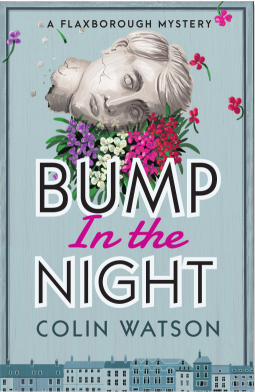
Bump in the Night by Colin Watson

Farrago| 18 March 2018|244 p|e-book|Review copy|4.5*

Description


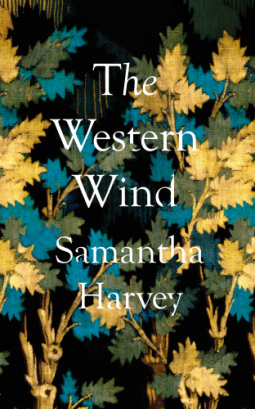
The Western Wind by Samantha Harvey

Jonathan Cape, Vintage Digital| 1 March 2018|304 p|Review copy|4.5*

Description

Bookworm: A Memoir of Childhood Reading by Lucy Mangan

Square Peg, Random House UK|1 March 2018|336 p|Review copy|4*

Bookworm: A Memoir of Childhood Reading by Lucy Mangan will appeal to all bookworms, but it’s more than an account of what Lucy read, it’s also a history of children’s books, details of their authors and a memoir of Lucy’s childhood. I loved it – it’s full of the joy and love of books, the intensity of reading and the ‘instant and complete absorption in a book‘. She writes with verve and humour, in a chatty style that makes it so readable. Reading her book is like being in conversation with a friend.

As I am older than Lucy, inevitably she mentions books I didn’t read as I was growing up (but have read some of them in later life) , especially in the later sections of her book, books she read as a teenager, but I was quite surprised and pleased to find that our reading in early childhood was so similar, and just like her, books have made me the person I am – why else would I be writing a blog called ‘BooksPlease‘.

As long as I can remember I have loved books and I can’t remember a time when I couldn’t read. So I was delighted to find that she too loved Teddy Robinson by Joan L Robinson.  This is the first book I remember borrowing from the library. I loved it so much I was dreadfully upset that I had to return it. Teddy Robinson was owned by a little girl named Deborah and I am so envious that Lucy Mangan has actually met Deborah, who showed her the original drawings for the books her mother wrote.

And then there are some of my most loved books when I was young such as Milly-Molly-Mandy, Alice’s Adventures in Wonderland, the Katy books, Little Women, Good Wives and Jo’s Boys, The Borrowers, the Narnia books, Ballet Shoes, and The Secret Garden. I re-read them many times over.

There’s a whole section on Enid BlytonThe Blyton Interregnum. I was very interested to see her view of this writer whose books I too adored. Blyton wrote around 760 books during her fifty-year writing career! Despite the criticism of her books as mediocre material, formulaic books with fantastical plots Lucy considers, correctly I think, that they are books that provided comfort reading during and in the aftermath of the Second World War. Not only that, they are satisfying stories that lay down a base for future reading, providing books that are fun to read and opening up the ‘pleasure-filled world of reading’. Then there are the questions about prejudice, sexism, class snobbery and racism, in Blyton’s books, which Lucy (and I) missed completely whilst reading as children.

She writes about re-reading the books as an adult as a ‘discombobulating experience‘ – stories that once wholly enraptured you no longer have that same magic, and about her disappointment in returning to Enid Blyton’s books and finding them unreadable. It’s the main reason I don’t go back to the books I loved as a child – I really don’t want to lose the magic they held for me then.

There is so much in this book I could write about, it’s packed with the magic of books and reading it has given me hours of nostalgic pleasure – but the best thing I think is to leave you to read this lovely book for yourself.

Many thanks to Random House UK for a review copy via NetGalley.