My First Review: My Goodness by Joe Queenan

I was wondering about doing a Top Ten Tuesday post tomorrow but the topic coming up on 23 April : The First Ten Books I Reviewed, interested me more then tomorrow’s topicI remembered that the very first one was I wrote was several years before I began this blog – it was on Amazon UK in August 2001. When I checked Amazon this morning I couldn’t find my review, but I had saved it in my Word documents and I thought I’d post it today. It is a review of Joe Queenan’s My Goodness.

Entertaining and thought provoking

my goodness queenan

‘This book is sub-titled ‘A cynic’s short-lived search for sainthood‘. I hadn’t heard of Joe Queenan before, but he describes himself as ‘an acerbic, mean-spirited observer of the human condition’ and gives many examples from his earlier books and newspaper articles to illustrate this. In his search for sainthood he set out to recognise what a horrible man he had been all his life and decided to transform himself into the very best human being he could be. He defines goodness as the conscious act of using all or most of one’s intellectual and emotional resources to better both the human and the planetary condition and differentiates ‘goodness’ from ‘niceness’.

As he is American some of the references were unknown to me and in particular his lists of apologies for his irresponsible journalism were repetitive and tedious. However, I did like his accounts of practising random kindness and senseless acts of beauty and found them amusing and ironic.

The main thrust of the book illustrates his distinction between actions that he describes as being motivated by a genuine love of humanity and good deeds carried out to salve one’s conscience or for public relations purposes. He does this relentlessly by poking fun at so-called do-gooders, environmentalists, and how to shop to help promote good causes. One of the funniest things is his account of his efforts to save water by taking his own sheets and towels with him to use in hotels, leaving a note for the maid that the bed linen would not need to be changed because he’d slept on the floor and the towels wouldn’t need washing because he’d brought his own. He then realised that the maid might not understand English and would end up stripping the bed and tossing the towels in the laundry anyway.

His account of how to talk to your Guardian Angel is perhaps the funniest part of the book. Read it to find out what God’s answer is on how to make investments more socially responsible.’

The Family Secret by Tracy Buchanan

The Family Secret

Avon Books UK|10 January 2019|Print length 400 pages|e-book Review copy|3*

The Family Secret by Tracy Buchanan is the first of her books that I’ve read. Although I liked it, I didn’t love it, but maybe that’s because it is romantic fiction, a genre that I don’t read very often.

It’s an emotional family drama set in two timelines. The narrative switches between the two periods – one in 2009 written in the third person present tense and the other in 1989 – 1996 in the first person past tense, so the timelines are easily distinguishable. The two storylines eventually merge. However, it begins with a prologue in which an unnamed woman drowns in a frozen lake, watched by an unnamed man. As I read on I was wondering who they were and what had led up to that scene and how it fitted into the main part of the book.

There are plenty of secrets and several twists in the story. In 2009, Amber Caulfield comes across a young girl, stumbling along the beach at Winterton Chine on the south coast of England, not wearing a coat or shoes and unable to remember who she is, or how she got there. Amber who has her own problems decides to help her remember who she is and to reunite her with her family.

The second storyline, beginning in 1989 is full of secrets too. Gwyneth is a wildlife documentary filmmaker who gets lost as she’s driving in the Scottish Highlands. She comes across a lodge overlooking a loch. It’s Christmas Eve, freezing cold and snowing, so she decides to ask for help, but seeing a ptarmigan gets out her camera to film the bird and steps onto the frozen loch, the ice cracks and she falls into the water. Fortunately she is rescued by Dylan McClusky and taken in by his family. She is made welcome but it soon becomes apparent that this is a dysfunctional family with a number of problems and secrets. Gwyneth too has a troubled background and a big secret that she keeps well hidden.

 It’s a novel about love, loss and guilt, but it’s a bit too predictable for my liking, with rather too many coincidences that weren’t very convincing. But it’s an easy and enjoyable book to read and it kept my interest to the endI liked the vivid descriptions of the landscape and wildlife both in the Scottish Highlands and in Iceland in the depths of winter, bringing the settings to life.

My thanks to the publishers, Avon Books UK for my review copy via NetGalley.

The King’s Evil by Andrew Taylor

London, 1667 – a royal scandal that could change the face of England forever…

The King's Evil HarperCollins|4 April 2019|464 pages|Hardback |Review copy|5* This is the third book in Andrew Taylor’s series following James Marwood and Cat (Catherine) Lovett. I loved the first two – The Ashes of London (set in 1666) and The Fire Court (set in 1667, eight months after the Great Fire of London), so I was delighted when Felicity Denham at HarperCollins asked me if I’d like a proof copy of The King’s Evil to review. It is not necessary to read the earlier books as I think they all work well as standalones, but I think it helps if you do. The King’s Evil carries on from where The Fire Court ended. Seven years after the restoration of the monarchy it’s still a time of political and social change. Whilst Charles II still had immense power as the King a new middle class, both professional and administrative, was evolving. James Marwood is a government agent in Whitehall, working as a clerk for William Chiffinch, one of the commissioners of the Board of Red Cloth. Chiffinch was also Keeper of the King’s Private Closet and Page of the Backstairs, an important position as he controlled private access to the King. In addition Marwood also works under Joseph Williamson, the Undersecretary to the Secretary of State for the South, one of Charles’s most powerful ministers. Charles had reinstated the ceremony of ‘touching for the King’s Evil’ as a demonstration of his divine right to rule – a ceremony in which the monarch touched those people suffering from scrofula, a disease, now known as  tuberculosis, that caused the swelling of the bones and lymphatic glands in the neck (the book cover illustrates the ceremony). It was believed that the King’s touch cured the disease. The novel begins as Marwood is in the Banqueting Hall at Whitehall watching the ceremony. Chiffinch had told him to attend on the orders of the King to meet Lady Quincy and do whatever she commanded. Lady Quincy, accompanied by a small African child, her footboy suffering from scrofula, tells Marwood to meet her outside the church near the Tower of London. She also warns him that Edward Alderley, her step-son, is out for revenge on Cat Lovett because of what she had done to him. (This refers to events in The Fire Court).  In order to keep her identity secret Cat, whose father had been one of the Regicides, is going by the name of Jane Hakesby. She had been working for Simon Hakesby, a surveyor and architect, on a garden pavilion project in the grounds of Clarendon House. Then Alderley is found dead in the well in the garden pavilion. Marwood is asked to look into the circumstances of Alderley’s death, under the King’s authority. He decides to keep his connection with Cat to himself, whilst he tries to find out where she has gone and who was responsible for Adderley’s death. Was it an accident, was it suicide, or was it murder? After Chiffinch received an anonymous letter naming Cat as the murdererhe sent officers to arrest her, but she had disappeared. So this was taken as a confession of her guilt. Marwood was afraid that this could implicate him too if it became known that he had told her that Alderley knew her whereabouts. In addition, Lord Clarendon is convinced that Alderley was involved in a conspiracy against him and also suspects that someone in his household is involved in the plot. He is out of favour with Charles, and had recently been removed from the office of Lord Chancellor.  But he’s still potentially politically powerful as his daughter is married to Charles’s brother, James, the Duke of York. His grandchildren, the Princesses Mary and Anne, are the next heirs in the line of succession if Charles remained childless. Marwood tries to find Cat, and also escorts Lady Quincy to Cambridge on a secret mission. Eventually his investigation into Alderley’s death leads him to discover who is behind the plot against Clarendon, and also to uncover a potential royal scandal in which Lady Quincy and the Duke of Buckingham, one of Charles’s favourites who had supplanted Clarendon, play important roles.  I loved the characterisation and all the details of the setting, bringing to life scenes at the royal court as well as in the refugee camps that housed the homeless as the work of rebuilding London continued. Andrew Taylor is a supreme storyteller, combining fact and fiction – his novels are full of historical details that slot seamlessly into his stories. The King’s Evil is historical fiction at its best, full of suspense and tension, an intricate and tightly plotted murder mystery, enhanced by the intrigue of a royal scandal.  I loved it. Many thanks to the publishers, HarperCollins for my review copy.
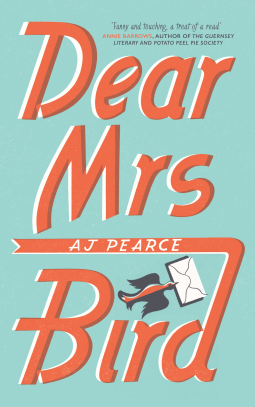
Dear Mrs Bird by A J Pearce

Picador|5 April 2018 |288 pages|Kindle edition |Review copy|3* I wasn’t sure I would like Dear Mrs Bird by A J Pearce because, although it’s historical fiction and one of my favourite genres, it has received so much hype that made me wonder if it was over-hyped and whether I’d find it a bit of a disappointment. 

Breakfast at Tiffany’s by Truman Capote

Breakfast at Tiffany's

Blurb:

Immortalised by Audrey Hepburn’s sparkling performance in the 1961 film of the same name, Breakfast at Tiffany’s is Truman Capote’s timeless portrait of tragicomic cultural icon Holly Golightly, published in Penguin Modern Classics.

It’s New York in the 1940s, where the martinis flow from cocktail hour till breakfast at Tiffany’s. And nice girls don’t, except, of course, for Holly Golightly: glittering socialite traveller, generally upwards, sometimes sideways and once in a while – down. Pursued by to Salvatore ‘Sally’ Tomato, the Mafia sugar-daddy doing life in Sing Sing and ‘Rusty’ Trawler, the blue-chinned, cuff-shooting millionaire man about women about town, Holly is a fragile eyeful of tawny hair and turned-up nose, a heart-breaker, a perplexer, a traveller, a tease. She is irrepressibly ‘top banana in the shock department’, and one of the shining flowers of American fiction.

My thoughts:

I’ve never seen the film Breakfast at Tiffany’s starring Audrey Hepburn as Holly Golightly, a high-priced escort looking for a rich man to marry, but I understand that it’s only loosely based on the novella and is set in the 1960s rather than the 1940s.

Breakfast at Tiffany’s is a quick read and very entertaining. The narrator is not named, although Holly Golightly calls him ‘Fred’ after her brother. He’s a writer and at the beginning of the book he is reminiscing about Holly with Joe Bell, who ran a bar around the corner on Lexington Avenue. They hadn’t seen or heard from Holly  for over two years. She used to live in the apartment below Fred’s in a brownstone in the East Seventies in New York. Her past is almost as unknown as her present whereabouts.

She’s a free spirit, charming and carefree, but craves attention. She has a cat, plays the guitar and likes to live as though she’s about to leave – all her belongings still in suitcases and crates – and has a great many friends who she entertains with numerous parties. She gets the ‘mean reds’, days when she’s afraid, expecting something bad is going to happen, but she doesn’t know what. On days like that she gets in a taxi and goes to Tiffany’s which calms her down and where nothing bad could happen to her, but not for the diamonds. She doesn’t ‘give a hoot’ about diamonds and thinks it’s ‘tacky to wear them before you’re forty’.

Her life is a mass of contradictions, one character describes her as a ‘phony,’ but a ‘real phony’ with crazy ideas and always on the move. She’s involved with a Mafia gangster, Sally Tomato, who she visits in jail every Thursday. But her life is really a mystery and not all is as it appears on the surface, longing for something wonderful to happen.

There’s a lot packed into this novella of 100 pages. There are also three short stories at the end of the book in the remaining pages – and these are a delight. I think these are among the best short stories that I’ve read!

There’s House of Flowers about a young woman called Ottilie, who makes the best of her life, first as a prostitute and then as the wife of Royal, a young man who takes her to live in a house in the mountains, a house of flowers with wisteria on the roof, vines over the windows and lilies blooming at the door. But all is not as idyllic as it seems in this beautiful and exotic setting.

A Diamond Guitar is set in a prison farm, a story of unrequited love when a new prisoner arrives bringing with him a guitar studded with glass diamonds. The third story is maybe my favourite, A Christmas Memory, about a young boy, Buddy and his cousin who is sixty or so years older than him. It’s a heart-warming story with a poignant ending.

I loved Capote’s writing – it’s lively, richly descriptive with sparkling dialogue, and his ability to conjure up characters with depth in a few paragraphs is impressive, to say the least.

  • Paperback: 160 pages
  • Publisher: Penguin Classics; New Ed edition (27 April 2000) – originally published in 1958
  • Source: Library Book
  • My Rating: 5*

Challenges: The Virtual Mount TBR Challenge

The Frank Business by Olivia Glazebrook

The Frank Business John Murray Press|7 March 2019 |288 pages|e-book |Review copy|4* I enjoyed The Frank Business by Olivia Glazebook very much. It’s about a rather dysfunctional family in crisis and it begins dramatically: