First Chapter, First Paragraph

First chapterEvery Tuesday Diane at Bibliophile by the Sea hosts First Chapter First Paragraph Tuesday Intros to share the first paragraph sometimes two, of a book that she’s reading or planning to read soon.

This week I’m featuring Cleopatra’s Sister by Penelope Lively.
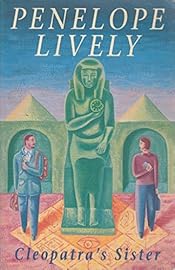
Howard Beamish became a palaeontologist because of a rise in the interest rate when he was six years old. His father, a cautious man with a large mortgage, announced that the projected family holiday to the Costa Brava was no longer feasible. A chalet was rented on the north Somerset coast instead and thus, on a dank August afternoon, Howard picked up an ammonite on Blue Anchor Beach.

He presented it to his parents. ‘What’s this?’

It’s a stone,’ said his father, who was listening to the test match.

‘No, it isn’t,’ retorted Howard, an observant child.

‘It’s a fossil, dear,’ said his mother. ‘That’s a very old sort of stone.’

‘Why?’ persisted Howard after a few moments. The single word embraced a vast range of query, for which he did not have the language.

His mother, too, paused to consider and was also defeated, though for different reason. She evaded the issue by offering Howard a tomato sandwich, which he accepted with enthusiasm while continuing to pore over the ammonite. During the rest of the afternoon, he collected five more fossil fragments, including one embedded in a slab of rock weighing several pounds.

Penelope Lively is one of my favourite authors, so I’m expecting to enjoy this book. I’ve quoted more than the first paragraph as I loved the conversation between Howard and his parents and the description of the scene on the beach as Howard ate his tomato sandwich and collected fossils. It shows the influence of chance on our lives – and I’m also fascinated by fossils.

Blurb:

Detached and unwordly paleontologist Howard Beamish is on a journey that is to change his life. Travelling to Nairobi, his plane is forced to land in Marsopolis, the capital of Callimbia, where Cleopatra’s sister entertained Antony. Also on the flight is Lucy Faulkner, a journalist with a sketchy knowledge of Callimbia’s political turbulence. As chance throws them together, Howard and Lucy become embroiled in a revolution that is both political and personal.

‘Every sentence is a pleasure to read’ Sunday Express

‘A fluent, funny, ultimately moving romance in which lovers share centre stage with Lively’s persuasive meditations on history and fate. . .a book of great charm with a real intellectual resonance at its core’ The New York Times Book Review

What do think – would you read on?

Missing Pieces by Heather Gudenkauf

Missing Pieces is the first book by Heather Gudenkauf that I’ve read. I enjoyed it very much and will look out for her other books.

Blurb:

Everyone has secrets’¦
Sarah Quinlan’s husband, Jack, has been haunted for decades by the untimely death of his mother when he was just a teenager, her body found in the cellar of their family farm, the circumstances a mystery. The case rocked the town where Jack was raised, and for years Jack avoided returning home.

But when his beloved aunt Julia is in an accident, hospitalised in a coma, Jack and Sarah are forced to confront the past that they have long evaded.
Sarah and Jack are welcomed by the family Jack left behind all those years ago’•barely a trace of the wounds that had once devastated them all. But as facts about Julia’s accident begin to surface, Sarah realises that nothing about the Quinlans is what it seems. Caught in a flurry of unanswered questions, Sarah dives deep into the rabbit hole of Jack’s past, but the farther she climbs, the harder it is for her to get out. And soon she is faced with a hard reality she may not be prepared for.

My thoughts:

The book begins with the murder of Lydia Quinlan in 1985 by someone she knew, when her son Jack  was fifteen. Jack and his little sister Amy went to live with his aunt Julia and her husband Hal after the deaths of their parents. As soon as he was old enough Jack left his home town of Penny Gate in Iowa.

Moving to the present day Jack and Sarah have been married for 20 years, but Sarah has never met any of his family or been to his home town. But when his aunt Julia is in a coma after a fall she goes with him to Penny Gate. Whilst the family gather round Julia’s hospital bed she begins to realise that there is a lot she didn’t know about Jack and his family, including the fact that he had lied to her about how his parents had died.

The book revolves around the mystery of who killed Lydia and was Julia’s fall an accident  – and if not who was responsible and why. The story is told from Sarah’s perspective as she delves into the history of Lydia’s death. I did have a few reservations about how easily Sarah managed to persuade Margaret Dooley who works in the sheriff’s department to let her see the files and records of the investigation into Lydia’s murder but Margaret is also keen to get to the truth, particularly as she had been Jack and Amy’s babysitter as they grew up and her mother and Lydia were best friends.

I was gripped by this book, as more and more secrets are revealed and Sarah begins to gather the missing pieces of the puzzle. Her relationship with Jack deteriorates as she realises that he has told her so many lies, or omitted to tell her the truth. She cannot understand why he won’t talk to her and begins to suspect the worst. And then it becomes clear after Julia died that her death was not the result of an accident.

I liked the setting of a small town and was fascinated by the characters and their relationships, which are intense and complicated by the reasons they kept secrets from each other. It’s a fast-paced novel that held my interest to the end. At various points as I read I became convinced that first this person and then that person must have killed Lydia, but I was way off mark. And I had no idea who could have killed Julia.

My thanks to the publishers and Midas Public Relations for my copy of this book.

  • Paperback: 384 pages
  • Publisher: HQ (12 Jan. 2017)
  • Language: English
  • ISBN-10: 184845497X
  • ISBN-13: 978-1848454972

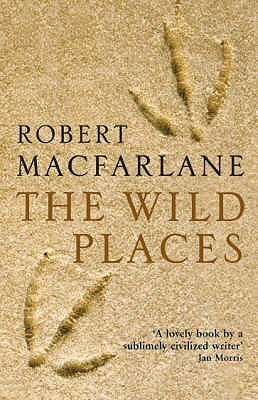
The Wild Places by Robert Macfarlane


I read The Wild Places by Robert Macfarlane at the end of December. I didn’t enjoy it as much as I thought I would from reading the blurb:

The Wild Places is both an intellectual and a physical journey, and Macfarlane travels in time as well as space. Guided by monks, questers, scientists, philosophers, poets and artists, both living and dead, he explores our changing ideas of the wild. From the cliffs of Cape Wrath, to the holloways of Dorset, the storm-beaches of Norfolk, the saltmarshes and estuaries of Essex, and the moors of Rannoch and the Pennines, his journeys become the conductors of people and cultures, past and present, who have had intense relationships with these places.Certain birds, animals, trees and objects – snow-hares, falcons, beeches, crows, suns, white stones – recur, and as it progresses this densely patterned book begins to bind tighter and tighter. At once a wonder voyage, an adventure story, an exercise in visionary cartography, and a work of natural history, it is written in a style and a form as unusual as the places with which it is concerned. It also tells the story of a friendship, and of a loss. It mixes history, memory and landscape in a strange and beautiful evocation of wildness and its vital importance.

I have mixed feelings about it. It does do all those things described above and maybe that was the problem for me -it tries to do too much. It is beautifully written, sometimes overwritten and it is also repetitive. There is a map showing the places he visited that helped me  to a certain extent – vague enough if you don’t want to pinpoint the precise locations. It is a book to read in small sections, to dip into rather than to read straight through as I did. I think I would have enjoyed it more if I had taken more time to read it – but during the times I did put it down I was in no hurry to get back to it.

I was intrigued by the places where he slept out and flabbergasted by the risks he took.

For example, he went on a night walk alone in the Cumbrian mountains. By the time he reached the mountains it was late afternoon and when he reached the ridge at over 2,000 feet the snow had thickened to a blizzard and it was hard to stand up in the wind. He decided to sleep on the surface of a frozen tarn that lay between two small crags giving some shelter from the wind. First he tested it by jumping gently on its centre; it didn’t creak, so he slept there in his sleeping and bivouac bags whilst it hailed and snowed. He began

to feel cold, deep down, as though ice were forming inside me, floes of it cruising my core, pressure ridges riding up through my arms and legs, white sheaths forming around my bones. (page 198)

When he woke he did a little dance on the tarn to warm himself and then saw that where he had been lying on the tarn,

the ice had melted, so that there was a shallow indent, shaped like a sarcophagus, shadowed out by the moonlight. (page 199)

However, I did enjoy the experience of reading The Wild Places, and  I’ve decided to read Macfarlane’s The Old Ways:  a Journey on Foot, particularly as a friend told me she had enjoyed it more than The Wild Places. Macfarlane describes how he set off from his Cambridge home to follow ancient tracks, holloways, drove roads and sea paths that criss-cross the British landscape.

Robert Macfarlane  is a Reader in Literature and the Geohumanities in the Faculty of English at Cambridge University. He is well-known as a writer about landscape, nature, memory, language and travel.

  • Paperback: 352 pages
  • Publisher: Granta Books (7 July 2008)
  • Language: English
  • ISBN-10: 1847080189
  • ISBN-13: 978-1847080189
  • Source: I bought my copy

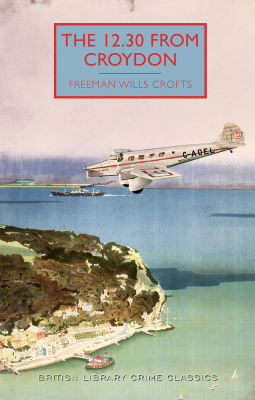
The 12.30 from Croydon by Freeman Wills Crofts

This is the second book by Freeman Wills Crofts that I’ve read. The first was Mystery in the Channel, which is a complicated murder mystery with plenty of red herrings and I had no idea about the identity of the killer. The 12.30 from Croydon couldn’t be more different – it begins with a murder but the identity of the murderer is known before he even thought of committing the crime.

The result is there is little mystery, as Charles Swinburne sets about murdering his uncle, Andrew Crowther, in order to inherit his fortune. It’s set in the early 1930s when the country is suffering the effects of the ‘slump’ and Charles’ business is on the edge of bankruptcy, and he is unable to raise the money to keep it going.

The major part of the book is taken up with describing how Charles became convinced that the only way out of his dilemma and the only way he could convince Una, a mercenary rich young woman, to marry him, was to kill Andrew. Consequently Andrew died on the 12.30 plane from Croydon. From that point onwards we see how Charles devised a plan and created an alibi that he thought would be perfect – and how it went wrong and how he was drawn into committing yet another murder.

Inspector French appears later on in the book to explain Charles’ thoughts and actions, and how he broke his alibi, just as Poirot sums up his thoughts and methods of deduction in Agatha Christie’s books.

The 12.30 from Croydon focuses on the psychology of the murderer and from that point of view I think it works well.  Charles’ personality is thoroughly explored, showing his ingenuity, efficiency, and the ways he overcame his scruples about murder were in the main convincing. But the in-depth detail of the planning means that it is hardly riveting reading. So whilst the plotting is clever my interest in the outcome flagged as the only thing to work out is would Charles get caught out, and would Inspector French break his alibi. But I did want to know how it would end.

What I found more interesting is the description of the thrill of the early passenger flights. In the opening chapter Rose Morley, Andrew’s young granddaughter flies to France with him and her father, Peter, because her mother had been knocked down and seriously injured by a taxi in Paris. Rose thinks the plane looks like a huge dragonfly. From her seat her view through the window was of the lower wing with its criss-cross struts connecting it to the upper wing. She was delighted by the whole process the increasing speed and the roar of the motors as the plane miraculously left the ground. Peter remarks that it was a wonderful improvement on the early machines when you had to stuff cotton wool in your ears. Rose loved the whole experience.

I also like the setting Crofts created for the novel – the enormous pressure that drove Charles to take such drastic action due to the financial disasters of the period in the 1930s is well presented. I liked the book but as I enjoy trying to work out the why and the how for me it needed more mystery, and more red herrings.

 My thanks to Netgalley and Poisoned Pen Press for a review copy of The 12.30 From Croydon. It was first published in 1934; this edition with an introduction by Martin Edwards was published in 2016 by Poisoned Pen Press in association with the British Library.

Amazon UK link

Amazon US link

This is my first book for the What’s in a Name 2017 in the category of ‘a number in numbers’.

My Week in Books: 18 January

This Week in Books is a weekly round-up hosted by Lypsyy Lost & Found, about what I’ve been reading Now, Then & Next.

IMG_1384-0

A similar meme,  WWW Wednesday is run by Taking on a World of Words.

Now – I’m reading two books, one I’ve nearly finished, The 12.30 from Croydon by Freeman Wills Crofts

Blurb: We begin with a body. Andrew Crowther, a wealthy retired manufacturer, is found dead in his seat on the 12.30 flight from Croydon to Paris. Rather less orthodox is the ensuing flashback in which we live with the killer at every stage, from the first thoughts of murder to the strains and stresses of living with its execution. Seen from the criminal’s perspective, a mild-mannered Inspector by the name of French is simply another character who needs to be dealt with. This is an unconventional yet gripping story of intrigue, betrayal, obsession, justification and self-delusion. And will the killer get away with it?

and The Eagle of the Ninth by Rosemary Sutcliff

The Eagle of the NinthBlurb: The Ninth Legion marched into the mists of northern Britain – and they were never seen again. Four thousand men disappeared and their eagle standard was lost. Marcus has to find out what happened to his father, who led the Ninth Legion. So he sets out into the unknown, on a quest so hazardous that no one expects him to return …
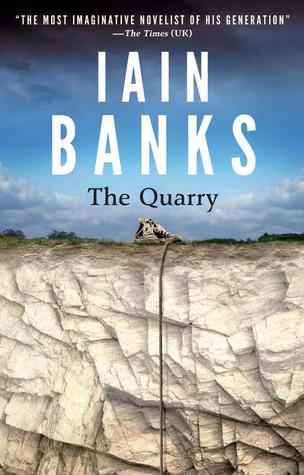
Then – the last book I finished was The Quarry by Iain Banks, which I enjoyed reading – it’s funny in parts, angry, sad and miserable in others and about relationships and secrets.

The QuarryI wrote more about it in this post.

NextThe Elephant Keeper’s Children by Peter Hoeg, Sarah Moss wrote in the Guardian that the hilarity of Peter Finø’s narrative makes this a delightful novel even for readers who have limited tolerance of surrealism. I’m one of those readers so I hope I have enough tolerance for this book.

The Elephant Keepers' ChildrenBlurb: Peter and Tilte are trying to track down two notorious criminals: their parents. They are the pastor and the organist, respectively, of the only church on the tiny island of Finø. Known for fabricating cheap miracles to strengthen their congregation’s faith, they have been in trouble before. But this time their children suspect they are up to mischief on a far greater scale.

When Peter and Tilte learn that scientific and religious leaders from around the world are assembling in Copenhagen for a conference, they know their parents are up to something. Peter and Tilte’s quest to find them exposes conspiracies, terrorist plots, an angry bishop, a deranged headmaster, two love-struck police officers, a deluded aristocrat and much more along the way.

If you’ve read any of these books, especially The Elephant Keeper’s Children, I’d love to know what you think. And do let me know what you are reading this week.

The Quarry by Iain Banks

The Quarry

Blurb:

Kit doesn’t know who his mother is. What he does know, however, is that his father, Guy, is dying of cancer. Feeling his death is imminent, Guy gathers around him his oldest friends ‘“ or at least the friends with the most to lose by his death. Paul ‘“ the rising star in the Labour party who dreads the day a tape they all made at university might come to light; Alison and Robbie, corporate bunnies whose relationship is daily more fractious; Pris and Haze, once an item, now estranged, and finally Hol ‘“ friend, mentor, former lover and the only one who seemed to care.

But what will happen to Kit when Guy is gone? And why isn’t Kit’s mother in the picture? As the friends reunite for Guy’s last days, old jealousies, affairs and lies come to light as Kit watches on.

My thoughts:

I enjoyed The Quarry, the last book Iain Banks wrote. He explained in this interview that it’s a fairly simple book with not many characters, with only really one location and “it doesn’t muck around with flashbacks or narrative order.” It is quite strange really because he had already written 90% of it before he was diagnosed with cancer. I’m sometimes a bit wary of novels on cancer, but The Quarry isn’t in the slightest a sentimental book, nor is it solely about cancer, or death, although Guy does rant about it. I particularly enjoyed his rants – as well as those about cancer he also rants about God, faith, miracles, politics, celebrities, the ‘hounding of the poor and disabled and the cosseting of the rich and privileged‘, the unfair society we live in and so on.

Kit and Guy live in a house that is gradually falling to pieces, situated on the edge of a quarry in the Pennines. Kit is the narrator so we see the events of the weekend when Guy’s friends came to visit through his eyes, as they reminisce about their time as film students and search through the house for a video tape they had made that could ruin all of their lives if it became public. And, of course, he wants to know who is mother is, is it Hol, Ali or Pris, or someone else?

Kit is my favourite character. He is ‘very clever, if challenged in other ways‘, meaning he is ‘on a spectrum that stretches from ‘highly gifted’ at one end to ‘nutter’ at the other.‘ He spends much of his time playing an online game called HeroSpace. I liked the descriptions of his rituals and his need for order – stirring tea and shopping in a certain order etc. Kit’s internal monologue on responding to conversations is also fascinating, illustrating his struggles to interact with people socially.

I read it quickly – it’s well written, easy to read and fast paced. The main characters, Kit, Guy and Hol are convincing characters, whereas the rest remained a bit blurred in my mind, despite the detailed descriptions of what they were wearing. The physical setting, whilst not actually precisely located, is good. I could easily visualise the house and its immediate setting next to the quarry, which plays a big part in the novel both as a physical entity and metaphorically – living on the edge of a precipice into which inevitably we will all fall.

I was gripped by the two strands – will they find the tape and what is on it and will Kit find out the identity of his mother? And Guy’s character is particularly intriguing. It’s an entertaining book, funny in parts, angry, sad and miserable in others and about relationships and secrets.

The Quarry is only the second book by Iain Banks that I’ve read. I’ve also read The Crow Road, which I thoroughly enjoyed, although I never got round to writing down my thoughts about it. I’m tempted to re-read it for comparison. I’ve started to read The Wasp Factory a few times and never got very far as other books pulled me away from it. So I’ll try that again and the only other book of his that I own, A Song of Stone.