Top Ten Tuesday: The Ten Most Recent Additions To My Wishlist

Top Ten Tuesday is a weekly meme created by The Broke and the Bookish and now hosted by Jana at That Artsy Reader Girl. For the rules see her blog.

The topic today is Books I Hope Santa Brings/Bookish Wishes, I’ve picked the Ten Most Recent Additions To My Wishlist.

  • The Eye in the Door by Pat Barker – the 2nd book in her World War One trilogy (Regeneration Trilogy Book 2).
  • Quartet in Autumn by Barbara Pym, a funny, poignant and hopeful story of human connection.
  • Venetian Vespers by John Banville, an eerie, Venice-set novel.
  • Victim of the Aurora by Thomas Keneally. In the waning years of the Edwardian era, a group of gentlemen wait out a raging blizzard in the perpetual darkness of the Antarctic winter, poised for a strike at the South Pole.
  •  Tolstoy: A Russian Life by Rosamund Bartlett, a biography of Count Lev Tolstoy.
  • Voices of the Dead (A Raven and Fisher Mystery Book 4) by Ambrose Parry.
  • The Ghost Ship (The Joubert Family Chronicles Book 3) by Kate Moss, a swashbuckling tale of adventure and buccaneering, love and revenge, stolen fortunes and hidden secrets on the high seas.
  • Green for Danger by Christianna Brand, book 7 of the Inspector Cockerill Mysteries.
  • Normal Women: 900 Years of Women Making History by Philippa Gregory
  • Unfinished Portrait by Agatha Christie writing as Mary Westmacott. Agatha Christie also wrote about crimes of the heart, six bittersweet and very personal novels, as compelling and memorable as the best of her work.

The Crow’s Inn Tragedy by Annie Haynes

Rating: 3 out of 5.

I have just finished reading is The Crow’s Inn Tragedy by Annie Haynes, originally published in 1927 and republished by Dean Street Press in 2015. I read this for the 2025 Dean Street December challenge hosted by Liz @ Adventures in Running, Reading and Working from Home.

Description from Amazon UK:

“I cannot understand why Mr. Bechcombe apparently offered no resistance. His hand-bell, his speaking-tube, the telephone—all were close at hand. It looks as though he had recognized his assassin and had no fear of him.”

The corner house of Crow’s Inn Square was the most dignified set of solicitors’ chambers imaginable. But this monument to law and order nonetheless becomes the scene of murder – when the distinguished lawyer Mr. Bechcombe, despite giving strict instructions not to be disturbed, is strangled in his own office.

Inspector Furnival of Scotland Yard has to wrestle with fiendish clues, unearth priceless gems and tangle with a dangerous gang before he can solve this case, his third and final golden age mystery. Originally published in 1927, this new edition is the first printed in over 80 years, and features an introduction by crime fiction historian Curtis Evans.

My thoughts:

I hadn’t heard of Annie Haynes (1865 – 1929), but she was a contemporary of Agatha Christie and wrote a series of detective novels between 1923 and 1930. She was born in Ashby de-la-Zouch in Leicestershire, growing up with her mother and younger brother when her parents separated, in her grandparents’ cottage at Coleorton Hall, the seat of the Beaumont baronets. After her mother’s death in 1905, she moved to London and lived with her friend Ada Heather-Bigg, a journalist, philanthropist and feminist. In 1914, at the age of 50, she began suffering from debilitating rheumatoid arthritis that left her in constant pain. She died of heart failure, aged 64, on 30 March 1929. According to crime fiction historian Curtis Evans in his Introduction, it was reported in the press that ‘many people well-known in the literary world’ attended her funeral at St Michael and All Angels in Paddington‘. But by the time Ada Heather-Bigg died in 1944 her mysteries were forgotten until the Dean Street Press republished them.

The Crow’s Inn Tragedy was her third Inspector Furnival Mystery. As you can tell from the description above this is a complicated murder mystery. When solicitor Luke Bechombe is found murdered in his office Inspector Furnival is called in. With the help of Mr Steadman, a barrister and cousin of Luke’s wife they investigate his death. It is far from simple. The Reverend James Collyer, Luke’s brother-in-law, had called to see him about his son, Tony, wanting to raise money to pay his debts. Luke tells him that the emeralds on the family heirloom, the Collyer cross are fake and that there is a regular gang in London stealing jewels, known as the Yellow Gang, under the leadership of the Yellow Dog. Luke’s chief clerk, Amos Thompson, and a mysterious visitor to the office are the chief suspects. Also involved in the mystery are Luke’s secretary Cecily Hoyle, who is in love with Tony and who is obviously hiding some secret, an American couple, Cyril B Carnthwaite and his wife, Luke’s nephew Aubrey Todmarsh, who is a conscientious objector, and who runs a settlement for ex-prisoners called the Community of St Philip .

I thought the setting in the aftermath of the First World War was well done, with details of the hardships and poverty of the returning service men. Tony, for example, who was gassed and wounded during the War had not been able to find a job, and the League of Nations is mentioned scathingly by Luke Bechombe:

“Damn the League of Nations!’ uttered the solicitor, banging his fist upon the writing-pad with an energy that rattled his inkstand. … I look to a largely augmented Air force with plenty of practice in bomb-throwing as my hope for the future. It will be worth fifty of that rotten League of Nations. (page 7)

I enjoyed it for the most part but I think the ending was a bit of a let down becoming too melodramatic and far-fetched for my liking. It reminded me of Agatha Christie’s The Big Four, (also published in 1927) in that it involves a gang of international criminals, and brings in some of the elements of the sensation novel. Inspector Furnival and  Mr Steadman find themselves in danger of certain death as they try to track down the Yellow Gang in an unconvincing twist (to me at any rate) as the book comes to a fast paced conclusion.

Top Ten Tuesday: Books On My Winter 2025-2026 to-Read List

Top Ten Tuesday is a weekly meme created by The Broke and the Bookish and now hosted by Jana at That Artsy Reader Girl. For the rules see her blog.

The topic today is Books On My Winter 2025-2026 to-Read List. The first three are books on my NetGalley shelf and will be published early in the New Year. The rest are books from my TBR lists. I do enjoy making lists and sometimes I stick to them!

  1. The Fox of Kensal Green by Richard Tyrrell – a quiet neighbourhood of London is about to be shattered.
  2. The Living and the Dead by Christoffer Carlsson – a haunting murder mystery, set in a rural Swedish town, where one community’s secrets will be laid bare over the next twenty years
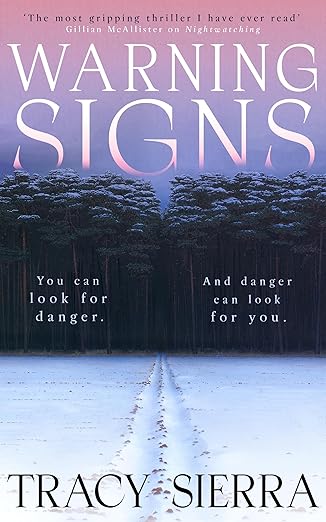
  3. Warning Signs by Tracy Sierra – a thriller set in the Colorado mountains during a ski-weekend.
  4. The Vanishing of Margaret Small by Neil Alexander – a mystery that takes readers into a fascinating past, and introduces an unforgettable literary heroine.
  5.  Goodbye Mr Chips by James Hilton – the classic story of a quiet, unassuming man and the many lives he touches.
  6. Exiles by Jane Harper – Investigator Aaron Falk finds himself drawn into a complex web of tightly held secrets in South Australia’s wine country.
  7. The Christmas Clue by Nicola Upson – a Christmas murder mystery featuring the real-life couple who invented Cluedo.
  8. Marble Hall Murders by Anthony Horowitz – Susan Ryeland has had enough of murder.
  9. Miss Willmott’s Ghosts: the extraordinary life and gardens of a forgotten genius: by Sandra Lawrence – a biography.
  10. Tyrant: The Ruthless Rise of Roman Emperor Nero by Conn Iggulden – the second book in the Nero Trilogy. I’ve read the first book, which I thought was excellent.

Spell the Month in Books – December 2025

Spell the Month in Books is a linkup hosted by Jana on Reviews From the Stacks on the first Saturday of each month. The goal is to spell the current month with the first letter of book titles, excluding articles such as ‘the’ and ‘a’ as needed. That’s all there is to it! Some months there are optional theme challenges, such as “books with an orange cover” or books of a particular genre, but for the most part, any book you want to use is fair game!

This month’s theme is Giftable – Books you would give or would like to receive as a gift. I’ve chosen a medley of crime fiction novels for people new to crime fiction. These are by some of my favourite crime fiction authors and all are books I’ve really enjoyed.

D is for A Dark-Adapted Eye by Barbara Vine, a pseudonym for Ruth Rendell. This is psychological crime fiction, you know right from the beginning who the murderer is, but not why or how the murder was committed. It’s not even clear immediately who the victim is.

E is for The Evidence is Against You by Gillian McAllister. A brilliant psychological thriller, this is a character-driven story of conflict, of broken lives, of the destruction of families, and of devastating trauma as secrets from the past come to the surface; a story full of twists and turns.

C is for Cards on the Table by Agatha Christie, one of the best of her books. In her Foreword she states that it is not the sort of detective story where the least likely person is the one to have committed the crime. This story has just four suspects and any one of them ‘given the right circumstances‘ might have committed the crime. She goes on to explain that there are four distinct types, the motives are peculiar to each person and each would employ a different method. It kept me guessing until the end

E is for Exit Lines by Reginald Hill, a Dalziel and Pascoe crime novel. There are three deaths in one night. All three victims were elderly and died violently and a drunken Dalziel is a suspect in one, as it seems he was driving the car that hit an elderly cyclist. The third victim was found dying, having fallen whilst crossing the recreation ground. The plot is intricate, with the separate cases all linked in one way or another.

M is for Murder by Matchlight by E C R Lorac, a Golden Age mystery featuring Chief Inspector Robert Macdonald, a shrewd detective, not easily ruffled or fooled. It’s set in London in 1945. A murder takes place in Regents Park in the darkness of the blackout as the bombs are still falling, witnessed by Bruce Mallaig who heard it happen and briefly saw both the victim and his assailant by the light of a struck match. It is not only darkness that shrouds the mystery – who is the victim?

B is for The Blackhouse by Peter May, the first in the Lewis trilogy, set on the Isle of Lewis in the Outer Hebrides. There’s a murder and a mystery. Detective Fin Macleod is seconded from the Edinburgh police force to help with the investigation into the murder. As the story unfolds, the narrative splits in two – one, set in the present day, following the murder investigation and the other, as Fin recalls the events of his childhood on the island.

E is for Even Dogs in the Wild by Ian Rankin, book 20 in the Inspector Rebus series. He is on his second retirement, when DI Siobhan Clarke asks him to act in a ‘consultative capacity’. Clarke’s been investigating the death of a senior lawyer whose body was found along with a threatening note. Then Big Ger Cafferty, Rebus’s long-time nemesis, receives an identical note and a bullet through his window. This is a complex book, with more deaths, and many twists and turns.

R is for Raven Black by Ann Cleeves, first book in the Shetland series. A teenage girl’s body is found dead in the snow strangled with her own scarf, ravens circling above. Inspector Jimmy Perez, originally from Fair Isle, is part of the investigation team. It has a strong sense of location and a terrific atmosphere – the landscape, the sea, the weather, the circling ravens and the spectacle of Up Helly Aa (the Fire Festival), all anchor the story and bring the book to life.

The next link up will be on January 3, 2026 when the theme will be: New  – interpret as you will (new releases, new to you, etc)

The Crow’s Inn Tragedy: Book Beginnings on Friday & The Friday 56

Every Friday Book Beginnings on Friday is hosted by Gillion at Rose City Reader where you can share the first sentence (or so) of the book you are reading. You can also share from a book you want to highlight just because it caught your fancy.

One of the books I’m currently reading is The Crow’s Inn Tragedy by Annie Haynes, the third Inspector Furnival Mystery. Originally published in 1927 and republished by Dean Street Press in 2015.

The book begins:

The offices of Messrs Babcombe and Turner took up the whole of the first floor of the corner house of Crow’s Inn Square. Babcome and Turner was one of the oldest firms in London. Their offices were dingy, not to say grimy-looking.

Also every Friday there is The Friday 56, hosted by Freda at Freda’s Voice, but she is taking a break and Anne at My Head is Full of Books has taken on hosting duties in her absence. You grab a book and turn to page 56 (or 56% of an eBook), find one or more interesting sentences (no spoilers), and post them.

Page 56:

‘By the way, I come into some more money when Aunt Madeleine dies. You will be expecting me to murder her next! You had something left you too. You may have done it to get that!

Description from Amazon UK

“I cannot understand why Mr. Bechcombe apparently offered no resistance. His hand-bell, his speaking-tube, the telephone—all were close at hand. It looks as though he had recognized his assassin and had no fear of him.”
The corner house of Crow’s Inn Square was the most dignified set of solicitors’ chambers imaginable. But this monument to law and order nonetheless becomes the scene of murder – when the distinguished lawyer Mr. Bechcombe, despite giving strict instructions not to be disturbed, is strangled in his own office.

Inspector Furnival of Scotland Yard has to wrestle with fiendish clues, unearth priceless gems and tangle with a dangerous gang before he can solve this case, his third and final golden age mystery. Originally published in 1927, this new edition is the first printed in over 80 years, and features an introduction by crime fiction historian Curtis Evans.

If you have read this book, what did you think?