Nonfiction November: Week 1

nonficnov 19

Nonfiction November begins this week. Each Monday a link-up for the week’s topic will be posted at the host’s blog for you to link your posts throughout the week.

Week 1: (Oct. 28 to Nov. 1) The topic is Your Year in Nonfiction, hosted by Julie @ Julz Reads :

Take a look back at your year of nonfiction and reflect on the following questions:

What was your favourite nonfiction read of the year?
Do you have a particular topic you’ve been attracted to more this year?
What nonfiction book have you recommended the most?
What are you hoping to get out of participating in Nonfiction November?

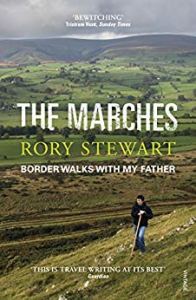
I love reading non-fiction, but it takes me much longer to read than fiction, so it’s only been about 10% percentage of my total reading so far this year. Up to now I have read seven books but I’ve not been very good at writing about them, so I’ve only reviewed three of them, although I have started to write about a fourth book – The Marches by Rory Stewart.

I like to vary my reading but tend to lean towards reading memoirs, biographies and history.

First the books I have not written about:

  1. Great Britain’s Great War by Jeremy Paxman – The back cover describes it: ‘He tells the story of the war through the experience of those who lived it – nurses, soldiers, politicians, factory workers, journalists and children.’ I began reading this book last year and didn’t finish it until January this year! I borrowed this from the library and had to renew it to finish it.
  2. Bitter Lemons of Cyprus by Lawrence Durrell  – his account of his time in Cyprus, during the 1950s Enosis movement for freedom of the island from British colonial rule. I’ve visited Cyprus several times, but not the area Durrell wrote about in this book – Kyrenia in Northern Cyprus, where he bought a house in the Greek village of Bellapaix.  His writing is richly descriptive and made me wish I could have seen Bellapaix in the 1950s.
  3. A Life of My Own by Claire Tomalin – a book that Marina @ Finding Time To Write kindly sent to me. Claire Tomalin writes excellent biographies, so I wondered what she had to say about her own life. She began by saying that writing about herself had not been easy and querying the reliability of memory, which maybe why I found it in places rather impersonal as she related a number of tragedies she had had to cope with.
  4. The Marches: Border Walks with my Father by Rory Stewart – review to follow. I enjoyed this account of walks along part of Hadrian’s Wall, the Debatable Lands, the Cheviot Border and in the area Stewart calls the ‘Middleland’. The last part of the book is about his father, Brian, who died four days before his 93rd birthday.

The links on the titles below take you to my reviews on the books:
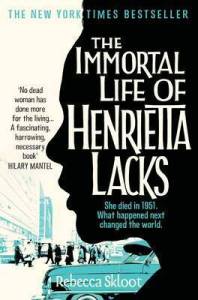
  1. The Immortal Life of Henrietta Lacks by Rebecca Skloot – a fascinating, but harrowing biography of Henrietta’s life and death.She died of cervical cancer in 1951. Her cancer cells  became known as HeLa cells and have formed the basis for much medical research and drug development ever since.
  2. The Adventures of Maud West, Lady Detective by Susannah Stapleton, subtitled ‘Secrets and Lies in the Golden Age of Crime‘. Maud West was a private investigator with her own detective agency, based in London in the early part of the twentieth century, from 1905 onwards. It is also about the changing society in which Maud lived.
  3. The Riviera Set: 1920 – 1960: The Golden Years of Glamour and Excess by Mary S Lovell about Maxine Elliott and Chateau de l’Horizon, the house she had built on a promontory between Cannes and Juan-les-Pins and those who peopled it between the years 1930 and 1960.

I’m also reading – very slowly – a biography of D H Lawrence by John Worthen. I began this in April and hope to finish it this year.

I enjoyed all these books for different reasons, but the book that fascinated – and surprised me the most – is The Immortal Life of Henrietta Lacks by Rebecca Skloot

By participating in Nonfiction November I’m hoping this will encourage me to read more nonfiction rather than picking up the next novel to read and I’m looking forward to seeing what others recommend.
Concerto by Hannah Fielding

Concerto

London Wall Publishing|6 June 2019|560 pages|e-book via NetGalley|Review copy|2*

My Friday Post: Boris by Andrew Gimson

Book Beginnings Button

Every Friday Book Beginnings on Friday is hosted by Gillion at Rose City Reader where you can share the first sentence (or so) of the book you are reading, along with your initial thoughts about the sentence, impressions of the book, or anything else the opener inspires.

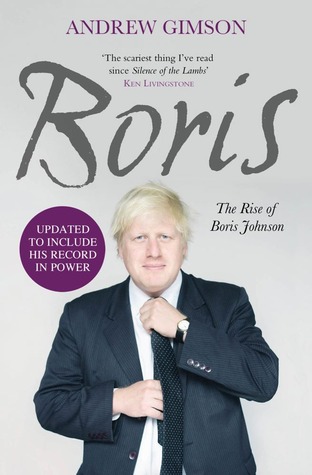
Boris

I’ve been thinking for a while of reading Boris: the Rise of Boris Johnson by Andrew Gimson, published in 2012. I bought it secondhand several years ago after Boris had been elected as Mayor of London and it is an updated version of his earlier biography to include Boris’s record in power as the Mayor of London.  I see that Gimson has since brought out  another updated edition, subtitled The Adventures of Boris Johnson, after the Brexit Referendum in 2016.  

It begins with an Introduction explaining why Gimson thought of writing a life of Boris Johnson.

In the summer of 2004, Boris’s star shone with amazing brightness. Reputable judges predicted he would be the next Conservative Prime Minister, and that June morning he was all over the newspapers, which were enthralled by a scoop he had gathered while waiting on his bike at a traffic light.

Well, he wasn’t the next Prime Minister – for that he had to wait until this year.

Then Chapter I begins:

Boris was born to British parents in New York City on 19 June 1964. His mother Charlotte, who was only twenty-two years old, relates that at his birth he had the thick yellow hair for which he was later to become so celebrated: ‘We didn’t cut it, so it turned into ringlets.

And in the photos there is one of Boris, aged one with his mother celebrating at the end of her Oxford exams and Boris is determined to have some of her champagne – his hair a mop of curls.

Also every Friday there is The Friday 56, hosted by Freda at Freda’s Voice.

30879-friday2b56These are the rules:

  1. Grab a book, any book.
  2. Turn to page 56, or 56% on your eReader. If you have to improvise, that is okay.
  3. Find any sentence (or a few, just don’t spoil it) that grabs you.
  4. Post it.
  5. Add the URL to your post in the link on Freda’s most recent Friday 56 post.

Pages 57:

At a time when many of us are still in a state of utter confusion, Boris knew where he wanted to go. A close friend said of him: ‘At the age of eighteen he set himself the target that he was going to be in the Cabinet by the age of thirty-five.’

He didn’t make that target until later in his life – and he went on to become Prime Minister in July.  But will he still be PM by the end of this year … ?

Who knows??

Rivers of London by Ben Aaronovitch

Rivers of London

Gollanz|January 2011|396 pages|e-book |5*

Blurb:

My name is Peter Grant and until January I was just probationary constable in that mighty army for justice known to all right-thinking people as the Metropolitan Police Service (and as the Filth to everybody else). My only concerns in life were how to avoid a transfer to the Case Progression Unit – we do paperwork so real coppers don’t have to – and finding a way to climb into the panties of the outrageously perky WPC Leslie May. Then one night, in pursuance of a murder inquiry, I tried to take a witness statement from someone who was dead but disturbingly voluble, and that brought me to the attention of Inspector Nightingale, the last wizard in England.

Now I’m a Detective Constable and a trainee wizard, the first apprentice in fifty years, and my world has become somewhat more complicated: nests of vampires in Purley, negotiating a truce between the warring god and goddess of the Thames, and digging up graves in Covent Garden … and there’s something festering at the heart of the city I love, a malicious vengeful spirit that takes ordinary Londoners and twists them into grotesque mannequins to act out its drama of violence and despair.

The spirit of riot and rebellion has awakened in the city, and it’s falling to me to bring order out of chaos – or die trying.

My thoughts:

I wish I had read Rivers of London when was first published in 2011, or in 2016 when I bought it because, when I finally began reading it I found I just didn’t want to put it down. 

I really didn’t expect to enjoy it so much, but I was completely engrossed in this book right from the beginning. It is a magical reading experience, and a fast-paced police procedural of a very different kind. It’s fantastical in the literal meaning of the word; an urban fantasy set in the real world of London. It’s a mix of reality and the supernatural, as Peter explains ‘Police work is all about systems and procedures and planning – even when you’re hunting a supernatural entity.‘

When a headless corpse is found in front of the West Portico of St Paul’s at Convent Garden, Peter interviews a witness, Nicholas Wallpenny, who tells him he has been dead for at least a hundred and twenty years – he is a ghost. From that point on nothing is straight forward as Peter is assigned to work with Detective Chief Inspector Thomas Nightingale (who is the last wizard in England) as part of a special and secret branch of the Met, dealing with all things magical and supernatural. And there are more murders

But interwoven with the murders is the feud between the Rivers of London, or rather between Mother Thames, whose territory is downstream and Father Thames who owns upstream. They both believe they rule the Thames and its tributaries. The dividing line is at Teddington Lock, two miles downstream from Eel Pie Island. Nicholas wants Peter to speak to Mother Thames to find out what the problem is and to find an amicable solution. And so he meets Beverley Brook and the other river goddesses.

Ben Aaronovitch knows London like he back of his hand and it shows in this book. It’s complex, the characters are great, the London setting is wonderfully detailed, and the writing is humorous and very entertaining. I loved it! It’s the first book in the Rivers of London series. The 8th book, False Value, will be published next year. So I have lots more Peter Grant novels to read, beginning with the next one, Moon Over Soho.

About the author:

Born and raised in London, Ben worked as a scriptwriter for Doctor Who and Casualty before the inspiration for his own series of books struck him whilst working as a bookseller in Waterstones Covent Garden. His unique novels are the culmination of his experience of writing about the emergency services and the supernatural.

See more about him and his work on his website.

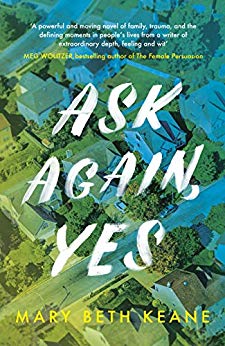
Ask Again, Yes by Mary Beth Keane

Ask Again Yes

Penguin Michael Joseph|3 October 2019|384 pages|e-book |Review copy|2*

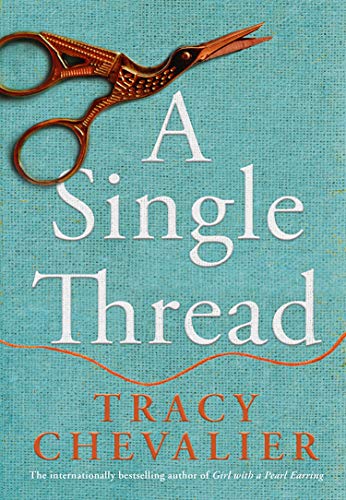
A Single Thread by Tracy Chevalier

 I’ve enjoyed all of Tracy Chevalier‘s books that I’ve read so far, so it was no surprise to me. to find that I loved her latest book, A Single Thread. 

A single thread

This is historical fiction, a mix of fact and fiction, set mainly in Winchester in the 1930s. It is a a simple straightforward story, beautifully written, with the emphasis on everyday life. The main character is Violet Speedwell, a single woman of 38, regarded by society as a ‘surplus woman’ unlikely to marry  because her fiancé, Laurence was killed in the First World War. The 1921 census revealed that there were 1.75 million more women than men in the UK.  Surplus women were patronised and were expected to stay at home looking after their elderly relatives, but at the age of 38 in 1932 Violet decides to leave her overbearing mother and move on her own to Winchester. There is a lot of information about embroidering cushions and kneelers for the the Choir stalls and Presbytery seats in the Cathedral and about bell-ringing, both of which formed integral parts of the book.

Violet knew nobody in Winchester, but whilst looking round the Cathedral she came across a group of women, calling themselves the Winchester Cathedral Broderers, dedicated to embroidering hassocks and cushions for the seats and benches. She joins the group, led by Miss Louisa Pesel (a real person) and the stern Mrs Biggins and as well as learning to embroider, she makes new friends. One of these friends is Gilda, who introduces her to two of the bell-ringers, Arthur, a older married man and a younger, unmarried man, called Keith.

She is determined to be independent, not relying on her mother or her brother to support her. So she finds a job as a typist and takes a room in house shared with two other women and her landlady, Mrs Harvey, who discourages male visitors other than family. The difficulties of being independent are brought home to Violet as she struggles on her wages to pay for her lodgings, laundry and coal, let alone feed herself. And then her mother is admitted to hospital and she has to decide whether to return home to look after her.

The characters are drawn with fine detail and the descriptions of the settings, particularly in the Cathedral are so clear that I could easily visualise both the building and its interior. I particularly liked the details about the embroidery and the stitches used. As the Nazi Party and Hitler rise to power in Germany, the use of fylfots in the embroidery designs are mistaken for swastikas which are ancient symbols of light and life and good fortune.

The book gives an detailed look at life between the two World Wars. It has a slow gentle pace following Violet’s new life, but there is a sense of change on the horizon as her relationship with Arthur develops.  It gives a lively picture of the difficulties of life for unmarried women, including Gilda and Dorothy’s unconventional relationship that they have to keep secret to avoid the prejudice this would attract. And there is an indication of the sense of unease in society as the threat of another war loomed. 

It is obvious throughout the book that Tracy Chevalier has meticulously carried out her research and in the acknowledgements she lists a number of the many resources she has used, including details of Louisa Pesel’s embroidery work as well as the history of Winchester Cathedral, bell-ringing, 1930s women and life in Britain in the 1930s .

My thanks to the publishers and NetGalley for my copy of this book for review.

  • Format: Kindle Edition
  • File Size: 1382 KB
  • Print Length: 353 pages
  • Page Numbers Source ISBN: 0008153817
  • Publisher: The Borough Press (5 Sept. 2019)
  • Source: Review copy from the publishers via NetGalley
  • My Rating: 4*