Bleak House by Charles Dickens: Book Beginnings on Friday & The Friday 56

Every Friday Book Beginnings on Friday is hosted by Gillion at Rose City Reader where you can share the first sentence (or so) of the book you are reading. You can also share from a book you want to highlight just because it caught your fancy.
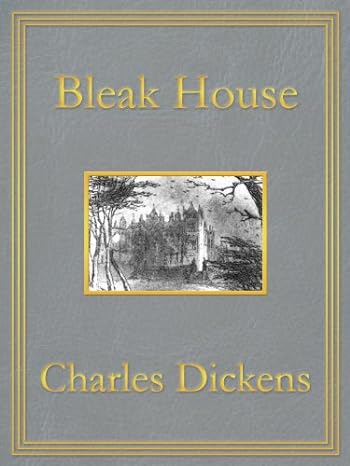
I’m featuring Bleak House, one of the books I’m currently reading.

Chapter 1 In Chancery

London. Michaelmas term lately over, and the Lord Chancellor sitting in Lincoln’s Inn Hall. Implacable November weather. As much mud in the streets as if the waters had but newly retired from the face of the earth, and it would not be wonderful to meet a Megalosaurus, forty feet long or so, waddling like an elephantine lizard up Holborn Hill.
Also every Friday there is The Friday 56, hosted by Freda at Freda’s Voice, but she is taking a break and Anne at My Head is Full of Books has taken on hosting duties in her absence. You grab a book and turn to page 56 (or 56% of an eBook), find one or more interesting sentences (no spoilers), and post them.

I found it a quite delightful place – in front, the pretty avenue and drive by which we had approached (and where, by the by, we had cut up the gravel so terribly with our wheels that I asked the gardener to roll it) at the back, the flower garden, with my darling at her window up there, throwing it open to smile at me, as if she would have kissed me from that distance.

The narrator in this passage is Esther Summerson. She and the two wards in the Jarndyce and Jarndyce case, had arrived at Bleak House and she is describing the scene that she saw from her bedroom window on their first morning at Bleak House.

Description:

Bleak House is the ninth novel by Charles Dickens, published in twenty monthly installments between March 1852 and September 1853. It is held to be one of Dickens’s finest novels, containing one of the most vast, complex and engaging arrays of minor characters and sub-plots in his entire canon. The story is told partly by the novel’s heroine, Esther Summerson, and partly by an omniscient narrator. Memorable characters include the menacing lawyer Tulkinghorn, the friendly but depressive John Jarndyce and the childish Harold Skimpole, as well as the likeable but imprudent Richard Carstone.

At the novel’s core is long-running litigation in England’s Court of Chancery, Jarndyce and Jarndyce, which has far-reaching consequences for all involved. This case revolves around a testator who apparently made several wills, all of them seeking to bequeath money and land surrounding the Manor of Marr in South Yorkshire. The litigation, which already has consumed years and sixty to seventy thousand pounds sterling in court costs, is emblematic of the failure of Chancery. Dickens’s assault on the flaws of the British judiciary system is based in part on his own experiences as a law clerk, and in part on his experiences as a Chancery litigant seeking to enforce his copyright on his earlier books. His harsh characterisation of the slow, arcane Chancery law process gave memorable form to pre-existing widespread frustration with the system. Though Chancery lawyers and judges criticized Dickens’s portrait of Chancery as exaggerated and unmerited, his novel helped to spur an ongoing movement that culminated in enactment of the legal reform in the 1870s. In fact, Dickens was writing just as Chancery was reforming itself, with the Six Clerks and Masters mentioned in Chapter One abolished in 1842 and 1852 the need for further reform was being widely debated.

I first read this book many years ago before I began my blog.

WWW Wednesday: 12 March 2025

WWW Wednesday is run by Taking on a World of Words.

The Three Ws are:

What are you currently reading?
What did you recently finish reading?
What do you think you’ll read next?

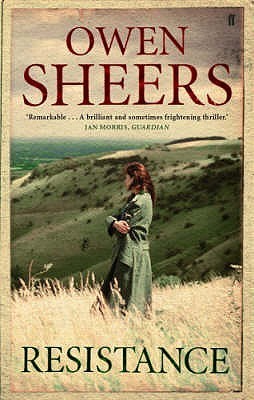
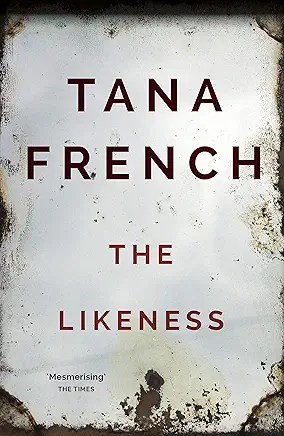
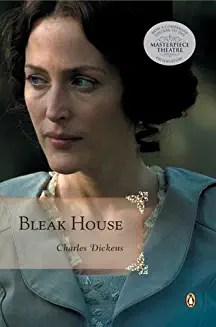
Currently I am reading Resistance by Owen Sheers, The Likeness by Tana French and Bleak House by Charles Dickens. They’re all what I call ‘wordy’ books and are taking me quite a while to read.

Resistance is an alternative history novel by Welsh poet and author Owen Sheers. The plot centres on the inhabitants of the isolated Olchon valley in the Black Mountains of south-east Wales close to Hereford and the border.  It’s set in 1944–45, shortly after the failure of Operation Overlord and a successful German counterinvasion of Great Britain.  It has beautiful descriptions of the Welsh countryside and farming life. I’m enjoying it but finding it slow reading.

The Likeness by Tana French, book 2 of the Dublin Murder Squad. I enjoyed reading the first book In the Woods, in 2014 but I don’t remember the details. No matter it reads well as a standalone. Detective Cassie Maddox is shocked to find out that a murdered girl is her double. At nearly 500 pages this will take me a while to read!

Bleak House by Charles Dickens is another chunkster, over 1000 pages full of description and lots of characters, about the complex and long-drawn out lawsuit of Jarndyce v Jarndyce. I’m only on page 43. I love the beginning – London in the fog.

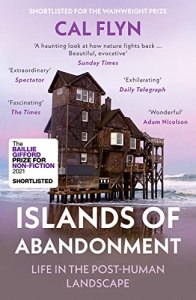
The last book I read was Islands of Abandonment: Life in the post-human landscape by Cal Flyn, a remarkable book, about abandoned places: ghost towns and exclusion zones, no man’s lands and fortress islands – and what happens when nature is allowed to reclaim its place.

I began reading this book in October and have been reading it slowly since then, only finishing it yesterday. It’s not a book to read quickly, but rather one to take your time to take in all the details. It’s fascinating, thoroughly researched and beautifully written.

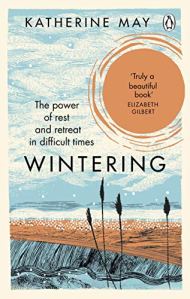
What will I read next? As I’m currently reading the three novels shown above, which will probably take me until the end of the month and beyond I’m not planning to start any more novels. However, I like to have a nonfiction book on the go to read with my breakfast, so tomorrow I’ll start reading Wintering by Katherine May. It’s described as  ‘a poignant and comforting meditation on the fallow periods of life, times when we must retreat to care for and repair ourselves. Katherine May thoughtfully shows us how to come through these times with the wisdom of knowing that, like the seasons, our winters and summers are the ebb and flow of life.’ (Amazon UK)

Top Five Tuesday:Top 5 books with a place in the title

Top 5 Tuesday was created by Shanah at Bionic Book Worm, and it is now being hosted by Meeghan at Meeghan Reads. For details of all of the latest prompts for January to March, see Meeghan’s post here.

Today the topic is Top 5 books with a place in the title – any location or place in a title is fine. I decided to feature books in different countries than my own (UK) – namely Italy, Japan, Greece, Russia and France.

These are all books I’ve read with links to my reviews.

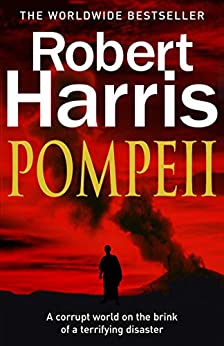
Pompeii by Robert Harris – one of my favourite books. Vesuvius erupts destroying the town of Pompeii and killing its inhabitants as they tried to flee the pumice, ash, searing heat and flames. The story begins just two days before the eruption of Mount Vesuvius and builds up to a climax. 

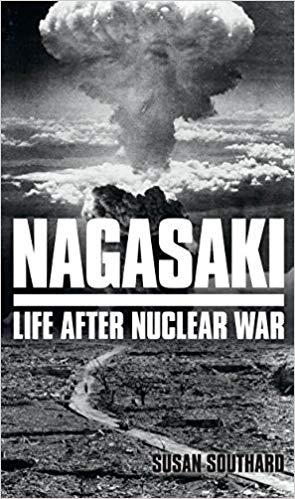
Nagasaki : Life After Nuclear War by Susan Southard, nonfiction, an amazing, heart-wrenching book. On August 9th 1945, two days after the atomic bombing of Hiroshima, a five-ton plutonium bomb was dropped on the small coastal town of Nagasaki. The effects were cataclysmic. It follows the lives of five of the survivors from then to the present day. 

This must be one of the most devastatingly sad and depressing books I’ve read and yet also one of the most uplifting, detailing the dropping of the bomb, which killed 74,000 people and injured another 75,000. 

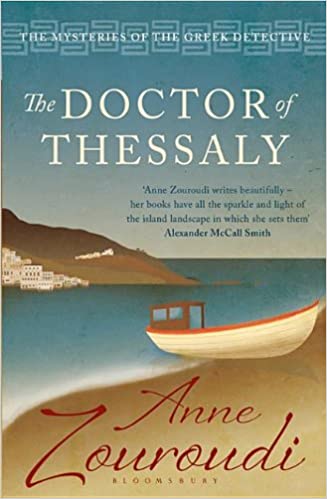
The Doctor of Thessaly by Anne Zouroudi, the third in the series of her Mysteries of the Greek Detective, about Hermes Diaktoros, a mysterious fat man. I was never sure who he worked for, or how he knew of the mystery to solve. Each of the books in the series features one of the Seven Deadly Sins – in this one it is envy, a tale of revenge and retribution.

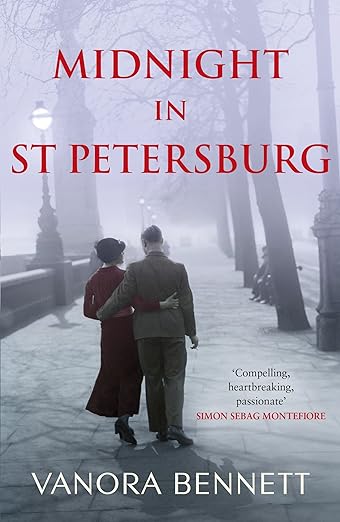
Midnight in St Petersburg by Vanora Bennett. It begins in 1911 in pre-revolutionary Russia with Inna Feldman travelling by train to St Petersburg to escape the pogroms in Kiev hoping to stay with her distant cousin, Yasha Kagan. The book is split into three sections – September – December 1911, 1916-17 and 1918-19 as Russia enters the First World War and is plunged into Revolution and life becomes increasingly dangerous for them all.

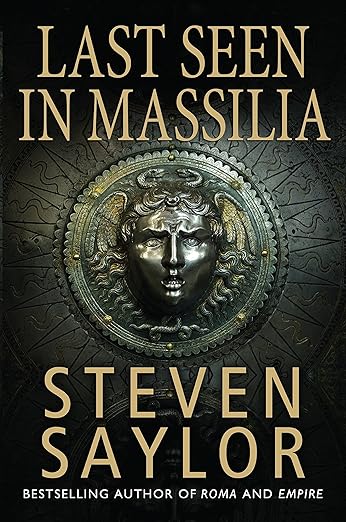
Last Seen in Massilia by Steven Saylor, historical crime fiction set in in Massilia – modern day Marseilles. It’s 49BC during Caesar’s siege of the city., featuring an investigator called Gordianus the Finder. I really liked all the details about Massilia – how it was governed – the hierarchy of the Timouchoi its ruling officials, its relationship to Rome, its traditions and customs. This is the 8th book in Saylor’s Roma Sub Rosa series set in ancient Rome.

Spell the Month in Books – March 2025

Spell the Month in Books is a linkup hosted by Jana on Reviews From the Stacks on the first Saturday of each month. The goal is to spell the current month with the first letter of book titles, excluding articles such as ‘the’ and ‘a’ as needed. That’s all there is to it! Some months there are optional theme challenges, such as “books with an orange cover” or books of a particular genre, but for the most part, any book you want to use is fair game!

This option this month is Science Fiction. I don’t read much science fiction these days, but I used to read a lot. I’ve chosen some books I read long before I began writing about books, some I’ve read more recently and some books that I own but haven’t read yet. The descriptions in italics are taken either from Amazon UK or from Goodreads.

M is for The Midwich Cuckoos by John Wyndham (my review).

The story is set in an ordinary village, with a village green and a white-railed pond, a church and vicarage, an inn, smithy, post office, village shop and sixty cottages and small houses, a village hall, and two large houses, Kyle Manor and The Grange. A very ordinary village where not much goes on, which makes what happens there even more extraordinary. It’s eerie and very chilling, a story of alien invasion and the apparent helplessness of humanity to put up any resistance.

The Midwich Cuckoos is the classic tale of aliens in our midst, exploring how we respond when confronted by those who are innately superior to us in every conceivable way.

In the sleepy English village of Midwich, a mysterious silver object appears and all the inhabitants fall unconscious. A day later the object is gone and everyone awakens unharmed – except that all the women in the village are discovered to be pregnant.

The resultant children of Midwich do not belong to their parents: all are blonde, all are golden eyed. They grow up too fast and their minds exhibit frightening abilities that give them control over others and brings them into conflict with the villagers just as a chilling realisation dawns on the world outside . . .

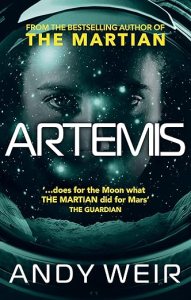
A is for Artemis by Andy Weir – a TBR, a book I bought after watching, The Martian, the film of his first book.

WELCOME TO ARTEMIS. The first city on the moon.
Population 2,000. Mostly tourists.
Some criminals.

Jazz Bashara is one of the criminals. She lives in a poor area of Artemis and subsidises her work as a porter with smuggling contraband onto the moon. But it’s not enough.

So when she’s offered the chance to make a lot of money she jumps at it. But though planning a crime in 1/6th gravity may be more fun, it’s also a lot more dangerous.

When you live on the moon, of course you have a dark side…

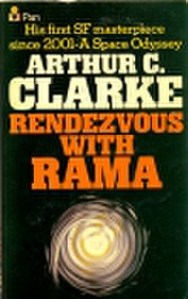
R is for Rendezvous with Rama. This is a book that we bought many years ago. I’m not sure whether I’ve read it or not. It was first published in 1973, so I’m guessing we bought it in the 1970s, the period when we were reading lots of science fiction.

The multi-award-winning SF masterpiece from one of the greatest SF writers of all time

Rama is a vast alien spacecraft that enters the Solar System. A perfect cylinder some fifty kilometres long, spinning rapidly, racing through space, Rama is a technological marvel, a mysterious and deeply enigmatic alien artefact.

It is Mankind’s first visitor from the stars and must be investigated …

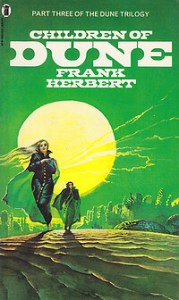
C is for Children of Dune by Frank Herbert, the third Dune novel. I read all the Dune books many years ago.

The Children of Dune are twin siblings Leto and Ghanima Atreides, whose father, the Emperor Paul Muad’Dib, disappeared in the desert wastelands of Arrakis nine years ago. Like their father, the twins possess supernormal abilities–making them valuable to their manipulative aunt Alia, who rules the Empire in the name of House Atreides.

Facing treason and rebellion on two fronts, Alia’s rule is not absolute. The displaced House Corrino is plotting to regain the throne while the fanatical Fremen are being provoked into open revolt by the enigmatic figure known only as The Preacher. Alia believes that by obtaining the secrets of the twins’ prophetic visions, she can maintain control over her dynasty.

But Leto and Ghanima have their own plans for their visions–and their destinies….

H is for The Handmaid’s Tale by Margaret Atwood – another book I read long before I began reviewing books.

Discover the dystopian novel that started a phenomenon.

Offred is a Handmaid in The Republic of Gilead. She is placed in the household of The Commander, Fred Waterford – her assigned name, Offred, means ‘of Fred’. She has only one function: to breed. If Offred refuses to enter into sexual servitude to repopulate a devastated world, she will be hanged. Yet even a repressive state cannot eradicate hope and desire. As she recalls her pre-revolution life in flashbacks, Offred must navigate through the terrifying landscape of torture and persecution in the present day, and between two men upon which her future hangs.

The next link up will be on April 5, 2025 when the theme will be: Animal on the Cover or in the Title.

A One Word Title Alphabet

Photo by Katya Wolf on Pexels.com

I saw this on Joanne’s blog and on Janette’s blog and wondered if I could fill the alphabet with one word titles too. I’ve limited myself to books that I have read and came up with 25. There is one book that I own but haven’t read yet and guess what – it begins with the letter X. I haven’t read any one word books beginning with Z.

Most of them are crime and historical fiction and the links take you to my reviews – some are parts of posts about different books.

A is for Awakening by S J Bolton

B is for Blonde by Joyce Carol Oates

C is for Conclave by Robert Harris

D – Daphne by Margaret Forster

E – Exit by Belinda Bauer

F – Fludd by Hilary Mantel

G – Greenmantle by John Buchan

H – Heartstone by C J Sansom

I – Inland by Tea Obreht

J – Joyland by Stephen King

K – Kidnapped by Robert Louis Stevenson

L – Lamentation by C J Sansom

M – Macbeth by Jo Nesbo

N – Nero by Conn Iggulden

O – Orlando by Virginia Woolf

P – Prophecy by S J Parris

Q – Quiet: The Power of Introverts in a World That Can’t Stop Talking by Susan Cain – if you disregard the subtitle!

R – Revelation by C J Sansom

S – Sanditon by Jane Austen

T – Tantalus by Jane Jazz

U – Underworld by Reginald Hill

V – Vengeance by Benjamin Black

W – Wakenhyrst by Michelle Paver

X – Xingu by Edith Wharton – one of my TBRs

Y – Yoga by Ernest Wood

Z – no books with one word titles

Have you read any of these books? Would you be able to make an alphabet
of books with one word titles that you have read?

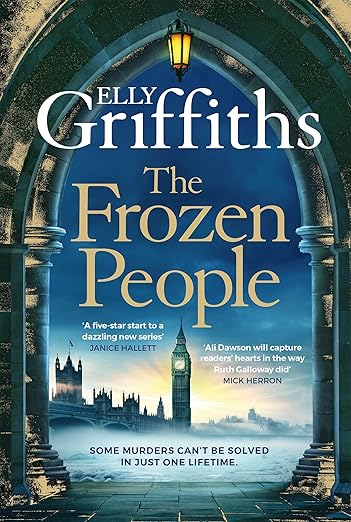
The Frozen People by Elly Griffiths

Quercus/ 13 February 2025/ 354 pages/review copy/e-book |Review copy| 5*

The Frozen People is the first in a new series, the Ali Dawson Mysteries, by Elly GriffithsIt’s not like her other books, but it’s still a murder mystery. Ali is fifty, a Detective Sergeant in a cold case team that investigates crimes in a unique way – by travelling back in time, physically, to do their research and interview the witnesses. You do need to suspend your disbelief but that wasn’t hard for me to do, as Elly Griffiths is an excellent storyteller.

I can’t say I understood how Serafina Jones, a physicist has developed a way of moving atoms in space. There are no concrete details about how it’s achieved and it’s all a bit vague. Jones explains it by saying it’s as if you create a space and then fill it with that exact person. The team calls it ‘going through the gate’. No matter, I never understood how Captain James T Kirk and his crew travelled through time and space in Star Trek, but I still loved it. And just as in Star Trek, Ali and her team are instructed not to interfere with historical events, and are required to maintain the timeline, to prevent history from being altered.

Ali and her colleague, Dina, have made a few trips back in time to collect evidence, but for their current case Ali has to go back in time further than she has gone before – to 1850, to the time and place when Ettie Moran, an artist’s model was murdered. She was found in a building used by artists owned by Cain Templeton, an influential man, who was a suspect, although he was never charged with the murder. He was part of a club called The Collectors. To be a member you had to have killed a woman. Cain’s great great grandson, Isaac, the MP Finn works, for is the Secretary of State for Justice and he wants to clear Cain’s name. So, Ali is assigned to the case. So far, so good. But it all starts to go wrong when Ali finds that she can’t get back to the present day it’s her biggest fear. She is stuck in 1850!

I was quickly drawn into this absorbing story. It’s a combination of two genres I love, crime fiction and historical fiction. The main characters come over as real people, the historical facts and the setting are detailed and convincing. And the plot held me captivated throughout.

I’m looking forward to reading more Ali Dawson books in the future.

Many thanks to the publishers for a review copy via NetGalley.