Book Beginnings & The Friday 56: Wednesday’s Child by Peter Robinson

Every Friday Book Beginnings on Friday is hosted by Gillion at Rose City Reader where you can share the first sentence (or so) of the book you are reading. You can also share from a book you want to highlight just because it caught your fancy.

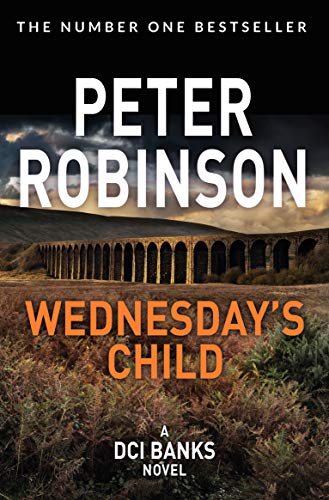
My book this week is Wednesday’s Child by Peter Robinson. I began reading his Inspector Banks books years ago and have read 11 of the 26 books in the series, mostly out of order, so I’ve been reading the earlier books to fill in the gaps, as it were. This morning reading Margot’s post I remembered that the next book in the series I have to read is the 6th book, Wednesday’s Child.
The room was a tip, the woman was a slattern. On the floor, near the door to the kitchen, a child’s doll with one eye missing lay naked on its back, right arm raised above its head. The carpet around it was so stained with ground-in mud and food it was hard to tell what shade of brown it had originally been. High in one corner, by the front window, pale flowered wallpaper had peeled away from a damp patch. The windows were streaked with grime, and the flimsy orange curtains needed washing.
Also every Friday there is The Friday 56, hosted by Freda at Freda’s Voice, where you grab a book and turn to page 56 (or 56% of an eBook), find one or more interesting sentences (no spoilers), and post them.

Page 56:

‘The superintendent mentioned the Moors Murderers, Brady and Hindley,’ said Banks. I know he’s got a bee in his bonnet about that case, but you have to admit there are parallels.’

Synopsis from Amazon

When two social workers, investigating reports of child abuse, appear at Brenda Scupham’s door, her fear of authority leads her to comply meekly with their requests. Even when they say that they must take her seven-year old daughter Gemma away for tests . . .

It is only when they fail to return Gemma the following day that Brenda realizes something has gone terribly wrong.

At the same time, Banks is investigating a particularly unpleasant murder at the site of an abandoned mine. Gradually, the leads in the two cases converge, guiding Banks to one of the most truly terrifying criminals he will ever meet . . .

Mmm … It sounds very grim! What do you think? Have you read this book – or any of the Inspector Banks books?

The Riddle of the Third Mile by Colin Dexter

Rating: 5 out of 5.

Pan| February 2011| 289 pages| e-book| 5*

From the Back Cover

Inspector Morse isn’t sure what to make of the truncated body found dumped in the Oxford Canal, but he suspects it may be all that’s left of an elderly Oxford don last seen boarding the London train several days before. Whatever the truth, the inspector knows it won’t be simple — it never is. As he retraces Professor Browne-Smith’s route through a London netherworld of topless bars and fancy bordellos, his forebodings are fulfilled. The evidence mounts; so do the bodies. So Morse downs another pint, unleashes his pit bull instincts, and solves a mystery that defies all logic. 

My thoughts

The Riddle of the Third Mile is Colin Dexter’s 6th book in his Inspector Morse series, first published in 1983. I remember watching the TV adaptation based on this book, The Last Enemy, but, as with most TV adaptations, it has several changes from the original. Like all of Dexter’s books this is a most complicated mystery, one of the ‘puzzle’ types. Dexter, himself, constructed crossword puzzles and made Morse a crossword aficionado. I agree with Sergeant Lewis when he asks Morse: ‘Aren’t you making it all a bit too complicated?‘ (page 145). I enjoyed trying to follow all the clues that Dexter planted in the mystery, although I had little idea about most of it. But I thoroughly enjoyed it.

The identity of the dismembered and headless corpse could have been that of Morse’s his old classics tutor, Browne-Smith or Browne-Smith’s hated rival, Westerby, or even one of the Gilbert twins who both harboured a grudge against Browne-Smith dating back to the Second World War. Or one of the twins could have been the murderer. Morse eventually works it out, by various means, including considering ‘the most improbable notions, in the sure certainty that by the law of averages some of them stood a more reasonable chance of being near to the truth than others.’ ( page 145) He’s also helped by his intuition, when a passage of scripture springs to his mind about forgiving one’s enemies: ‘ And whosoever shall compel thee to go a mile, go with him twain (Matthew 14.1)’ which he checks in a Gideon Bible, and letting his mind ponder this he remembers a sermon he had heard on the ‘Religion of the Second Mile’:

And it was with the forty-watt bulb shedding its feeble light over the Gideon Bible that Morse smiled to himself in unspeakable joy, like one who has travelled on a longer journey still – that third and final mile …

At last he knew the truth. (page 220)

I can’t say I was also enlightened, and so I just had to read on to find out what Morse had managed to deduce.

Along with the mystery details of Morse’s earlier life when he was a student at St John’s College, Oxford are revealed. He had failed the classics degree, known as ‘Greats’, after his love affair with a postgraduate student at St Hilda’s, Wendy Spencer, came to an end. It had had a disastrous effect on his academic work.

… he departed from Oxford, a withdrawn and silent young man, bitterly belittled, yet not completely broken in spirit. It had been his sadly disappointed old father, a month or so before his death, who suggested that his only son might find a niche somewhere in the police force. (page 61)

I’ve now read 9 of the 13 Morse books:

1. Last Bus to Woodstock (1975) – read in October 2020 not reviewed
2. Last Seen Wearing (1976)
3. The Silent World of Nicholas Quinn (1977)
4. Service of All the Dead (1979)
5. The Dead of Jericho (1981)
6. The Riddle of the Third Mile (1983)
7. The Secret of Annexe 3 (1986)
8. The Wench Is Dead (1989)
9. The Jewel That Was Ours (1991)
10. The Way Through the Woods (1992)
11. The Daughters of Cain (1994)
12. Death Is Now My Neighbour (1996)
13. The Remorseful Day (1999)

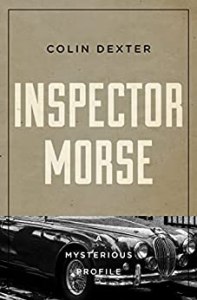
Inspector Morse: A Mysterious Profile by Colin Dexter is also available, published as one of the Mysterious Profiles series of 26 books.

Synopsis:

The international-bestselling author answers readers’ questions and discusses the origins of the Oxford inspector with a penchant for classical music.

In 1975, Inspector Morse debuted, working to solve the case of a murdered hitchhiker in Colin Dexter’s Last Bus to Woodstock. The book led to a multimillion-bestselling mystery series and a television show that spawned a spinoff and a prequel. But how did the beloved DCI from Oxford come to be exactly?

In this quick read, Colin Dexter addresses some of the many questions posed to him by his readers. He reveals what motived him to break into crime writing and which authors and novels influenced him. He discusses Morse’s many traits and inner workings, as well as how he got his first Morse novel published. He also shares how he maintains a discipline with writing, how he deals with critics, and what it’s like to transform a series of novels into a television series.

WWW Wednesday: 27 July 2022

WWW Wednesday is run by Taking on a World of Words.

The Three Ws are:

What are you currently reading?
What did you recently finish reading?
What do you think you’ll read next?

I’m currently reading J R R Tolkien’s The Lord of the Rings. This is a book I’ve read several times over the years since the first time I read it, just after I left school (a long time ago). I have finished Book 1, The Fellowship of the Ring and have nearly finished Book 2, The Two Towers. This time round I am struck by Tolkien’s world building and his powers of description of the characters and the locations, but most of all by Tolkien’s storytelling – superb. I am reading this hardback book slowly, taking my time over it, just a small section each day – letting the story soak into my mind.

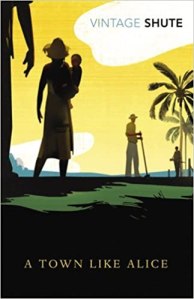
The other book I’m reading is A Town Like Alice by Nevil Shute, which is also a fantastic story. I’m reading this one quickly on my Kindle, so different from The Lord of the Rings, but although Shute’s style of writing in straight forward, almost plain language, is not at all like Tolkien’s he is also an excellent storyteller, bringing the characters to life. So far I am still in Malaya with Jean and her companions as they walk hundreds of miles around Malaya as prisoners of war of the Japanese.

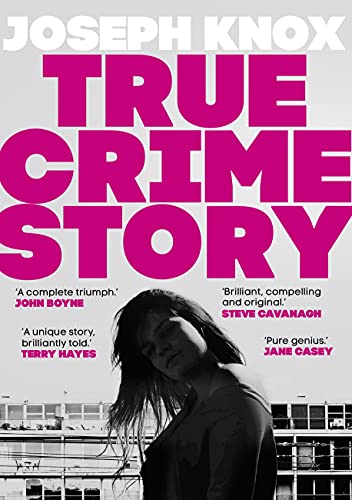
I recently finished True Crime Story by Joseph Knox and wrote about it in this post. I didn’t enjoy it, as much as I had hoped, but after a confusing start it picked up at around the 50% mark. It’s a novel about a 19 year old university student who walked out of a party taking place in the shared accommodation where she had been living for three months and just disappeared. Seven years after her disappearance, struggling writer Evelyn Mitchell begins piecing together what really happened in 2011.

As always I haven’t decided what to read next. I have so many books I’d love to read, but until I’ve finished The Lord of the Rings and A Town Like Alice, I just don’t know which one it will be.

True Crime Story by Joseph Knox

Transworld Digital| 17 Jun. 2021| 433 pages| e-book Review copy| 2.5* rounded up to 3*

Synopsis:

What happens to those girls who go missing? What happens to the Zoe Nolans of the world?’

In the early hours of Saturday 17 December 2011, Zoe Nolan, a nineteen-year-old Manchester University student, walked out of a party taking place in the shared accommodation where she had been living for three months.

She was never seen again.

Seven years after her disappearance, struggling writer Evelyn Mitchell finds herself drawn into the mystery. Through interviews with Zoe’s closest friends and family, she begins piecing together what really happened in 2011. But where some versions of events overlap, aligning perfectly with one another, others stand in stark contrast, giving rise to troubling inconsistencies.

Shaken by revelations of Zoe’s secret life, and stalked by a figure from the shadows, Evelyn turns to crime writer Joseph Knox to help make sense of a case where everyone has something to hide.

Zoe Nolan may be missing presumed dead, but her story is only just beginning

True Crime Story is Joseph Knox’s fourth novel, his first standalone. Previously I’ve read two of his Detective Aidan Waits novels, The Smiling Man and The Sleepwalker, which I loved – they’re both brilliant, dark and violent urban noir novels. They’re also amongst the most complicated books that I’ve ever read. So my expectations for True Crime Story were very high, but, I’m sorry to say, I was disappointed. In fact I almost abandoned it several times, until about the 50% mark when I realised that I had to read on because I wanted to know what had happened to Zoe.

Despite the title this is not a nonfiction true crime story, nor a mix of fact and fiction, it is a novel and it includes the author, Joseph Knox, as one of its characters. It has a story within the story – made up of emails to and from Knox and another writer (fictional) Evelyn Mitchell. Evelyn is writing a book about the disappearance of a student at Manchester University, Zoe Nolan. Her book is a collection of the interviews she carried out with Zoe’s family and friends seven years after Zoe’s disappearance, which she sends to Joseph Knox as she collates them, and asks for his advice.

Initially I found this rather confusing but I gradually worked out their relationships and characters, although it is repetitive and reads as a long session of interviews about the same events as seen through each character’s perspective. For me, this makes it fragmentary and in parts disjointed, slows down the action, and lessens the tension and suspense even as the facts about the mystery emerge, including what happens to Evelyn herself.

However, many other readers love this book, so I am in the minority. It has had rave reviews and was short listed for this year’s Theakston Old Peculiar Crime Fiction Novel of the Year, an award that celebrates excellence, originality, and the very best in crime fiction from UK and Irish authors. You may enjoy it more than I did!

My thanks to the publishers Transworld Digital for a review copy via NetGalley.

Top Ten Tuesday: Books From My Past Seasonal TBR Posts I STILL Haven’t Read

Top Ten Tuesday is a weekly meme created by The Broke and the Bookish and now hosted by Jana at That Artsy Reader Girl. For the rules see her blog.

The topic this week is Books From My Past Seasonal TBR Posts I STILL Haven’t Read. I’m not very good at predicting which books I’m going to read next, so I’m pleased to discover that I have actually read some of the books from three of the last three seasonal TBR Top Ten posts!

These are the books I still haven’t read:

Five books from my Spring 2022 TBR List:

Quichotte by Salman Rushdie – a retelling of Don Quixote for the modern age. Sam DuChamp, mediocre writer of spy thrillers, creates Quichotte, a courtly, addled salesman obsessed with television, who falls in impossible love with the TV star Salman R. Together with his (imaginary) son Sancho, Quichotte sets off on a picaresque quest across America to prove worthy of her hand.

The Girl with the Dragon Tattoo by Stieg Larsson – Harriet Vanger, scion of one of Sweden’s wealthiest families, disappeared over forty years ago. Years later, her aged uncle continues to seek the truth. He hires Mikael Blomkvist, a crusading journalist to investigate. He is aided by the pierced and tattooed punk prodigy Lisbeth Salander.

Strangers on a Train by Patricia Highsmith – Guy Haines and Charles Anthony Bruno meet on a train. Bruno manipulates Guy into swapping murders with him. From this moment, almost against his conscious will, Guy is trapped in a nightmare of shared guilt and an insidious merging of personalities.

Night of the Lightbringer by Peter Tremayne – This is the 28th Sister Fidelma mystery, a medieval murder mystery,  featuring a Celtic nun who is also an advocate of the ancient Irish law system. It’s set in Ireland in AD 671 on the eve of the pagan feast of Samhain.

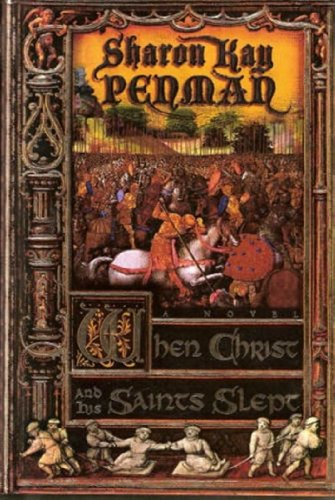
When Christ and His Saints Slept by Sharon Penman – the first book in the Eleanor of Aquitaine trilogy. Historical fiction about Stephen and his cousin, the Empress Maude, and the long fight to win the English throne.

Two from my Fall 2021 List and three from my Summer 2021 List:

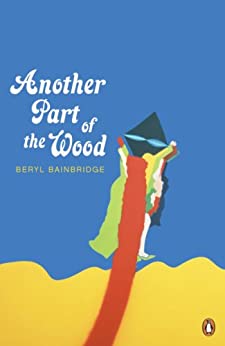
Another Part of the Wood by Beryl Bainbridge – 159 pages -literary fiction set In a remote cottage in Wales where two urban couples are spending their holiday with the idealistic owner and his protege. The beginning is idyllic but catastrophe lurks behind every tree.

The Unlikely Pilgrimage of Harold Fry by Rachel Joyce, which I bought in 2013! It’s about Harold’s journey on foot from one end of the country to the other – from South Devon to Berwick-upon-Tweed and I was intrigued. I wondered which places he went through.

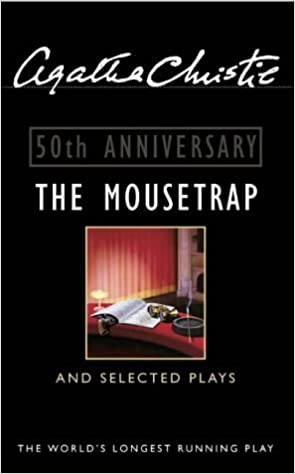
The Mouse Trap and Selected Plays by Agatha Christie – the world’s longest running play, plus three other thrillers adapted from the novels (which I have read) – And Then There Were None, The Hollow and Appointment with Death. Set in a manor house, a number of people are isolated from the outside world by a blizzard and faced with the reality that one of them is a killer. This is also on my 20 Books of Summer list, and is my Classics Club Spin book for August, but it’s in such a small font I’m finding it extremely difficult to read! I may not manage it.

The Enchanter’s Forest by Alys Clare – historical fiction set in Midsummer 1195. A ruthlessly ambitious man has fallen deeply into debt, his desperate situation made even more difficult by the contribution he has had to pay towards King Richard’s ransom. To make matters worse the beautiful wife he tricked into marriage has tired of him and her mother hates his guts.

The House on Bellevue Gardens by Rachel Hore – Bellevue Gardens is a tranquil London square, tucked away behind a busy street. You might pass it without knowing it’s there. Here, through the imposing front door of Number 11, is a place of peace, of sanctuary and of secrets. It is home to Leonie; once a model in the sixties, she came to the house to escape a destructive marriage and now, out of gratitude, she opens her house to others in need.


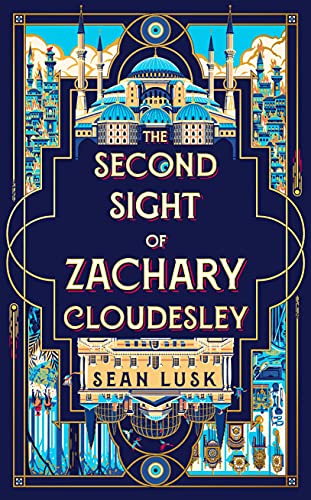
The Second Sight of Zachary Cloudesley by Sean Lusk

Random House UK, Transworld| 9 June 2022| e-book, print length 355 pages| Review copy| 4*

Synopsis from Amazon

In 1754, renowned maker of clocks and automata Abel Cloudesley must raise his new-born son Zachary when his wife dies in childbirth.

Growing up amongst the cogs and springs of his father’s workshop, Zachary is intensely curious, ferociously intelligent, unwittingly funny and always honest—perhaps too honest. But when a fateful accident leaves six-year-old Zachary nearly blinded, Abel is convinced that the safest place for his son is in the care of his eccentric Aunt Frances and her menagerie of weird and wonderful animals.

So when a precarious job in Constantinople is offered to him, Abel has no reason to say no. A job presented to him by a politician with dubious intentions, Abel leaves his son, his workshop and London behind. The decision will change the course of his life forever.

Since his accident, Zachary is plagued by visions that reveal the hearts and minds of those around him. A gift at times and a curse at others, it is nonetheless these visions that will help him complete a journey that he was always destined to make—to travel across Europe to Constantinople and find out what happened to his father all those years ago.

With a Dickensian cast of characters that are brilliantly bonkers one moment and poignant the next, Sean Lusk’s debut will take listeners on an immersive journey into the wonders of the world of Zachary Cloudesley.

I’ve enjoyed novels about clockwork and automata inventions before, so I was hoping Sean Lusk’s debut novel, The Second Sight of Zachary Cloudesley would be just as enjoyable – and it is. It’s a mixture of historical fact and fantasy set in the 18th century, in London and in Constantinople.

It follows the events in Zachary’s life from his birth in London, brought up two strong-minded women, surrounded by the clocks and clockwork automata in his father’s workshop, to his teenage years, when he travelled to Constantinople in search of his father, Abel. Zachary, an intelligent and gifted child, who had visions of future events, had an unusual most unusual life – as indeed, did Abel.

For me this book was as much about Abel as about Zachary and I loved the rich descriptions and all the detail that Lusk packed into his book. It did slow the action down at times, but it didn’t spoil my enjoyment at all. The characters are fabulous, the settings are beautifully described and the historical background is fascinating.

Lusk begins his book with an extensive note about Ottoman heirachy in the mid eighteenth century and ends it with a section of Historical and Other Notes explaining that his inspiration to write his novel came when he discovered an eighteenth century Ottoman clock made in England, in a shop in Istanbul. He finally produced his book after several years of research into clockmaking, Anglo-Ottoman relations and other 18th century matters, and having spent numerous hours in the British Library. He also includes a list of books for further reading. It is a remarkable book on a grand scale that entertained me enormously. I’m looking forward to reading more books by Sean Lusk.

About Sean Lusk

Sean Lusk is an award-winning short story writer, winner of the Manchester Fiction Prize, the Fish Short Story Prize and runner-up in the Bridport and Tom-Gallon Trust prizes. He has lived in Greece, Pakistan and Egypt, working variously as a gardener, speechwriter and diplomatic official. He now lives near Forres on the Moray Firth. The Second Sight of Zachary Cloudesley is his debut novel.

My thanks to Random House, UK for a review copy via NetGalley.