My Week in Books: 28 June 2017

This Week in Books is a weekly round-up hosted by Lypsyy Lost & Found, about what I’ve been reading Now, Then & Next.

IMG_1384-0

A similar meme,  WWW Wednesday is run by Taking on a World of Words.

Now: I’m currently reading South Riding by Winifred Holtby.

South Riding

I watched the BBC adaptation when it was broadcast in 2011 (can’t believe it was that long ago), bought the book and then left in on my TBR shelves. I started reading it a few days ago and it’s really good. It’s set in the fictional South Riding of Yorkshire during the Depression. There’s a huge list of characters, the main one being Sarah Burton, newly appointed as headmistress of the local girls’ school. It’s the 1930s, the world is changing (when isn’t it?) and Sarah’s arrival stirs up people’s emotions and prejudices.

Then: Last Seen Alive by Claire Douglas, to be published on 13 July. I loved this story, never quite sure who I could believe. Libby and her husband Jamie decide to do a house swap – but then things start to go wrong – very wrong. I’ll post my review soon.

Last Seen Alive

Next: The Escape by C L Taylor

I quoted the opening of this book in one of my First Chapter, First Paragraph posts and am keen to read it soon.
Blurb:

‘Look after your daughter’s things. And your daughter’¦’

When a stranger asks Jo Blackmore for a lift she says yes, then swiftly wishes she hadn’t.

The stranger knows Jo’s name, she knows her husband Max and she’s got a glove belonging to Jo’s two year old daughter Elise.

What begins with a subtle threat swiftly turns into a nightmare as the police, social services and even Jo’s own husband turn against her.

No one believes that Elise is in danger. But Jo knows there’s only one way to keep her child safe ‘“ RUN.

How’s your week in books been?

Our Spoons Came from Woolworths by Barbara Comyns

I read Our Spoons Came From Woolworths by Barbara Comyns for the What’s in a Name Challenge (in the category of a book with item/items of cutlery in the title). It’s a book that I’ve been meaning to read for years.

Description from the back cover:

Pretty, unworldly Sophia is twenty-one years old and hastily married to a young painter called Charles. An artist’s model with an eccentric collection of pets, she is ill-equipped to cope with the bohemian London of the 1930s, where poverty, babies (however much loved) and husband conspire to torment her.

Hoping to add some spice to her life, Sophia takes up with Peregrine, a dismal, ageing critic, and comes to regret her marriage ‘“ and her affair. But in this case virtue is more than its own reward, for repentance brings an abrupt end to the cycle of unsold pictures, unpaid bills and unwashed dishes . . .

My thoughts:

I quoted the opening and an extract from page 56 in one of my Friday Posts. Now I’ve finished the book I understand the opening sentence ‘I told Helen my story and she went home and cried’, because it’s such a sad and, in parts even a tragic, story. As the synopsis indicates this is set in 1930s London and Sophia and her husband Charles (both artists) live a life of poverty whilst he struggles to sell his artwork. Actually Charles contributes very little money and it is left to Sophia to earn whatever she can working in a commercial art studio and as an artists’ model.

Their marriage is blighted by Sophia’s money worries and Charles’s cavalier attitude to life. Things get worse when Sophia realises she is pregnant – Charles had told her before they were married he never wanted to have children – and she realises too late that her idea of birth control as being a matter of controlling your thoughts and thinking very hard, and saying ‘I won’t have any babies’ was quite wrong!  After the birth of Sandro, a harrowing experience that makes me so thankful for the NHS, their situation deteriorates even further.

Despite their circumstances, Sophia tells her story in a casual, matter of fact way, with much humour. Sandro is a small, sickly baby and Sophia was afraid he would die. She also thought that if she applied for free milk the council would take him away if on the grounds that his parents had no visible means of support. Charles is no help to her at all, he dislikes Sandro and wants him out of the way:

‘Babies have no feelings and would be just as happy in an orphanage as anywhere else.’ On the other hand, he would be much happier of the baby was out of the way, so to send him to a ‘home’ was much the most reasonable thing  to do. (page 71)

Theirs is a life of hardship and heartbreaking tragedy, but Sophia’s spirit is not broken despite the tragic events that descend upon her. From a lighthearted and comic beginning the mood of the novel darkens as it moves towards an inevitable tragic climax. What seems to make it even more tragic is the conversational tone in which it is all told, concealing such real pain. However, the novel does not end with tragedy – it is not all doom and gloom and as the opening page reveals Sophia survives to tell her story:

… it all happened eight years ago, and I’m not unhappy now. I hardly dare admit it, even touching wood, but I’m so happy that when I wake in the morning I can’t believe it’s true. I seldom think of the time I was called Sophia Fairclough; I try to keep it pushed right at the back of my mind.

Our Spoons Came From Woolworths is a semi-autobiographical novel as indicated by this note at the beginning of the book:

The only things that are true in this story are the wedding and Chapters 10, 11 and 12 and the poverty.

Thankfully the really tragic events do not occur in these chapters. There are moments of comedy and humour throughout and the novel is written in a light, chatty style. It is a portrait of life in the Thirties, a life ruled by poverty and hardship and of a marriage destroyed by circumstances and personalities.

Barbara Comyns (1909 – 1992) began to write and illustrate her stories as a child. Our Spoons Came From Woolworths, first published in 1950 was her second novel.

  • Paperback: 208 pages
  • Publisher: Virago (4 July 2013)
  • Language: English
  • ISBN-10: 1844089274
  • ISBN-13: 978-1844089277
  • Source:  library book
  • My Rating: 3*

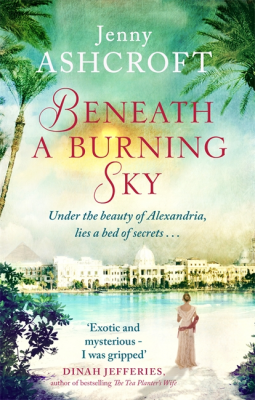
Beneath a Burning Sky by Jenny Ashcroft

Publication Date: June 29th from Sphere

Source: Review Copy

When twenty-two-year-old Olivia is coerced into marriage by the cruel Alistair Sheldon she leaves England for Egypt, his home and the land of her own childhood. Reluctant as she is to go with Alistair, it’s in her new home that she finds happiness in surprising places: she is reunited with her long-estranged sister, Clara, and falls ‘“ impossibly and illicitly ‘“ in love with her husband’s boarder, Captain Edward Bertram.

Then Clara is abducted from one of the busiest streets in the city. Olivia is told it’s thieves after ransom money, but she’s convinced there’s more to it. As she sets out to discover what’s happened to the sister she’s only just begun to know, she falls deeper into the shadowy underworld of Alexandria, putting her own life, and her chance at a future with Edward, the only man she’s ever loved, at risk. Because, determined as Olivia is to find Clara, there are others who will stop at nothing to conceal what’s become of her . . .

Beneath a Burning Sky is a novel of secrets, betrayal and, above all else, love. Set against the heat and intrigue of colonial Alexandria, this beautiful and heart-wrenching story will take your breath away.

My Thoughts:

I have mixed feelings about Beneath a Burning Sky by Jenny Ashcroft. I liked the historical setting – Alexandria at the end of the 19th century when Egypt was under British rule. It is a complex book but it is not so much historical fiction but more of a romantic story. Overall I enjoyed it but thought the book was melodramatic and I was hoping for more historical content.

There is a large cast of characters and although the main character, Olivia is convincingly described, many of the other characters are rather flat stereotypes – Alistair the sadistic older husband, Millicent, the wicked grandmother, and Edward, the ‘good’ character, the handsome, romantic lover.

From the start of the novel there is a lot that is not explained and the action moves swiftly from location to location, switching between different sets of characters. Olivia, trapped in an appalling marriage, is reunited with her older sister Clara from whom she was separated at a very young age after the death of their parents. She has no memories of her parents or her early life in Egypt, but throughout the book has tantalising flashbacks. I would have liked to have discovered what had happened to her parents, but this was only hinted at. I also wondered why Millicent, the wicked grandmother, had hated Olivia’s mother so much. And I was not convinced about the plausibility of Olivia’s forced marriage to Alistair.

But this is not the main mystery – that concerns Clara, because shortly after Olivia arrives, Clara disappears. The police investigation is completely useless, mainly because the chief of police is corrupt. What follows is Olivia’s frantic search for Clara with multiple twists as various secrets and passions begin to surface.

An added complication is the story of Nailah, an Egyptian woman, and her family. This shows the contrast between the ruling British class and the local people and the conditions they experienced and I think Jenny Ashcroft’s portrayal is the best part of her book. But I floundered to understand Nailah’s role in the novel and it was only towards the end that that became clear.

It is easy reading, and I was keen to know what had happened to Clara and why she disappeared. But for me it was too long with too many episodes that I sometimes found confusing. However, other people enjoyed it more than I did -there are plenty of 5 and 4 star reviews both on Amazon and Goodreads.

With thanks to NetGalley and Sphere, the publisher for a review copy.

  • Paperback: 432 pages
  • Publisher: Sphere (29 Jun. 2017)
  • Language: English
  • ISBN-10: 0751565032
  • ISBN-13: 978-0751565034
  • My Rating: 3˜…

This is the second book for my 10 Books of Summer Challenge.

My Friday Post: Our Spoons Came From Woolworths

Book Beginnings ButtonEvery Friday Book Beginnings on Friday is hosted by Gillion at Rose City
Reader
 where you can share the first sentence (or so) of the book you are reading, along with your initial thoughts about the sentence, impressions of the book, or anything else the opener inspires.

My opening this week is from Our Spoons Came From Woolworths by Barbara Comyns.

I told Helen my story and she went home and cried. In the evening her husband came to see me and brought some strawberries; he mended my bicycle, too, and was kind, but he needn’t have been, because it all happened eight years ago, and I’m not unhappy now.

Friday 56Also every Friday there is The Friday 56, hosted by Freda at Freda’s Voice.

These are the rules:

  1. Grab a book, any book.
  2. Turn to page 56, or 56% on your eReader.
  3. Find any sentence (or a few, just don’t spoil it) that grabs you.
  4. Post it.
  5. Add the URL to your post in the link on Freda’s most recent Friday 56 post.

From Page 56:

Charles said he had borrowed some money to send telegrams to his relations saying we had a boy of six ounces. I told him it was six pounds not ounces, but he said a few pounds either way wouldn’t make any difference. But Charles’s telegrams caused a huge sensation, and his family was most disappointed when in due course they discovered we had had quite a normal baby.

Description from the back cover:

Pretty, unworldly Sophia is twenty-one years old and hastily married to a young painter called Charles. An artist’s model with an eccentric collection of pets, she is ill-equipped to cope with the bohemian London of the 1930s, where poverty, babies (however much loved) and husband conspire to torment her.

Hoping to add some spice to her life, Sophia takes up with Peregrine, a dismal, ageing critic, and comes to regret her marriage – and her affair. But in this case virtue is more than its own reward, for repentance brings an abrupt end to the cycle of unsold pictures, unpaid bills and unwashed dishes . . .

I’m only a few chapters into this book which at first seems to be a comic novel, written in a chatty, relaxed style, but going by the blurb it may not end that way.

My Week in Books: 14 June 2017

This Week in Books is a weekly round-up hosted by Lypsyy Lost & Found, about what I’ve been reading Now, Then & Next.

IMG_1384-0

A similar meme,  WWW Wednesday is run by Taking on a World of Words.

Now: I’m currently reading Beneath a Burning Sky by Jenny Ashcroft.

Blurb:

When twenty-two-year-old Olivia is coerced into marriage by the cruel Alistair Sheldon she leaves England for Egypt, his home and the land of her own childhood. Reluctant as she is to go with Alistair, it’s in her new home that she finds happiness in surprising places: she is reunited with her long-estranged sister, Clara, and falls ‘“ impossibly and illicitly ‘“ in love with her husband’s boarder, Captain Edward Bertram.

Then Clara is abducted from one of the busiest streets in the city. Olivia is told it’s thieves after ransom money, but she’s convinced there’s more to it. As she sets out to discover what’s happened to the sister she’s only just begun to know, she falls deeper into the shadowy underworld of Alexandria, putting her own life, and her chance at a future with Edward, the only man she’s ever loved, at risk. Because, determined as Olivia is to find Clara, there are others who will stop at nothing to conceal what’s become of her . . .

Beneath a Burning Sky is a novel of secrets, betrayal and, above all else, love. Set against the heat and intrigue of colonial Alexandria, this beautiful and heart-wrenching story will take your breath away.

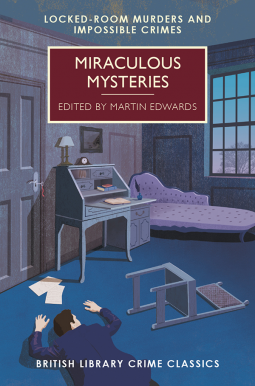
Then: I’ve just finished reading Miraculous Murders: Locked-RoomMurders and Impossible Crimes edited by Martin Edwards which I really enjoyed. My review will follow soon.

Blurb:

Impossible crime stories have been relished by puzzle-lovers ever since the invention of detective fiction. Fiendishly intricate cases were particularly well suited to the cerebral type of detective story that became so popular during the ‘˜golden age of murder’ between the two world wars. But the tradition goes back to the days of Edgar Allan Poe and Wilkie Collins, and impossible crime stories have been written by such luminaries as Arthur Conan Doyle, G.K. Chesterton, Dorothy L. Sayers and Margery Allingham. This anthology celebrates their work, alongside long-hidden gems by less familiar writers. Together these stories demonstrate the range and high accomplishment of the classic British impossible crime story over more than half a century.

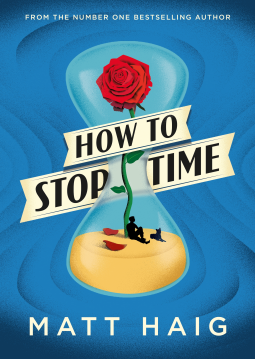
Next: This is such a difficult decision as there are so many books I want to read and I always hesitate to say which one I’ll read next. But I think I’ll read How to Stop Time by Matt Haig, with the usual proviso that when the time comes I may decide to read a different book.

Blurb:

‘I am old. That is the first thing to tell you. The thing you are least likely to believe. If you saw me you would probably think I was about forty, but you would be very wrong.’
Tom Hazard has a dangerous secret. He may look like an ordinary 41-year-old, but owing to a rare condition, he’s been alive for centuries. From Elizabethan England to Jazz Age Paris, from New York to the South Seas, Tom has seen a lot, and now craves an ordinary life.

Always changing his identity to stay alive, Tom has the perfect cover – working as a history teacher at a London comprehensive. Here he can teach the kids about wars and witch hunts as if he’d never witnessed them first-hand. He can try and tame the past that is fast catching up with him. The only thing Tom mustn’t do is fall in love.

How to Stop Time is a wild and bittersweet story about losing and finding yourself, about the certainty of change and about the lifetimes it can take to really learn how to live.

They say you shouldn’t judge a book by its cover, which is a good thing as I don’t like anything about this cover – it doesn’t say ‘read me’ to me. But the synopsis does.

How about you? Have you read any of these books?  If so, what did you think of them? And what have you been reading this week?

A TMO – a Tree of Multiple Occupancy

I meant to post this a couple of weeks ago – it’s that time of year when the garden seems to take over my life and this year there’s been quite a lot going on in our garden.

This is an old ash tree in the field behind our house and we’ve called it a Tree of Multiple Occupancy. It’s hollowed out at the top with several holes lower down and the occupants are mainly jackdaws and wood pigeons. This is not a happy household as none of them get on and the jackdaws regularly patrol the tree trying to scare off any birds that come near.

In the early mornings I’ve seen a barn owl going into the top hole, chased by the jackdaws. I’ve seen the owl a few times now – one evening it came sweeping out of the top hole followed by a group of jackdaws. It flew into our little wood and after just a short time it flew back into the tree. I wish I’d had my camera handy that day, it’s an absolutely beautiful bird!

I also wish I had a camera inside the tree to see the arrangements – is the tree hollow all the way down? Do they all have nests? And is the barn owl nesting there too?

The great tits and bluetits have been busy – the great tits made a nest in an old hollow fence post and produced four young ones. David’s video shows the fledglings leaving the nest early one morning. We also have had bluetits nesting in a great tits’ bird box on the gable end of the house. And now the swallows are here, swooping around the sky – such wonderful aerial displays.