Top Five Tuesday:Top 5 books with a place in the title

Top 5 Tuesday was created by Shanah at Bionic Book Worm, and it is now being hosted by Meeghan at Meeghan Reads. For details of all of the latest prompts for January to March, see Meeghan’s post here.

Today the topic is Top 5 books with a place in the title – any location or place in a title is fine. I decided to feature books in different countries than my own (UK) – namely Italy, Japan, Greece, Russia and France.

These are all books I’ve read with links to my reviews.
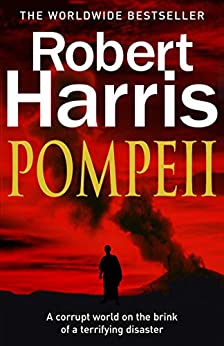
Pompeii by Robert Harris – one of my favourite books. Vesuvius erupts destroying the town of Pompeii and killing its inhabitants as they tried to flee the pumice, ash, searing heat and flames. The story begins just two days before the eruption of Mount Vesuvius and builds up to a climax. 

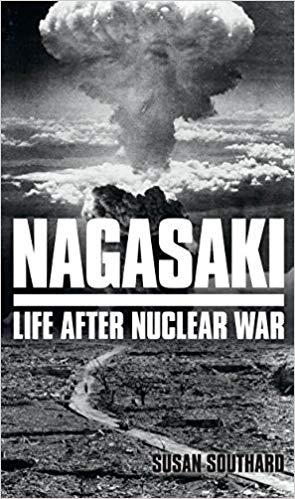
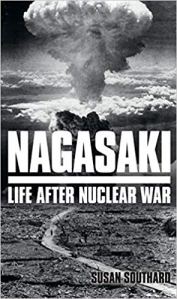
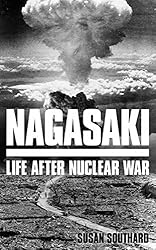
Nagasaki : Life After Nuclear War by Susan Southard, nonfiction, an amazing, heart-wrenching book. On August 9th 1945, two days after the atomic bombing of Hiroshima, a five-ton plutonium bomb was dropped on the small coastal town of Nagasaki. The effects were cataclysmic. It follows the lives of five of the survivors from then to the present day. 

This must be one of the most devastatingly sad and depressing books I’ve read and yet also one of the most uplifting, detailing the dropping of the bomb, which killed 74,000 people and injured another 75,000. 

The Doctor of Thessaly by Anne Zouroudi, the third in the series of her Mysteries of the Greek Detective, about Hermes Diaktoros, a mysterious fat man. I was never sure who he worked for, or how he knew of the mystery to solve. Each of the books in the series features one of the Seven Deadly Sins – in this one it is envy, a tale of revenge and retribution.

Midnight in St Petersburg by Vanora Bennett. It begins in 1911 in pre-revolutionary Russia with Inna Feldman travelling by train to St Petersburg to escape the pogroms in Kiev hoping to stay with her distant cousin, Yasha Kagan. The book is split into three sections – September – December 1911, 1916-17 and 1918-19 as Russia enters the First World War and is plunged into Revolution and life becomes increasingly dangerous for them all.

Last Seen in Massilia by Steven Saylor, historical crime fiction set in in Massilia – modern day Marseilles. It’s 49BC during Caesar’s siege of the city., featuring an investigator called Gordianus the Finder. I really liked all the details about Massilia – how it was governed – the hierarchy of the Timouchoi its ruling officials, its relationship to Rome, its traditions and customs. This is the 8th book in Saylor’s Roma Sub Rosa series set in ancient Rome.

Spell the Month in Books June 2024

Spell the Month in Books is a linkup hosted by Jana on Reviews From the Stacks on the first Saturday of each month. The goal is to spell the current month with the first letter of book titles, excluding articles such as ‘the’ and ‘a’ as needed. That’s all there is to it! Some months there are optional theme challenges, such as “books with an orange cover” or books of a particular genre, but for the most part, any book you want to use is fair game!

This month’s theme is History. I don’t think that the books you choose have to be books that you’ve read, but where possible I like to do that, or at least choose books that I want to read and and this month I’ve managed to find enough nonfiction books about different aspects of history that I have read with titles beginning with each of the letters to spell JUNE.

J is for Jane Austen at Home by Lucy Worsley

I think it was a foregone conclusion that I would really enjoy historian Lucy Worsley’s Jane Austen at Home. I have loved Jane Austen’s books for many years, going back to when I was about 12 and read Pride and Prejudice for the first time. I’d previously read Carol Shields’s biography Jane Austen and Claire Tomalin’s Jane Austen: a Life so there was really very little I learned reading Jane Austen at Home that surprised me or that I hadn’t known before.

I suppose what was new to me was the emphasis on what home life was like during the period of Jane’s life and seeing photos of the houses and places that she had lived or stayed in as a visitor. And I think I gained a better understanding of the social history of Georgian England and of Jane’s wider family connections and what her family and friends thought of her both as a person and as an author.

Jane Austen at Home is both very readable and very detailed, which is not an easy thing to achieve. There is an extensive section at the end of the book, listing sources, a bibliography, notes on the text and an index. There are two sections of colour plates.

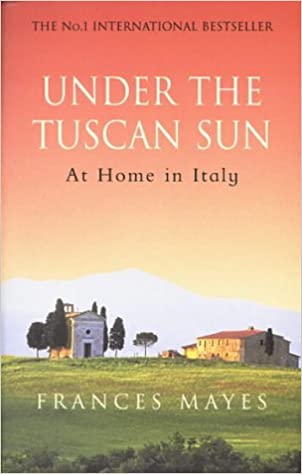
U is for Under the Tuscan Sun by Frances Mayes

In this book the author describes how she bought and renovated an abandoned villa. It’s full of the pleasures of living in Tuscany – the sun, the food, the wine and the local people. It makes me want to do the same! It’s nothing like the film they made of it – the book is much better. Bella Tuscany is the follow up book with more details about the restoration of the villa and its garden, plus recipes.

I read this book before I began blogging, so no review. And I no longer have my copy, which just shows the dangers of recycling books as I’d love to re-read it!

N is for Nagasaki: Life After Nuclear War by Susan Southard

The facts are horrendous – on August 9th 1945, two days after the atomic bombing of Hiroshima, a five-ton plutonium bomb was dropped on the small coastal town of Nagasaki. The effects were cataclysmic.

This must be one of the most devastatingly sad and depressing books I’ve read and yet also one of the most uplifting, detailing the dropping of the bomb, which killed 74,000 people and injured another 75,000. As the subtitle indicates this book is not just about the events of 9 August 1945 but it follows the lives of five of the survivors from then to the present day. And it is their accounts which make this such an emotive and uplifting book, as it shows their bravery, how they survived, and how they were eventually able to tell others about their experiences. Along with all the facts about the after effects of the bombing, the destruction, and radiation, it exposes the true horror of atomic warfare, making it an impressive and most compelling account of pain, fear, bravery and compassion.

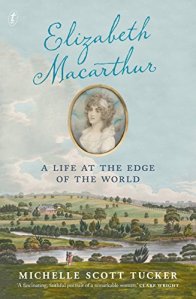
E is for Elizabeth Macarthur: A Life at the Edge of the World by Michelle Scott Tucker

This is an excellent biography because it is thorough, well researched and it provides an insight into the early years of Australia’s colonial history. It is an extremely readable biography of a fascinating woman. Elizabeth was born on 14 August 1766 in Devon, England and she married John Macarthur in October 1788. In June 1789 they sailed with their first child, Edward, initially on the Neptune, and then on the convict ship Scarborough to New South Wales where John joined his regiment, the New South Wales Corps, in the recently established colony of New South Wales.

For sixty years, Elizabeth ran the family farm in Parramatta, west of Sydney town – on her own during her husband’s long absences abroad, four years during her husband’s first absence, and nine years during the second, when she was responsible for the care of their valuable merino flocks, as well as the Camden Park estate and the direction of its convict labourers.

The book is packed with detail about the landscape, the indigenous population, the disputes between various sections of the colony, about farming and the establishment of the wool industry, not forgetting the details of the Macarthur family members, illnesses, and the position of the women within the community.

The next link up will be on July 6, 2024 when the optional theme will be Stars/Sky

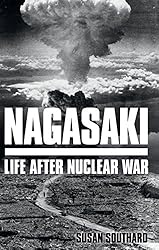
Nagasaki: Life After Nuclear War by Susan Southard

Nagasaki: Life after Nuclear War by Susan Southard is an amazing, heart-wrenching book.

The facts are horrendous – on August 9th 1945, two days after the atomic bombing of Hiroshima, a five-ton plutonium bomb was dropped on the small coastal town of Nagasaki. The effects were cataclysmic.

This must be one of the most devastatingly sad and depressing books I’ve read and yet also one of the most uplifting, detailing the dropping of the bomb, which killed 74,000 people and injured another 75,000. As the subtitle indicates this book is not just about the events of 9 August 1945 but it follows the lives of five of the survivors from then to the present day. And it is their accounts which make this such an emotive and uplifting book, as it shows their bravery, how they survived, and how they were eventually able to tell others about their experiences. Along with all the facts about the after effects of the bombing, the destruction, and radiation, it exposes the true horror of atomic warfare, making it an impressive and most compelling account of pain, fear, bravery and compassion.

Throughout the book the black and white photos illustrate the true horror of the effects of the bomb – photos of Nagasaki both before and after the bomb was dropped, of five survivors – Wada Kohi (aged 18 in August 1945), a street car operator; Nagano Etsuko (aged 16), who worked on a production line in a Mitsubishi airplane parts factory;  Taniguchi Sumiteru (aged 16), who worked at Minchino-o Post Office; Yoshida Katsuji (aged 13), a student at Nagasaki Prefecture Technical School on a ship building course; and Do-oh Mineko (aged 15), formerly a student at Keiho Girls High School, working at the Mitsubishi Arms Factory Onashi Plant. There are also maps showing Japan today and of Nagasaki 1945 showing the Scope of Atomic Bomb Damage.

Susan Southard’s ten years of research has resulted in this impressive book as she reveals what happened in particular to these five survivors, their immediate injuries, the radiation-related cancers and illnesses they have suffered, and their difficulties of daily living still in pain both physical and emotional.

In addition to all that Nagasaki ‘reveals the censorship that kept the suffering endured by the hibakusha [atomic bomb-affected people] hidden around the world. For years after the bombings news reports and scientific research were censored by U.S. occupation forces and the U.S. government led an efficient campaign to justify the necessity and morality of dropping the bombs’ (from the jacket sleeve).

I knew a bit about Hiroshima and Nagasaki before I read this book but it has opened my eyes to the true horror of nuclear war and the need to prevent anything like this happening again.

Many thanks to Souvenir Press Ltd for sending me a complimentary copy for review.

  • Hardcover: 416 pages
  • Publisher: Souvenir Press Ltd (2 Nov. 2015)
  • Language: English
  • ISBN-10: 0285643274
  • ISBN-13: 978-0285643277

My Week in Books: 11 November 2015

This Week in Books is a weekly round-up hosted by Lypsyy Lost & Found, about what I’ve been reading Now, Then & Next. A similar meme,  WWW Wednesday is run by Taking on a World of Words.

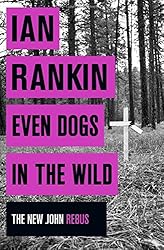
Now: Currently I’m reading two books: Even Dogs in the Wild by Ian Rankin. I’d like to finish this today.

BlurbHands in his pockets, Rebus turned to face Cafferty.
They were old men now, similar builds, similar backgrounds. Sat together in a pub, the casual onlooker might mistake them for pals who’d known one another since school.
But their history told a different story.

Retirement doesn’t suit John Rebus. He wasn’t made for hobbies, holidays or home improvements. Being a cop is in his blood.

So when DI Siobhan Clarke asks for his help on a case, Rebus doesn’t need long to consider his options.

Clarke’s been investigating the death of a senior lawyer whose body was found along with a threatening note. On the other side of Edinburgh, Big Ger Cafferty – Rebus’s long-time nemesis – has received an identical note and a bullet through his window.

Now it’s up to Clarke and Rebus to connect the dots and stop a killer.

Meanwhile, DI Malcolm Fox joins forces with a covert team from Glasgow who are tailing a notorious crime family. There’s something they want, and they’ll stop at nothing to get it.

It’s a game of dog eat dog – in the city, as in the wild.

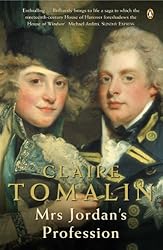
I’m also reading  Mrs Jordan’s Profession: the Story of a Great Actress and a King by Claire Tomalin, which I’ve been reading very slowly for a few weeks now. I hope to finish it soon. I’m up to 1812/13 when Dora and Prince William have parted and Dora is trying to come to terms with her new situation and pick up the pieces of her life. It’s very moving.

Blurb: Acclaimed as the greatest comic actress of her day, Dora Jordan lived a quite different role off-stage as lover to Prince William, third son of George III. Unmarried, the pair lived in a villa on the Thames and had ten children together until William, under pressure from royal advisers, abandoned her. The story of how Dora moved between the worlds of the eighteenth-century theatre and happy domesticity, of her fights for her family and her career makes a classic story of royal perfidy and female courage.

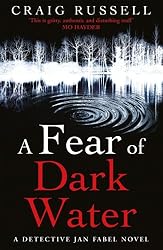
Then: I recently finished A Fear of Dark Water by Craig Russell. This is the sixth Jan Fabel book, but can be read as a stand-alone. Russell is now one of my favourite authors. This book is so good I raced through it.

Blurb: Just as a major environmental summit is about to start in Hamburg, a massive storm hits the city. When the flood waters recede, a headless torso is found washed up.

Initially, Jan Fabel of the Murder Commission fears it may be another victim of a serial rapist and murderer who stalks his victims through internet social network sites, then dumps their bodies in waterways around the city.

But the truth of the situation is far more complex and even more sinister. Fabel’s investigations lead him to a secretive environmental Doomsday cult called ‘Pharos’, the brainchild of a reclusive, crippled billionaire, Dominik Korn.

Fabel’s skills as a policeman are tested to their utmost as he finds himself drawn into an unfamiliar, high tech world of cyberspace, where anyone can be anybody or anything they want. And he quickly realises that he is no longer the hunter, but the hunted.

I’ll write more about this book in a later post.

Next: always tentative choices as when the time comes I may choose other books, but right now I’m thinking of reading Nagasaki: Life after Nuclear War by Susan Southard, a book that follows the lives of five teenage survivors of the atomic bombing of the civilian population of Nagasak from 1945 to the present day Southard. She  unveils the lives they have led, their injuries in the annihilation of the bomb, the dozens of radiation-related cancers and illnesses they have suffered, and the humiliating and frightening choices about marriage they were forced into as a result of their fears of the genetic diseases that may be passed through their families for generations to come.

And as I like to have both a non-fiction and a fiction book on the go together I may read A Pale View of the Hills by Kazuo Ishiguro, which has post-war life in Japan as its backdrop to a story of memory, suicide, and psychological trauma.