Top Ten Tuesday: Books with My Favourite Colour on the Cover

Top Ten Tuesday is a weekly meme created by The Broke and the Bookish and now hosted by Jana at That Artsy Reader Girl. For the rules see her blog.

The topic this week is Books with My Favourite Colour on the Cover. Here they are in various shades of red:
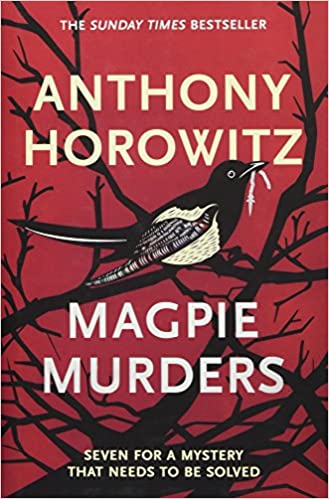
Magpie Murders by Anthony Horowitz – a prime example of a puzzle-type of crime fiction combining elements of the vintage-style golden age crime novel with word-play and cryptic clues and allusions to Agatha Christie and Arthur Conan Doyle. It’s also a novel within a novel, with mystery piled upon mystery. I loved it.

The Sentence is Death by Anthony Horowitz – the second book in the Hawthorne and Horowitz Mystery series in which Daniel Hawthorne, an ex-policeman, now a private investigator, who the police call in to help when they have a case they call a ‘sticker’. What I found particularly interesting was the way that Anthony Horowitz inserted himself into the fiction, recruited by Hawthorne to write a book about him and the cases he investigates.

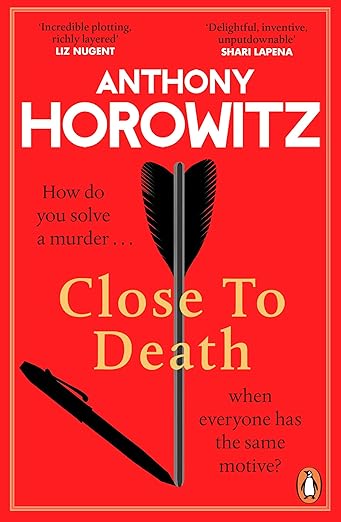
Close to Death by Anthony Horowitz – the fifth literary whodunit in the Hawthorne and Horowitz series, Detective Hawthorne is once again called upon to solve an unsolvable case—a gruesome murder in an idyllic gated community in which suspects abound, aided by Horowitz, as a fictional character.

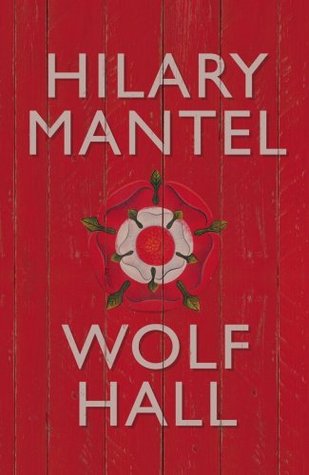
Wolf Hall by Hilary Mantel – historical fiction, the story of Thomas Cromwell, the son of a blacksmith, and his political rise, set against the background of Henry VIII’s England and his struggle with the Pope over his desire to marry Anne Boleyn. This is the first in the Wolf Hall trilogy, based on the life of Thomas Cromwell (c. 1485-1540), who rose from obscurity to become chief minister of King Henry VIII of England.

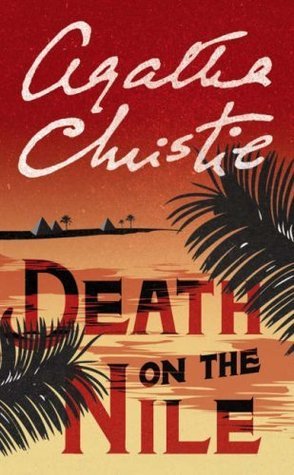
Death on the Nile by Agatha Christie, a pre-Second World War crime fiction novel. It shows Agatha Christie’s interest in Egypt and archaeology and also reflects much of the flavour and social nuances of the pre-war period. In it she sets a puzzle to solve –  who shot Linnet Doyle, the wealthy American heiress? Although the novel is set in Egypt, an exotic location, it is essentially a ‘locked room mystery’.

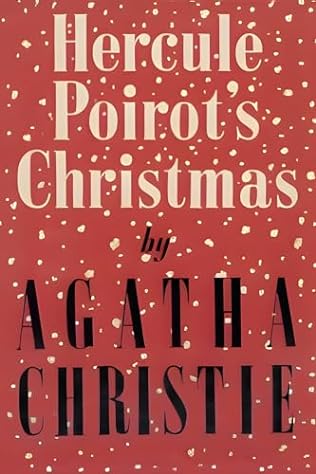
Hercule Poirot’s Christmas by Agatha Chistie in which Poirot investigates the death of Simeon Lee, the head of the Lee family. None of his family like him, in fact most of them hate him and there are plenty of suspects for his murder. He is found dead with his throat cut in a locked room – locked from the inside.

Wild Fire by Ann Cleeves, the 8th and last book in Ann Cleeves’ Shetland series. I have loved this series ever since I read the first book, Raven Black, back in 2010. And because I began reading the books before they were televised my picture of Inspector Jimmy Perez is drawn from them rather than from the dramatisations. There are some significant changes  between the TV dramatisations and the books. I love the books, but still enjoyed the TV adaptions.

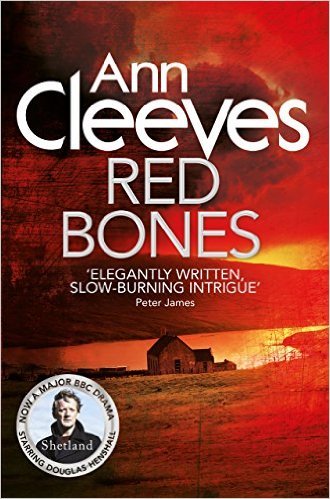
Red Bones by Ann Cleeves, the third book in her Shetland Quartet. It’s set on Whalsay, where two young archaeologists, excavating a site on Mima Williams’s land, discover human bones. They are sent away for testing – are they an ancient  find or are the bones more contemporary?

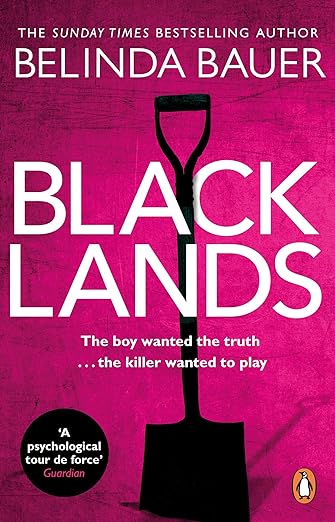
Blacklands by Belinda Bauer, crime fiction. This is an absolutely gripping battle of wits between Stephen aged twelve and serial killer Arnold Avery as they exchange letters about the whereabouts of Stephen’s uncle’s body.

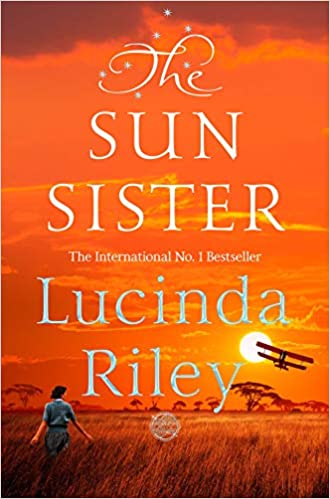
The Sun Sister by Lucinda Riley – the only book on this list that I haven’t yet read. It’s the sixth book in The Sven Sisters series, the story of love and loss, inspired by the mythology of the famous star constellation. It’s one of my TBRs only because I’m reading the series in order and so far I’ve read the first three books.

Novellas in November: Short Nonfiction

Novellas in November is hosted by Cathy and Rebecca. This week the theme is short nonfiction and these are some I’ve read in previous years.
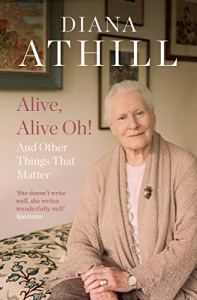
  1. Alive, Alive Oh and Other Things That Matter by Diana Athill (21 December 1917 – 23 January 2019). She was a British literary editor, novelist and memoirist who worked with some of the greatest writers of the 20th century at the London-based publishing company Andre Deutsch Ltd. This book contains her memories, thoughts and reflections on her life as she approached her 100th year, covering events from her childhood in the 1920s and 1930s, her post-war life, visits to Florence, and in the Club Mediterranee in Corfu in the 1950s, and the friends and lovers she has known upto 2009 when she moved into a home. The chapters follow on chronologically but are unconnected except for the fact that they demonstrate her love of life. And it is this love of life that is evident in her writing that makes it such a remarkable book. I loved it.
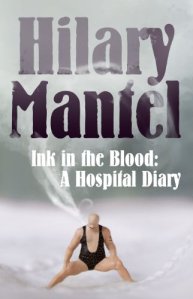
  2. Ink in the Blood: A Hospital Diary by Hilary Mantel, another short memoir. I read this in 2011 after Hilary Mantel’s talk at the Borders Book Festival at Melrose had been cancelled in the previous summer.  She had to cancel that because she wasn’t well – I didn’t know just how ill she was. Ink in the Blood reveals all – how she had surgery to remove an intestinal obstruction that ended up in a marathon operation, followed by intense pain, nightmares and hallucinations. Illness she found knocks down our defences, revealing things we should never see, needing moment by moment concentration on breathing, on not being sick and being dependent on others for your well-being. Writing was Hilary Mantel’s lifeline – it was the ink, as she wrote in her diary, that reassured her she was alive.
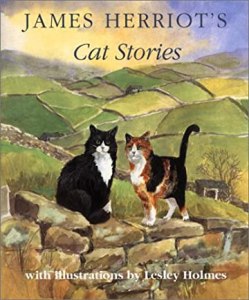
  3. James Herriot’s Cat Stories is a collection of ten stories clearly demonstrating his love of cats. In the introduction James writes that cats were one of the main reasons he chose a career as a vet. They have always played a large part in his life and and when he retired they were still there ‘lightening’ his days. This is a short book of 158 pages with illustrations by by Lesley Holmes.

I’ve recently read Breathtaking by Rachel Clarke and I’ll post a review later.

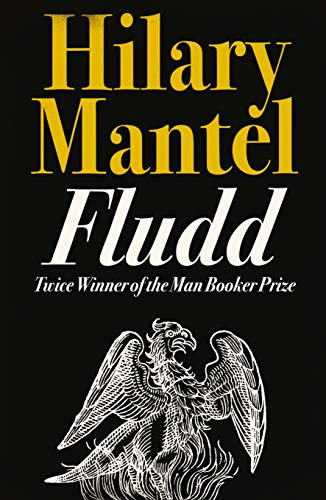
Contemporary Novellas: Fludd by Hilary Mantel

A dark fable of lost faith and awakening love amidst the moors

5*

Novellas in November began this week, hosted by Cathy and Rebecca. Each week they will take it in turns to host a “buddy read” of a featured book they hope you will join in reading – see their blogs for details.

The definition of a novella is loose – it’s based on word count rather than number of pages – but they suggest aiming for 150 pages or under, with a firm upper limit of 200 pages. The prompt for this week is contemporary fiction, defined as post 1980 and hosted by Cathy,

My choice this week is Fludd by Hilary Mantel, first published in 1989 by Viking. My copy, published in 2010 by Fourth Estate, has 181 pages followed by additional features at the end, including an About the Author section, and an interview with Hilary Mantel.

Description:

Fetherhoughton is a drab, dreary town somewhere in a magical, half-real 1950s north England, a preserve of ignorance and superstition protected against the advance of reason by its impenetrable moor-fogs. Father Angwin, the town’s cynical priest, has lost his faith, and wants nothing more than to be left alone. Sister Philomena strains against the monotony of convent life and the pettiness of her fellow nuns. The rest of the town goes about their lives in a haze, a never-ending procession of grim, grey days stretching ahead of them.

Yet all of that is about to change. A strange visitor appears one stormy night, bringing with him the hint, the taste of something entirely new, something unknown. But who is Fludd? An angel come to shake the Fetherhoughtonians from their stupor, to reawaken Father Angwin’s faith, to show Philomena the nature of love? Or is he the devil himself, a shadowy wanderer of the darkest places in the human heart?

Full of dry wit, compassionate characterisations and cutting insight, Fludd is a brilliant gem of a book, and one of Hilary Mantel’s most original works.

My thoughts:

It is 1956, set in the north of England in the fictional village of Fetherhoughton, which is loosely based on the village where Mantel grew up. She was brought up as a Catholic and the idea for the story came from a conversation with her mother about her childhood. When she was around four the Bishop decreed that all the statues in the church were to be removed which annoyed the parishioners and she heard the adults talking about what to do with the statues. One suggestion was to bury them. Her mother also told her about a young priest, who everyone liked, and who disappeared. It was assumed that there was a girl involved. The two events combined in her mind and came out as this novel.

Mantel clarifies in a Note before the story begins that the church in Fludd bears some resemblance, but not much to the Roman Catholic Church in the real world. Fludd was a real person (1574 – 1637), a physician, scholar and alchemist and she adds that

In alchemy, everything has a literal and factual description, and in addition a description that is symbolic and fantastical.

This sets the scene for what follows – there is a mystery that lies beyond the visible world, miraculous things appear to happen and very ordinary things appear miraculous. There is a hint of the supernatural.

The story centres on Fludd, a young priest who comes to the Church of St Thomas Aquinas to help Father Angwin, a cynical priest who has lost his faith. The Bishop, a modern man, is concerned about Father Angwin and wants to bring him and the Catholic community up to date – so the statues in the church have to go. This has a most disturbing effect on all concerned – not just the church and Father Angwin, but also the the nuns in the convent, and the school, both under the stern eye of Mother Perpetua.

Fludd, himself is something of a mystery. When he eats the food disappears, but he is not seen eating. When he pours out whisky for Father Anwin the bottle always remains full. Strange things happen, a wart disappears from one character’s face and finds its way to another’s, one character apparently spontaneously combusts, another disappears and there’s a tobacconist who may or may not be the devil. The real question is just who is Fludd?

I enjoyed it all immensely – partly about religion and superstition, but also a fantasy, a fairy tale, told with wit and humour with brilliant characterisation.

Book Beginnings & The Friday 56: Fludd by Hilary Mantel

Every Friday Book Beginnings on Friday is hosted by Gillion at Rose City Reader where you can share the first sentence (or so) of the book you are reading. You can also share from a book you want to highlight just because it caught your fancy.

This week I’m featuring Fludd by Hilary Mantel, described as’ a dark fable of lost faith and awakening love amidst the moors.’ It’s very different from the other books by her that I’ve read. For one thing it’s short!

The Book Begins:

On Wednesday the bishop came in person. He was a modern prelate, brisk and plump in his rimless glasses, and he liked nothing better than to tear around the diocese in his big black car.

Also every Friday there is The Friday 56, hosted by Freda at Freda’s Voice. *Grab a book, any book. *Turn to Page 56 or 56% on your  ereader . If you have to improvise, that is okay. *Find a snippet, short and sweet, but no spoilers!

These are the rules:

  1. Grab a book, any book.
  2. Turn to page 56, or 56% on your eReader. If you have to improvise, that is okay.
  3. Find any sentence (or a few, just don’t spoil it) that grabs you.
  4. Post it.
  5. Add the URL to your post in the link on Freda’s most recent Friday 56 post.

Page 56:

That afternoon, Father Fludd undertook a parish tour. Father Angwin accompanied the curate to the front door. ‘They may ask you into their houses’, he said. ‘For God’s sake don’t eat anything. Be back before dark.’ He hovered, anxious. ‘Perhaps you shouldn’t go alone?’

‘Don’t fuss, man’, Fludd said.

Summary (from Amazon)::

Fetherhoughton is a drab, dreary town somewhere in a magical, half-real 1950s north England, a preserve of ignorance and superstition protected against the advance of reason by its impenetrable moor-fogs. Father Angwin, the town’s cynical priest, has lost his faith, and wants nothing more than to be left alone. Sister Philomena strains against the monotony of convent life and the pettiness of her fellow nuns. The rest of the town goes about their lives in a haze, a never-ending procession of grim, grey days stretching ahead of them.

Yet all of that is about to change. A strange visitor appears one stormy night, bringing with him the hint, the taste of something entirely new, something unknown. But who is Fludd? An angel come to shake the Fetherhoughtonians from their stupor, to reawaken Father Angwin’s faith, to show Philomena the nature of love? Or is he the devil himself, a shadowy wanderer of the darkest places in the human heart?

Full of dry wit, compassionate characterisations and cutting insight, Fludd is a brilliant gem of a book, and one of Hilary Mantel’s most original works.

~~~

What do you think – does this book appeal to you too?

Throwback Thursday: 1 April 2021

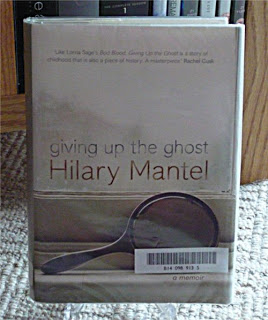
This month I’m looking back at Giving Up the Ghost: a memoir by Hilary Mantel, which I first posted in April 2008.

This is the first paragraph:

In the first chapter of Hilary Mantel’s memoir she writes, ”I hardly know how to write about myself. Any style you pick seems to unpick itself before a paragraph is done.”  She then advises herself to trust the reader, to stop spoon-feeding and patronising and write in ‘the most direct and vigorous way that you can.’ She worries that her writing isn’t clear, or that it is ‘deceptively clear’. It comes across to me as being clear, honest and very moving. She’s not looking for sympathy but has written this memoir to take charge of her memories, her childhood and childlessness, feeling that it is necessary to write herself into being.

Click here to read my full review

The next Throwback Thursday post is scheduled for April 29, 2021.

My Friday Post: The Mirror and the Light by Hilary Mantel

Book Beginnings Button

Every Friday Book Beginnings on Friday is hosted by Gillion at Rose City Reader where you can share the first sentence (or so) of the book you are reading, along with your initial thoughts about the sentence, impressions of the book, or anything else the opener inspires.

Mirror and Light

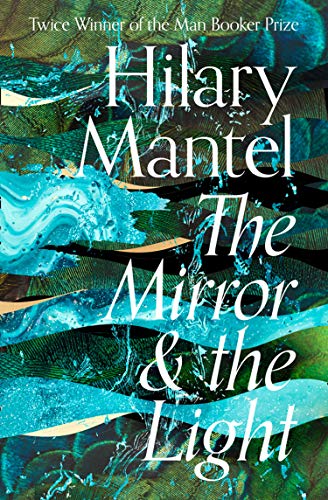
I began reading The Mirror and the Light by Hilary Mantel as soon as it arrived in the post on 6 March – and I’m still reading it, very slowly, as it is a very long and detailed book.

It begins:

Wreckage (1)

London, May 1536

Once the queen’s head is severed, he walks away.

He is Thomas Cromwell, Secretary to Henry VIII, and the Queen was Anne Boleyn.

Also every Friday there is The Friday 56, hosted by Freda at Freda’s Voice.

30879-friday2b56These are the rules:

  1. Grab a book, any book.
  2. Turn to page 56, or 56% on your eReader. If you have to improvise, that is okay.
  3. Find any sentence (or a few, just don’t spoil it) that grabs you.
  4. Post it.
  5. Add the URL to your post in the link on Freda’s most recent Friday 56 post.

Page 56: Chapuys, the  ambassador of the Emperor Charles V is talking to Cromwell about the dangers to Henry’s life:

A dagger thrust, it is easily done. It may be, even, it needs no human hand to strike. There is plague that kills in a day. There is the sweating sickness that kills in an hour.

How true!

Blurb

With The Mirror and the Light, Hilary Mantel brings to a triumphant close the trilogy she began with Wolf Hall and Bring Up the Bodies. She traces the final years of Thomas Cromwell, the boy from nowhere who climbs to the heights of power, offering a defining portrait of predator and prey, of a ferocious contest between present and past, between royal will and a common man’s vision: of a modern nation making itself through conflict, passion and courage.

~~~

Does this book appeal to you too? Have you read/are you reading this book