Maigret’s Doubts by Georges Simenon: a Novella

Rating: 5 out of 5.

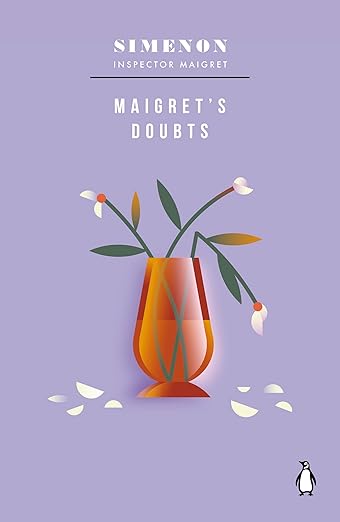
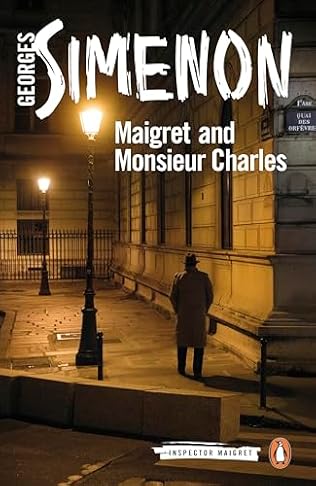
Maigret’s Doubts by Georges Simenon, translated by Shaun Whiteside is the 52nd Maigret novel (first published as Les scrupules de Maigret in 1957), and published by Penguin in 2018, one of the books in the Maigret Capsule Collection, a selection of twelve of Georges Simenon’s iconic Inspector Maigret titles.

Description from Goodreads

Inspector Maigret finds himself caught in the middle of a husband and wife duo’s case of “he said/she said”—with murderous consequences

An unusually quiet day for Inspector Maigret at the Quai des Orfèvres is disturbed by a visit from mild-mannered toy salesman Xavier Manton. Maigret is taken aback by Manton’s revelation that he suspects his wife of plotting to poison him. And when he receives a visit from Madame Manton expressing her own grave concerns later that day, he finds himself deeply conflicted, unsure of whom to trust. Maigret heeds the advice of his seniors and begins investigating the couple—and with every turn, new complications arise. When the case comes to a boil and a body is discovered, everyone, including Maigret, is shocked.

Maigret’s Doubts is an engrossing mystery of marriage and deceit that forces the reader to question whether our brilliant inspector may be fallible after all.

My review:

I recently reviewed Simenon’s earlier book, The Yellow Dog, which baffled me because I had little idea about what Maigret was thinking or even doing. Maigret’s Doubts is just the opposite as it is very clear what he is thinking as Simenon describes his thoughts in detail.

It begins on the 10th January, after the holidays finding detectives at the Quai des Orfèvre, strangely quiet with little to do except dull administrative tasks, a period of dead calm. Maigret wasn’t in good form, feeling lethargic and wondering if he wasn’t coming down with the flu. And he’s worrying about his wife’s health after their family doctor has told him he’s prescribed her some pills at the same time telling him there was absolutely nothing to worry about. It makes him melancholy as he realises they are both getting to the age of minor ailments that need attention.

A visit from Xavier Marton, the head of the toy department at the Grands Magasins du Louvre, a model train specialist, breaks into Maigret’s melancholy, telling him that he thinks his wife wants to poison him. Later that same day his wife, Gisèle also visits Maigret and tells him that her husband is having delusions, leaving him unsure who is telling him the truth. The next day, Manon visits Maigret again and warns him that if his wife poisons him, he’ll shoot her before he dies. But it soon becomes clear that Manon and Jenny, his wife’s sister are in love, although not actually having an affair and that Gisèle, on the other hand, is having an affair with her employer, Monsieur Harris.

Maigret is puzzled by what Manon and his wife have told him and asks Dr Pardon his family doctor for his opinion and consults books about psychiatry, making this book more of a psychological study than a police investigation. Maigret isn’t faced with a crime that has been committed but one that could be committed. But it was just as possible that it wouldn’t be committed at all.

What he had to do this time was not to reconstruct the actions and gestures of a human being, but to predict his behaviour, which was difficult in a different way.(page 114)

But Maigret doesn’t find the books of much help:

In the end he got up, as a man who has had enough threw the book on the table and, opening the sideboard in the dining room picked up the bottle of plum brandy and filled one of the little gold-rimmed glasses.

It was like a protestation of common sense against all that scientific gobbledygook, a way of getting back to earth.

I really enjoyed this book, although not a lot actually happens. Maigret fears that there is going to be a murder but who will be the victim and how can he make an arrest when no crime has been committed? The narrative moves at a slow pace as the tension steadily rises culminating in a murder as the book moves to its end.

Novellas in November is hosted by Cathy at 746 Books and Bookish Beck.

The Yellow Dog by Georges Simenon

The Maigret books are also a good choice for Novellas in November, they’re all under 200 pages. I’ve been a Maigret fan for a long time, ever since I was in my teens, watching the TV series with Rupert Davies in the title role. And I’ve been reading the Maigret series as I’ve come across the books in libraries, bookshops, and more recently as e-books, so not in the order they were originally published.

Penguin| 2014| 164 pages| My own copy| 3*

This is a short review because, once more I’m behind with writing reviews. The Yellow Dog is the 5th book in the new Penguin Maigret series, translated by Linda Asher. It was first published in 1931 and also published in a previous translation as A Face for a Clue. It’s a tale of small town suspicion and revenge.

In the windswept seaside town of Concarneau, a local wine merchant is shot. In fact, someone is out to kill all the influential men and the entire town is soon sent into a state of panic. For Maigret, the answers lie with the pale, downtrodden waitress Emma, and a strange yellow dog lurking in the shadows…

It’s only 134 pages but with a slow start it did seem longer than that. It begins with the shooting of Monsieur Mostaguen, a local wine merchant, followed by the appearance of the yellow dog, a big, snarling yellow animal, and then an attempt at poisoning for Maigret to investigate. I wondered what the significance of the yellow dog was and who it belonged to; no one seems to know. The locals had never seen it before and they all viewed it with fear and suspicion. I’ve read some of the earlier Maigret and have noted before that I’ve been confused and baffled, with little idea of what was going on and it was just the same with this book. Maigret doesn’t seem to be very concerned about the man who was shot and seriously injured, nor about the attempted poisoning until there’s a murder and another man disappears. He walks around the town, observing but not actively investigating.

Simenon is good at conveying atmosphere and skilled at setting the scene and drawing convincing characters in a few paragraphs.  As the book begins there’s a south-westerly gale slamming the boats together in the harbour in Concarneau and the wind surges through the streets. Contrast the weather at the beginning of the book with the change by the time Maigret is getting close to clearing up the mystery – the weather turned fine, with a vibrant blue sky, the sea sparkled, and ‘the Old Town’s walls, so gloomy in the rain, turn a joyful, dazzling white.

I don’t think this is one of the best Maigret book, but it is puzzling with Maigret keeping his thoughts to himself until the end of the book, when like Agatha Christie’s Hercule Poirot, he explains it all.

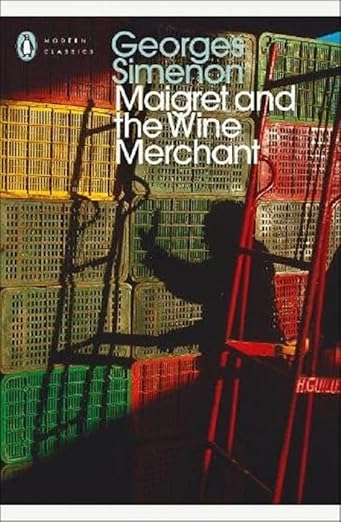
Maigret and the Wine Merchant by Georges Simenon: Book Beginnings on Friday & The Friday 56

Every Friday Book Beginnings on Friday is hosted by Gillion at Rose City Reader where you can share the first sentence (or so) of the book you are reading. You can also share from a book you want to highlight just because it caught your fancy.

Maigret and the Wine Merchant is one of the books I’m currently reading. I fancied reading something shorter that the books I’ve been reading and thought this one with just 176 pages was ideal. It’s the seventy first book in the Maigret series, and was originally published in 1971. The Penguin Classics edition was first published in September 2019.

The book begins:

“You only killed her to rob her, didn’t you?”

Also every Friday there is The Friday 56, hosted by Freda at Freda’s Voice, but she is taking a break and Anne at My Head is Full of Books has taken on hosting duties in her absence. You grab a book and turn to page 56 (or 56% of an eBook), find one or more interesting sentences (no spoilers), and post them.

Page 56:

‘Was Madame Thorel one of Oscar Chabut’s mistresses?’

‘Rita? She’s come with him and with overs. She’s a sexy little brunette who can’t do without men.’

Description from Goodreads:

‘Maigret had never been comfortable in certain circles, among the wealthy bourgeoisie where he felt clumsy and awkward … Built like a labourer, Oscar Chabut had hauled himself up into this little world through sheer hard work and, to convince himself that he was accepted, he felt the need to sleep with most of the women.’

When a wealthy wine merchant is shot in a Paris street, Maigret must investigate a long list of the ruthless businessman’s enemies before he can get to the sad truth of the affair.

Top 5 Tuesday:Books set in Europe

Top 5 Tuesday was created by Shanah at Bionic Book Worm, and it is now being hosted by Meeghan at Meeghan Reads. For details of all of the latest prompts for April to June, see Meeghan’s post here

We’re continuing reading around the world this month and today the topic is Europe. The books I’ve chosen are crime fiction and historical fiction.

France: When I think of French crime fiction Georges Simenon’s Maigret immediately pops into my mind.  Simenon was actually Belgian, not French, but the Maigret books are set in France (mainly in Paris). Simenon wrote 75 novels and 28 short stories featuring Commissaire Jules Maigret and I first knew of them from a friend at school who loved the books. Then there were the numerous TV productions with Rupert Davies as Maigret and more recently Rowan Atkinson has played the role of Chief Inspector Maigret in the 2016 ITV series.

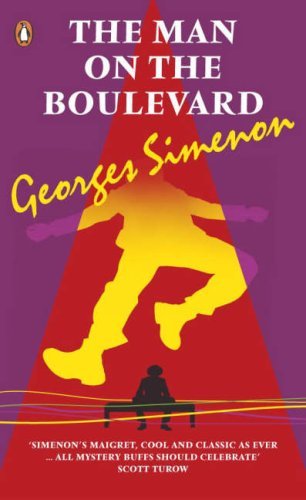
I’ve read several of the Maigret books. The Man on the Boulevard is the 41st book in the series. There were lots of things I liked in this book – the attention to detail, the descriptions of the weather (cold and wet), and the characters themselves.  It’s set in Paris and without knowing the location of the various boulevards I could still get a good impression of the city and its suburbs. 

It has a puzzling murder to solve – Louis Thouret is found stabbed in a little alleyway. Seemingly a perfectly ordinary man of regular habits who had left his home in the suburbs to go to his job as a storekeeper in Paris for the past twenty five years. It turns out that Louis had a double life that his wife knew nothing about. It appears he had been having an affair and for the past three years he had not had a job. I liked the theme of a man following a double life and the way Louis resolves his problem of keeping up appearances with his wife and family although I thought his method of maintaining his income was rather implausible.

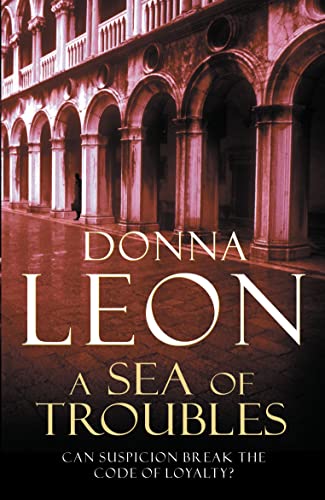
Italy: A Sea of Troubles by Donna Leon, whose books are crime fiction, but also discuss various social and cultural issues and A Sea of Troubles, the 10th Commissario Guido Brunetti novel, is no exception. Brunetti is one of my favourite detectives. He is happily married with two children. He doesn’t smoke or drink to excess and often goes home for lunch to his beautiful wife Paolo, who is a wonderful cook – in this book she treats him to a delicious apple cake made with lemon and apple juice and ‘enough Grand Marnier to permeate the whole thing and linger on the tongue for ever.’ (page 238)

I read it eagerly, keen to get to the bottom of the mystery surrounding the deaths of two clam fishermen, father and son, off the island of Pellestrina, south of the Lido on the Venetian lagoon, when their boat suddenly exploded. As well as the mystery the issues Leon highlights in this book are concerning pollution and the overfishing of clams that is destroying the clam beds.

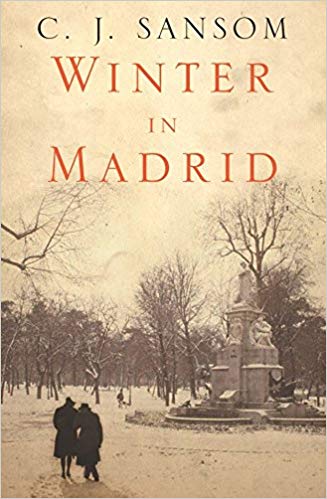
Spain:  C J Sansom’s Winter in Madrid, which I think is one of the best books I’ve read, a book that had me in tears as I was reading about the devastation, desolation and waste of war. It is an action packed thrilling war/spy story and also a moving love story and historical drama all rolled into this tense and gripping novel. Sansom vividly conveys the horror and fear of the realities of life in Spain during the Spanish Civil War and the first two years of the Second World War.

The opening chapter dramatically sets the tone for the book with the brutality of the Battle of Jarama in 1937 then leaps straight into the bombing of London in 1940. Then Harry Brett, traumatised by his injuries at Dunkirk is sent to Spain to spy for the British Secret Service. He is plunged into the terrible living conditions in Madrid where people are starving, children are left homeless to fend for themselves and wild dogs roam the rubble of bombed houses.

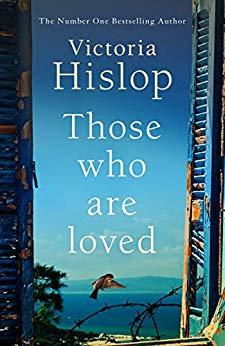
Greece: Those Who Are Loved by Victoria Hislop, one of the most moving novels I’ve read. It is historical fiction ‘set against the backdrop of the German occupation of Greece, the subsequent civil war and a military dictatorship, all of which left deep scars’. It begins slowly and it was only at about the halfway stage that it really took off for me. But then, the book sprang to life, the pace increased, and I was totally gripped and moved as history and fiction came together dramatically in glorious technicolor, telling the story of the characters personal lives and their parts in the action.

The main character is Themis Koralis/Stravidis (in Greek mythology Themis is the personification of fairness and natural law). In 2016 she is a great grandmother and realising that her grandchildren knew very little about Greek history she decided to tell them her life story, beginning from when she was a small child in the 1930s, through the German occupation of Greece during the Second World War, the civil war that followed, then the oppressive rule of the military junta and the abolition of the Greek monarchy, up to the present day.

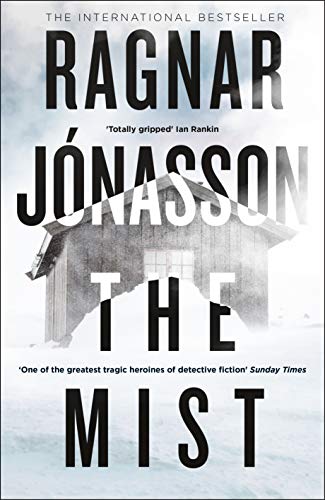
Iceland: The Mist by Ragnar Jonasson, the third novel in the Hidden Iceland series. Detective Inspector Hulda Hermannsdottir is worrying about her daughter, Dimma and her relationship with her husband, Jon. Alongside the story of what is happening in her personal life, she is also investigating the disappearance of a young woman and a suspected murder case, a particularly horrific one in an isolated farmhouse in the east, where Erla and her husband, Einar live. When a stranger, lost in a snowstorm arrives Erla invites him in and the nightmare begins.

I loved the setting, Jonasson’s writing bringing the scenery and the weather to life – you can feel the isolation and experience what it is like to be lost in a howling snowstorm. The emotional tension is brilliantly done too, the sense of despair, confusion and dread is almost unbearable. 

Top Five Tuesday:Top 5 series I will finish in 2025

Top 5 Tuesday was created by Shanah at Bionic Book Worm, and it is now being hosted by Meeghan at Meeghan Reads. For details of all of the latest prompts for January to March, see Meeghan’s post here.

Today the topic is Top 5 series I will finish in 2025. Which series are you planning to finish (or finish to most recent publication) in 2025?

I have many series on the go. These five crime fiction novels are just the tip of the iceberg! I’m not saying I’ll finish these series this year, but I’m hoping I’ll make some progress with them this year.

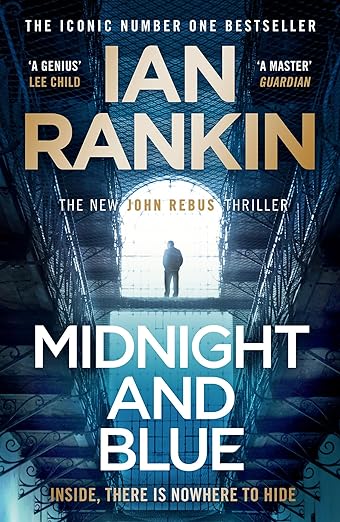
Ian Rankin’s Inspector Rebus series. There are 25 and I’ve read 24 – just one more to read, Midnight and Blue. This is the latest book in the series, so this is the only series that I will finish this year.

Reginald Hill’s Dalziel and Pascoe novels. There are 24 books in the series and I’ve read 16.

Peter Robinson’s Inspector Banks series. There are 28 and I’ve read 20.

Ann Cleeves’ Vera Stanhope books. There are 11 and I’ve read 9.

Georges Simenon’s Inspector Maigret books – there are 75 and I’ve read 16. It’ll take me ages to finish this series – if I ever do!

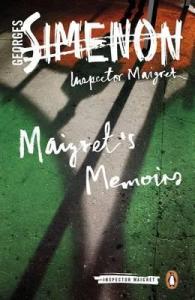
Maigret’s Memoirs by Georges Simenon Translated by Howard Curtis

Week 2 in Novellas in November is Novellas in translation and a Maigret book is an obvious choice for me. But Maigret’s Memoirs is not your usual Maigret mystery. This a memoir written by Simenon writing as his fictional character, Maigret.

Penguin Classics| 2016| 160 pages| My Own Copy| 4*

I can still see Simenon coming into my office the next day, pleased with himself, displaying even more self-confidence, if possible, than before, but nevertheless with a touch of anxiety in his eyes.’

Maigret sets the record straight and tells the story of his own life, giving a rare glimpse into the mind of the great inspector – and the writer who would immortalise him.

‘One of the greatest writers of the twentieth century . . . Simenon was unequalled at making us look inside, though the ability was masked by his brilliance at absorbing us obsessively in his stories’ Guardian

‘A supreme writer . . . unforgettable vividness’ Independent

The original French version of Maigret’s MemoirsLes Mémoires de Maigret, was first published in 1950. An English translation was later published in Great Britain in 1963. It is unlike any of the other Maigret novels. It’s a fictional autobiography by Georges Simenon writing as Maigret, beginning in 1927 or 1928 when Maigret and Simenon, calling himself Georges Sim, first ‘met’. I don’t recommend reading if you haven’t read some of the Maigret mysteries.

I enjoyed it – it’s a quick entertaining read as Maigret looks back to his first ‘meeting’ with Sim. He fills in some of the background of his early life and talks about his father and how he first met his wife, Louise. Simenon had written 34 Maigret novels before this one and Maigret took this opportunity to correct some of Simenon’s inaccuracies. I recognised some of the books – I’ve read 11 of his first 34 books.

One of the things that irritated Maigret the most was Simenon’s habit of mixing up dates, of putting at the beginning of his career investigations that had taken place later and vice versa. He’d kept press cuttings that his wife had collected and he had thought of using them to make a chronology of the main cases in which he’d been involved. And he also considered some details his wife had noted – concerning their apartment on Boulevard Richard Lenoir, pointing out that in several books Simenon had them living on Place des Vosges without explaining why. There were also times when he retired Maigret even though he was still several years away from retirement. Madame Maigret was also bothered by inaccuracies concerning other characters in the books and by Simenon’s description of a bottle of sloe gin that was always on the dresser in their apartment – that was in actual fact not sloe gin but raspberry liqueur given to them every year by her sister-in-law from Alsace.

Simenon drops facts and information piecemeal in his Maigret books and one thing I particularly like in Maigret’s Memoirs is that it is all about Maigret, but I did miss not having a mystery to solve.