WWW Wednesday 8 October 2025

WWW Wednesday is run by Taking on a World of Words.

The Three Ws are:

What are you currently reading?
What did you recently finish reading?
What do you think you’ll read next?

I haven’t done a WWW Wednesday post since July! Where has the time gone? We’re now in October and it’s definitely Autumn – colder but stil some bright sunny days. The leaves are now falling, soon our garden will be covered by them – we have a lot of trees.
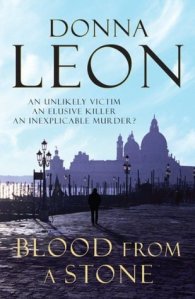
Currently I’m reading one of Donna Leon’s Commissario Brunetti novels – Blood from a Stone, which I’m thoroughly enjoying. I’m not surprised by that as I’ve enjoyed all of the Brunetti books I’ve read. He is one of my favourite detectives, maybe even the favourite.

In this one Brunetti is investigating the death of one of the vu cumprà, illegal immigrants selling fake designer handbags from sheets on the ground. He was killed one cold night near Christmas when two men entered Venice’s Campo Santo Stefano and shot him five times. The only witnesses are some American tourists.

I’m also reading Gulliver’s Travels by Jonathan Swift (1667-1745), which I think is such a strange book, definitely not a children’s book as I had thought. First published in 1726, it’s a satire on human nature and the imaginary travellers’ tale literary subgenre about Lemuel Gulliver, a ship’s surgeon who travels to four strange and distant lands. I’ve nearly finished it and I’ll write more about it in a later post.
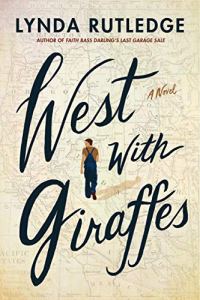
The last book I read was West with Giraffes by Linda Rutledge, a novel based on a true story which I loved.

Description from Goodreads

Woodrow Wilson Nickel, age 105, feels his life ebbing away. But when he learns giraffes are going extinct, he finds himself recalling the unforgettable experience he cannot take to his grave.

It’s 1938. The Great Depression lingers. Hitler is threatening Europe, and world-weary Americans long for wonder. They find it in two giraffes who miraculously survive a hurricane while crossing the Atlantic. What follows is a twelve-day road trip in a custom truck to deliver Southern California’s first giraffes to the San Diego Zoo. Behind the wheel is the young Dust Bowl rowdy Woodrow. Inspired by true events, the tale weaves real-life figures with fictional ones, including the world’s first female zoo director, a crusty old man with a past, a young female photographer with a secret, and assorted reprobates as spotty as the giraffes.
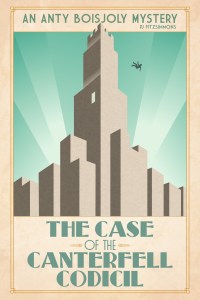
What will I read next? It could be The Case of the Canterfell Codicil Anty Boisjoly Mysteries Book 1) by P.J. Fitzsimmons, a locked room mystery.

Description from Goodreads

In The Case of the Canterfell Codicil, Wodehousian gadabout and clubman Anty Boisjoly takes on his first case when his old Oxford chum and coxswain is facing the gallows, accused of the murder of his wealthy uncle. Not one but two locked-room mysteries later, Boisjoly’s pitting his wits and witticisms against a subversive butler, a senile footman, a single-minded detective-inspector, an irascible goat, and the eccentric conventions of the pastoral Sussex countryside to untangle a multi-layered mystery of secret bequests, ancient writs, love triangles, revenge, and a teasing twist in the final paragraph. 

But when the time comes to start another book it could be something completely different.

Top 5 Tuesday:Books set in Europe

Top 5 Tuesday was created by Shanah at Bionic Book Worm, and it is now being hosted by Meeghan at Meeghan Reads. For details of all of the latest prompts for April to June, see Meeghan’s post here

We’re continuing reading around the world this month and today the topic is Europe. The books I’ve chosen are crime fiction and historical fiction.

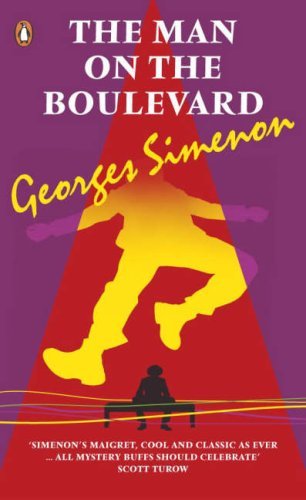
France: When I think of French crime fiction Georges Simenon’s Maigret immediately pops into my mind.  Simenon was actually Belgian, not French, but the Maigret books are set in France (mainly in Paris). Simenon wrote 75 novels and 28 short stories featuring Commissaire Jules Maigret and I first knew of them from a friend at school who loved the books. Then there were the numerous TV productions with Rupert Davies as Maigret and more recently Rowan Atkinson has played the role of Chief Inspector Maigret in the 2016 ITV series.

I’ve read several of the Maigret books. The Man on the Boulevard is the 41st book in the series. There were lots of things I liked in this book – the attention to detail, the descriptions of the weather (cold and wet), and the characters themselves.  It’s set in Paris and without knowing the location of the various boulevards I could still get a good impression of the city and its suburbs. 

It has a puzzling murder to solve – Louis Thouret is found stabbed in a little alleyway. Seemingly a perfectly ordinary man of regular habits who had left his home in the suburbs to go to his job as a storekeeper in Paris for the past twenty five years. It turns out that Louis had a double life that his wife knew nothing about. It appears he had been having an affair and for the past three years he had not had a job. I liked the theme of a man following a double life and the way Louis resolves his problem of keeping up appearances with his wife and family although I thought his method of maintaining his income was rather implausible.

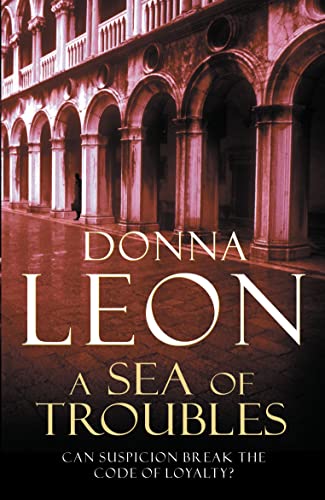
Italy: A Sea of Troubles by Donna Leon, whose books are crime fiction, but also discuss various social and cultural issues and A Sea of Troubles, the 10th Commissario Guido Brunetti novel, is no exception. Brunetti is one of my favourite detectives. He is happily married with two children. He doesn’t smoke or drink to excess and often goes home for lunch to his beautiful wife Paolo, who is a wonderful cook – in this book she treats him to a delicious apple cake made with lemon and apple juice and ‘enough Grand Marnier to permeate the whole thing and linger on the tongue for ever.’ (page 238)

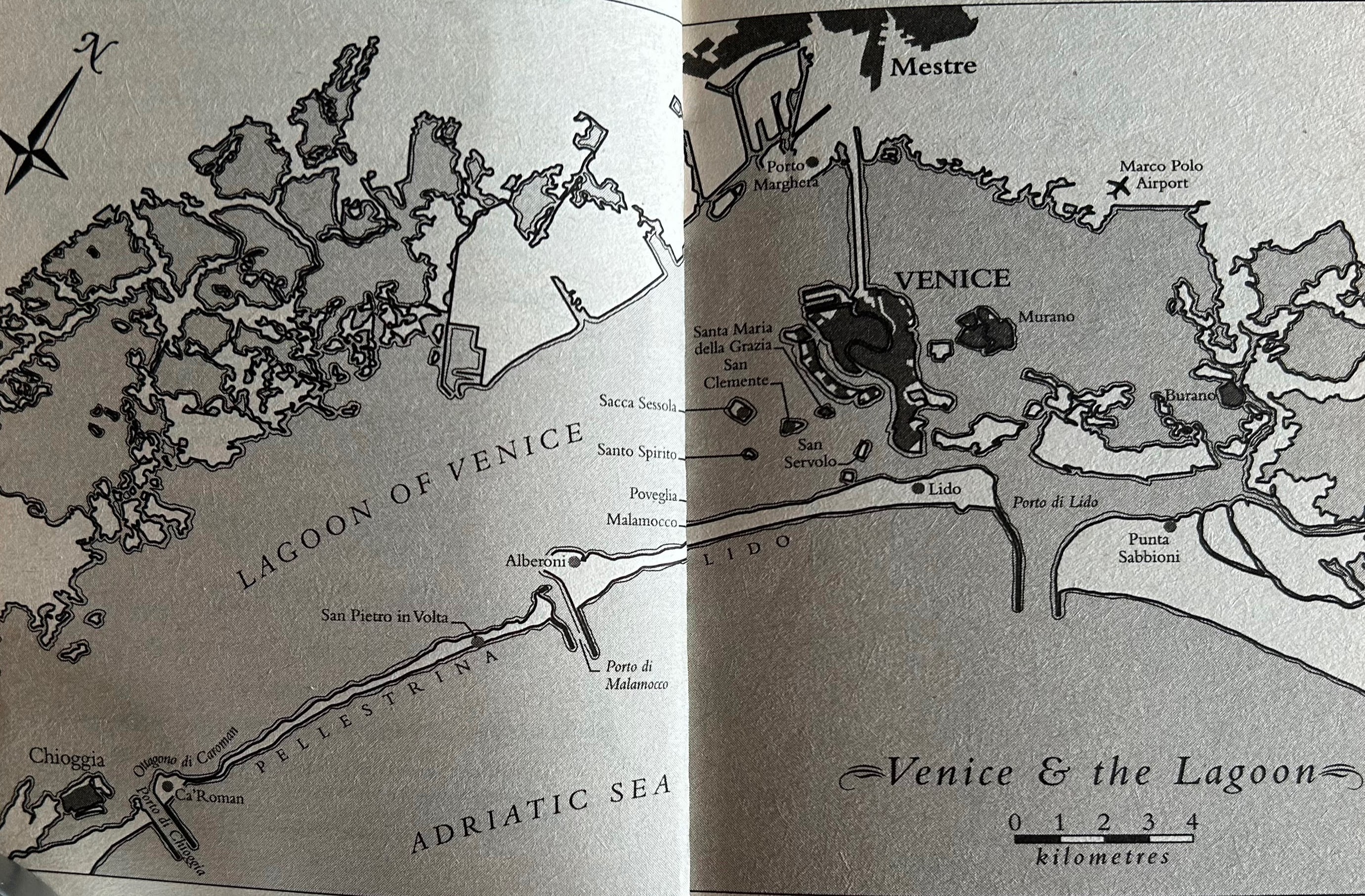
I read it eagerly, keen to get to the bottom of the mystery surrounding the deaths of two clam fishermen, father and son, off the island of Pellestrina, south of the Lido on the Venetian lagoon, when their boat suddenly exploded. As well as the mystery the issues Leon highlights in this book are concerning pollution and the overfishing of clams that is destroying the clam beds.

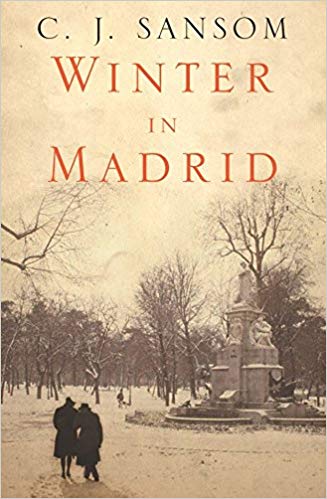
Spain:  C J Sansom’s Winter in Madrid, which I think is one of the best books I’ve read, a book that had me in tears as I was reading about the devastation, desolation and waste of war. It is an action packed thrilling war/spy story and also a moving love story and historical drama all rolled into this tense and gripping novel. Sansom vividly conveys the horror and fear of the realities of life in Spain during the Spanish Civil War and the first two years of the Second World War.

The opening chapter dramatically sets the tone for the book with the brutality of the Battle of Jarama in 1937 then leaps straight into the bombing of London in 1940. Then Harry Brett, traumatised by his injuries at Dunkirk is sent to Spain to spy for the British Secret Service. He is plunged into the terrible living conditions in Madrid where people are starving, children are left homeless to fend for themselves and wild dogs roam the rubble of bombed houses.

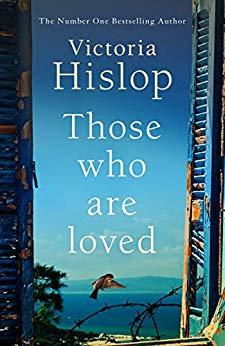
Greece: Those Who Are Loved by Victoria Hislop, one of the most moving novels I’ve read. It is historical fiction ‘set against the backdrop of the German occupation of Greece, the subsequent civil war and a military dictatorship, all of which left deep scars’. It begins slowly and it was only at about the halfway stage that it really took off for me. But then, the book sprang to life, the pace increased, and I was totally gripped and moved as history and fiction came together dramatically in glorious technicolor, telling the story of the characters personal lives and their parts in the action.

The main character is Themis Koralis/Stravidis (in Greek mythology Themis is the personification of fairness and natural law). In 2016 she is a great grandmother and realising that her grandchildren knew very little about Greek history she decided to tell them her life story, beginning from when she was a small child in the 1930s, through the German occupation of Greece during the Second World War, the civil war that followed, then the oppressive rule of the military junta and the abolition of the Greek monarchy, up to the present day.

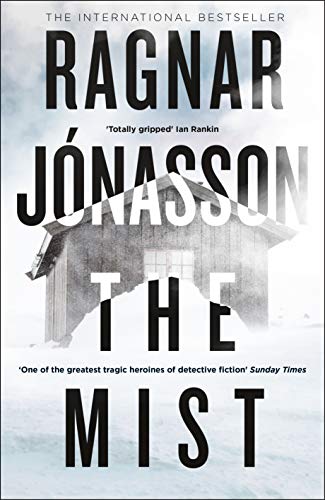
Iceland: The Mist by Ragnar Jonasson, the third novel in the Hidden Iceland series. Detective Inspector Hulda Hermannsdottir is worrying about her daughter, Dimma and her relationship with her husband, Jon. Alongside the story of what is happening in her personal life, she is also investigating the disappearance of a young woman and a suspected murder case, a particularly horrific one in an isolated farmhouse in the east, where Erla and her husband, Einar live. When a stranger, lost in a snowstorm arrives Erla invites him in and the nightmare begins.

I loved the setting, Jonasson’s writing bringing the scenery and the weather to life – you can feel the isolation and experience what it is like to be lost in a howling snowstorm. The emotional tension is brilliantly done too, the sense of despair, confusion and dread is almost unbearable. 

A Sea of Troubles by Donna Leon

A Sea of Troubles is Donna Leon’s 10th Commissario Guido Brunetti novel. I’ve been reading them out of order of publication on and off for several years now and this book is the earliest one in the series that I’ve read. Her books are crime fiction, but also discuss various social and cultural issues and A Sea of Troubles is no exception. 

Brunetti is one of my favourite detectives. He is happily married with two children. He doesn’t smoke or drink to excess and often goes home for lunch to his beautiful wife Paolo, who is a wonderful cook – in this book she treats him to a delicious apple cake made with lemon and apple juice and ‘enough Grand Marnier to permeate the whole thing and linger on the tongue for ever.’ (page 238)

I read it eagerly, keen to get to the bottom of the mystery surrounding the deaths of two clam fishermen, father and son, off the island of Pellestrina, south of the Lido on the Venetian lagoon, when their boat suddenly exploded. As well as the mystery the issues Leon highlights in this book are concerning pollution and the overfishing of clams that is destroying the clam beds.

I was fascinated by the island, never having heard of it before. It’s a long and narrow island (11 km long, and 25 to 210 metres wide) that separates the Venetian Lagoon from the Adriatic Sea. Fishing is the primary source of income and alongside the inner side of the thin peninsular are scores of vongolari, the clam fishing boats.

Pellestrina is a closely knit community, the islanders bound together by a code of loyalty and a suspicion of outsiders. Brunetti is finding it difficult to penetrate their silence, as even though he is a Venetian, he is regarded by the islanders as an outsider, a foreigner. So when his boss’s secretary, the ever-resourceful Signorina Elettra, volunteers to visit her cousin who lives in the village there to see what she can find out, he lets her go. And then is most concerned when she falls for a young man on the island. And Paola begins to question why he is so interested in Elettra, having noticed that he had thought about little else than her for over a week. He then realises his feelings for Elletra are not so straightforward after all.

However, the crime still needs resolving and Brunetti finds himself in a web of political intrigue, corruption and secrets. From a slow start the ending is dramatic and action packed with Brunetti and Elletra in danger of their lives.

  • Publisher ‏ : ‎ Arrow; 1st edition (26 Feb. 2009)
  • Language ‏ : ‎ English
  • Paperback ‏ : ‎ 336 pages
  • Source: I bought it
  • My rating: 5*

Mini Reviews

This year has been a good time for reading books, but not a good time as far as writing reviews goes and I am way behind. This is the second set of mini reviews in an attempt to catch up with the backlog.

Give Unto Others by Donna Leon 3*

I read this because I’ve read just a few of the Commissario Guido Brunetti crime fiction novels and enjoyed them. This one is described on Goodreads as follows:

The gifted Venetian detective returns in his 31st case – this time, investigating the Janus-faced nature of yet another Italian institution. Brunetti will have to once again face the blurred line that runs between the criminal and the non-criminal, bending police rules, and his own character, to help an acquaintance in danger.

This is an unusual mystery, slow to begin with then gradually gathering pace, as Brunetti unofficially agrees to do Elisabetta Foscarini, an ex-neighbour a favour. She is worried about her daughter’s husband, Enrico Fenzo an accountant, who she fears is in danger. Brunetti enlists the help of his colleagues Griffoni, Vianello, and Signorina Elettra with his investigations. What they uncover is a tangled web surrounding a South American charity that Fenzo had helped Elisabetta’s husband set up, the Belize nel Cuore, providing a hospital and medical services to the poor.

It was entertaining and I enjoyed the descriptions of Venice, just opening up to tourists again after the pandemic. I thought it would have been better as an official police investigation. But it does give an insight into the way charities are set up and can be misused. And there’s a particularly disturbing picture of what dementia can do to a person.

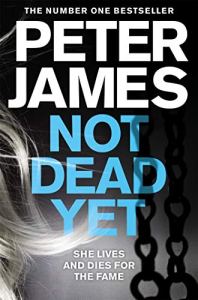
Not Dead Yet by Peter James 4*

I really enjoyed this book, the 8th Roy Grace book. If you’ve been watching the TV adaptation this story was the last one they produced, as usual with adaptations, with several differences from the book. As I’ve said before I prefer the books and this one was very good. This is the summary from Amazon:

The return of a Brighton girl turned movie star spells nothing but trouble for Detective Superintendent Roy Grace in the gripping crime novel Not Dead Yet, by award winning author Peter James.

Gaia Lafayette has a movie to shoot back home and Grace is in charge of her security. Yet when a vicious gangster is released from prison and an unidentifiable headless torso is found, a nightmare unfolds before Grace’s eyes.

An obsessed stalker is after Gaia – and Grace knows that they may be at large in his city, waiting, watching, planning . . .

It’s fast paced, complicated and totally gripping. I loved all the details of the scenes of the filming in Brighton’s Royal Pavilion and also the ongoing story of Roy’s missing wife. Now I’m looking forward to reading the 9th book in the series, Dead Man’s Time.

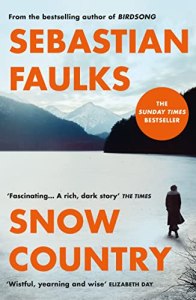
Snow Country by Sebastian Faulks 2*

This is the synopsis on Goodreads:

1914: Young Anton Heideck has arrived in Vienna, eager to make his name as a journalist. While working part-time as a private tutor, he encounters Delphine, a woman who mixes startling candour with deep reserve. Entranced by the light of first love, Anton feels himself blessed. Until his country declares war on hers.

1927: For Lena, life with a drunken mother in a small town has been impoverished and cold. She is convinced she can amount to nothing until a young lawyer, Rudolf Plischke, spirits her away to Vienna. But the capital proves unforgiving. Lena leaves her metropolitan dream behind to take a menial job at the snow-bound sanatorium, the Schloss Seeblick.

1933: Still struggling to come terms with the loss of so many friends on the Eastern Front, Anton, now an established writer, is commissioned by a magazine to visit the mysterious Schloss Seeblick. In this place of healing, on the banks of a silvery lake, where the depths of human suffering and the chances of redemption are explored, two people will see each other as if for the first time.

Sweeping across Europe as it recovers from one war and hides its face from the coming of another, SNOW COUNTRY is a landmark novel of exquisite yearnings, dreams of youth and the sanctity of hope. In elegant, shimmering prose, Sebastian Faulks has produced a work of timeless resonance.

My thoughts:

I was disappointed by this novel, mainly because I found it quite dull in places, which I hadn’t expected from the synopsis or the 5 and 4 star reviews on both Amazon and Goodreads. The best defined character is Lena, but the others seem rather flat – one dimensional and hard to distinguish. This may, of course, be down to me as I found it rather muddled and I had to keep recapping just to clarify who they were. So, I struggled to read it and eventually lost interest. But I did finish it.

First Chapter First Paragraph: Falling in Love

Every Tuesday Diane at Bibliophile by the Sea hosts First Chapter First Paragraph Tuesday Intros to share the first paragraph sometimes two, of a book that she’s reading or planning to read soon.

This week’s first paragraph is from a library book that I’ll be reading soon, Falling in Love by Donna Leon. It’s the 24th Commissario Brunetti novel.

Falling in Love (Brunetti 24)

It begins:

The woman knelt over her lover, her face, her entire body stiff with terror, staring at the blood on her hand. He lay on his back, one arm flung out, palm upturned as if begging her to place something into it; his life, perhaps. She had touched his chest, urging him to get up, so they could get out of there, but he hadn’t moved, so she had shaken him, the same old sleepy-head who never wanted to get out of bed.

Blurb (from back cover):

As an opera superstar at La Fenice in Venice, Flavia is well acquainted with attention from adoring fans and aspiring singers. But when anonymous admirer inundates her with bouquets of yellow roses, which start to appear in her dressing room and even inside her locked apartment, she begins to fear for her safety and calls in an old friend.

Enter Commissario Brunetti.

But soon the threat becomes more serious. Brunetti must enter the psyche of an obsessive fan and find the culprit before anyone, especially Flavia, comes to harm.

I’ve only read a few of the Brunetti novels and certainly not in the order they were written. Apparently Flavia appeared in the first book, Death at La Fenice, in which Flavia Petrelli, one of Italy’s finest living sopranos had been the prime suspect in the poisoning of a renowned German conductor – until Brunetti cleared her name.

This title doesn’t say this book is crime fiction to me. What do you think?

Wilful Behaviour by Donna Leon: Book Review

Wilful Behaviour begins with an explosion …

The explosion came at breakfast. Brunetti’s position as a commissario of police, though it made for the possibility of explosion more likely than it would be for the average citizen, did not make the setting any less strange. The location, however, was related to Brunetti’s personal situation as the husband of a woman of incandescent, if inconsistent, views and politics, not to his profession.

‘Why do we bother to read this disgusting piece of garbage?’ Paola exploded, slamming a folded copy of the day’s Gazzettino angrily onto the breakfast table, where it upset the sugar bowl. (page 1)

Wilful Behaviour

  • Paperback: 368 pages
  • Publisher: Arrow; First Thus edition (26 Feb 2009)
  • Language English
  • ISBN-10: 0099536625
  • ISBN-13: 978-0099536628
  • Source: Library Book

Brief Description

When one of his wife Paola’s students comes to visit him, with a strange and vague interest in investigating the possibility of a pardon for a crime committed by her grandfather many years ago, Commissario Brunetti thinks little of it, beyond being intrigued and attracted by the girl’s intelligence and moral seriousness. But when she is found murdered, clearly stabbed to death, Claudia Leonardo is suddenly no longer simply Paola’s student, but Brunetti’s case ‘¦’

My view

I’ve been reading Donna Leon’s Commissario Brunetti’s books set in Venice, completely out of order of their publication. It doesn’t  matter at all to me. Her books are crime fiction, but also discuss various social and cultural issues and Wilful Behaviour is no exception. The effects of the Second World War feature largely in this book, the different attitudes Italians had during the war – secrets of collaboration, resistance fighters, the exploitation of Italian Jews – and the way modern day Italians view the past.

I read the book quickly keen to discover who had killed Claudia and why, following the intricacies of Italian bureaucracy with interest, the planning process for example. The question of honour is also uppermost, with Paola, who had been lecturing her university students ‘on the theme of honour and honourable behaviour and the way it was central to [Edith]Wharton’s three great novels,‘  wondering ‘whether it still had the same meaning for her students; indeed whether it had any meaning for her students.’

Brunetti consults his father-in-law, Count Falier, who with his myriad connections is a source of information on the people and workings of Venice. Through him he learns more about Luca Guzzardi, Claudia’s grandfather who had been convicted of war crimes after the war. Guzzardi was ‘one of the people appointed to decide which pieces of decadent art should be disposed of by galleries and museums.’ And it is these works of art and their current whereabouts that provide the clue to why Claudia was murdered, but don’t point exactly to the culprit.

Wilful Behaviour has an intricate plot, with characters who are fallible and so believable. I like the way Brunetti works, gathering information from various sources including the ever-resourceful Signorina Elettra and the interactions with his family. The ending is not in line with the ideal of justice being seen to be done and Brunetti has to admit to himself that he is ‘helpless to effect any change in the way things would play themselves out.’ It reminds Paola of ‘Jarndyce vs Jarndyce.’