Top Ten Tuesday: Books with My Favourite Colour on the Cover

Top Ten Tuesday is a weekly meme created by The Broke and the Bookish and now hosted by Jana at That Artsy Reader Girl. For the rules see her blog.

The topic this week is Books with My Favourite Colour on the Cover. Here they are in various shades of red:
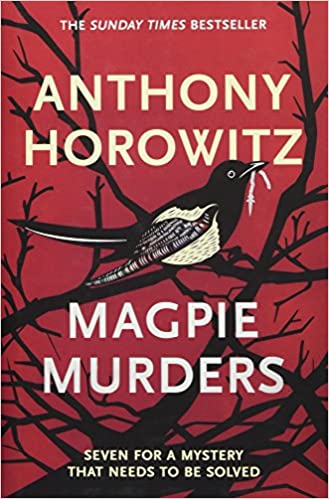
Magpie Murders by Anthony Horowitz – a prime example of a puzzle-type of crime fiction combining elements of the vintage-style golden age crime novel with word-play and cryptic clues and allusions to Agatha Christie and Arthur Conan Doyle. It’s also a novel within a novel, with mystery piled upon mystery. I loved it.

The Sentence is Death by Anthony Horowitz – the second book in the Hawthorne and Horowitz Mystery series in which Daniel Hawthorne, an ex-policeman, now a private investigator, who the police call in to help when they have a case they call a ‘sticker’. What I found particularly interesting was the way that Anthony Horowitz inserted himself into the fiction, recruited by Hawthorne to write a book about him and the cases he investigates.

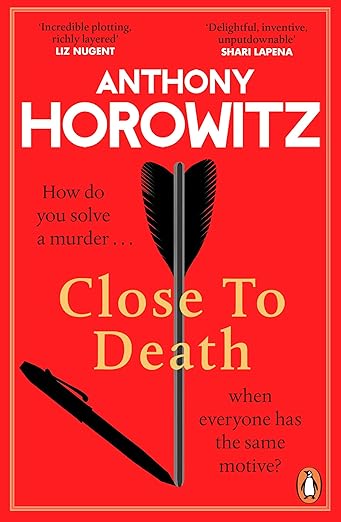
Close to Death by Anthony Horowitz – the fifth literary whodunit in the Hawthorne and Horowitz series, Detective Hawthorne is once again called upon to solve an unsolvable case—a gruesome murder in an idyllic gated community in which suspects abound, aided by Horowitz, as a fictional character.

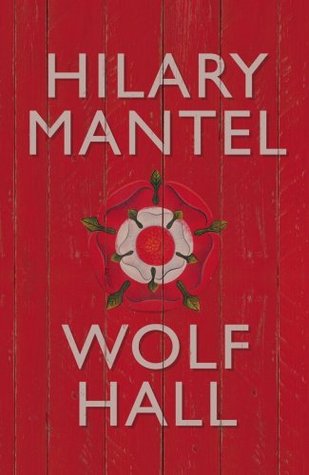
Wolf Hall by Hilary Mantel – historical fiction, the story of Thomas Cromwell, the son of a blacksmith, and his political rise, set against the background of Henry VIII’s England and his struggle with the Pope over his desire to marry Anne Boleyn. This is the first in the Wolf Hall trilogy, based on the life of Thomas Cromwell (c. 1485-1540), who rose from obscurity to become chief minister of King Henry VIII of England.

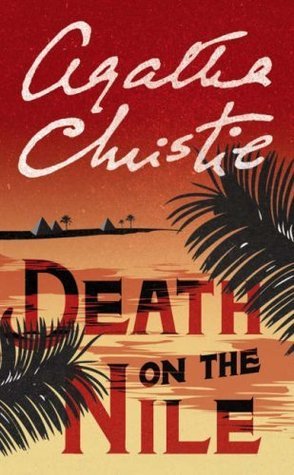
Death on the Nile by Agatha Christie, a pre-Second World War crime fiction novel. It shows Agatha Christie’s interest in Egypt and archaeology and also reflects much of the flavour and social nuances of the pre-war period. In it she sets a puzzle to solve –  who shot Linnet Doyle, the wealthy American heiress? Although the novel is set in Egypt, an exotic location, it is essentially a ‘locked room mystery’.

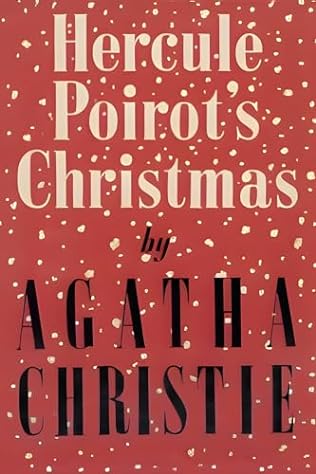
Hercule Poirot’s Christmas by Agatha Chistie in which Poirot investigates the death of Simeon Lee, the head of the Lee family. None of his family like him, in fact most of them hate him and there are plenty of suspects for his murder. He is found dead with his throat cut in a locked room – locked from the inside.

Wild Fire by Ann Cleeves, the 8th and last book in Ann Cleeves’ Shetland series. I have loved this series ever since I read the first book, Raven Black, back in 2010. And because I began reading the books before they were televised my picture of Inspector Jimmy Perez is drawn from them rather than from the dramatisations. There are some significant changes  between the TV dramatisations and the books. I love the books, but still enjoyed the TV adaptions.

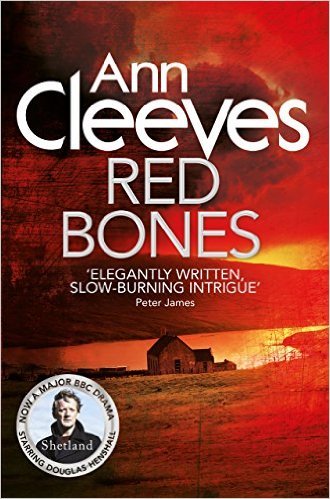
Red Bones by Ann Cleeves, the third book in her Shetland Quartet. It’s set on Whalsay, where two young archaeologists, excavating a site on Mima Williams’s land, discover human bones. They are sent away for testing – are they an ancient  find or are the bones more contemporary?

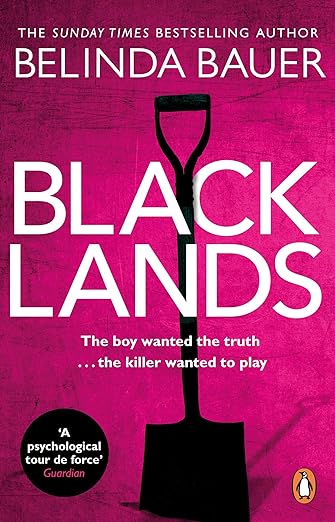
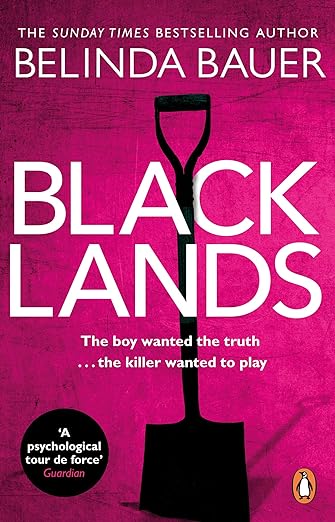
Blacklands by Belinda Bauer, crime fiction. This is an absolutely gripping battle of wits between Stephen aged twelve and serial killer Arnold Avery as they exchange letters about the whereabouts of Stephen’s uncle’s body.

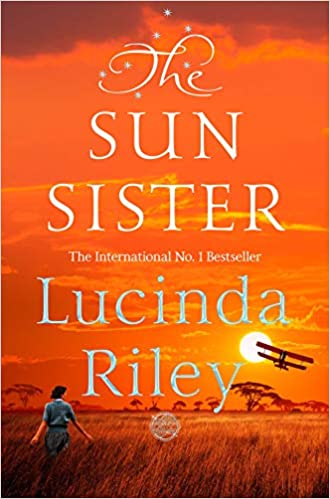
The Sun Sister by Lucinda Riley – the only book on this list that I haven’t yet read. It’s the sixth book in The Sven Sisters series, the story of love and loss, inspired by the mythology of the famous star constellation. It’s one of my TBRs only because I’m reading the series in order and so far I’ve read the first three books.
Catching Up

It’s that time of year – the grass is growing at a rate of knots, the weeds are shooting up all over the place, the garden is crying out for attention and my time for writing is disappearing.

So here are two quick reviews of books I’ve read this month:

Blacklands by Belinda Bauer – her debut novel. I loved this book, so different from other crime fiction books I’ve read. It’s told mainly from Stephen Lamb’s perspective. Stephen is twelve years old. Nineteen years earlier Billy, Stephen’s uncle then aged eleven had disappeared. It was assumed that he had fallen victim to the notorious serial killer Arnold Avery, but his body had never been found. Stephen is determined to find where Arnold had buried his body and writes to him in prison.

What follows is an absolutely gripping battle of wits between Stephen and Arnold as they exchange letters. This is a dark and chilling story that took me inside the minds of both Stephen and Arnold, making this a disturbing experience and also a very moving and heartbreaking story. Since reading this book I’ve also read Snap, which although I enjoyed it I don’t think it is as good as Blacklands. I shall certainly be reading more of her books!

A Life in Questions

A Life in Questions by Jeremy Paxman (one of my TBRS). This is an interesting and entertaining autobiography, which is mainly about his career with little about his personal life, written in a very readable style. His sardonic wit and sense of humour come across, often aimed at himself. He tells of his childhood and his career first with the BBC in Northern Ireland and then in various war zones and trouble spots before becoming a presenter on Newsnight, where his interviews with politicians both infuriated and delighted me, and quizmaster on University Challenge. He has also done documentary programmes including an enlightening one on the EU, on art, and on history and has written several books on a variety of subjects. The only one I’ve read is The English: A Portrait of a People.

As I would expect from such a forthright person Paxman’s book is full of his opinions, but I couldn’t help wondering how much of  his grumpiness is a facade and what the real man behind it is really like. Maybe his reflections on his love for fly fishing and for nature, give us a glimpse of the real person. I liked these passages very much. Extending to 6 pages he describes how fishing is

essentially about trying to inserting yourself into an environment where you don’t belong, without being noticed. If you blunder about you won’t catch anything – on a sunny day you will be able to see the trout darting off in all directions when they sense your footfall on the bank, their flicking tails a snub to your clumsiness. Be quiet. And then, when you’re stalking a fish, things happen around you. A grass snake swims sinuously across the river. A water vole plops into a stream. Wagtails and oystercatchers dance at the water’s edge. Swallows and martins swoop low over the water, snatching flies. A kingfisher flashes that spectacular iridescent blue above the river; it is gone in an instant.

… To become absorbed in the natural world frees your mind: fish cannot survive in our element, and only imagination will allow us to live in theirs. …

In essence it is a solitary occupation. But the best fishing days are those spent with friends, meeting for a picnic lunch on the riverbank, united in the awareness that we are doing something which defies rational explanation. (extracts from pages 254-255)


Although I don’t fish I think I’d like to read his book on fishing: Fish, Fishing and the Meaning of Life.

New-to-Me Books from Barter Books

On Tuesday it was time for another visit to my favourite bookshop Barter Books, one of the largest secondhand bookshops in Britain. This is where you can ‘swap’ books for credit that you can then use to get more books from the Barter Books shelves.

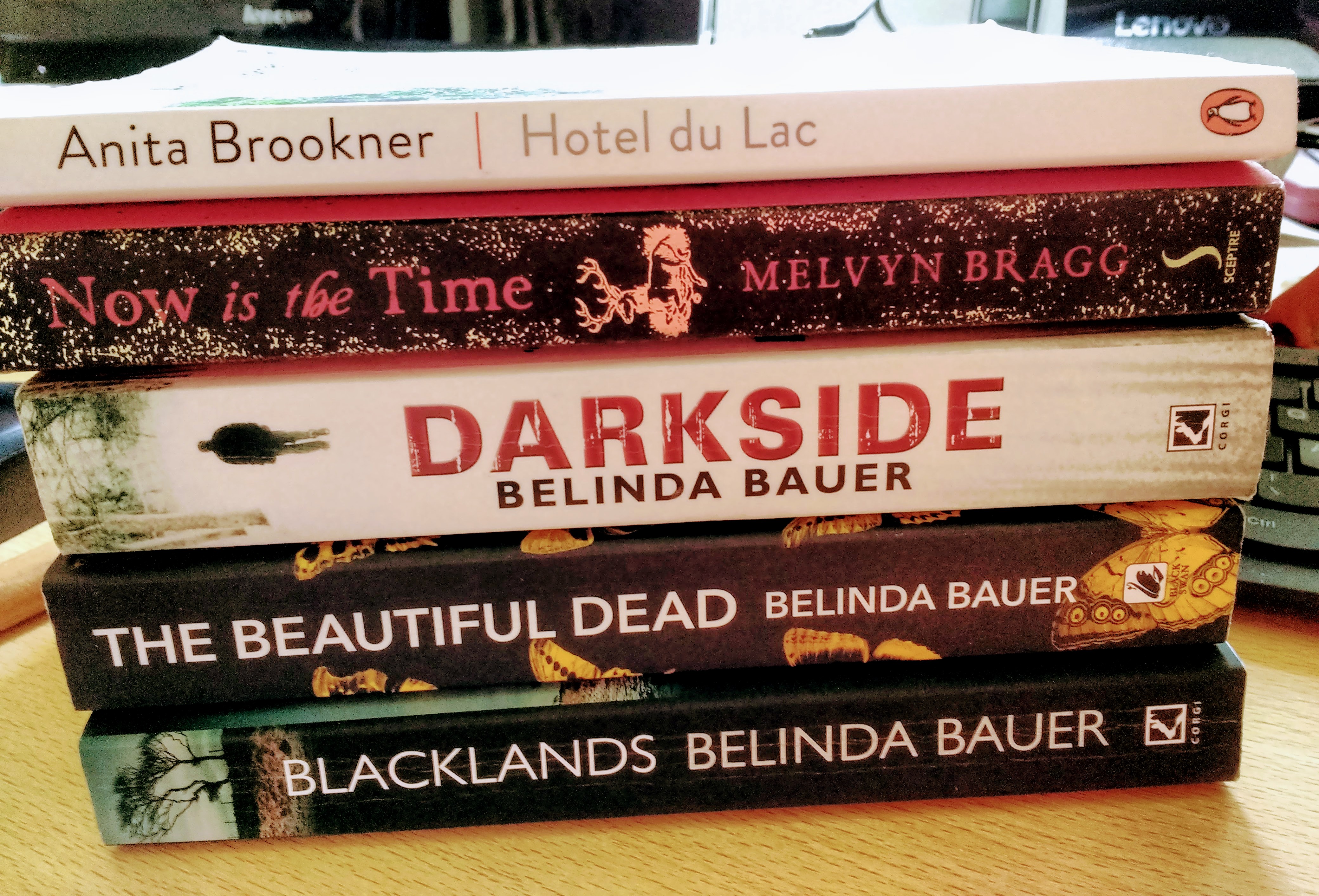
These are the books I brought home:

IMG_20180425_153217932.jpg


Hotel du Lac by Anita Brookner. I first read this many years ago and want to reread it – and hope I still like it as much. It won the Booker Prize in 1984. From the back cover: ‘Into the rarefied atmosphere of the Hotel du Lac timidly walks Edith Hope, romantic novelist and holder of modest dreams. Edith has been exiled from home after embarrassing herself and her friends. She has refused to sacrifice her ideals and remains stubbornly single. But among the pampered women and minor nobility Edith finds Mr Neville, and her chance to escape from a life of humiliating spinsterhood is renewed . . .’ 

Now is the Time by Melvyn Bragg. I loved his Soldiers Return quartet amongst some of his other books, so I’m hoping this historical fiction set in 1381 at the time of  the Peasants’ Revolt will be as good. Richard II was on the throne of England when a vast force of people led by Wat Tyler and John Ball demanded freedom, and equality. 

Then, three books by Belinda Bauer that I’ve been wanting to read for some time now:

Blacklands, her first novel – this tells the story of a game of cat and mouse between a 12 year old boy, Steven, and Arnold Avery, a serial killer and an abuser of children, who murdered Steven’s Uncle Billy, when he was 11 years old, twenty years ago.

Her second book, Darkside is set in the middle of winter time, when the people who live in a peaceful place, Shipcott, are shocked by the murder of an old woman in her bed.

The Beautiful Dead is about Eve Singer, a TV crime reporter, who will go to any length to get the latest scoop. But when a twisted serial killer starts using her to gain the publicity he craves, Eve must decide how far she’s willing to go – and how close she’ll let him get.

I’d love to start all these books straight away but I think I’ll begin with Belinda Bauer’s books, especially as I also have a review copy of her latest book, Snap which is due to be published as an e-book on 3 May 2018, with the hardback and paperback editions coming out later this year.

What do you think? Have you read any of these? Do they tempt you too?