My Friday Post: Giant’s Bread by Mary Westmacott (Agatha Christie)

Every Friday Book Beginnings on Friday is hosted by Gillion at Rose City Reader where you can share the first sentence (or so) of the book you are reading. You can also share from a book you want to highlight just because it caught your fancy.
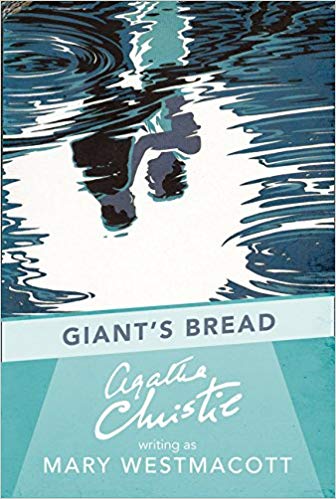
Giant’s Bread is by Agatha Christie, writing as Mary Westmacott. It’s one of the books on my 20 Books of Summer list. She wrote six novels under this pseudonym – Giant’s Bread was the first one, published in 1930. In the same year she also published The Mysterious Mr Quin and, Murder at the Vicarage – Miss Marple’s first book. 

It begins with a Prologue:

It was the opening night of London’s new National Opera House and consequentially an occasion. Royalty was there. The Press were there. The fashionable were there in large quantities. Even the musical, by hook or by crook, had managed to be there – mostly very high up in the final tier of seats under the roof.

They were there to see the performance of a new musical composition called Giant’s Bread.

And chapter one begins:

There were only three people of real importance in Vernon’s world: Nurse, God and Mr Green

Also every Friday there is The Friday 56, hosted by Freda at Freda’s Voice. *Grab a book, any book. *Turn to Page 56 or 56% on your  ereader . If you have to improvise, that is okay. *Find a snippet, short and sweet, but no spoilers!
These are the rules:

  1. Grab a book, any book.
  2. Turn to page 56, or 56% on your eReader. If you have to improvise, that is okay.
  3. Find any sentence (or a few, just don’t spoil it) that grabs you.
  4. Post it.
  5. Add the URL to your post in the link on Freda’s most recent Friday 56 post.
  1. Grab a book, any book.
  2. Turn to page 56, or 56% on your eReader. If you have to improvise, that is okay.
  3. Find any sentence (or a few, just don’t spoil it) that grabs you.
  4. Post it.
  5. Add the URL to your post in the link on Freda’s most recent Friday 56 post.

Page 56:

Poor Myra, She’d had a rotten deal on the whole. A fine looking creature, but he’d married her really for the sake of Abbots Puissants – and she had married him for love. That was the root of the whole trouble.

Blurb from Goodreads:

Vernon Deyre is a sensitive and brilliant musician, even a genius, tormented and driven by forces even he didn’t understand. His sheltered childhood in the home he loves has not prepared Vernon for the harsh reality of his adult years, and in order to write the great masterpiece of his life, he has to make a crucial decision with no time left to count the cost. But there is a high price to be paid for his talent, especially by his family and the two women in his lifee – the one he loves and the one who loves him.

Young Nell Vereker had always loved Vernon, loved him with a consuming passion that was alien to the proper social world in which she lived. But when Vernon sought solace in the arms of Jane Harding, a stranger and enigmatically beautiful older woman, Nell felt she could endure no greater pain. But Fate had only begun to work its dark mischief on this curious romantic triangle — for before their destinies were sealed, one would live, one would die, and one would return from the grave to be damned…

~~~

Mary was Agatha’s second name and Westmacott the name of some distant relatives. She succeeded in keeping her identity as Mary Westmacott unknown for nearly twenty years and the books, much to her pleasure, were modestly successful.
Short Stories on Sunday

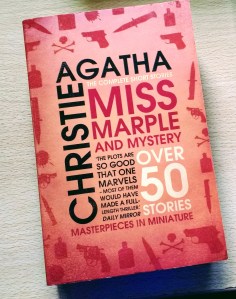
Over several years I’ve been reading my way through Agatha Christie’s books and short stories. I’ve read all her detective/mystery novels and some of her short story collections. In an attempt to read more of the short stories I’ve decided to read some each Sunday, beginning with the stories collected in Miss Marple and Mystery.

IMG_20180513_095855842.jpgThis collection contains 55 stories, 20 of them featuring Miss Marple. There is an Short Story Chronology in the Appendix with a table aiming to present all Agatha Christie’s short stories published between 1923 and 1971, listed in order of traced first publication date. Counting how many there are in total is a difficult task – some stories that first appeared in weekly or monthly magazines were later  re-worked and became chapters in a larger work, some in Partners in Crime were sub-divided into smaller chapters, 13 were re-worked into the episodic novel, The Big Four, and some were rewritten so substantially that they appear separately in different books!
I’ve read some of these in other short story collections but there are still many I haven’t read.

The Girl in the Train is one I haven’t read before. It was first published in Grand Magazine in February 1924 and was adapted as one of the Agatha Christie Hour drama series for by Thames Television in 1982 as part of their ten-part programme. It’s a very short story that also appears in The Listerdale Mystery collection of short stories.

George Rowland is the heir to his Uncle William’s wealth but is left without a job or a home when William throws him out on his heel. On a whim George Rowland decides to catch a train down to Rowland’s Castle, a village which happens to bear his name. A beautiful girl bursts into his compartment, frantically begging to be hidden.  She gives him a package saying it is the key to everything and he is to guard it with his life. Jumping out of the train at the first stop she tells him to follow the little man with a small dark beard getting on the train. His life changes dramatically as he follows her instructions.

It’s a bit of nonsense really, in the same vein as Christie’s Tommy and Tuppence stories. A quick easy read, but entertaining nevertheless and possibly the first of books entitled The Girl … 

Nonfiction November: Week 3 – Be The Expert – Agatha Christie

nonficnov 19

I’m taking part in Nonfiction November 2019 again this year. It was one of my favourite events last year – this year it will run from Oct 28 to Nov 30. Each Monday a link-up for the week’s topic will be posted at the host’s blog for you to link your posts throughout the week.

This week’s topic is: 

Be The Expert/Ask the Expert/Become the Expert (Katie @ Doing Dewey): Three ways to join in this week! You can either share 3 or more books on a single topic that you have read and can recommend (be the expert), you can put the call out for good nonfiction on a specific topic that you have been dying to read (ask the expert), or you can create your own list of books on a topic that you’d like to read (become the expert).

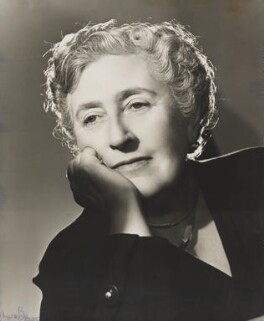
I read more fiction than nonfiction, so I can’t claim to be an expert in any one subject, but I do read quite a lot of autobiographies and biographies and combined with my love of crime fiction I’ve chosen Agatha Christie for the subject of this post. I have read all of her crime fiction novels, her Autobiography and her memoir, Come Tell Me How You Live.

Agatha Christie

Agatha Christie: An Autobiography. It took her fifteen years to write it. She stopped in 1965 when she was 75 because she thought that it was the ‘right moment to stop’. As well as being a record of her life as she remembered it and wanted to relate it, it’s also full of her thoughts on life and writing. I’ve written about her Autobiography in a few posts as I was reading it:

Agatha Christie: Come, Tell Me How You Live: an archaeological memoir – she had visited the Middle East in 1929 travelling on the Orient Express to Istanbul and then on to Damascus and Baghdad. She visited the excavations at Ur and returned there the following spring where she met archaeologist Max Mallowan – by the end of the summer they had decided to marry, which they did on 11 September 1930. She wrote this memoir to answer her friends’ questions about what life was like when she accompanied Max on his excavations in Syria and Iraq in the 1930s.

I can also recommend the following books:

Agatha Christie and the Eleven Missing Days by Jared Cade – a fascinating book. I did feel as though I was intruding into Agatha Christie’s private life that she had not wanted made known but Cade writes sympathetically. In December 1926 Agatha Christie disappeared from her home, Styles, in Berkshire. She was found eleven days later in a hotel in Harrogate, Yorkshire apparently suffering from amnesia.   The book is not just about those eleven days but is a biography that reveals how those eleven days and the events that led up to her disappearance influenced the rest of her life.

Agatha Christie: An English Mystery by Laura Thompson – Overall, I think that this book as a biography is unbalanced, concentrating on the events surrounding Agatha’s disappearance and there is much speculation and supposition. I prefer Agatha’s own version of her life: An Autobiography, in which she merely referred to the events of 1926 thus:

The next year of my life is one I hate recalling. As so often in life, when one thing goes wrong, everything goes wrong. (page 356)

Agatha Christie at Home by Hilary Macaskill –  a beautiful book, with many photographs – more than 100 colour photos – illustrating Agatha’s life and homes.

Poirot and Me by David Suchet – For me Suchet was the perfect Poirot and this book really lives up to its title, as the main subject is David Suchet’s role as Poirot. His first performance as Poirot was in 1988. Over the intervening twenty five years he played the part in every one of the seventy Poirot stories that Agatha Christie wrote, with the exception of a tiny short story called The Lemesurier Inheritance (a story in Poirot’s Early Cases and in The Under Dog).

I also dip into two more books about Agatha Christie’s work – Agatha Christie’s Secret Notebooks: Fifty Years of Mysteries in the Making by John Curran and The Life and Crimes of Agatha Christie by Charles Osborne.

Six Degrees of Separation: from How To Be Both to The Prime of Miss Jean Brodie

I love doing Six Degrees of Separation, a monthly link-up hosted by Kate at Books Are My Favourite and Best. Each month a book is chosen as a starting point and linked to six other books to form a chain. A book doesn’t need to be connected to all the other books on the list, only to the one next to it in the chain.

This month (April 6, 2019), the chain begins with Ali Smith’s award-winning novel, How to be Both.

How to be both

How to be Both is a novel all about art’s versatility. Borrowing from painting’s fresco technique to make an original literary double-take, it’s a fast-moving genre-bending conversation between forms, times, truths and fictions. There’s a Renaissance artist of the 1460s. There’s the child of a child of the 1960s. Two tales of love and injustice twist into a singular yarn where time gets timeless, structural gets playful, knowing gets mysterious, fictional gets real—and all life’s givens get given a second chance.’ (Goodreads)

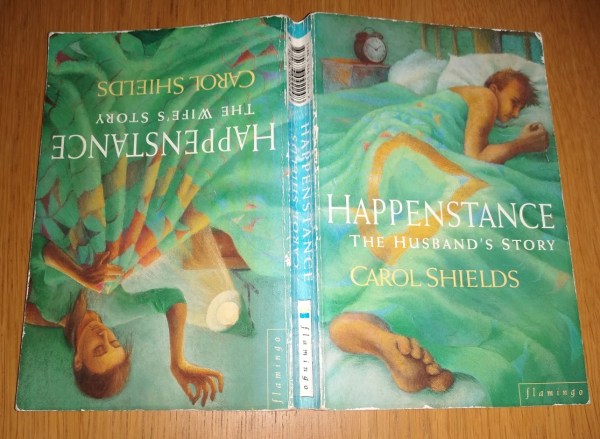
I haven’t read this book but I’d like to sometime. I see that there are two versions: one begins with the contemporary story, the other with the 15th-century story. This reminded me of Carol Shields’ book Happenstance, two stories about the same five-day period – one from Jack Bowman’s point of view, and the other from his wife, Brenda’s. They’re printed in the same book in an unusual format of containing two books in one, either can be read first – then turn the book upside down and read the other story.

Happenstance

My next link is a bit of a jump – from the character Brenda in Happenstance I immediately thought of Brenda Blethyn, who plays Vera in Ann Cleeves’s books. One of these books is Silent Voices in which D I Vera Stanhope finds a dead body in the sauna room of her local gym. The victim, a woman had worked in social services – and was involved in a shocking case involving a young child.

Social Services also feature in Fair of Face by Christina James. Ten year old Grace is being fostered when her foster mother and her baby are found dead in their beds. Social Services are asked to work with the police, in order to question Grace and her friend Chloe, a child from a troubled family.

Another author with the name James, is P D James, also a crime writer. An Unsuitable Job for a Woman is a Cordelia Gray detective story in which she takes on an assignment from Sir Ronald Callander, a famous scientist, to investigate the death of his son, Mark who had been found hanged in suspicious circumstances. Mark had left Cambridge University without completing his degree and had taken a job as a gardener.

My next link is to Agatha Christie’s Cat Among the Pigeons, set mainly in an exclusive and expensive girls’ school, Meadowbank, in England. Some new staff members have been appointed, including Adam Goodman, a handsome young gardener.

My final link is to another school, the Marcia Blaine School for Girls in Muriel Spark’s novel, The Prime of Miss Jean Brodie. Marcia Blaine is a traditional school where Miss Brodie’s ideas and methods of teaching are viewed with dislike and distrust. The Head Teacher is looking for ways to discredit and get rid of her. The girls in her ‘set’ fall under her spell, but one of them betrays her, ruining her teaching career.

Different formats, the name ‘Brenda’, Social Services, authors’ surname ‘James’, gardeners,  and girls’ schools all link How To Be Both to The Prime of Miss Jean Brodie.

Except for The Prime of Miss Jean Brodie the books in my chain are all crime fiction and apart from How To Be Both I’ve read all the books in the chain – clicking on the titles takes you to my posts, where they exist.

Next month (May 4, 2019), the chain will begin with Jane Harper’s debut best-seller, The Dry.

The Big Book of Christmas Mysteries

The Big Book of Christmas Mysteries: The Most Complete Collection of Yuletide Whodunits Ever Assembled

The Big Book of Christmas Mysteries:The Most Complete Collection of Yuletide Whodunits Ever Assembled edited by Otto Penzler is just the book to read at this time of year if, like me, you enjoy mystery fiction with a Christmas theme. It is a big book of 647 pages – so I have an e-book version and dip into into it each Christmas.

It contains stories by a variety of authors including Agatha Christie, Colin Dexter, Ellis Peters, Arthur Conan Doyle, Ellery Queen, Edgar Wallace, Peter Lovesey, Peter Robinson, Ed McBain, Sarah Paretsky, Mary Higgins Clark, Ngaio Marsh, Isaac Asimov, G K Chesterton, H R F Keating, Robert Louis Stevenson and more.

Rumpole and the Spirit of Christmas by  John Mortimer is one of the stories in the section ‘A Funny Little Christmas’. In it Rumpole is at the Old Bailey defending Edward Timson, the youngest member of the huge south London family of criminals, charged with wilful murder. It’s Christmas and Eddie tells Rumpole his mum wants him hone for Christmas – but Rumpole wonders ‘which Christmas?

Will he make it? The evidence against him is strong. It all began when a war broke out between the Timsons and the O’Dowds when Bridget O’Dowd was chosen to play the role of Mary in the school nativity play and Eddie said she was ‘a spotty little tart unsuited to play any role of which the most notable characteristic was virginity‘. The resulting battle ended with the death of Kevin O’Dowd.

Rumpole is his usual grumpy self, getting drunk on wine in Pommeroy’s Wine Bar with the prosecuting barrister, Wrigglesworth, instead of hurrying home to his wife, Hilda (She Who Must be Obeyed) who has made him rissoles and frozen peas for his dinner. As I read it I could easily imagine the scenes, with Leo McKern playing the role of Rumpole.

Agatha Christie has two stories in the collection – the first is The Adventure of the Christmas Pudding in which Hercule Poirot investigates the theft of a priceless ruby stolen from a Far Eastern prince. The Christmas Pudding in question is a ‘large football of a pudding, a piece of holly stuck in it and glorious flames of blue and red rising round it’  and the second A Christmas Tragedy, a little puzzle of a mystery. Miss Marple tells the story of the death of Mrs Sanders and how it it had been made to look an accident when it was really a cold-blooded murder. I can’t see any connection in this story to Christmas, but it is definitely a tragedy and for a short story it is very complicated.

There are no stories by Charles Dickens in this collection but Morse’s Greatest Mystery by Colin Dexter begins with a quotation from A Christmas Carol, when Lewis knocks on the door of Morse’s North Oxford flat and Morse greets him whilst shouting down the phone to his bank manager. Like Scrooge Morse doesn’t like Christmas! This story is about the theft of a donation of £400 pounds to a charity for Mentally Handicapped Children the patrons of the George pub. Morse has to follow a series of clues to solve the mystery – and by the end he becomes more like the Christmas Scrooge …

~~~

As this is my last post before Christmas I wish you all a Merry Christmas and Happy Reading! 

Absent in the Spring by Mary Westmacott (Agatha Christie)

img_20180809_0727129331

⭐⭐⭐⭐⭐

I love Agatha Christie’s crime fiction but I’ve held back from reading her other books written under the name of Mary Westmacott, not sure just what to expect. So, I was very glad to find that Absent in the Spring is just as good as her other books and I was thoroughly absorbed in the story of Joan Scudamore who was stranded in the desert, after visiting her daughter in Baghdad.

Agatha Christie managed to keep the true identity of Mary Westmacott a secret for fifteen years! Absent in the Spring is the one book she wrote that  satisfied her completely – and having now read it I can see why. She wrote the book in just three days in 1944. It had ‘grown inside‘ her for six or seven years. She had visualised all the characters and they were there ready for her to write about them and she just had to get it down on paper, writing in a ‘white heat‘, without interruptions until it was finished, leaving her exhausted. She slept for more or less twenty-four hours afterwards. She took the title from Shakespeare’s sonnet that begins ‘From you I have been absent in the spring.’ (Sonnet 98)

It is a great example of an unlikeable character that makes fascinating reading – you don’t have to like a character to love a book. In her Autobiography she wrote that it was:

… the picture of a woman with a complete image of herself, of what she was, but about which she was completely mistaken. Through her actions, her feelings and thoughts this would be revealed to the reader. She would be, as it were, continually meeting herself, not recognising herself, but becoming increasingly uneasy. What brought about this revelation would be the fact that for the first time in her life she was alone – completely alone – for four or five days. (page 516)

The novel is set in Mesopotamia (corresponding to today’s Iraq, mostly, but also parts of modern-day Iran, Syria and Turkey) in a railway rest-house at Tel Abu Hamid on the Turkish border, where Joan is stranded, delayed by floods – no trains or vehicles can get through to Mosul, her next stop on her journey home to London. There are no other travellers there, only an Arab boy and an Indian servant who brings her meals, but who speak little English and there is nowhere to go, except to walk in the desert.

At first she occupies herself writing letters and reading the two books she has with her, The Power House by John Buchan and Memoirs of Lady Catherine Dysart. Then she starts thinking about herself and gradually relives her past life, all the time with a growing feeling of unease and anxiety as she reinterprets her past. She wonders, for the first time in her life what she is really like and what other people think of her, with that unsettling, anxious feeling that she is not the person she thought she was. And she resolves to put things right when she returns home.

She is jolted out of her complacency  and self deception as she remembers how Rodney had looked as she watched him leave Victoria Station:

Suddenly, in the desert,with the sun pouring down on her, Joan gave a quick uncontrollable shiver.

She thought, No, no – I don’t want to go on – I don’t want to think about this …

Rodney, striding up the platform, his head thrown back, the tired sag of his shoulders all gone. A man who had been relieved of an intolerable burden …

Really, what was the matter with her? She was imagining things, inventing them. Her eyes had played a trick on her.

Why hadn’t he waited to see the train pull out?

She was imagining – Stop, that didn’t make it any better. If you imagined a thing like that, it meant that such an idea was already in your head.

And it couldn’t be true – the inference that she had drawn simply could not be true.

She was saying to herself (wasn’t she?) that Rodney was glad she was going away …

And that simply couldn’t be true! (pages 55-56)

It really is a most remarkable book. On the surface it is a simple story, but in fact it is a complex and in-depth character study, with a growing sense of tension. The setting adds to the uneasiness as Joan walks in the desert to get away from the rest-house, with its refuse dump of tins enclosed by a tangle of barbed wire,  and a space where skinny chickens run about squawking loudly and with clouds of flies surrounding the area. There is a twist at the end of the book, which I had begun to anticipate as I approached the final pages, which rounded it off very well. An excellent book.

Now, I really must get hold of her other Mary Westmacott books!

My copy is a paperback, published by Fontana, 2nd impression 1983, 192 pages. This is the 4th book for my 10 Books of Summer 2018 Challenge.