Completely Unexpected Tales by Roald Dahl

I’m taking part in Short Story September hosted by Lisa at ANZ LitLovers LitBlog She asks us to read a collection and then choose just one story to review, defining a short story as one that can be read in under an hour. It’s fine to mention the titles of other stories in the collection that you also enjoyed, of course. Aim for a review that’s less than 800 words, but this is not a hard-and-fast rule because some stories need less and others need more.

Roald Dahl is well known for his children’s books. He was a poet, screenwriter and a wartime fighter ace, a military pilot who had officially shot down a minimum number of enemy aircraft, typically five or more, during aerial combat.

He also wrote numerous short stories for adults. There are several collections of these. I have just one – Completely Unexpected Tales by Roald Dahl, which is made up of two collections: Tales of the Unexpected and More Tales of the Unexpected. I first came across Roald Dahl back in 1979 when I used to enjoy watching these tales in the TV series, Tales of the Unexpected. There are 25 short stories in total in this book, some of them are very short, but I prefer the longer stories. As the title suggests these short stories all end with an unexpected twist, some are more predictable than others, but others did take me by surprise with a sting in the tail.

Roald Dahl was born n Llandaff, Glamorgan. His parents were Norwegian. I bought this book at The Roald Dahl Museum and Story Centre in the village of Great Missenden, Buckinghamshire where Dahl lived until his death in 1990. Previously I’ve read and enjoyed some of his children’s books.

On the back cover Completely Unexpected Tales is described as a superb compendium of vengeance, surprise and dark delight. I haven’t read all the stories yet but a couple stand out for me.The first is William and Mary, which was originally published in 1959 and included in his 1960 collection Kiss Kiss, a sinister story about the darker side of human nature.

After William Pearl died his wife, Mary received a letter which both surprised and shocked her. It wasn’t at all what she had expected. A domineering, unpleasant man he began in usual bossy way by telling her to:

continue to observe those precepts which have guided you so well daring our partnership together. Be diligent and dignified in all things. Be thrifty with your money. Be very careful that you do not . . . et cetera, et cetera.

She had hoped he might have written her something beautiful, that maybe he’d thank her for giving him thirty years of her life and for ironing a million shirts and cooking a million meals and making a million beds, something that she could read over and over again, once a day at least.

But, no this was a letter describing a scientific experiment that Doctor Landy, an Oxford University colleague wanted to do on his brain immediately after his death from cancer. She was shocked and appalled as he proceeded to tell her in great detail what it entailed.

He ended his letter with a postscript reminding her not to drink cocktails… waste money… smoke cigarettes… buy a television apparatus.

After she read it all, she reached for a cigarette, lit it, inhaling the smoke deeply and blowing it out in clouds all over the room. Through the smoke she could see her lovely television set, brand new, lustrous, huge, crouching defiantly but also a little self-consciously on top of what used to be William’s worktable. What would he say, she wondered, if he could see that now?

He disapproved of smoking and also of children and they’d never had any. But after thirty years of doing what he told her, she felt she had to follow his instructions and rang Landy to see whether the experiment had gone ahead. It had and Dahl describes it in disgusting and repulsive detail.

This is a story about control, revenge and the dark side of human relationships and as I read it I wonder how Mary would react. She’d already gone against his ban on smoking and watching television. But would she really break free of his control and could she indeed take revenge on him?

The other story features a couple with a very different marriage – Mrs Bixby and the Colonel’s Coat. Mrs Bixby has been having a secret affair for years with an extremely wealthy man known as the Colonel. When he gives her a beautiful mink coat she wonders what to tell her husband about where she got it. In the end she decides to pawn the coat and tell him she found the pawn ticket in a taxi and then she can retrieve the coat. But will this plan work? Is her dentist husband really as ignorant of her affair as she thinks. I was pleased with the ending of this story of betrayal and deception.

The Sweetness at the Bottom of the Pie by Alan Bradley: Book Beginnings on Friday & The Friday 56

Every Friday Book Beginnings on Friday is hosted by Gillion at Rose City Reader where you can share the first sentence (or so) of the book you are reading. You can also share from a book you want to highlight just because it caught your fancy.

The Sweetness at the Bottom of the Pie caught my eye one day as I was browsing the bookshelves in Barter Books in Alnwick, one of my favourite secondhand bookshops. It’s the first of the Flavia de Luce Mystery novels.

The book begins:

It was as black in the closet as old blood. They had shoved me in and locked the door.

Also every Friday there is The Friday 56, hosted by Freda at Freda’s Voice, but she is taking a break and Anne at My Head is Full of Books has taken on hosting duties in her absence. You grab a book and turn to page 56 (or 56% of an eBook), find one or more interesting sentences (no spoilers), and post them.

Page 56:

Daphne had described to me the effects of tetanus: one scratch from an old auto wheel and I’d be foaming at the mouth, barking like a dog and falling to the ground in convulsions at the sight of water.

Description from Amazon:

England 1950. At Buckshaw, the crumbling country seat of the de Luce family, very-nearly-eleven-year-old Flavia is plotting revenge on her older sisters.

Then a dead bird is left on the doorstep, which has an extraordinary effect on Flavia’s eccentric father, and a body is found in the garden. As the police descend on Buckshaw, Flavia decides to do some investigating of her own.

If you have read this book, what did you think?

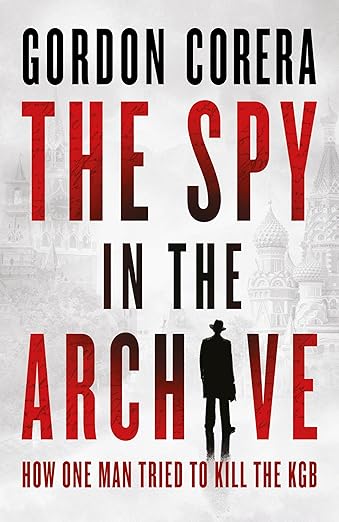
The Spy in the Archive by Gordon Corera

William Collins| 5 Jun 2025| 298 pages| e-book| Review copy| 4*

Description:

The Spy in the Archive tells the remarkable story of how Vasili Mitrokhin – an introverted archivist who loved nothing more than dusty files – ended up changing the world. As the in-house archivist for the KGB, the secrets he was exposed to inside its walls turned him first into a dissident and then a spy, a traitor to his country but a man determined to expose the truth about the dark forces that had subverted Russia, forces still at work in the country today.

Bestselling writer and historian Gordon Corera tells of the operation to extract this prized asset from Russia for the first time. It is an edge-of-the-seat thriller, with vivid flashbacks to Mitrokhin’s earlier time as a KGB idealist prepared to do what it took to serve the Soviet Union and his growing realisation that the communist state was imprisoning its own people. It is the story of what it was like to live in the Soviet Union, to raise a family and then of one man’s journey from the heart of the Soviet state to disillusion, betrayal freand defection. At its heart is Mitrokhin’s determination to take on the most powerful institution in the world by revealing its darkest secrets. This is narrative non-fiction at its absolute best.

I was intrigued by the title of The Spy in the Archive: How One Man Tried to Kill the KGB by Gordon Corera, a former BBC correspondent. It’s about Vasili Mitrokhin, a KGB archivist who defected to Britain in 1992. Mitrokhin, a quiet, introverted and determined man, was a reluctant defector, because whilst he loved Russia he came to hate the KGB and the Soviet system.

Working in the archives gave him access to top-secret documents and he decided to copy the files on slips of paper written in his own personal code, a type of shorthand. He wasn’t searched when he left work, although his bags were, so he hid the slips of paper in his clothing and typed them up in full at home. They included details about the Soviet secret service and the ‘illegals’, deep-cover operatives who penetrated Western society. These ‘illegals’ had been used to recruit and run the Cambridge spies, including Kim Philby in MI6 as well as atomic spies in America who had stolen the secrets of the Manhattan project and the bomb, and spies in other countries. He also noted the names of hundreds of agents in the west who had collaborated with the KGB. He wanted the documents he had copied to be made public, not just to the world but to open the Russians’ eyes to the corruption, torture and terror that was prevalent.

So, in 1992 he decided to take a sample of his notes first to the US embassy in Riga and Vilnius, but he was not taken seriously, He then went to the British embassy in Vilnius, where he was believed and eventually and handed over his secret archive.

It is a remarkable book about a remarkable man. It’s an in-depth account, that took me weeks to read as it’s not a book to read quickly. It’s fascinating and informative, as I know very little about Russian history post the 1917 Revolution (and not much before that either). It includes a glimpse of a young Vladimir Putin, aged sixteen, who already walked with a swagger as he announced to a KGB official that he wanted to get a job, on his way to becoming a Chekist. I think it’s worthy of note that in 2000 he was the first President to attend the Chekist day celebrations personally. Corera wrote that ‘only a few could understand what his [Putin’s] rise really signified. Mitrokhin, in his exile, was one of those. He understood the Chekist roots from which Putin had sprung and he understood what his rise meant.’

I’d never heard of Chekism before so that was particularly interesting for me. The word derives from Lenin’s creation in 1917 of the ‘All Russian Extraordinary Committee to combat Counter-Revolution and Sabotage’, known by its initials as the Cheka. It was more than a secret police force, it was ‘a revolutionary terrorist organisation’. The Lubyanka building in Moscow was its headquarters. It was formally dissolved in 1922 (the year Mitrokhin was born). But it was renamed several times and eventually emerged as the KGB. As Corera explains ‘the Cheka never died. It simply passed from the land of the living to the land of the dead, an otherworldly beast whose outward form would change but whose dark heart kept beating. … those who served the beast would always refer to themselves as the same thing: Chekists.’ Mitrokhin became a Chekist and that was what he came to hate and want to defeat by exposing to the Russian people and the world. He made it a condition of his defection that the documents he had copied should be made public

The final section concerning his exfiltration from Russia via Lithuania and Sweden reads like fiction. It was hard to believe that it is all true, as I began to wonder whether Mitrokhin and his family would make it to London, even though I knew that he did. Sadly, despite his determination that his work would reach the Russian people, that has not proved possible. He died from pneumonia in January 2004.

Many thanks to the publishers for a review copy via NetGalley. I enjoyed this fascinating and enlightening book.

Spell the Month in Books – September 2025

Spell the Month in Books is a linkup hosted by Jana on Reviews From the Stacks on the first Saturday of each month. The goal is to spell the current month with the first letter of book titles, excluding articles such as ‘the’ and ‘a’ as needed. That’s all there is to it! Some months there are optional theme challenges, such as “books with an orange cover” or books of a particular genre, but for the most part, any book you want to use is fair game!

The optional theme this month, which is Something to Savour. I’m including books that have been on my TBR a long time, some of them are also long books, some very long books. Some of them I’ve had, and still haven’t read, for very many years. I began cataloguing my books in 2007 on LibraryThing, so the books listed for 2007 are books I’d already acquired before then.

These are books that I’d almost forgotten about, some double shelved and so hidden behind others. Some I think I haven’t read as there are so long. The links in the titles of each book go to Amazon UK.

S is for Saving Fish from Drowning by Amy Tan – 496 pages, a book I’ve had before 2007.

On an ill-fated art expedition of the Southern Shan State in Burma, eleven Americans leave their Floating Island Resort for a Christmas morning tour – and disappear. Through the twists of fate, curses and just plain human error, they find themselves deep in the Burma jungle, where they encounter a tribe awaiting the return of the leader and the mythical book of wisdom that will protect them from the ravages and destruction of the Myanmar military regime.

E is for Elizabeth Gaskell: A Habit of Stories by Jenny Uglow – 704 pages, a TBR since 2010.

High-spirited, witty and passionate, Elizabeth Gaskell wrote some of the most enduring novels of the Victorian age, including Mary Barton, North and South and Wives and Daughters. This biography traces Elizabeth’s youth in rural Knutsford, her married years in the tension-ridden city of Manchester and her wide network of friends in London, Europe and America. Standing as a figure caught up in the religious and political radicalism of nineteenth century Britain, the book looks at how Elizabeth observed, from her Manchester home, the brutal but transforming impact of industry, enjoying a social and family life, but distracted by her need to write down the truth of what she saw.


P is for The Pursuit of Happiness by Douglas Kennedy – 658 pages, a TBR before 2007.

New York, 1945 – Sara Smythe, a young, beautiful and intelligent woman, ready to make her own way in the big city attends her brothers Thanksgiving Eve party. As the party gets into full swing, in walks Jack Malone, a US Army journalist back from a defeated Germany and a man unlike any Sara has ever met before – one who is destined to change Sara’s future forever.

But finding love isn’t the same as finding happiness – as Sara and Jack soon find out. In post-war America chance meetings aren’t always as they seem, and people’s choices can often have profound repercussions. Sara and Jack find they are subject to forces beyond their control and that their destinies are formed by more than just circumstance. In this world of intrigue and emotional conflict, Sara must fight to survive -against Jack, as much as for him.

In this mesmerising tale of longing and betrayal, The Pursuit of Happiness is a great tragic love story; a tale of divided loyalties, decisive moral choices, and the random workings of destiny.

T is for The Things We Cherished by Pam Jenoff – 299 pages, a TBR since 2011.

Roger Dykmans, a university student, is living with his brother Hans, an international emissary who’s secretly working against the Nazis. As time goes by, Roger finds himself increasingly drawn to Magda, Hans’ Jewish wife, and soon they are involved in a passionate love affair. But their secret world is turned upside down when Magda and her young daughter, Anna, are arrested by the Nazis. The Gestapo make a deal with Roger: if he hands over information about Hans’ operations, they’ll set Magda and Anna free. Suddenly, Roger is faced with an impossible decision – should he betray his brother to save the woman they both love?

Spanning decades and continents, The Things We Cherished explores the strength of true love under the worst of circumstances.

E is for Edwin: High King of Britain (The Northumbrian Thrones, 1) by Edoardo Albert – 353 pages, a TBR since 2011.

In 604 AD, Edwin, the deposed king of Northumbria, seeks refuge at the court of King Raedwald of East Anglia. But Raedwald is urged to kill his guest by Aethelfrith, Edwin’s usurper. As Edwin walks by the shore, alone and at bay, he is confronted by a mysterious figure–the missionary Paulinus– who prophesies that he will become High King of Britain. It is a turning point.

Through battles and astute political alliances Edwin rises to great power, in the process marrying the Kentish princess Aethelburh. As part of the marriage contract the princess is allowed to retain her Christian faith. But, in these times, to be a king is not a recipe for a long life.

This turbulent and tormented period in British history sees the conversion of the Anglo-Saxon settlers who have forced their way on to British shores over previous centuries, arriving first to pillage, then to farm and trade–and to come to terms with the faith of the Celtic tribes they have driven out.

M is for The Master Bedroom by Tessa Hadley – 352 pages, a TBR since 2008.

Kate Flynn has always been a clever girl, brought up to believe in herself as something special. Now Kate is forty-three and has given up her university career in London to come home and look after her mother at Firenze, their big house by a lake in Cardiff. When Kate meets David Roberts, a friend from the old days, she begins to obsess about him: she knows it’s because she’s bored and hasn’t got anything else to do, but she can’t stop.

Adapting to a new way of life, the connections Kate forges in her new home are to have painful consequences, as the past begins to cast its long shadow over the present…

B is for Blood Hunt by Ian Rankin, writing as Jack Harvey – 432 pages, a TBR since 2010

It begins with a phone call. Gordon Reeve’s brother has been found dead in his car in San Diego. The car was locked from the inside, a gun was in his hand. In the US to identify the body Gordon realises that his brother has been murdered. What’s more, it’s soon obvious that his own life is in danger.

Once back in Scotland he finds out his home has been bugged by professionals. But Reeve is a professional too. Ex-SAS, he was half of a two-man unit with someone he came to fear, then to hate. It looks like his nemesis is back…

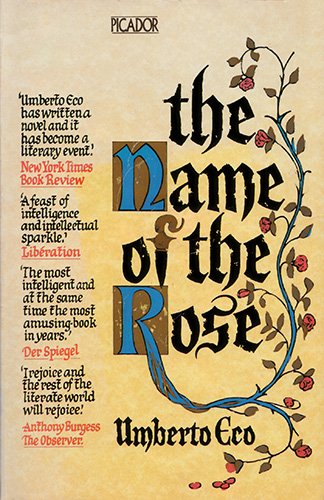
E is for An Equal Music by Vikram Seth – 496 pages, a TBR since 2013.

A chance sighting on a bus; a letter which should never have been read; a pianist with a secret that touches the heart of her music . . . AN EQUAL MUSIC is a book about love, about the love of a woman lost and found and lost again; it is a book about music and how the love of music can run like a passionate fugue through a life. It is the story of Michael, of Julia, and of the love that binds them.

R is for Ralph’s Party by Lisa Jewell – 368 pages, a TBR before 2007.

Meet the residents of 31 Alamanac Road . . .

Ralph and Smith are flatmates and best mates. Nothing can come between them – until the gorgeous Jemima moves in. They’re both falling for her, but which one of them does Jem want?

Upstairs, Karl and Siobhan are happily unmarried and have been for fifteen years – until Cheri, in the flat above, fixes her sights on Karl. Why should a little problem like his girlfriend get in her way?

Sooner or later it’s all going to come to a head – and what better place for tears and laughter, break ups and make ups than Ralph’s party?

Are there any that you can recommend?

Six Degrees of Separation from  Ghost Cities by Siang Lu to 4.50 from Paddington

It’s time again for Six Degrees of Separation, a monthly link-up hosted by Kate at Books Are My Favourite and Best. Each month a book is chosen as a starting point and linked to six other books to form a chain. A book doesn’t need to be connected to all the other books on the list, only to the one next to it in the chain.

I’ve been away so this post is a little late!

This month we start with Ghost Cities by Siang Lu , the winner of the 2025 Miles Franklin Literary Award, This is Amazon’s description:

Ghost Cities – inspired by the vacant, uninhabited megacities of China – follows multiple narratives, including one in which a young man named Xiang is fired from his job as a translator at Sydney’s Chinese Consulate after it is discovered he doesn’t speak a word of Chinese and has been relying entirely on Google Translate for his work.

How is his relocation to one such ghost city connected to a parallel odyssey in which an ancient Emperor creates a thousand doubles of Himself? Or where a horny mountain gains sentience? Where a chess-playing automaton hides a deadly secret? Or a tale in which every book in the known Empire is destroyed – then re-created, page by page and book by book, all in the name of love and art?

Allegorical and imaginative, Ghost Cities will appeal to readers of Haruki Murakami and Italo Calvino.

My First link is a book by Italo Calvino – If on a Winter’s Night a Traveller, which I borrowed from the library a few years ago. It’s composed of stories of menace, spies, mystery, premonition—with explorations of how and why we choose to read, make meanings, and get our bearings or fail to. It has an excellent beginning  but as I read on all the stops and starts became disjointed. I renewed it a few times but eventually I decided to abandon it and returned it unfinished.

Cloud Atlas by David Mitchell is my second link because it is a book I abandoned three times before trying it again, after watching the movie, which is fantastic – a kaleidoscope of visual delights, the scenery, the settings and the costumes are blazes of colour and drama. Cloud Atlas covers a time period from the 19th century to a post apocalyptic future. It is an amazing creation (‘amazing‘ is a very overused word, but in this instance very apt), at times confusing and at times brilliant.

My Third link is also by David Mitchell. It’s Slade House, a book I loved as soon as I started reading it. It’s a mixture of a ghost story, science fiction and horror. Something nasty happens every nine years at the end of October at Slade House. I read it as a fantasy, something that I couldn’t believe could ever happen (or at least, I hope not). People are invited or are drawn into Slade House and find themselves in a strange and dangerous situation, and there is no way out.

Which brings me to my fourth link House of Silence by Linda Gillard, a novel about families and their secrets – in particular one family, the Donovans. When Gwen Rowland meets Alfie Donovan she becomes interested in his family and persuades him to let her spend Christmas with them at the family home, Creake Hall, an old Elizabethan manor house. It raises issues of memory and identity, mental illness, loss and love.

Mental illness is my Fifth link in The Tree of Hands by Ruth Rendell, one of her best standalone books. When Benet was about fourteen, she and Mopsa, her psychologically disturbed mother had been alone in a train carriage, when Mopsa, had tried to stab her with a carving knife. It’s a psychological thriller, full of suspense, with several twists and turns that made me unsure how it would end. I was delighted by the final twist!

Agatha Christie wrote several books featuring trains. My sixth link is one of those books, 4.50 from Paddington. This begins when Mrs McGillicuddy was going home from Christmas shopping in London when she saw from the window of her train a murder being committed in a train travelling on a parallel line. But nobody believes her because there is no trace of a body and no one is reported missing. Nobody, that is except for her friend Miss Marple. But she is getting older and more feeble and she hasn’t got the physical strength to get about and do things as she would like. So, she enlists the help of Lucy Eyelesbarrow.

My chain is made up of books I abandoned books and books I loved. It’s taken me from a book about megacities in China to a murder mystery on a London train.

What is in your chain?

Next month (October 4, 2025), we’ll start with Dominic Amerena’s novel about authors and publishing, I Want Everything.

Library Books & Short Story September 2025

The mobile library van came yesterday and I borrowed three books of short stories to read for Short Story September 2025.

I’ve read books by each of the three following authors before:

Sleep No More: Six Murderous Tales by P D James – each one with the dark motive of revenge.

Normal Rules Don’t Apply by Kate Atkinson – Eleven interconnected stories, where everything is changing, where nothing is quite as it seems.

Six Stories and an Essay by Andrea Levy – This collection opens with an essay about how writing has helped Andrea Levy to explore and understand her heritage. She explains the context of each piece within the chronology of her career and finishes with a new story, written to mark the centenary of the outbreak of the Great War in 1914.

I also borrowed two other books:

The Gardener by Salley Vickers – Previously I’ve read five books by Vickers, and enjoyed them, especially Miss Garnet’s Angel and Mr Golightly’s Holiday. The last one I read was The Librarian, which I thought was rather underwhelming. I hope this one is better.

Nine Lives by Peter Swanson – I haven’t read any of Swanson’s books, but keep seeing them on book blogs and thought I’d see if I like this one.