Weekend Cooking – Family Recipes

I’ve been watching BBC 1’s series The Hairy Bikers – Mums Know Best, which has made me think about my family’s recipes. I have my Mum’s recipe book. She didn’t really need recipes as much of what she cooked was by instinct. Even though the recipes give quantities in pounds and ounces she didn’t use scales, but measured ingredients by spoonfuls until she thought it was right. In fact she didn’t use recipes much at all – there are no meat or poultry recipes in her book and the only fish recipe is for cooking salmon – which is so brief – – “to cook half and hour to three quarters”. There are jam recipes and one for Green Tomato Chutney.

The majority of the recipes are for cakes and biscuits – Lunch Cake, made with lemon and sultanas, Ginger Cake, various Fruit Cakes, a Swiss Roll – made with dried egg, Chocolate Cake, Date Loaf, Bakewell Tart, Bun Loaf, Malt Loaves, Parkin and an Easter Cake which is rolled out when mixed and baked on a greased oven plate and which I don’t remember her making.

One of my favourites is Parkin, made with medium oatmeal, brown sugar, margarine, lard, flour, syrup or treacle, baking powder, ground ginger, milk and water.

 I loved this!

Visit Beth Fish Reads for other bloggers who are participating in Weekend Cooking.

Lucy’s New Door

Lucy has now settled in our new house. We kept her in for a while and then let her out during the day. That wasn’t enough for her as she likes to come and go in the middle of the night – any number of times between midnight and 5am. We weren’t getting up to let her out and so she woke us up miaowing very loudly most nights.

Now she can come and go whenever she wants.  She hasn’t gone very far yet – she just likes to have a drink in the burn (even though she has fresh, clean water inside) :

Wondrous Words

Each Wednesday Kathy (Bermuda Onion) runs the Wondrous Words Wednesday meme to share new (to us) words that we’ve encountered in our reading.

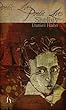
This week my words are from Poetic Lives: Shelley by Daniel Hahn. This is a short biography of Percy Bysshe Shelley. In this extract Shelley is writing to a friend about the poet Robert Southey, one of the “Lake Poets” and a contemporary of William Wordsworth. Southey was older than Shelley, who had idolised him, until he met him, that is. He disappointed Shelley:

Southey has changed. I shall see him soon and I shall reproach him for his tergiversation. – He to whom Bigotry, Tyranny, Law was hateful, has become the votary of these idols in a form the most disgusting. (page 28)

I had no idea of the meaning of tergiversation and only a vague idea about votary.

To tergiversate means to turn one’s back; to desert; to change sides; to shuffle, shift , use evasions.

A Votary is a person dedicated by or as if by a vow to some service, worship or way of life; someone enthusiastically addicted to a pursuit, study etc.

Mmm,  it seems I’m a votary of reading and books and I have no intention of being a tergiversator.

Crime Fiction Alphabet: S is for C J Sansom

For this week’s letter, S my contribution to Kerrie’s Crime Fiction Alphabet series is  Sansom and Shardlake, more specifically C J Sansom’s Matthew Shardlake  historical crime fiction series.

Chris J Sansom trained and worked as a solicitor before he wrote the Tudor murder mystery series featuring lawyer Matthew Shardlake. There are currently four books:

Dissolution – set in 1537 – Shardlake investigates the death of a Commissioner during the dissolution of the monasteries.

Dark Fire – set in 1540 – Shardlake is assigned to find the formula for Greek Fire, whilst defending a young girl accused of brutal murder.

Sovereign – set in 1541 – Shardlake investigates a number of murders whilst on a secret assignment  from Archbishop Cranmer.

Revelation – set in 1543 – Shardlake investigates the murder of his old friend Roger Elliard,and also works on the case of a teenage boy, imprisoned in the Bedlam hospital for the insane.

A fifth book – Heartstone (set in 1545) will be published later this year. Dark Fire won the 2005 CWA Ellis Peters Historical Dagger and Sansom was “Very Highly Commended” in the 2007 CWA Dagger in the Library award, for the Shardlake series.

Matthew Shardlake, the main character, is a hunchback, an outsider, scorned by society, but prized by Thomas Cromwell for his intelligence and persistence.  As the story progresses through the books he begins to question both his religous and political beliefs. He is a fascinating character.

The books all have a rich historical background. The 16th century was a time of great change – changes in thought, belief and social control. The books have a wonderful sense of time and place – Tudor England from the gutter to the court. The historical characters include Thomas Cromwell, the King’s Chief Minister, Thomas Cranmer, the Archbishop of Canterbury, and  Henry VIII. They had me turning the pages to see what happens next and find out who committed the murders, and there was enough commentary on the political, religious and social scene for me to grasp what it was like living in Tudor England. They are written in a  fluent, readable style with a good balance between dialogue and description and the characters are well-defined and believable. I loved all of them.

I read the first three books before I began this blog, so I’ve only written about Revelation – see here. There is a BBC4 Bookclub broadcast interview with Sansom talking about his first book, Dissolution.

I’ve seen reports that Kenneth Branagh was in discussions about playing Shardlake for the BBC, but I don’t know how true this is and after seeing him as Wallender I can’t imagine him playing Matthew Shardlake. Does anyone have any more information?

Sansom  has also written Winter in Madrid, an action packed thrilling war/spy story about the Spanish Civil War. It is tense and gripping  but it’s also a moving love story and historical drama. I wrote more about it here.
Sunday Salon – Reading and Writing

Writing Tips: I liked this – yesterday’s articles in the Guardian – a survey of established authors’ tips for successful authorship.  Part one tips from Elmore Leonard, Diana Athill, Margaret Atwood, Roddy Doyle, Helen Dunmore, Geoff Dyer, Anne Enright, Richard Ford, Jonathan Franzen, Esther Freud, Neil Gaiman, David Hare, PD James, AL Kennedy

and

Part Two: Hilary Mantel, Michael Moorcock, Michael Morpurgo, Andrew Motion, Joyce Carol Oates, Annie Proulx, Philip Pullman, Ian Rankin, Will Self, Helen Simpson, Zadie Smith, Colm Tóibín, Rose Tremain, Sarah Waters, Jeanette Winterson

Choice tips: mostly along the lines of

  •  Write
  • Read
  • Get on with it/be persistent

I think this from Will Self goes for everyone not just successful authors:

You know that sickening feeling of inadequacy and over-exposure you feel when you look upon your own empurpled prose? Relax into the awareness that this ghastly sensation will never, ever leave you, no matter how successful and publicly lauded you become. It is intrinsic to the real business of writing and should be cherished.

Reading – Today I’ve been trying to decide which book to get as my free book from newbooks magazine. As usual I’m spoilt for choice and have to ask myself – do I really want yet another book to add to the to-be-read mountain?

These are the books (soon to be published in paperback):

  • The Crimson Rooms by Katherine McMahon (pub date 1 April). Six years after the end of the First World War Evelyn is still haunted by the death of her younger brother. I enjoyed her earlier novel The Rose of Sebastopol, so maybe this would be a good choice.
  • The Glass Room by Simon Mawer (pub date 11 March) Set in 1930, the storm clouds of World War Two are gathering in Czechoslovakia. Landauer House built of glass, steel and onyx is passed from hand to hand. I’ve only read The Gospel of Judas by Mawer – enjoyed that, perhaps this would be good too.
  • Relics of the Dead by Ariana Franklin (pub date 18 March). More about Adelia, a 12th century ‘readerof bones’ for Henry II. In this latest book she has to identify and authenticate the bones of Arthur and Guinevere. I loved the first book Mistress of the Art of Death and the second The Death Maze, although I haven’t read it yet. It would be good to have this third book to complete the set.
  • Balthazar Jones and the Tower of London Zoo by Julia Stuart (pub date 4 March). Balthazar is a Beefeater and his new job is to look after the exotic animals that are to be moved from London Zoo to the Tower’s grounds. This is a debut novel. It does sound different from my usual choice of reading.
  • Instruments of Darkness by Imogen Robertson (pub date 1 April). A murder mystery set in West Sussex in the 18th century. A man’s body is found in the grounds of Thornleigh Hall. His throat has been cut. On the same day Alexander Adams is murdered in London. This is a debut novel too. I do like historical crime fiction, but I’m not sure about this one.