Laurie Lee

Laurie Lee was born in Stroud in Gloucestershire and moved to Slad when he was three in 1917. He died there in 1997. His best known book is Cider With Rosie (1959) which I loved. It covers his childhood years in Slad and it is absolutely fascinating. He was also a poet and this book reads like a prose poem throughout – I wrote about it here.

I’ve recently read another two of Laurie Lee’s books – As I Walked Out One Midsummer Morning (1969), which is about his life after he left his home in Slad, and A Rose for Winter (1955), which is a record of his travels in Andalusia 15 years after he first went there.
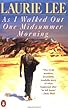
 As I Walked Out One Midsummer Morning is the second of his autobiographical trilogy which began with Cider With Rosie followed by A Moment of War (1991). It begins in 1934 when Laurie Lee left his home in the Cotswolds and set out ‘to discover the world’. First he walked to London where he got a job on a building site and supplemented his income by playing the violin. He left for Spain a year later, landing at Vigo and then making his way on foot through to Castillo on the south coast, playing his violin in exchange for food and a bed for the night. Then the Spanish Civil War began in earnest and he came home on a Royal Navy destroyer that had been sent from Gibraltar to rescue any ‘British subjects who might be marooned on the coast.’ In an Epilogue he explains how he had shameful doubts about leaving Spain and so he returned to join the Republicans.

Lee writes vivid, lyrical prose with beautiful descriptions of the countryside, the scorching heat, the poverty and the people, so although I haven’t been to any of the places he describes it was easy to visualise the scenes. It’s not just the scenery he captures, but also the atmosphere, the splendour and squalor, and the desperation and also the love and enthusiasm for life.
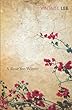
In A Rose in Winter Lee writes about his travels in Andalusia which he visited with his wife fifteen years after his last time there during the Spanish Civil War. Again, he describes the towns and countryside beautifully, portraying the poverty, the hospitality and the changes the Civil War had inflicted. He takes part in religious processions, goes to a bull fight and watches the ‘most fundamental, most mysterious of all encounters in Andalusian folk-music – the cante flamenco’, a most dramatic and erotic performance.

Reading them one after the other I was struck by his descriptions of the towns – Seville, for example, in As I Walked Out One Midsummer Morning was

… dazzling – a creamy crustation of flower-banked houses fanning out from each bank of the river. The Moorish occupation had bequeathed the affection for water around which so many of even the poorest dwellings were built – a thousand miniature patios set with inexhaustible fountains which fell trickling upon ferns and leaves, each a nest of green repeated in endless variations around this theme of domestic oasis. (page 126)

and in A Rose for Winter

So Seville remains, favoured and sensual, exuding from the banks of its golden river a miasma of perpetual excitement, compounded of those appetites that are most particularly Spanish – chivalry, bloodshed, poetry and religious mortification. (page 34)

Katrina commented on my previous post about As I Walked Out One Midsummer Morning that she was disappointed to read that Laurie Lee’s Spanish experiences were almost all fiction. I tried to find out more about this. There are doubts that Lee falsified and embellished his involvement in the Spanish Civil War in A Moment of War (which I haven’t read). However, his widow denied this. In an interview recorded in The New York Times, 24 February 1985, Lee, talking about Cider With Rosie said  “… it is not so much about me as about the world that I observed from my earliest years. It was a world that I wanted to record because it was such a miracle visitation to me. I wanted to communicate what I had seen, so that others could see it.”

Whether his books are fictionalised accounts of his life or not, I like them. They evoke the past – a world long gone – and give a sense of what life was like. I like to think they portray truth, even if all the facts may not be strictly accurate.

Crime Fiction Alphabet: S is for …

Maigret and the Ghost by Georges Simenon, which is my choice to illustrate the letter S in Kerrie’s Crime Fiction Alphabet.

Simenon wrote many Maigret books spanning the years 1931 – 1972, 75 novels and twenty eight short stories to be precise.

Maigret and the Ghost was first published in 1964 as Maigret et le Fantome. Inspector Lognon, a plain-clothes detective is shot in the street and is close to death, fighting for his life. The last word he spoke was ‘ghost’. It is soon apparent that this grumpy detective, who suffers from an inferiority complex, believing that he never gets the credit he is due, was visiting the apartment of a beautiful young woman every night. Chief Superintendent Maigret finds it hard to believe he has transformed into some sort of Don Juan. The young woman has disappeared.

Maigret investigates in his usual seemingly casual manner, registering impressions, which he knew would sooner or later ‘coalesce and become meaningful.’ Lognon’s wife insists that he was convinced he was onto something big which would bring him the recognition he deserved. Maigret’s investigations lead him into the strange world of art dealer Norris Jonker and his glamorous and much younger wife, Mirella. His search for the culprit brings him into contact again with the English detective he had first met in My Friend Maigret, Mr Pyke, now Chief Inspector Pyke at Scotland Yard.

I really enjoyed this short, concise detective story. Simenon writes such taut prose, straight-forward and direct, with not one word wasted. He conveys the nature of each character with precision, the dialogue is so realistic and the setting in a rainy Paris is so atmospheric. It’s almost like viewing a painting. Because his books are short (in comparison to today’s chunksters) the tension is easily maintained throughout and it’s so well-paced that I just  had to read it straight through from start to finish.

Although short Simenon’s books don’t lack detail or complicated plots. One of the things I like about them are the glimpses into Maigret’s personal life. In this book Madame Maigret is thrilled because he invites her out to lunch:

They couldn’t help exchanging smiles. The contrast between lunching at home in the Boulevard Richard-Lenoir and in the intimate atmosphere of the little restaurant struck them both at the same time. Madame Maigret especially was tremendously thrilled by it. (page 37)

She was also thrilled because she had been to see Madame Lognon and on telling Maigret about the visit he commented:

‘I fancy what you have just told me alters the whole complexion of the case …’

She stared at him, torn between incredulity and delight. For the rest of her life, that lunch at Chez Maniere was to remain one of her happiest memories. (page 40)

Georges Simenon was definitely a master of the detective novel.

  • Paperback: 160 pages
  • Publisher: Penguin Classics; New Ed edition (4 Dec 2003)
  • Language: English
  • ISBN-10: 0141187271
  • ISBN-13: 978-0141187273
  • Source: library book
  • My Rating 4/5

I’ve read some of his other books –

Classics Challenge – September Prompt: Music

Classic Challenge 2012This year I am taking part in a Classics Challenge hosted by Katherine of November’s Autumn. The goal is to read at least seven classics in 2012 and every month Katherine is posting a prompt to help us discuss the books we are reading.

This month’s prompt is to select a piece of…

Music

…that you feel reflects the book. Modern, classical, jazz, anything, it doesn’t have to be from the period of the novel but share what it is about the piece that echoes the novel in someway.

I don’t listen to music when I’m reading because I just don’t hear it when I’m lost in the words and the story. But some books automatically bring music into my head as the book I’m reading this month does. It’s the classic science fiction – The War of the Worlds by H G Wells and the music is Jeff Wayne’s Musical Version of The War of the Worlds, an album that we bought in 1978 – wonderful music and words bringing the book to life. It’s narrated by Richard Burton with songs by David Essex, Julie Covington and Justin Hayward.

The opening words and music are always thrilling, heralding the coming of the Martians to Earth:

No one would have believed, in the last years of the nineteenth century, that human affairs were being watched keenly and closely by intelligences greater than man’s and yet as mortal as his own; that as men busied themselves about their affairs they were scrutinized and studied, perhaps almost as narrowly as a man with a microscope might scrutinize the transient creatures that swarm and multiply in a drop of water. With infinite complacency men went to and fro over this globe about their little affairs, serene in their assurance of their empire over matter.

The clip below is ‘Thunder Child’, the warship that destroys two Martian tripods before being sunk.

Whilst I was looking for the clip to include in my post I discovered that there is a new version of Jeff Wayne’s classic album – Jeff Wayne’s Musical Version of The War of the Worlds, the New Generation, to be released on 12 November, which features Liam Neeson, Gary Barlow, Joss Stone and Ricky Wilson.

Saturday Snapshot

Heidi’s new bed –

We bought this little bed yesterday and deliberately didn’t attempt to put Heidi in it or even to show it to her because cats are fussy creatures and like to find places to sleep for themselves. So we just left it on the worktop in the utility room, where she likes to sit and this morning this is where I found her. I’m so glad she likes it.

For more Saturday Snapshots see Alyce’s blog At Home with Books.

From the Archives: Biographies

This is a second post in which I’m following Simon’s example at Stuck in a Book of posts in which he revisits his old reviews. I’ve been looking back into my archives at biographies ‘“ triggered by Katrina’s post on Daphne du Maurier’s Rebecca Notebook, which I’ve also read and written about in 2010.

So here’s a list of some of my posts on biographies of authors – with links to the posts, a short summary and a quotation from my review.

First of all two from 2007:

  • Daphne by Margaret Forster – a biography of Daphne Du Maurier, the author of Rebecca etc

From my post: There is too much I could say about ‘Daphne’, not least that it is a candid account of her relationships, eg her troubled married life; wartime love affair; and friendships with Gertrude Lawrence and Ellen Doubleday, as well as an excellent source of information on Du Maurier’s method of writing and views on life.

  • Lewis Carroll by Morton N Cohen – a biography of Charles Dodgson (Lewis Carroll) a long post  which has a somewhat controversial interpretation of some aspects of Dodgson’s life.

From my post: his account of Charles Dodgson’s life is basically chronological, but because he also looks at different aspects of Charles’s life it is a bit repetitive. As biographies go this is not one of the most straightforward or readable. It’s extremely detailed and at nearly 600 pages it is not a quick read.

One from 2008:

  • Dear Dodie by Valerie Grove – biography of Dodie Smith, the author of I Capture the Castle etc.

From my post: It is very readable and gives a very full picture of Dodie’s life, and it has an excellent index (always a plus for me). 

And two from 2009:

  • Wild Mary by Patrick Marnham – biography of Mary Wesley, the author of Camomile Lawn and other books.

From my post:  … I certainly wouldn’t like to have met Mary. She seems to have been a difficult and determined woman who aroused strong passions in those who knew and loved her.

From my post: My outstanding impression of the book is how amazingly detailed it is given the fact that few records of her life have survived.