Saturday Snapshots

My snapshots today are of Inchree Wood and Righ Falls in Glen Righ, on the eastern side of Loch Linnhe, near Glencoe. It was a cool day in September this year when we walked up the woodland trail to see the waterfalls, but the views were still spectacular.

The walk is through woodland with views of Loch Linnhe below:

The waterfall comes into view:

It cascades down the hill side:

The trail continues uphill through broad-leaf and conifer trees:

It’s a good place to see red squirrels:

through the viewing holes:

But we were disappointed not to see one!

See more Saturday Snapshots on Alyce’s blog At Home With Books.

Full Tilt: Book Beginnings

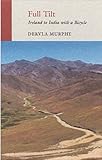
One of the books I’m reading is Dervla Murphy’s Full Tilt: Dunkirk to Delhi on a Bicycle. It was first published in 1965 and is an account of her journey in 1963. I’m finding it slow reading because I’m constantly wondering about the places she describes, how they’ve changed since the early 1960s and looking them up.

Her journey took her through Europe, Persia (Iran), Afghanistan, over the Himalayas to Pakistan and into India. She travelled on her own, with a revolver in her saddle bag. It’s amazing.

It begins with her desire to cycle to India:

On my tenth birthday a bicycle and an atlas coincided as presents and a few days later I decided to cycle to India. I’ve never forgotten the exact spot on a hill near my home at Lismore, County Waterford, where the decision was made and it seemed to me then, as it still seems to me now, a logical decision, based on the discoveries that cycling was a most satisfactory method of transport and that (excluding the USSR for political reasons) the way to India offered few watery obstacles than any other destination at a similar distance. (page 1)

And that is what she did 21 years later.

So far I have travelled with her to Afghanistan, where she is on her way to Kabul via Khandahar. Needless to say I’m struck with thoughts about how much has changed in the world since then. I’m full of questions, not just about the current situation with all the places she describes, but also about how she managed it, how she found out where to stay, and how she communicated with people for example.

It’s very much a personal account, not so much about the actual cycling, although I was amused by her account of getting her cycle repaired in a Persian cycle shop where they would not use a screwdriver but hammered every screw into place. Not so funny, because a few days later the back wheel came off, as the relevant screw had been ruined!

Book Beginnings on Fridays is hosted by Gilion at Rose City Reader.

November Prompt: A Classics Challenge

This year I’ve been taking part in A Classics Challenge hosted by Katherine of November’s Autumn. The goal is to read at least seven classics in 2012 and every month Katherine is posting a prompt to help us discuss the books we are reading.

There are several questions for this month’s prompt:

Of all the Classics you’ve read this year is there an author or movement that has become your new favorite? Which book did you enjoy the most? Or were baffled by? Who’s the best character? The most exasperating? From reading other participants’ posts which book do you plan to read and are most intrigued by?

Before I started this challenge I’d have said my favourite author is Jane Austen. She’s still a favourite, but I must add Charles Dickens as a favourite too. It follows that the books I enjoyed the most are by those authors – in particular Pride and Prejudice and A Tale of Two Cities.

I haven’t been baffled by any of the books.

I think one of the ‘best’ characters in the classics I’ve read is Marian Halcombe from The Woman in White. She’s feisty, loyal, passionate, clever, resourceful and assertive.

The most exasperating are also from The Woman in White. They are Laura and Frederick Fairlie  because both are quite irritating – Laura because she is so insipid and her father because he is such a selfish hypochondriac.

After reading Jane’s post about Barchester Towers I decided it was time I read Anthony Trollope’s Barchester Chronicles and have begun with reading The Warden. The novels and their characters are all new to me as I’ve never watched any of the TV dramatisations.

Crime Fiction Alphabet: Letter Z

We have reached the final letter in Kerrie’s Crime Fiction Alphabet and to illustrate the letter Z I’m focusing on:

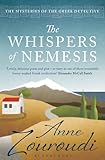
The Whispers of Nemesis by Anne ZouroudiThis book is the fifth in Zouroudi’s series about Hermes Diaktoros of Athens, the Greek Detective.

Summary (from Anne Zouroudi’s website):

It is winter in the mountains of northern Greece and as the snow falls in the tiny village of Vrisi a coffin is unearthed and broken open. But to the astonishment of the mourners at the graveside, the remains inside the coffin have been transformed, and as news of the bizarre discovery spreads through the village like forest fire it sets tongues wagging and heads shaking.

Then, in the shadow of the shrine of St Fanourios (patron saint of lost things), a body is found, buried under the fallen snow – a body whose identity only deepens the mystery around the exhumed remains. There’s talk of witchcraft, and the devil’s work – but it seems the truth, behind both the body and the coffin, may be far stranger than the villagers’ wildest imaginings. Hermes Diaktoros, drawn to the mountains by a wish to see an old and dear friend, finds himself embroiled in the mysteries of Vrisi, as well as the enigmatic last will and testament of Greece’s most admired modern poet.

The Whispers of Nemesis is a story of desperate measures and long-kept secrets, of murder and immortality and of pride coming before the steepest of falls.
My view:

Hermes is a detective with a difference. Just who he is and who he works for is never explained. He’s most definitely not a policeman and when asked he says he works for a ‘higher power’ than the police. He is described as ‘the fat man’. He wears a cashmere overcoat of midnight blue, a grey suit with a subtle stripe and a waistcoat, and white tennis shoes. He has owlish glasses and thick curly greying hair. His name is his

… ‘father’s idea of humour. He’s something of a classical scholar.  And in the spirit of my namesake, I call these’ – he indicated his white tennis shoes – ‘my winged sandals.’  (page 94)

It is this element of the novels that appeal to me – that and the quirky mysteries. And this book certainly is about a strange mystery about the life and death of the poet Santos Volakis. A local man, he had died some four years earlier choking on an olive stone. In his will he had stipulated that his bequests would only be available when his bones ‘finally see daylight’. So the rite of exhumation, which is customary in rural Greece four years after a death was important to his family and friends, but no one was prepared for the shock that it delivered when the bones were revealed.

I found it a little difficult at first following the sequence of events and identifying who was who, but I soon worked it out. I also had worked out what the mystery was well before the the end, which actually added to my enjoyment of reading the book. The setting is superb, placing you so completely in Greece in winter amongst believably real people.

Each of the books in the Hermes Diaktoros series features one of the Seven Deadly Sins ‘“ in this one it is the sin of pride. Nemesis is the bringer of retribution.

  • Paperback: 304 pages
  • Publisher: Bloomsbury Paperbacks (7 Jun 2012)
  • Language: English
  • ISBN-10: 1408821915
  • ISBN-13: 978-1408821916
  • Source: I bought the book
  • My Rating: 3.5/5

1. The Messenger of Athens (2007)
2. The Taint of Midas (2008)
3. The Doctor of Thessaly (2009)
4. The Lady of Sorrows (2010)
5. The Whispers of Nemesis (2011)
6. The Bull of Mithros (2012)

Thanks to Kerrie for organising the Crime Fiction Alphabet. I’ve listed the books I’ve read in a page (see Index tab at the top of the blog) and soon I’ll do a summing up post about the highlights.

Saturday Snapshot: Castle Stalker

I was delighted to find this romantic ruined castle during our holiday on the west coast of Scotland. This is Castle Stalker, a 15th century tower house built by the Stewarts of Appin. It’s on a small island in Loch Linnhe, just north east of Port Appin (the setting for Robert Louis Stevenson’s Kidnapped, a fictionalised account of the “Appin Murder” of 1752).

Castle Stalker  P1080069

It was quite late in the day when we got there and the light was fading, so my photo is rather dark. I’d love to go back and take a trip across the loch to the island and see round the castle. It’s privately owned and there are tours on just 5 weeks of the year. There’s a brief history of the castle on the Castle Stalker website.

Castle Stalker is the location of Castle Aaaaarrrrrrggghhh in the 1975 film Monty Python and the Holy Grail.

To participate in the Saturday Snapshot meme post a photo that you (or a friend or family member) have taken then leave a direct link to your post in the Mister Linky at At Home With Books. Photos can be old or new, and be of any subject as long as they are clean and appropriate for all eyes to see. How much detail you give in the caption is entirely up to you. Please don’t post random photos that you find online.

Standing in Another Man’s Grave by Ian Rankin

Yesterday I received Ian Rankin’s new book, Standing in Another Man’s Grave and it’s looking good.

It begins:

He’d made sure he wasn’t standing too near the open grave.

Closed ranks of other mourners between him and it. The pall-bearers had been called forward by number rather than name – six of them starting with the deceased ‘s son. Rain wasn’t quite falling yet, but it had scheduled an appointment.

The deceased is a retired policeman. The unnamed man, standing at the funeral had known him. He was desperate for a cigarette. After the coffin is lowered into the grave one of the mourners approaches him with a nod of recognition:

‘John’, he said.

‘Tommy’, Rebus replied, with another nod.

Rebus is back!

With the rain now falling he heads for his car, turns on the car’s CD player and Jackie Leven’s voice emerges singing about standing in another man’s grave. Except he isn’t – the track is called ‘Another Man’s Rain’.

I paused and decided to look for the track. Here it is:

I’m trying to read this book slowly, but the plot and Rebus is gradually pulling me in. I just have to keep turning the pages. So, it’s back to the book now.

Fro more Book Beginnings on Friday see Gilion’s blog Rose City Reader.