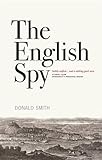
The English Spy by Donald Smith

I’d gone to my local library to collect Road to Referendum by Iain Macwhirter, a book I’d reserved after I read about on FictionFan’s blog, and was browsing the shelves when this book, The English Spy caught my eye. Road to Referendum is about the run up to the Independence Referendum to take place in Scotland in September 2014. It also has chapters on Scottish history leading up to the present day as background.  So, it was quite a coincidence finding The English Spy as this is a novel about the build up to the political Union of England and Scotland in 1707 – the Union that Independence for Scotland would break.

My knowledge of the Act of Union in 1707 was limited to just the fact that by that union Scotland and England, together with Ireland and Wales, became the United Kingdom and I thought it was to settle the successor to Queen Anne who was childless and ill. Of course, it was much more complicated than that and The English Spy tells the story of how Daniel Defoe, at that time still known as Daniel Foe, was sent to Scotland under secret instructions from the English government to persuade the Scots to give up their independence. It’s a fascinating story of intrigue and backstabbing amongst the members of the Scottish parliament!

The narration moves between multiple viewpoints, mainly in the first person and some in the third person of various characters, some obviously historical figures and others possibly(?) fictional ones. There are Foe’s own account, letters between Isobel Rankin, his landlady in Edinburgh and her friend Nellie in Glasgow, the journal of Lord Glamis and a third person narrative of Robert Harley, the first Earl of Oxford. There are several other characters who pop in and out of the story – Lady O’Kelly and Aeneas Murray amongst others. This is a story about spies and the struggle between various factions for power and once I had got the characters sorted in my mind I was swept along with the intrigue and dangers of the times, keen to see how the Union came about.

The English Spy is a mix of fact and fiction but A Warning to the Reader at the beginning of the book clarifies that Daniel Defoe had indeed been sent to Scotland and was required to provide London with ‘clandestine reports on affairs in the north’. The Scottish Government was led by the Marquis of Queensberry who favoured union with England and the Duke of Hamilton was opposed to the union. Donald Smith warns:

Yet why did Scotland surrender its hard won and long cherished independence? The historians remain divided. What is offered here is fiction, yet as Defoe himself shows, the truths or apparent deceits of fiction may be uncomfortably closer to home.

Now, over 300 years later the question of independence for Scotland is still in question!

Dr Donald Smith is a founding member of the Scottish Storytelling Forum and of Edinburgh’s Guid Crack Club, and he is currently Director of the Scottish Storytelling Centre at The Netherbow.  He has written, directed or produced over fifty plays and is a founding director of the National Theatre of Scotland.

Now to read what Road to Referendum has to offer.

A Non-Fiction Adventure

NF Adventure


I don’t read as much non-fiction as fiction. I find it needs more concentration and so often pick up and read fiction. But I do like non-fiction and own quite a lot of it. I’ve been trying to read more and one way that helps me to focus on reading it is the This Isn’t Fiction Reading Challenge run by Birgit at The Book Garden.

Now, thanks to Bev at My Reader’s BlockI’ve found another wayA Non-Fiction Adventure.  Like The Classics Club this one runs for five years. It’s hosted by Michelle of The True Book Addict

The Sign- up is here.

These are the guidelines:

  • Choose 50+ non-fiction books; the number is up to you. Choose 50, 75, 100, 200. It’s entirely your choice.
  • Books must be non-fiction – biography, autobiography, history, memoir, cooking, travel, science, etc.
  • List them at your blog (or on Goodreads or another social media site, if you do not have a blog)
  • Choose your completion goal date five years in the future.

My five years run from 14 August 2013 to 14 August 2018.

My Goal: 50 books, initially choosing from these 60 books: all books I own; there are more, but I think this is enough to start with. I like the idea that your list can change, so this is just a starting point and no doubt I’ll find other books I want to read during the next five years!

Autobiographies/Diaries/Letters

  1. Jane Austen’s Letters
  2. Diaries 1969-1979: The Python Years 1969-1979 by Michael Palin
  3. Between the Woods and the Water: On Foot to Constantinople: From The Middle Danube to the Iron Gates by Patrick Leigh Fermor
  4. Great Meadow: an Evocation by Dirk Bogarde
  5. Slipstream: a Memoir by Elizabeth Jane Howard
  6. Trollope: an Autobiography
  7. A Long Walk to Freedom by Nelson Mandela
  8. The Snow Geese by William Fiennes
  9. A Time to Dance, No Time to Weep by Rumer Godden
  10. Corvus: a Life with Birds by Esther Woolfson
  11. The Mitfords: Letters between Six Sisters by Charlotte Mosley  editor
  12. Chronicle of Youth by Vera Brittain

Biographies

  1. Being Shelley by Anne Wroe
  2. The Wolf That Never Sleeps by Marguerite de Beaumont (Baden-Powell)
  3. The Innocent Man by John Gresham
  4. Mary Queen of Scots by Alison Weir
  5. Victorian People by Asa Briggs
  6. D H Lawrence: the Life of an Outsider by John Worthen
  7. Billy by Pamela Stephenson
  8. The Life of Samuel Johnson by James Boswell
  9. William Barclay by Clive Rawlins
  10. Thomas Hardy: the Time-torn Man by Claire Tomalin
  11. Howard Hughes by Peter Harry Brown
  12. Marilyn Monroe by Barbara Leeming
  13. Shakespeare: the biography by Peter Ackroyd
  14. Charles Dickens: a Life by Claire Tomalin
  15. Dickens by Peter Ackroyd
  16. The Sisters Who Would Be Queen: The tragedy of Mary, Katherine and Lady Jane Grey by Leanda de Lisle
  17. Virginia Woolf: a Writer’s Life by Gordon Lyndall
  18. Mary Queen of Scots by Antonia Fraser
  19. L S Lowry: a Life by Shelley Rhode
  20. Agatha Christie at Home by Hilary Macaskill

History

  1. Great Escape Stories by Eric Williams
  2. Big Chief Elizabeth by Giles Milton
  3. Band of Brothers by Stephen E Ambrose
  4. How the Girl Guides Won the War byJane Hampton
  5. The Making of Modern Britain byAndrew Marr
  6. After Elizabeth: the death of Elizabeth and the coming of King James by Leanda de Lisle
  7. Stalingrad by Anthony Beevor
  8. The English by Jeremy Paxman
  9. Shakespeare’s Restless World: An Unexpected History in 20 Objects by Dr N Mcgregor
  10. Wartime Britain by Juliet Gardiner
  11. 1599:  A Year in the Life of William Shakespeare by James Shapiro
  12. The Games We Played by Susan Kelleher
  13. Glencoe by John Prebble
  14. On the Trail of the Assassins by Jim Garrison

Philosophy/ Religion

  1. Sovereignty of Good by Iris Murdoch
  2. Think: a compelling introduction to philosophy by Simon Blackburn
  3. Meditations by Aurelius
  4. C S Lewis: the Man and His God by Richard Harries
  5. Islam: a very short introduction by Malise Ruthven

Reading/ Writing

  1. Virginia Woolf on Women and Writing
  2. A Reading Diary by Alberto Manguel
  3. The Companion to the History of the Book by Simon Eliot & Jonathan Rose editors
  4. How Fiction Works by James Wood
  5. You English Words by John Moore

Miscellaneous

  1. Weeds by Richard Mabey
  2. Gorillas in the Mist by Dian Fossey
  3. Rivers by Griff Rhys Jones
  4. The Penguin Book of Lies by Philip Kerr editor

Third Girl by Agatha Christie

Third Girl was first published in 1966. In it Poirot is probably meant to be approaching eighty, although if he had aged with the books he would have been well over a hundred! Anyway, the young lady who comes to see him about ‘a murder she might have committed‘ runs out of his room after blurting out:

You’re too old. Nobody told me you were so old. I really don’t want to be rude but – there it is. You’re too old. I’m really very sorry.’ (page 13)

Poirot is bored. He had finished his Magnum Opus, an analysis of detective fiction writers, in which he had spoken scathingly of Edgar Allen Poe, and had complained of the lack of method or order in the romantic outpourings of Wilkie Collins. He had no idea what to do next, so, his interest is aroused by the young lady’s announcement and he sets out to discover what murder she ‘might have committed.’ It turns out that Mrs Ariadne Oliver had told the girl about him when talking with friends about detectives and together they discover that she is Norma Restarick, the ‘third girl’, sharing a flat with two other girls.

Norma thinks she might be crazy, but won’t see a doctor. She doesn’t always remember what she has done. She hates her stepmother and thinks she might have poisoned her. Poirot is intrigued but when a suspicion of espionage surfaces it is all too much for him:

Poirot gave an exasperated sigh.

‘Enfin,’ he said, ‘it is too much! There is far too much. Now we have espionage and counter espionage. All I am seeking is one perfectly simple murder. I begin to suspect that that murder only occurred in a drug addict’s brain! (page 211)

But as Poirot reminds himself it is his ‘metier’ to deal with murder, to clear up murder, to prevent murder and eventually with a casual phrase spoken by Mrs Oliver it all becomes clear to him.

The plot is complex, which is rather puzzling,  but for me Third Girl is also interesting because of its commentary on the 1960s culture seen through the eyes of the older characters – the disparaging remarks about the youth of the day – beatniks, long hair, clothes that were of doubtful cleanliness, and skimpy skirts, and the Van Dyke type clothes some of the young men wore, the drink and drugs and wild parties. Mrs Oliver has her usual gripe about people saying things to her about her books and how they longed to meet her, making her feel ‘hot, bothered and rather silly‘ and how much they love the ‘awful detective Sven Hjerson‘ she had created and now hates.

Maybe it’s not one of Agatha Christie’s best books but I think it’s very entertaining.

The Classics Club Spin

The Classics ClubIt’s time for another Classics Spin.

I took part in the last Classics Club Spin when the book I read was Barnaby Rudge by Charles Dickens, a long book (845 pages), so for this spin I fancied reading something shorter.

Here’s my list of ‘shorter’ books – some are very short but there is one very long one of 959 pages (it’s number 12 – what do you bet that will be the number that comes out of the spin!)

  1. Lady Susan, The Watsons, Sanditon by Jane Austen
  2. Out of Africa by Karen Blixen
  3. The Thirty Nine Steps by John Buchan
  4. My Antonia by Willa Cather
  5. A Journal of the Plague Year by Daniel Defoe
  6. Moll Flanders by Daniel Defoe
  7. Lazy Tour of Two Idle Apprentices by Charles Dickens
  8. Silas Marner by George Eliot
  9. Washington Square by Henry James
  10. Three Men in a Boat by Jerome K Jerome
  11. The Call of the Wild by Jack London
  12. Gone with the Wind by Margaret Mitchell
  13. Anne of Green Gables by Lucy Maud Montgomery
  14. Black Beauty by Anna Sewell
  15. Travels with a Donkey in the Cevennes by Robert Louis Stevenson
  16. Gulliver’s Travels by Jonathan Swift
  17. Walden by Henry James Thoreau
  18. The Color Purple by Alice Walker
  19. The Time Machine by H G Wells
  20. Ethan Frome by Edith Wharton

Silver: Return to Treasure Island by Andrew Motion

Silver

I first read Treasure Island as a child. It’s a book that has remained in my memory as a great adventure story, so I was interested to see that Andrew Motion (poet laureate of the UK from 1999- 2009, now professor of creative writing at the University of London and fellow of the Royal Society) had written a sequel: Silver: Return to Treasure Island. I was intrigued and when the publishers offered me a copy to read and review I immediately accepted it.

Description from the back cover:

Silver is the rip-roaring sequel to the greatest adventure ever told: Treasure Island. Almost forty years following the events of Robert Louis Stevenson’s classic, Jim Hawkins and Long John Silver have seemingly put their maritime adventures to rest. Jim has settled on the English coast with his son Jim, and Silver has returned to rural England with his daughter Natty. While their escapades may have ended, for Jim and Natty the adventure is only just beginning. One night, Natty approaches young Jim with a proposition: return to Treasure Island and find the remaining treasure that their fathers left behind. As they set sail in their fathers’ footsteps, Jim and Natty cannot imagine what awaits them. Murderous pirates, long-held grudges, noxious greed, and wily deception lurk wickedly in the high seas, and disembarking onto Treasure Island only proves more perilous. Their search for buried treasure leaves every last wit tested and ounce of courage spent. And the adventure doesn’t end there, since they still have to make their way home…

My view:

The book, narrated by young Jim Hawkins has a good beginning. I was immediately captivated by Jim’s encounter with Natty and his subsequent meeting with her father, Long John Silver, now a disintegrating body, emaciated, blind, shrunken and shrivelled but still raging with anger with a core of steel. As I had imagined a book by Motion would be, it’s beautifully written, and the scenes came to life as I read. The scenes at the beginning, on the island and in the final scenes are powerful and for me are the book’s greatest strength.

There is a lot packed into its pages, with plenty of references to Stevenson’s Treasure Island, so much so that part way through Silver I decided I had to re-read Treasure Island (so for me Silver really was a return to Treasure Island!). But this is not just a story about pirates, or the search for the silver that was left behind, it’s also a story about the island itself, about what happened to the three pirates marooned there for forty years and about the horrors of slavery and savagery.

On the whole I enjoyed Silver, but at times its pace slows, almost to a standstill and not just when the voyage on the Nightingale comes to a dead calm and the crew subside into a lethargy for several weeks, but also during some passages on the island which seemed to last an eternity – I felt I was languishing in the doldrums. There were times when I began to tire of the book, but it does pick up, with danger and death during a terrific storm.

One little touch amused me – one of the crew is a certain Mr Stevenson – ‘a Scotsman and a wisp of a fellow, whose place was generally in the crow’s nest, where he acted as our lookout.’ (page 115)

  • Paperback: 416 pages
  • Publisher: Vintage (4 April 2013)
  • Language: English
  • ISBN-10: 0099552655
  • ISBN-13: 978-0099552659
  • Source: review copy
  • My Rating: 3/5

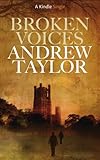
Broken Voices by Andrew Taylor

I like Andrew Taylor’s books, so when I saw this novella on Kindle I downloaded it anticipating a good read. Broken Voices is a ghost story set in an East Anglian cathedral city just before the First World War when two schoolboys are left at the cathedral school during the Christmas holidays. They lodge with Mr Ratcliffe, a semi-retired schoolmaster, a bachelor now in his seventies who lived with Mordred, his malevolent cat, in a grace-and-favour house granted to him by the Dean and chapter of the cathedral.

Andrew Taylor has drawn both the setting in the Fens and the atmosphere of the times well. The two boys, both upset at being left at school have little to occupy themselves with and are entertained by the ghost stories that Mr Ratcliffe tells them. There was an ancient tragedy connected with the cathedral bells, the tower and a Canon who had been commissioned to write an anthem to mark the occasion when the bells were recast. The cathedral is full of shifting shadows, and the bell tower is haunted by fragments of melody, which one of the boys can hear.

I didn’t find it that chilling, but the story does have a creepy atmosphere and a tension as the boys investigate the tower in the dead of night. It’s suitably ambiguous. It’s not spelled out and you can make your own decision – as one of the boys says at the beginning of the story, looking back forty years to the events he is relating:

Was there a ghost? Was there, in a manner of speaking, a murder?

Ask me these questions and I cannot answer a simple yes or no. I did not know at the time and now, more than forty years later, I am even less able to answer them.

I read this quickly. It may be just a bit predictable, but none the less I enjoyed it for what it is – a ghost story told with eloquence and sufficient pace to build up the suspense and keep me entertained to the end.