Books in Synch

South with Scott, The Birthday Boys, Race to The End

Birthday Boys & SWS Race to the End 2


Beryl Bainbridge’s novel The Birthday Boys is a fictionalised version of Scott’s 1912 Antarctic expedition. Ever since I bought South with Scott by Lord Mountevans when I was at school I’ve been fascinated by race to reach the South Pole and reading The Birthday Boys made me take down South with Scott from my bookshelves to compare the two. But even so I was wanting to know more and so, when I went to the library yesterday morning I thought I’d see if there was anything else I could read about. AND THERE WAS!

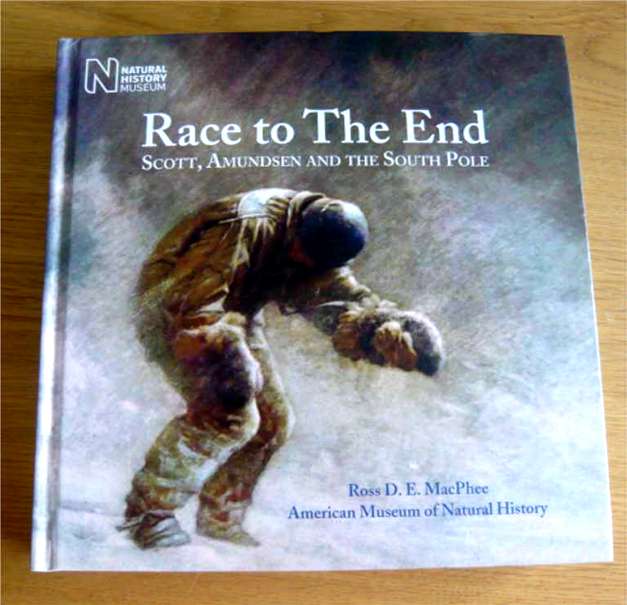
Race to The End cover

As Alex said last week when I wrote about the coincidence of finding The English Spy in the library when I had reserved Road to Referendum it really does seem as if books do call out to each other, because sitting there on the library shelves just as though it was waiting for me was this beautifully illustrated book – Race to The End: Scott, Amundsen and the South Pole by Ross D E MacPhee.

As I read The Birthday Books I was wondering how true to the facts Bainbridge had been in her novel. I’ve had time just to compare one event that is common to all three books, when Dr Wilson (Uncle Bill), Lieutenant ‘Birdie’ Bowers and Apsley Cherry-Garrard set off to Cape Crozier to recover emperor penguin eggs in the middle of the Antarctic winter – and Bainbridge’s version seems remarkable accurate, bringing the terrible hardships vividly to life. I think she must have read South with Scott. I shall write more about these books.

Birthday Boys & SWS Race to the End 1

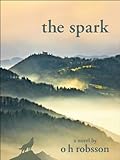
The Spark by o h robsson

The Spark by o h robsson is an introspective and soul searching novel. Set in Norway, it’s both a love story and a mystery, but just what exactly happened in the opening chapter is not revealed until the end of the book. Although there are hints that something went wrong, that something terrible had happened in the past, as I read on I became involved in Kristoffer’s life as he and Eva, a former girlfriend meet again. Twelve years previously they had parted and Eva had married someone else. But is there still a spark between them?

Kristoffer, a photographer, is the narrator and Robsson’s relaxed style gets right inside Kristoffer’s mind. His doubts, fears and hopes are all revealed, both as he reflects on events and expresses his feelings to his grandfather, his friend Mats and his dog Anja.  I particularly liked his talks with his grandfather, who lives alone in the summer in a small cabin high up in the hills. It is rather rambling and over wordy in places, with just a bit too much philosophising which slows the narrative down, but beneath all that the tension is building below the surface just waiting to break out. And events move quickly in the last quarter of the book  bringing it to a dramatic conclusion.

The setting is beautiful in the Norwegian mountains, fjords and valleys. An added bonus is the special features section at the end of the book – photographs of  krisotoffer’s world, and  o h robsson’s world and an author interview of quick questions with rambling answers. The photographs are beautiful – Robsson was a photographer before he became a novelist – and complement the story, but even without them I could easily visualise the scenery, as in this extract:

The mist is lying in wait for me. Less than two hundred metres ahead, it’s clinging to the valley sides and swallowing everything beyond, giving the lower part of the valley an eerie, almost supernatural effect. Days like this, it’s all too easy to understand how the legends of trolls thrived so long in this part of the world, the stories of their sightings passed on from family to family, generation to generation.

I reach the edge of the mist and it’s like going from above water to below water. Within seconds I’ve left behind the big blue sky I’ve spent the day with, and entered a new world of muted greens and pastel shades. A pale grey ceiling of cloud moves above me, the horizon only a few metres away, then moments later it’s a hundred metres away.

I feel like I’m driving through a landscape painting. (Loc. 80)

The Spark is written in the present tense, which I always find a bit of a challenge, as my preference is for books written in the past tense. But there are some books that make me forget the tense and for most of this book I was simply unaware of it as I became involved in the characters and their daily lives. All in all it is a good read; it’s not a book to rush through, but one to take your time over and ponder.

  • Format: Kindle Edition
  • File Size: 2553 KB
  • Print Length: 364 pages
  • Simultaneous Device Usage: Unlimited
  • Publisher: eBookPartnership.com (21 Feb 2013)
  • Sold by: Amazon Media EU S.à r.l.
  • Language: English
  • ASIN: B00BJOS364
  • Source: Review copy from the author

The Classics Club Spin – the Result

The Classics Club

The Classics Club Spin number this time is 4, and number 4 on my list of 20 titles is …

…  My Antonia by Willa Cather and I’m really pleased. I read A Lost Lady over four years ago and at that time I was very keen to read more of Willa Cather’s books. So I’m glad the Spin has given me the push to read this one. It’s not very long so I hope I’ll have read it and aim to post about it on 1 October.

First Chapter First Paragraph Tuesday Intros

Every Tuesday Diane at Bibliophile By the Sea hosts First Chapter First Paragraph First chapterTuesday Intros, to share the first paragraph or (a few) of a book you are reading or thinking about reading soon.

The Cabinet Room, 10 Downing Street, London, 4.30pm, 9 May 1940

Churchill was last to arrive. He knocked once, sharply, and entered. Through the tall windows the warm spring day was fading, shadows lengthening on Horse Guards Parade. Margesson, the Conservative Chief Whip, sat with Prime Minister Chamberlain and Foreign Secretary Lord Halifax at the far end of the long, coffin-shaped table which dominated the Cabinet Room. As Churchill approached them Margesson, formally dressed as ever in immaculate black morning coat stood up.

‘Winston.’

Churchill nodded at the Chief Whip, looking him sternly in the eye. Margesson, who was Chamberlain’s creature, had made life difficult for him when he had stood out against party policy over India and Germany in the years before the war.He turned to Chamberlain and Halifax, the Prime Minister’s right-hand man in the government’s appeasement of Germany. ‘Neville. Edward.’ Both men looked back; no sign today of Chamberlain’s habitual half-sneer, nor of the snappy arrogance which had alienated the House of Commons during yesterday’s debate over the military defeat of Norway. Ninety Conservatives had voted with the Opposition or abstained; Chamberlain had left the chamber followed by shouts of ‘Go!’ The Prime Minister’s eyes were red from lack of sleep or perhaps even tears – though it was hard to image Neville Chamberlain weeping. Last night the word around a feverish House of Commons was that his leadership would not survive.

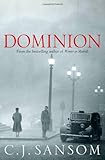
This is the opening of Dominion by C J Sansom, a novel about what might have happened, an alternative history, if Germany had been triumphant in the Second World War. All events that take place in this book after 5 p.m. on 9 May 1940 are imaginary.

I’ve read and enjoyed Sansom’s earlier books, the five Matthew Shardlake historical mysteries and Winter in Madrid, historical fiction set in Spain in 1940, but I wasn’t sure I wanted to read Dominion, his latest book, described on the book jacket as ‘a vivid, haunting re-imagining of 1950s Britain’ and ‘a gripping, humane spy thriller and a poignant love story.’

I like the opening paragraphs I’m still not sure because ‘re-imaginings’ don’t exactly appeal to me. I prefer historical fiction to be historical and fiction to be fiction, not  an alternative version of history. But when I saw a copy on the library shelves I was tempted to at least look at it and brought it home to see if it’s any good. After all it’s written by C J Sansom, so it can’t be bad, can it?

Agatha Christie at Home by Hilary Macaskill

One of the things that struck me when I was reading Agatha Christie’s An Autobiography was her love of houses. It stemmed from her childhood dolls’ house. She enjoyed buying all the things to put in it – not just furniture, but all the household implements such as brushes and dustpans, and food, cutlery and glasses. She also liked playing at moving house, using a cardboard box as a furniture van.

Writing about her life with her husband, Max Mallowan she wrote:

We were always choosing sites for houses. This was mainly owing to me, houses having always been my passion – there was indeed a moment in my life, not long before the outbreak of the second war, when I was the proud owner of eight houses. (page 440 of An Autobiography)

Agatha Christie at Home Macaskill

So when I saw that Hilary Macaskill had written this book – Agatha Christie at Home – I knew immediately that I wanted to read it. It’s a beautiful book, with many photographs – more than 100 colour photos – illustrating Agatha’s life and homes. I took my time reading it, first of all looking at the photos, before reading the text.

There is a Foreword by Mathew Prichard, her grandson, explaining the love his grandmother had for Devon, in particular for Torquay, where she was born and Greenway, the house that had a special place in her heart.  He expressed his hope that this book will ‘transmit some of the magic that my whole family felt when they were there.’  And this book does indeed do that!

There is an overview of Agatha Christie’s life followed by descriptions of the houses and countryside she loved – from Ashfield in Torquay her first home, where she was born and brought up to Greenway, a Georgian mansion above the River Dart, now owned by the National Trust.

There are no spoilers in this book but Hilary Macaskill has identified the settings Agatha Christie used in her books and how some of the place names have been altered, but are still recognizable from her descriptions. I hadn’t realised that the names of some of her characters are taken from the names of streets or villages, such as Luscombe Road in Paignton which she adopted for Colonel Luscombe in At Bertram’s Hotel.

It’s a useful book too if you want to find out more about visiting Devon with tourist information and website addresses. The final chapter is about Agatha Christie’s legacy and her continuing popularity both nationally and internationally. As well as being able to visit Greenway, which has been restored to the way it was when Agatha lived there, there are events to celebrate her life and works, such as the annual Agatha Christie week that takes place in Torquay each September around her birthday.

I haven’t been to Greenway, although I have stayed in Torquay, but that was before Greenway was open to the public. It is enormously popular – on the first day it was opened over 400 visitors came to see the house. But Agatha Christie was a very private person and I can’t imagine what she would have thought about that. After all she had refused permission for an ‘authorized life’ to be written, stating:

‘I write books to be sold and I hope people will enjoy them but I think people should be interested in books and not their authors.’ (page 129)

Knowing that I think I’d feel I was invading her privacy if I did go to Greenway!

Saturday Snapshots: Wallington

Griffins' heads, Wallington

Wallington is now owned by the National Trust but was for generations the home of the Blackett and Trevelyan families. It’s in the village of Cambo, Northumberland, to the west of Morpeth, approached down a series of country lanes. We visited it just over a week ago, never having heard of it or of Cambo until I looked in the NT handbook. There’s a lot to see, including these strange objects on the front lawn – they’re griffin heads that were originally on Bishopsgate in London (according to wikipedia this was the gate where the heads of criminals were displayed on spikes).

I took lots of photos, mainly inside the house, which was built in the late 17th century. We didn’t have time to see everything and spent most of the time looking round the house. I’ve just posted a few of my photos today (click on them to enlarge):

First the entrance to the property is under a Clock Tower topped by a cupola on nine Doric columns:

Clock Tower, Wallington

This opens into a grassed courtyard where people were sitting having picnics and children were playing ball games. Crossing the grass takes you to the entrance to the house:

Wallington entranceI think the Central Hall is impressive, but one of the house stewards told me not all visitors like it. I suppose not everybody thinks an Italianate Renaissance palazzo type courtyard is right for the house, or perhaps it’s the wall paintings they don’t like.

Central Hall, Wallington P1080991The wall paintings illustrate the history of Northumberland. They are the work of William Bell Scott, a friend of Dante Gabriel Rossetti. The photo below shows three of the paintings, featuring Egfrid, King of Northumberland with St Cuthbert, Danish Vikings landing at Tynemouth and the death of the Venerable Bede.

Wall paintings, Wallington P1080993Just a few more photos – below a photo of one of the cabinets containing a collection of model soldiers, 3,800 in total. These belonged to the three sons of Sir George Otto Trevelyan. They set them out following the plans of the battles of Marlborough and Napoleonic wars to re-enact the battles. Now they are laid out in regiments:

Model soldiers, Wallington P1090002There are the usual rooms – Kitchen (my photos of this are a bit dark), Parlour, Study, Drawing Room, Dining Room, Library, Nusery, Bedrooms and Galleries, all with many paintings, sculptures, beautiful furniture and collections of ceramics and textiles.

I was intrigued by this large boot in one of the bedrooms:

Boot Bath, Wallington P1090021It’s a Boot Bath – used by Sir William Blackett in the 18th century. It’s made of metal sheets soldered together. I don’t think I’d have liked using it, but it was designed for modesty – just your head and shoulders could be seen when you’re sitting in it – and for warmth! It was originally used in a bedroom downstairs and placed near a fire. I don’t think I’d like to have been one of the servants either, whose job it was to fill it up or empty it.

One final photo. After going round the house and part of the garden we needed some refreshment: a cup of Earl Grey tea with coffee and walnut cake for me and and mug of coffee with chocolate fudge cake for David (you can see my reflection in the teapot):

Teatime, Wallington P1090036

That’s enough for now – more photos another day, maybe of the Cabinet of Curiosities on the top floor of the house.

For more Saturday Snapshots see Melinda’s blog West Metro Mommy Reads.