What's in a Name 2014 – an Update

Whats in a name 7Charlie who hosts the What’s In A Name challenge on her blog The Worm Hole has added a a 6th category to the challenge. I was hoping she would as there has always been a 6th category for this challenge. Here it is in Charlie’s own words:

A book with a school subject in the title. And yes, that does mean you can get creative and use a magical academic subject if you wish €“ Hogwarts is a school, after all.

Examples of books you can choose: The History Boys by Alan Bennett, Angelology by Danielle Trussoni, Mastering The Art Of Soviet Cooking by Anya Von Bremzen

This sixth category will be considered a bonus. You can read for it or not €“ if you only want to read for the original five categories your last book of the five will still mean you have completed this year’s challenge.

I’ve had a quick look at my unread books (as I like to use challenges to read from my own books, rather than having to buy/borrow them) and have these to choose from:

History

The Brief  History of the Dead by Kevin Brockmeier
A Small Part of History by Peggy Elliott
The History of Love by Nicole Krauss

Languages

A Dead Language by Peter Rushforth
Italian Neighbours: An Englishman in Verona by Tim Parks

Music

An Equal Music by Vikram Seth

Art

The Lost Art of Keeping Secrets by Eva Rice

Shakespeare

1599: A Year in the Life of William Shakespeare by James Shapiro

Dancing

A Time To Dance, No Time To Weep by Rumer Godden

February's Books

This has been a fantastic February for reading. I finished eleven books, all of them from my to-be-read books (TBRs). The links are to my posts on the books:

  1. The Crow Trap by Ann Cleeves
  2. Playing With Fire by Peter Robinson
  3. Five Little Pigs by Agatha Christie
  4. The Grass is Singing by Doris Lessing
  5. Dying in the Wool by Frances Brody
  6. Crucible by S G MacLean
  7. The Steel Bonnets: the story of the Anglo-Scottish Border Reivers by George MacDonald Fraser  (Non fiction)
  8. The Thirty-Nine Steps by John Buchan
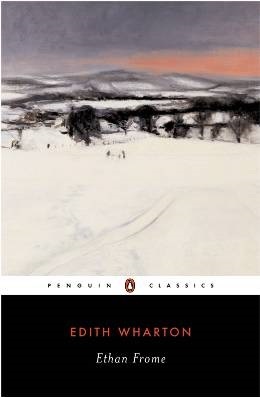
  9. Ethan Frome by Edith Wharton
  10. The Breaker by Minette Walters
  11. Purple Hibiscus by Chimamanda Ngozi Adichie

I enjoyed every one of them, but there are a couple of outstanding books, one of which is Crucible by S G MacLean and that is my Crime Fiction Pick of the Month. I was transported back to 17th century Scotland where Alexander Seaton investigates the murder of his friend, Robert Sim, the College librarian at the Marischal College in Aberdeen.

It’s absolutely compelling reading, including a quest for €˜a secret, unifying knowledge, known to the ancients‘ since lost to us. There are many twists and turns and another man is killed before he finally arrives at the truth.

For more Crime Fiction Picks of the Month see Kerrie’s blog, Mysteries in Paradise.

The other outstanding book is Purple Hibiscus by Chimamanda Ngozi Adichie, which I have yet to write about. I found this book quite hard to read when it was about the abuse happening to some of characters. In some ways it is a dark book and yet in other ways it is uplifting. Another book that I didn’t want to end and at the same time I wanted to rush through it to see how it would end.

I’ve had this book for nearly six years and am so glad I eventually got round to reading it.

Also worth a mention are The Thirty-Nine Steps by John Buchan and Ethan Frome by Edith Wharton (no review post as yet). I read both on my Kindle, both are short books, but beautifully composed, taut and precise. Of the two I think Ethan Frome has the edge, mainly because of Wharton’s descriptive writing evoking such an intense atmosphere.

I’m doing well at the moment sticking to reading my TBRs (books I’ve had since before 1 January 2014)  – I’ve plenty to choose from – although I am wavering and have started to read a library book. I keep finding books I haven’t included in my LibraryThing and Goodreads catalogues, so although the numbers of unread books on the shelves are going down, the numbers on LT and GR aren’t. And I have bought a few books this year to add to the unread totals!

Book Beginnings – The Flower Book

Yesterday I finished reading Purple Hibiscus by Chimamanda Ngozi Adichie, which I thought was an amazing book that kept me captivated even though it’s a challenging book to read because of its subject matter. I’ll write more about that in a later post.

It has left me with the usual problem of deciding what to read next and I’ve picked up and started so many books, none of which seem good enough after Purple Hibiscus. I’ve been reading from my own bookshelves this year, but I’m thinking of having a little break from that and reading a library book. It’s one I picked off the mobile library van, not knowing anything about it or about the author, Catherine Law – The Flower Book. It’s set in 1914 and also in 1936.

It begins in Cornwall in March 1914:

On certain nights if the wind was right, you could hear the sea from Old Trellick. So the legend has it, although Violet had never heard the waves and her parents would not try, due to the fact, she decided, that they had no imagination.

As a child she’d stand at the French windows and implore them to be quiet, to stop what they were doing and to concentrate with her, to catch this magical and elusive sound.

Every Friday Gilion at Rose City Reader hosts Book Beginnings on Friday, where you can share the first sentence (or so) of the book you are reading, along with your initial thoughts about the sentence, impressions of the book, or anything else the opener inspires.

I like the images the beginning of this book conjures and also the sounds. I always like the sight and sound of the waves breaking on the shore; to me too that has a certain magic. So this appealed to me straight away. Couple that with a story set against the backdrop of World War I as Aster Fairling searches for the truth behind her parents’ tragic love through the pages of her mother journal and I want to know more.

The Flower Book is Catherine Law’s third book.

The Thirty-Nine Steps by John Buchan

Way back in 2008 I watched The 39 Steps on TV with Rupert Penry-Jones as Richard Hannay, so inevitably as I read The Thirty-Nine Steps I could see Penry-Jones as Hannay. The dramatisation, however, although there are similarities, is different from John Buchan’s book. There are a number of historical inaccuracies and some artistic licence was used – none of which I was aware of as I watched the film and I thoroughly enjoyed it. It made me want to read the book and it’s taken me until now to get round to it – I’d forgotten most of the details of the film, except for visions of Penry-Jones running away from his pursuers in the Scottish moors, scrambling through the heather.

John Buchan 1936

John Buchan began writing The Thirty-Nine Steps in 1914; it was first published in 1916. He was born in Perth in 1875 and after leaving Oxford University he had a varied career, as well as writing books and articles he was a barrister, a member of Parliament, a soldier and a publisher. He was created Baron Tweedsmuir of Elsefield in 1935 and became the 15th Governor-General of Canada, a position he held until his death in 1940.

Once I began reading The Thirty-Nine Steps I didn’t want to put it down. It’s a fast moving action-story, beginning with an international conspiracy, involving anarchists, financiers and German spies. Richard Hannay, having found Scudder, murdered in his London flat, fears for his life and goes on the run, chased by villains in a series of exciting episodes, culminating in the discovery of the location of the ‘thirty-nine steps’. Hannay is a remarkable character, resourceful, and a master of disguise. As well as fleeing for his life he is searching for Scudder’s notebook, which contains clues to the international conspiracy – Scudder was a spy.

The master villain is also a master of disguise, having the ability to ‘hood his eyes like a hawk‘ :

There was something weird and devilish in those eyes, cold, malignant, unearthly, and most hellishly clever. They fascinated me like the bright eyes of a snake. (page 119)

He can impersonate the British First Sea Lord at a top secret meeting with people who knew the real First Sea Lord very well and is also convincing as the very British gentleman, the plump, bridge-player Percival Appleton.

The Thirty-Nine Steps is to my mind a gem. There are other Hannay books – the Complete series is available on Kindle, The Thirty-Nine Steps, Greenmantle, Mr. Standfast, The Three Hostages, and The Island of Sheep.

And so one book leads on to yet more books!

The Steel Bonnets by George MacDonald Fraser

The Steel Bonnets 001The full title of this book is The Steel Bonnets: the Story of the Anglo-Scottish Border Reivers by George MacDonald Fraser. It’s a detailed account of the Border between England and Scotland up to the accession of James VI’s succession to the English throne in 1603.

The people living in the Borders, both English and Scottish feuded amongst themselves, Scots against Scots, English against English, and Scots against English – robbery, blackmail, raiding, arson, kidnapping, murder and extortion were regular events during that period, amongst a number of families, including Armstrongs, Johnstones, Forsters and Hetheringtons, Elliots, Fenwicks, Bells and Nixons, Littles and Scotts, Maxwells and Kerrs. Some families had both English and Scottish members, making it all very confusing. Fraser searched many sources in compiling this history, including State and Border papers and letters, listed in the Bibliography.

There is a map showing the six Marches that made up the Border – three on each side, East, Middle and West. Each March had its own Warden. It’s not very easy to see on my copy of this map, but it shows the general locations:

Border Marches map

The seamen of the first Elizabeth might sweep the world’s greatest fleet off the seas, but for all the protection she could give to her Northumbrian peasants they might as well have been in Africa. While young Shakespeare wrote his plays, and the monarchs of England and Scotland ruled the comparatively secure hearts of their kingdoms, the narrow hill land between was dominated by the lance and the sword. The tribal leaders from their towers, the broken men and outlaws of the mosses, the ordinary peasants of the valleys, in their own phrase, “Shook loose the Border.” They continued to shake it as long as it was a political reality, practising systematic robbery and destruction on each other. History has christened them the Border Reivers.*

*Reiver, reaver – robber, raider, marauder, plunderer. the term is obsolete, but lingers on in words like bereave. (page 3)

The book is divided into five parts:

  • Part I a brief historical sketch up to 1500 from the Roman period.
  • Part II describing what the Border was like in that century, the people who lived there, who were the leading robber families, how they lived, ate, dressed, built their homes, the games they played (football, the fore-runner of rugby, soccer and American football, horse racing, hawking, hunting, fishing and gambling), and the songs they sang – Border ballads.
  • Part III – about the reivers, how they rode their raids, conducted their feuds etc and the Border Law, and how the March Wardens tried to keep order, what it was like for ordinary folk living in the frontier country.
  • Part IV – historical survey of the reiving century from 1503 – 1603, how the reivers fitted into the history of their time and the part they played in the long-drawn Anglo- Scottish struggle..
  • Part V – how their story ended when England and Scotland came under one king, and the old Border ceased to be.

James became the King of all Britain in 1603:

… he was determined to make one country where there had been two before, to bury the old quarrels, and to keep the peace. (page 360)

Fraser makes the point that whilst James pacified the Borders using a

‘heavy hand and it makes an ugly story’, … ‘at the end of the day he left the old, wild, bloody Border a fit place for ordinary folk to live. If the border riders were harshly dealt with, it is not irrelevant to point out that they had dealt fairly harshly in their time. Undoubtedly injustice and atrocity took place in settling the frontier, but the victims are not to be accounted any nobler just because of that.

It is also wrong to suggest that James was ignorant of Border conditions. He knew a great deal about them, from first-hand experience – certainly more than any occupant of the English throne since Richard III. He may be charged with cruelty, indifference and dishonesty in his attitude to Border affairs, but not with ignorance or stupidity. (pages 360 -361)

It’s taken me since the beginning of December to read this book. I read it slowly in small sections as there is a lot to take in and I found the structure of the book a bit confusing and disjointed, as inevitably it meant that information was repeated. There are a large number of footnotes, which interrupted the flow of the text if I paused to read them – which I did, as they contained much relevant information. I would have preferred it to have been incorporated into the main body of the book.

However, I’m glad I read it – it’s a tour de force, and a mine of information! An ideal book for Read Scotland 2014 if you are interested in the history of the region and/or the families, or like me, you live there.

George MacDonald Fraser (1925 – 2008) was a Scot born in England (Carlisle), a Borderer himself. In 1943 he enlisted in The Border Regiment and served in the Burma Campaign. He was later granted a commission into the Gordon Highlanders. After the War he became a journalist. He was the author of the ‘Flashman‘ books, other novels and movie scripts.

Crucible by S G MacLean

Once again I was transported back to 17th century Scotland with Crucible by S G Maclean, the third of her Alexander Seaton books. I read the first, The Redemption of Alexander Seaton in February 2013 and now a year later I’ve been just as engrossed in Crucible. I think her style of writing suits me perfectly, the characters are just right, credible well-rounded people, the plot moves along swiftly with no unnecessary digressions and it’s just full of atmosphere. I loved it.

It’s set in 1631 in Aberdeen, where Alexander is now a Master at Marischal College. On Midsummer’s eve he stumbles across the body of his friend, Robert Sim, the college librarian, a few feet from the library steps, with his throat cut, blood congealing around the wound. Dr Dun, the college principal asks Alexander to investigate the matter, to look into Robert’s private life, hoping he’ll find nothing to reflect badly on the college.

I found it absolutely compelling reading. Robert had been cataloguing a new acquisition to the library before he was killed and Alexander is convinced that Robert was troubled by what he found there, amongst the books of history, alchemy  and hermetics – the quest for ‘a secret, unifying knowledge, known to the ancients’ since lost to us. There are many twists and turns and another man is killed before he finally arrives at the truth.

This is the third book in the series, but although I haven’t read the second book, I don’t think that matters as I think Crucible stands well on its own. The fourth book in the series is The Devil’s Recruit – the hardback and Kindle versions are available now, whilst the paperback will be available on 14 May. Now I’ve lifted my book buying ban I think I may just have to get the Kindle version soon.

Crucible qualifies for four of the challenges I’m doing this year – the Mount TBR challenge, the Historical Fiction Challenge, My Kind of Mystery Challenge and the Read Scotland Challenge.