Color Coded Challenge 2015

The Color Coded Challenge is running again next year. Bev has made a change – the colourColour coded may either be named in the title or it may appear as the dominant colour for the cover of the book. For “implies colour” the image implying colour should dominate the cover–for instance a large rainbow, a field of flowers, or the image of a painter.

Here are the rules:

*Read nine books in the following categories. The title shown in italics are my initial choices (mostly on my Kindle) – these could easily change over the course of 2015, especially as I like the idea of using the dominant colour of the cover of the book instead of the title. And these books will also qualify for the Mount TBR Reading Challenge 2015.

1. A book with “Blue” or any shade of Blue (Turquoise, Aquamarine, Navy, etc) in the title/on the cover. Blue Mercy by Orna Ross (Kindle)

2. A book with “Red” or any shade of Red (Scarlet, Crimson, Burgundy etc) in the title/on the cover. The Redbreast by Jo Nesbo (Kindle)

3. A book with “Yellow” or any shade of Yellow (Gold, Lemon, Maize, etc.)in the title/on the cover. The Hare with Amber Eyes by Edmund de Waal

4. A book with “Green” or any shade of Green (Emerald, Lime, Jade, etc) in the title/on the cover. Greenmantle by John Buchan (Kindle)

5. A book with “Brown” or any shade of Brown (Tan, Chocolate, Beige, etc) in the title/on the cover. The Various Flavours of Coffee by Anthony Capella.

6. A book with “Black” or any shade of Black (Jet, Ebony, Charcoal, etc) in the title/on the cover. Black Roses by Jane Thynne (Kindle)

7. A book with “White” or any shade of White (Ivory, Eggshell, Cream, etc) in the title/on the cover. Whitethorn Woods by Maeve Binchy

8. A book with any other colour in the title/on the cover (Purple, Orange, Silver, Pink, Magneta, etc.). Silver Lives by Ann Parker (Kindle)

9. A book with a word that implies colour (Rainbow, Polka-dot, Plaid, Paisley, Stripe, etc.). A Crown of Lights by Phil Rickman (Kindle)

* Any book read from January 1 through December 31, 2015 will count.

*Crossovers with other challenges are fine.

*Everyone who completes all nine categories will be entered in a year-end drawing for a book-related prize package.

Victorian Bingo Challenge 2015

Victorian Bingo

I read about The Victorian Bingo Challenge hosted by Becky at Becky’s Book Reviews on Cath’s blog, Read Warbler and thought it looked interesting.

The goal is to get a Bingo (horizontal, vertical, diagonal, four corners and centre square). This will require a minimum of five books.

One book per square. For example: Oliver Twist can count for “Book with a name as the title” or “Charles Dickens” or “Book published 1837-1940” or “Book published in serial format” or “Book over 400 pages” or “Book that has been adapted into a movie” or “Book set in England.” But obviously, it can only count once.

This is the bingo card:

Bingo cardMore details:

1. Fiction or nonfiction.

2. Books, e-books, audio books all are fine.

3. Books and movies can be reviewed together or separately.

4. You can create a reading list if you want, but it’s not a requirement. 

5. If you do make a list, consider adding a list of five books you’d recommend to others

6. If possible try to try a new-to-you author! I know it can be really tempting to stick with familiar favorites.

7. Children’s books published during these years should not be forgotten!

8. Rereads are definitely allowed if you have favourites!

I’ve not done a bingo style challenge before – selecting books to fit into the categories looks a bit daunting, but I’m going to have a go. I’m not sure I’ll complete this challenge but the only way for me I think is to read what I want to read and see if the books qualify for any of the squares. I’ll be choosing books by Charles Dickens, Elizabeth Gaskell, Anthony Trollope, George Eliot, Thomas Hardy, R L Stevenson and Wilkie Collins – books on my Kindle and on my shelves.

These are a few of my paper copies:

Victorian bksI’ll see where I can fit them into the bingo card!

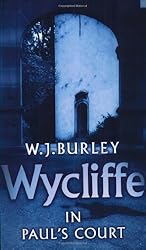
Wycliffe in Paul's Court by W J Burley

We had to spend nearly 4 hours yesterday in the Newcastle Emergency Eye Department as D has a corneal abrasion. As my Kindle needed charging I picked up a lightweight paperback to slip into my bag to while away the time – and I nearly finished it whilst we were there! It was Wycliffe in Paul’s Court by W J Burley.

Synopsis from the back cover:

Paul’s Court is a quiet corner in the heart of the city: an oasis of peace and safety – until the night when there are two violent deaths. Willy Goppel, an émigré from Germany, is found hanging from a beam in his home; and fifteen-year-old Yvette Cole, who may or may not have lived up to her wild reputation, is strangled and thrown half naked over the churchyard hedge.

Chief Superintendent Wycliffe has the aid of a shrewd local sergeant, Kersey, but they still find this a difficult case to crack. Did Willy assault the girl and then hang himself? Or was his death not suicide after all? As Wycliffe and Kersey dig deeper they gradually untangle a complex network of secrets in the quiet of Paul’s Court …

My thoughts

Although there are plenty of suspects, all from the five houses in Paul’s Court I could easily distinguish them, even with the distractions of a hospital waiting room from children crying that they wanted to go home and people talking loudly next to me. On the other hand, I wasn’t able to concentrate enough to follow all the clues and it was only just before the culprit was revealed that I had any idea who it was. But it was still an enjoyable read.

Wycliffe is a quiet, thoughtful detective who doesn’t let himself become desk-bound and gets very involved with the investigation. This is the first time he has worked with Kersey, who sized him up thus:

He saw a man with a clear view of right and wrong who was not a bigot; he recognised a close-grained moral toughness with a hint of old-fashioned puritan zeal, but no wish to burn heretics. A man of compassion but no sentimentalist, a reformer but not a do-gooder. (page 70)

Wycliffe and Kersey make a good team; Kersey knows not just the area very well but also the local people and is able to give Wycliffe ‘vivid thumb-nail sketches of the inhabitants of Paul’s Court’. They are ordinary people, living ordinary lives but who find themselves in the middle of a murder investigation. W J Burley was very good at creating believable people caught up in extraordinary situations. I’ve read just a few of his 22 Wycliffe books – plenty more to read yet!

W.J. Burley (1914 – 20020 was first an engineer, and later went to Balliol to read zoology as a mature student. On leaving Oxford he went into teaching and, until his retirement, was senior biology master in a large mixed grammar school in Newquay. He created Inspector Wycliffe in 1966 and the series has been televised with Jack Shepherd starring in the title role. Wycliffe in Paul’s Court was first published in 1980.

The Spin Result is …

… Number 13 in the Classics Club Spin.

For me that is The Call of the Wild by Jack London, the story of the dog, Buck and his adventures in the Klondike.

Call of the wild

I am delighted with this choice. That’s not so surprising as I want to read all the books on my Classics Club list, but I’m particularly pleased with this one because I’ve been meaning to read it for years! Both this and White Fang are books that belonged to my mother and I just cannot imagine why I’ve never read either of them before – it seems I need this push from the Spin to get round to it. As The Call of the Wild is so short I’m going to read White Fang as well.

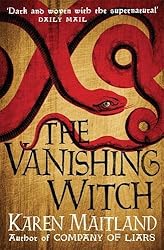
The Vanishing Witch by Karen Maitland

I found The Vanishing Witch by Karen Maitland a little slow at the beginning, although it’s full of interesting and well drawn characters, set in Lincoln during the reign of Richard II. It’s the time of the Peasants Revolt, a time of murder and mayhem and when suspicions of witchcraft were high as people started to die unnatural deaths, but it just didn’t have the magic spark that I’d enjoyed in her other books that I’ve read – The Company of Liars and The Owl Killers. It’s a long book of nearly 500 pages and it’s not just the beginning that’s slow, but it picks up towards the end.

The story revolves around Robert of Bassingham, a rich wool merchant, and his family – wife Edith and sons, Jan and Adam. All is fine until Robert meets Catlin, a wealthy widow, who comes to him for advice. Catlin is, of course, not as kind and good as Robert thinks she is and Robert’s family soon suffers because of his involvement with her. There are many other characters, including Gunter and his family. Gunter is a river boatman, struggling to make a living, burdened by heavy taxes he can’t pay. His life goes from bad to worse.

I liked the elements of the supernatural and suspicions of witchcraft in this book and the historical setting. There are several narrators, including a ghost and each chapter is headed by weather-lore, anti-witchcraft charms and spells taken from medieval ecclesiastical writings, recorded British folklore and from medieval spell books known as grimoires. For example this is the heading for Chapter 2:

If you fear that you are in the presence of a witch, clench both your hands into fists with the thumbs tucked under your fingers. Then she cannot enchant your mind.

Now that advice could be useful!

The Classics Spin

The Classics ClubIt’s time for another Classics Spin. I didn’t manage to read the book from the last Spin but as we have until 5th January to read the selected book, I’m hoping to do better this time.

The rules are the same as always:

  • Pick twenty unread books from your list.
  • Number them from one to twenty.
  • On Monday a number will be drawn.
  • That’s your book, to read by 5th January.

Here’s my list:

  1. Lady Susan/The Watsons/Sanditon by Jane Austen
  2. Lorna Doone: A Romance of Exmoor by R D Blackmore
  3. Out of Africa by Karen Blixen
  4. No Name by Wilkie Collins
  5. Little Dorrit by Charles Dickens
  6. Martin Chuzzlewit by Charles Dickens
  7. Nicholas Nickleby by Charles Dickens
  8. Oliver Twist by Charles Dickens
  9. The Mill on the Floss by George Eliot
  10. Parade’s End by Ford Maddox Ford
  11. Where Angels Fear to Tread by E M Forster
  12. The Man Who Would Be King by Rudyard Kipling
  13. The Call of the Wild by Jack London
  14. Love in the Time of Cholera by Gabriel Garcia Marquez
  15. One Hundred Years of Solitude by Gabriel Garcia Marquez
  16. Of Human Bondage by W. Somerset Maugham
  17. Black Beauty by Anna Sewell
  18. Barchester Towers (Barsetshire Chronicles, #2) by Anthony Trollope
  19. The Age of Innocence by Edith Wharton
  20. The Voyage Out by Virginia Woolf

These are all books from my TBR books which will help me reduce the numbers – books I’ve had for years in some cases!