Top Ten Tuesday: Books with Trains, Boats & Planes on the Covers

Top Ten Tuesday is a weekly meme created by The Broke and the Bookish and now hosted by Jana at That Artsy Reader Girl. For the rules see her blog.

This week’s topic is How My Reading Habits Have Changed Over Time, but I don’t think they have, I’ve always loved reading and read a wide variety of genres. So, instead I am doing a topic I missed in August when I was on holiday. It’s books Featuring Modes of Transportation on the Cover, Planes, Trains & Automobiles.

The books I’ve chosen show trains, boats and planes on their covers:

Trains

The Christmas Train by David Baldacci – Basically this is a love story. Tom, a world-weary journalist is travelling from Washington DC to spend Christmas with his girlfriend who lives in Los Angeles. It’s also a detective story as there is a thief on the train.

Blood on the Tracks: Railway Mysteries edited by Martin Edwards, fifteen railway themed stories in this collection and an introduction on classic railway mysteries. Train travel provides several scenarios for a mystery – the restriction of space on trains, with or without a corridor, means that there are a limited number of suspects and they can also provide an ideal place for a ‘locked room’ crime or an ‘impossible crime’ story. This collection also includes a couple of crimes with a supernatural element.

The Mystery of the Blue Train by Agatha Christie – Ruth Kettering, the daughter of millionaire Rufus Van Aldin is found strangled in her compartment in the Paris-Nice train, known as the train bleu, on its arrival in Nice and the fabulous ruby, the Heart of Fire that Van Aldin had given her, has been stolen. Fortunately Hercule Poirot is also travelling on the train and he of course unravels the mystery.

4.50 from Paddington by Agatha Christie – this begins when Mrs McGillicuddy was going home from Christmas shopping in London when she saw from the window of her train a murder being committed in a train travelling on a parallel line. But nobody believes her because there is no trace of a body and no one is reported missing. Nobody, that is except for her friend Miss Marple. But she is getting older and more feeble and she hasn’t got the physical strength to get about and do things as she would like. So, she enlists the help of Lucy Eyelesbarrow.

Murder on the Orient Express by Agatha Christie – Poirot is on the Orient Express, on a three-days journey across Europe. But after midnight the train comes to a halt, stuck in a snowdrift. In the morning the millionaire Simon Ratchett is found dead in his compartment his body stabbed a dozen times and his door locked from the inside. It is obvious from the lack of tracks in the snow that no-one has left the train and by a process of elimination Poirot establishes that one of the passengers in the Athens to Paris coach is the murderer.

Boats and Planes

Death on the Nile by Agatha Christie – Poirot is on the river-steamer SS Karnak, cruising on the Nile. Linnet Doyle, a wealthy American heiress is murdered, shot through the head. The motive seems straightforward, looking at who gains from Linnet’s death, but this is a complicated plot (when is one of Christie’s books not complicated?) and following on from Linnet’s murder, her maid is also found dead, Linnet’s pearls are missing, several characters are not what them seem and with the arrival of Colonel Race, a member of the British Secret Service, it seems there is also an international murderer and agitator on board.

Death Under Sail by C P Snow – This is a classic mystery, a type of ‘country house’ mystery, but set on a wherry (a sailing boat) on the Norfolk Broads, where Roger Mills, a Harley Street specialist, is taking a group of six friends on a sailing holiday. When they find him at the tiller with a smile on his face and a gunshot through his heart, all six fall under suspicion. It’s ingenious!

Planes

The 12.30 from Croydon by Freeman Wills Crofts – this begins with a murder but the identity of the murderer is known before he even thought of committing the crime. It’s set in the early 1930s when the country is suffering the effects of the ‘slump’ and Charles Swinburne’s business is on the edge of bankruptcy, and he is unable to raise the money to keep it going. So, he decided to murder his uncle, Andrew Crowther, in order to inherit his fortune. Consequently Andrew died on the 12.30 plane from Croydon. What I found most interesting is the description of the thrill of the early passenger flights. 

Death in the Clouds by Agatha Christie – a kind of locked room mystery, only this time the ‘locked room’ is a plane on a flight from Paris to Croydon, in which Hercule Poirot is one of the passengers. In mid-air, Madame Giselle, is found dead in her seat. It appears at first that she has died as a result of a wasp sting (a wasp was flying around in the cabin) but when Poirot discovers a thorn with a discoloured tip it seems that she was killed by a poisoned dart, aimed by a blowpipe. A most enjoyable book!

Fair Stood the Wind for France by H E Bates – I was totally gripped by the first part of the book describing Franklin’s flight, with his crew of four sergeants, over France then the Alps and on to Italy. On his return flight when they were over France, they began to dive, rapidly losing height and he knew that the port engine had gone. The air screw (that’s a propeller) had broken, meaning they wouldn’t make it back to England and they crash landed somewhere in the countryside. They thought they were about west-north-west of the Vosges. From then onwards the story covers the period when Franklin whose arm had been very badly injured was cared for by Francoise and her family, hidden in their farmhouse. He falls in love with Francoise and she agrees to help him escape and marry him when they reach England.

I’m the King of the Castle by Susan Hill

I read I’m the King of the Castle by Susan Hill for the 1970 Club hosted by Simon and Karen.

Description from Amazon UK for the Mass Market paperback edition published in 2014:

‘Some people are coming here today, now you will have a companion.’

But young Edmund Hooper doesn’t want anyone else in Warings, the rambling Victorian house he shares with his widowed father. Nevertheless Charles Kingshaw and his mother are soon installed and Edmund sets about persecuting his fearful new playmate.

From the dusty back rooms of Warings through the gloomy labyrinth of Hang Wood to the very top of Leydell Castle, Edmund pursues Charles, the balance of power slipping back and forth between bully and victim. With their parents oblivious, the situation speeds towards a crisis…

Darkly claustrophobic and morally ambiguous, Susan Hill weaves a classic tale of cruelty, power, and the dangerous games we play as children.

It is a depressing, tragic, heart-rending story about 11 year-old Charles Kingshaw’s misery and torture when he and his mother Helena, went to live at Warings, the home of Joseph Hooper and his bully of a son, Edmund, also aged 11. It’s well written, with well defined characters and I could easily visualise the setting, but I can’t say I enjoyed it. There is that awful sense of foreboding all the way through.

I really disliked Edmund who took great delight in terrorising Charles. As for the parents I was shocked at their behaviour and attitudes. Mrs Kingshaw is oblivious to what is going on between the boys and how much Charles fears Edmund. Charles is a sensitive boy, but smart and resourceful. He decides to run away, but Edmund follows him into Hang Wood and they lose their way. Charles can cope, but Edmund falls to pieces, cries like a baby, and injures himself falling into a stream. However, after the adults rescue them and they return to Warings Charles succumbs again to Edmund’s bullying, dominated by his cruelty. Things come to a climax when they all visit a ruined castle, where Charles is really the ‘King of the Castle’ and Edmund falls off a high wall. There is no way that all will end well. It reminded me of that sense of impending tragedy in The Lord of the Flies. It’s disturbing, dark and violent. The ending was inevitable and totally tragic.

I’ve had this book for a long time and can’t remember when or where I bought it, nor why I haven’t read it before now. My copy is a secondhand hardback published by Longman in 1970. The Introduction clarifies that Susan Hill wrote the book for adults. It’s a chilling novel that explores the extremes of childhood cruelty.

The Girl Next Door by Ruth Rendell

Rating: 5 out of 5.

Ruth Rendell, Lady Rendell of Babergh, also known as Barbara Vine, who died aged 85 in 2015, was a literary phenomenon. From 1964, when Inspector Reginald Wexford first appeared in From Doon With Death, she wrote more than sixty novels, including police procedurals, standalone and psychological mysteries plus numerous books of short stories. Many of them were adapted for television or made into feature films.

The Girl Next Door by Ruth Rendell, is one of my TBRs, a book that’s been sitting on my bookshelves since 2016. It’s one of her later novels, a stand-alone book, first published in 2014, a year before her death.

Description from Amazon UK

Beneath the green meadows of Loughton, Essex, a dark network of tunnels has been dug. A group of children discover them. They play there. It becomes their place.

Seventy years on, the world has changed. Developers have altered the rural landscape. Friends from a half-remembered world have married, died, grown sick, moved – or disappeared.

Work on a new house called Warlock uncovers a long buried grisly secret: the bones of two severed hands are discovered in a box, and an investigation into a long-buried crime of passion begins.

The friends, who played together as children, begin to question their past. And a weary detective, more concerned with current crimes, must investigate a case of murder.

The book begins just before the second world war when Woody killed his wife and her lover when he discovered they were having an affair. He then cut off their hands, a right hand and a left that they had held together, and put them in a biscuit tin, which he buried in a tunnel, where the local children played.

Time moves on to 1944. Ruth Rendell describes a garden where the neighbourhood children play:

The garden was not beautiful. It had no flowering trees, no roses, no perfumed herbs. Tunnels they called it at first. The word ‘qanat’, an impossible word, was found by Daphne Jones and adopted by the rest of them. It meant, apparently, a subterranean passage for carrying water, in some oriental language. They liked it because it started with a q without a u. Their schoolteachers had taught them that no word could ever start with q unless followed by u, so Daphne’s idea appealed to them and the tunnels became qanats. (pages 13 – 14)

Time moves on again and we meet up with the children as adults in their seventies, when the skeletal hands have been discovered. The qanats were actually the foundations of a house called Warlock in Loughton, twelve miles north of London and most of the children, are now still living in the area. When they read the newspaper report about the discovery of the hands they get together and reminisce about their childhood and playing in the tunnels, wondering whose hands had been buried.

This is when the book expands into a study of ageing as well as murder mystery:

As you get older, you forget names: those you studied with, lived next door to, the people who came to your wedding, your doctor, your accountant and those who cleaned your house. Of these people’s names you forget perhaps half, perhaps three quarters. Then whose names do you never forget, because they are incised on the rock of your memory? Your lovers (unless you have been promiscuous and there are too many) and the children you went to your first school with. You remember their names unless senility steps in to scrape them off the rock face. (page 17)

It’s quite a long book, nearly 350 pages in a small font in my copy and Ruth Rendell takes time to describe these old friends’ lives and reveals their relationships, their loves and losses and those of their own children and grandchildren as well as their regrets, and bereavements. I felt I really got to know them as real people. Long buried secrets rise to the surface, and old passions are reignited.

From the beginning we know the identity of the murderer, Woody and that of his wife Anita, but not that of the man, whose hand had held Anita’s. At times I thought I’d worked out who it was but when his identity was revealed it wasn’t who I thought it was – it was more complicated than I’d realised. And who is ‘the girl next door‘? I did work that out correctly. It is in some places a bleak novel, and all the characters’ lives have changed by the end of the book. It’s a book that really gripped me and drew me on to find out more. And I really enjoyed how it shows the changes that have taken place in society from the 1930s onward.

I’ve read several of Ruth Rendell’s standalone books and I think this is one of her best. I’ve also read some of her Inspector Wexford books and those she wrote under the name of Barbara Vine.

Top 5:non-human characters

Top 5 Tuesday was created by Shanah at Bionic Book Worm, and it is now being hosted by Meeghan at Meeghan Reads. For details of all of the latest prompts for October to December, see Meeghan’s post here.

It’s time to talk about books with non-human characters  animals or supernatural creatures… maybe even a park bench. Who are your favourite non-human characters?

This is a selection of some of the books with non-human characters that I’ve read and enjoyed. I’ve read all these books, so the links in the titles take you to my reviews.

The Guest Cat by Takashi Hiraide. The main character in this book is a stray cat, Chibi, who made herself at home with a couple in their thirties who lived in a small rented house in a quiet part of Tokyo. At first the cat was cautious and just peeked inside their little house but eventually Chibi spent a lot of time with the couple coming and going as she pleased.

The Toymakers by Robert Dinsdale –  a wonderful book about Papa Jack’s Emporium in London, a toyshop extraordinaire. The toys it sells aren’t ordinary toys – they seem alive, from patchwork dogs, to flying pegasi, Russian dolls that climb out of one another, runnerless rocking horses, whales that devour ships, fire-breathing dragons and many others to the toy soldiers that wage war on each other.

The Good People by Hannah Kent is set in 1825/6, a long gone world of people living in an isolated community, a place where superstition and a belief in fairies held sway. People talk of others being ‘fairy-swept’ or ‘away with the fairies’, and kept with the music and lights, dancing under the fairy hill.This is not a fairy story, but one in which their existence is terrifyingly real to the people of the valley. The villagers believe that the fairies live in Piper’s Grave, ‘the lurking fairy fort’, at the end of the valley, a place where few people went, a neglected and wild place. People see lights there, glowing near a crooked whitethorn tree that stood in a circle of stone. Nóra is completely unable to cope with Micheál, her four-year old grandson. There is talk that he is ‘fairy-struck’.

The Watchmaker of Filigree Street by Natasha Pulley, described as ‘steampunk’, this is a mixture of historical fact and fantasy set in Victorian times, both in London and Japan. The main characters are Thaniel Stapleton, who works in the telegraphy department of the Home Office in London, Keita Mori, watchmaker extraordinaire and an inventor of amazing clockwork creations and Grace Carrow, an Oxford physicist who sneaks into an Oxford library dressed as a man, desperate to prove the existence of the luminiferous ether. I loved Katsu, the clockwork octopus, which was made by Mori.

The Wonderful Wizard of Oz by L Frank Baum. I enjoyed this entertaining story, pure escapism, which I would have loved as a child, following Dorothy’s adventures in the Land of Oz after the cyclone whisked her house high in the air out of Kansas and set it down on top of the Wicked Witch of the East, thus killing her. Dorothy and her little dog, Toto, are very anxious to get back home to Kansas and they set out on the yellow brick road leading to the Emerald City to ask the Wizard of Oz to help them. On the way she meets the Scarecrow, the Tin Man and the Cowardly Lion, who go with her as they want the Wizard to give them brains, a heart and courage respectively.

Their journey is interrupted in various places and by a variety of creatures, some very dangerous indeed; as in most fairy tales, there is a fair amount of violence in the book, as Dorothy and her friends combat the Wicked Witch of the East.

The 1970 Club

It’s time for the 1970 Club, the bi-annual event where Simon and Karen ask readers across the internet to join together to build up a picture of a particular year in books. Any book published in 1970 counts – in whatever format, language, place.

I’ve previously read and reviewed read three books published in 1970:

Passenger to Frankfurt by Agatha Christie – not representative of Agatha Christie’s books and not one I’d recommend to anyone who hasn’t read any of her books. Although there is a degree of pessimism and cynicism running through it there is also a strain of humour, a sense that you shouldn’t take it all too seriously and I did enjoy it.

Sir Stafford Nye, a diplomat is on his way back to London, sitting in an airport lounge in Frankfurt. He was thinking that “life and journeys by air were really excessively boring” when he met a dark haired woman whose life was in danger and his own life changed for ever. The woman wanted his passport to get her safely to London, disguised by his dark purply-blue cloak with its scarlet lining and hood.  He agreed. So far, so good. From then on Sir Stafford is dragged along, somewhat unwillingly at first into a world of espionage, and world-wide organisations dedicated to anarchy and violence.

A Clubbable Woman by Reginald Hill, his first published book and the first book featuring Dalziel and Pascoe. My first encounters with Dalziel and Pascoe (played by Warren Clarke and Colin Buchanan respectively) were the TV adaptations that began in 1996 and I was pleased to find out that Warren Clarke’s portrayal of him was a good match for Reginald Hill’s description.

Connon, known as Connie, was set to play rugby for England before an ankle injury ended his career. He is no longer Wetherton Rugby Football Club’s star player but he still plays occasionally. After a match in which he returns home dazed and confused after a blow on the head he finds his wife, Mary watching television, leaving him to get his own meal. Feeling sick he goes upstairs, then passes out. Later he realises that she is still downstairs, apparently still watching the television – then he discovers that she is dead, with a hole in the middle of her forehead. Dalziel, who is a member of the rugby club, and Pascoe investigate the murder. 

Wycliffe and How to Kill a Cat by W J Burley is the second book in the Wycliffe series. It’s set in Cornwall in the late 1960s, specifically at the time of the astronauts’ first moon landing in July 1969. Superintendent Wycliffe, despite being on holiday, can’t help getting involved when a young woman is found murdered in her seedy hotel bedroom. She’d been strangled and her face had been savagely smashed in. A thousand pounds was still in a drawer, hidden beneath her clothes, so the motive wasn’t theft. I like Wycliffe, a quiet man who works on instinct and I’ve read a few more of the books in the series.

I have two other books published in 1970 to read in my TBRs:

I’m the King of the Castle by Susan Hill, which I am currently reading and The Sovereignty of Good by Iris Murdoch.

Classics Club Spin

It’s time for another Classics Club Spin.

Before next Sunday, 20 October 2024 create a post that lists twenty books of your choice that remain “to be read” on your Classics Club list. On that day the Classics Club will post a number from 1 through 20. The challenge is to read whatever book falls under that number on your Spin List by the 18th December, 2024.

Here’s my list:

  1. In Cold Blood by Truman Capote
  2. The Case of the Gilded Fly by Edmund Crispin
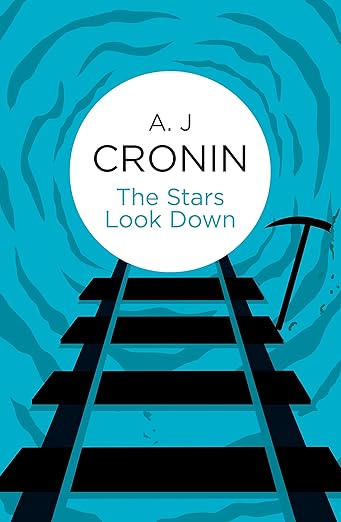
  3. The Stars Look Down by A J Cronin
  4. Bleak House by Charles Dickens
  5. Dombey and Son by Charles Dickens
  6. Nicholas Nickleby by Charles Dickens
  7. The Lost World by Arthur Conan Doyle
  8. Friends and Heroes by Olivia Manning
  9. The Birds and other short stories by Daphne du Maurier
  10. I’ll Never be Young Again by Daphne du Maurier
  11. North and South by Elizabeth Gaskell
  12. Brighton Rock by Graham Greene
  13. The Go Between by L P Hartley
  14. The Great Fire by Shirley Hazzard
  15. Brave New World by Aldous Huxley
  16. Daisy Miller by Henry James
  17. Go Set a Watchman by Harper Lee
  18. Friends and Heroes by Olivia Manning
  19. Down and Out in Paris and London by George Orwell
  20. Fire from Heaven by Mary Renault

I hope it’s one of the shorter books! Which one/s would you recommend?