Virginia Woolf Read-a-Long

Virginia woolf2

Heavenali is holding a Virginia Woolf read-a-long taking place in 2016.

Starting in January 2016 – the aim is to read 6 books (or indeed more for the real enthusiasts) by or about Virginia Woolf. For each section you simply choose the book or collection that you most want to read.

First and foremost there are no rules ‘“ drop in and out as it suits you ‘“ if you only want to read the first book ‘“ that’s fine. Ali will post six (one every two months) ‘˜how are we doing’/discussion style posts where links to other posts can be shared.

This is not a reading challenge – I’m thinking of it as a project and one with no goal to read a set number of books. I love the fact that there are no rules with Ali’s read-a-long . I’ll read what I can.

January/February ‘“ Getting started with a famous Woolf novel ‘“ To the Lighthouse or Mrs Dalloway

March/April ‘“ beginnings and endings ‘“ The Voyage Out/ Night and Day (Woolf’s first and second novels ‘“ or Between the Acts ‘“ Woolf’s final novel

May/June ‘“ shorter fiction ‘“ any collection of short stories. This list of possibles from Wikipedia:
‘¢ Kew Gardens (1919)
‘¢ Monday or Tuesday (1921)
‘¢ A Haunted House and Other Short Stories (1944)
‘¢ Mrs Dalloway’s Party (1973)
‘¢ The Complete Shorter Fiction (1985)
‘¢ Carlyle’s House and Other Sketches (2003)
Oxford World Classics now produce a collection called The Mark on the Wall and other short Fiction ‘“ though I don’t know which stories it contains.

July/August ‘“ biographies ‘“ either Flush, Orlando or a biography of Virginia Woolf.

September/ October nonfiction ‘“essays or diaries. Any essay collection you fancy ‘“ there are a lot to choose from but you might want to consider: A Room of One’s Own, Three Guineas, The Common Reader or Virginia Woolf’s diaries. There seem to be a couple of diary collections, including Vintage books Selected Diaries and Persephone book’s A Writer’s Diary (edited by Leonard Woolf).

November/December ‘“ another novel ‘“ The Years/ Jacobs Room/ The Waves

So far I think I’ll be reading at least some of her short stories/essays, The Voyage Out and Virginia Woolf: a Writer’s Life by Lyndall Gordon and re-reading Mrs Dalloway, and any other of Woolf’s books that come my way next year.
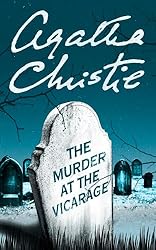
The Murder at the Vicarage by Agatha Christie

Ingenious! That’s what I thought when I’d finished reading The Murder at the Vicarage. Although Agatha Christie had written short stories featuring Miss Marple this is the first full length Miss Marple story, published in 1930.
I’ve been reading my way through Agatha Christie’s crime fiction for a few years now, totally out of order, which is why I’ve only just got round to reading The Murder at the Vicarage. I’d picked up along the way on the fact that Miss Marple uses her knowledge of people to help her solve the mysteries she investigates. And it is in this book that her use of analogy is made absolutely explicit, as she considers who could have killed Colonel Prothero, the unpopular churchwarden, found in the vicar’s study shot through the head. She comes up with seven suspects, all based on examples of human behaviour she has observed in the past.

Miss Marple is not the popular figure she appears in the later books as not everybody likes her. The vicar does, liking her sense of humour, and describing her as ‘a white-haired old lady with a gentle appealing manner’, whereas his wife describes her as ‘the worst cat in the village. And she always knows everything that happens – and draws the worst inference from it.

But it is very helpful to know what is going on in St Mary Mead, about Dr Stone, a well-known archaeologist superintending the excavation of a barrow on Colonel Protheroe’s land and about Mrs Lestrange, a mysterious woman who has recently moved to the village and also about who was coming and going to the vicarage and when.

It’s also helpful to have a a plan of St Mary Mead, showing where the main characters live, and plans of the layout of the vicarage and the vicar’s study, where the murder occurred.

After one of the suspects confesses to the murder Inspector Slack, who shows his contempt for Miss Marple, thinks the case is closed, but Miss Marple is puzzled – the facts seem to her to be wrong. The Murder at the Vicarage has an intricate plot, is full of red herrings and was impossible for me to unravel, but Miss Marple with her knowledge of ‘Human Nature’ solves the mystery.

I enjoyed this book very much, but Agatha Christie writing her Autobiography years later, wasn’t all that pleased with it. She thought it had too many characters and too many sub-plots; she is probably right. But she thought that the main plot was sound and that the village was as real to her as it could be. It’s real to me too.

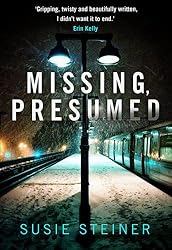
Missing, Presumed by Susie Steiner

I was a bit doubtful that I would like Missing, Presumed by Susie Steiner as it’s written in the present tense, which I usually find irritating. But I needn’t have been concerned because it wasn’t long before I’d completely forgotten the tense and I was totally immersed in the story. And I loved it.

Missing, Presumed is crime fiction, investigating the disappearance of Edith Hind, a beautiful Cambridge post-grad.  Her boyfriend, Will Carter had returned to their flat to find the front door open, coats in disarray and a spatter of blood on the kitchen floor. It’s told from different characters’ viewpoint, each one individually distinct, beginning with DS Manon Bradshaw on the Major Incident Team (her name means ‘bitter’ in Hebrew, but I thought it was Welsh), a lonely disillusioned single woman approaching forty, who overcomes her insomnia by listening to the low murmurings of police reports on her radio.

Edith’s mother, Miriam, Lady Hind, is distraught, wondering if somehow this is fault, her daughter the centre of a drama. Sir Ian Hind, a successful doctor, physician to the Royal Family and a friend of the Home Secretary adds to the pressure the police are under to find Edith. Edith’s friend, Helena comes under suspicion and known offenders are interviewed, but after the first 72 hours she is still missing. The team’s urgency is cooling  as the possibility that Edith is still alive diminishes. Then a dog walker finds a body in the Ouse, near Ely; is it Edith? The search for the killer is intensified.

This has all the ingredients of a successful crime novel for me. My only criticism of the book is that I didn’t think the final section, ‘One Year Later‘ in which the ends are tied up , was necessary. But apart from that I found it gripping and intense. I was intrigued by the multi-layered plot, and thought the characters were fully rounded, believable people, explored with psychological depth – in particular Manon Bradshaw stands out. And, best of all, it is beautifully written.

The Author

Susie Steiner is a novelist and freelance journalist. She began her writing career as a news reporter first on local papers, then on the Evening Standard, the Daily Telegraph and The Times. In 2001 she joined The Guardian, where she worked as a commissioning editor for 11 years. For more information see her website, susiesteiner.co.uk

My thanks to Lovereading for providing an advance proof of this novel, due to be published in February 2016. Missing, Presumed is Susie Steiner’s second book ‘“ the first is Homecoming, which I really must read.

And I do hope she will write more about DS Manon Bradshaw.

Classics Club Spin Result

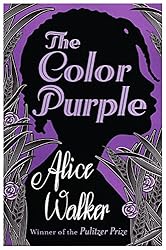
The Spin number is 19, which for me is The Color Purple by Alice Walker – to be read by 1 February 2016.

‘One of the most haunting books you could ever wish to read … it is stunning – moving, exciting, and wonderful’, Lenny Henry.

I’m looking forward to reading it. I watched the film starring Whoopi Goldberg many years ago, which I thought was an excellent film.

Did you take part in the Classics Spin? What will you be reading?

Adding to the TBR Shelves

STSmall

Stacking The Shelves is all about sharing the books you are adding to your shelves. This means you can include ‘˜real’ and ‘˜virtual’ books (ie physical and ebooks) you’ve bought, books you’ve borrowed from friends or the library, review books, and gifts.

These recent additions to my bookshelves and the ever growing TBR piles are the result of my last visit to Barter Books. I took in two bags of books (20 books), books I’d read and decided I wouldn’t want to re-read, and came home with 7, so I’m still in credit there and at least, for the time being, have fewer books in the house. Six of the books are fiction and just one is non-fiction.

Stacking the Shelves Nov15

From top to bottom they are all crime fiction apart from the last book:

  • Clouds of Witness by Dorothy L Sayers – Lord Peter Wimsey’s brother the Duke of Denver is charged with murder. A series I’m dipping into now and then. This is the 2nd Lord Peter Wimsey book.
  • Strangers and Brothers by C P Snow – currently published as George Passant, this is the first in the Strangers and Brothers series. I read some of the series many years ago, so not sure if I read this one then.
  • Runaway by Peter May – In 1965, five teenage friends fled Glasgow for London to pursue their dream of musical stardom. Yet before year’s end three returned, and returned damaged.
  • The Child’s Child by Barbara Vine – A brother, a sister and a secret. Could you live a lie, to protect the one you love?’
  • Dead Men and Broken Hearts by Craig Russell – the 4th in his Lennox thriller series set in Glasgow.
  • Lennox by Craig Russell – the first in the series set in Glasgow in the 1950s. I love Russell’s Jan Fabel books set in Hamburg so am keen to see if I’ll also love his Lennox books.
  • Pastels for Beginners by Ernest Savage – a book to improve my pastel painting, I hope. This was published in 1980, with lots of detail and mainly black and white illustrations. I’d prefer more colour illustrations.

And yesterday I went to the library and borrowed these:

P1010807

  • The Churchill Factor: How One Man Made History by Boris Johnson.  Cath’s review at Read Warbler inspired me to read this book. She loved its conversational tone and Johnson’s insight into Churchill’s character – what made him tick. I reserved this book.
  • The Pattern in the Carpet: a Personal History with Jigsaws by Margaret Drabble – a book that’s been on my wish list for years and there it was just sitting on the library shelves. Drabble describes is as a ‘hybrid’ – not a memoir, nor a history of jigsaws, although that is what she intended to write. It spiralled off in other directions and she is not sure what it is!
  • Katherine Mansfield: a Secret Life by Claire Tomalin. I reserved this book for two reasons – I’ve recently read some of Katherine Mansfield’s short stories and I’ve enjoyed other biographies written by Claire Tomalin.

Now I need to get reading!!

The Classics Spin

The Classics ClubIt’s time for another Classics Spin.

  • List any twenty books you have left to read from your Classics Club list.
  • Number them from 1 to 20.
  • Next Monday the Classics Club will announce a number.
  • This is the book you need to read by 1 February 2016.
  1. Lorna Doone: A Romance of Exmoor by R D Blackmore
  2. Nicholas Nickleby by Charles Dickens
  3. Little Dorrit by Charles Dickens
  4. Martin Chuzzlewit by Charles Dickens
  5. Oliver Twist by Charles Dickens
  6. The Count of Monte Cristo by Alexandre Dumas
  7. The Mill on the Floss by George Eliot
  8. Romola by George Eliot
  9. Silas Marner by George Eliot
  10. Parade’s End by Ford Maddox Ford
  11. Mary Barton by Elizabeth Gaskell
  12. North and South by Elizabeth Gaskell
  13. Wives and Daughters by Elizabeth Gaskell
  14. Far from the Madding Crowd by Thomas Hardy
  15. The Return of the Native by Thomas Hardy
  16. Love in the Time of Cholera by Gabriel Garcia Marquez
  17. One Hundred Years of Solitude by Gabriel Garcia Marquez
  18. Doctor Thorne  (Barsetshire Chronicles, #3) by Anthony Trollope
  19. The Color Purple by Alice Walker
  20. The Age of Innocence by Edith Wharton

I really don’t mind which one comes up in the Spin!