A Month in the Country by J L Carr

A Month in the Country (Penguin Modern'¦‘Ah, those days … for many years afterwards their happiness haunted me. Sometimes listening to music, I drift back and nothing has changed. The long end of summer. Day after day of warm weather, voices calling as night came on and lighted windows pricked the darkness and, at day-break, the murmur of corn and the warm smell of fields ripe for harvest. And being young.

As an old man Tom Birkin is looking back to the summer of 1920 when he was asked to uncover a huge medieval wall-painting in the village church of Oxgodby in Yorkshire. J L Carr’s A Month in the Country is a beautifully written little book of just 85 pages, set in the aftermath of World War I. Tom, his ‘nerves shot to pieces, wife gone, dead broke‘,  is still suffering from shell shock after the battle of Passchendaele. Living in the church bell tower, he begins to uncover the painting, excited and engrossed in his work.

Another war veteran, Charles Moon is also in Oxgodby, an archaeologist, camping in a meadow next to the church, whilst he looks for a lost 14th century grave. There are also two more people who are relatively new to the village – the vicar and his beautiful wife, Arthur and Alice Keach. Tom and Moon decide their marriage is an ‘outrage’ and Tom finds her enchanting – reminding him of Botticelli’s Primavera.

I loved this quiet novel, in which not a lot happens and yet so much happens as Tom describes the events of that summer – his relationships with the local people as well as with Moon and Arthur and Alice Keach. There’s the unforgettable Sunday School outing and a visit to Ripon with the Wesleyans looking for an American organ to replace the harmonium in their chapel. It’s during this visit Tom learns more about Moon.

I loved the detail of the wall-painting – the original methods of painting, the colours, the people in the painting. It’s a masterpiece, a Doom, a Christ in Judgement painting. Tom wonders about the original artist, the nameless man and why the painting had been covered and as he uncovers more of the painting thinks that he has lived with a great artist and had shared with the unknown man the ‘great spread of colour’ and feels ‘the old tingling excitement’.

But above all it is the writing that I loved the most – words that took me back in time to that glorious summer in Oxgodby. At the end Tom looks back at that summer with nostalgia for the things that have disappeared, contemplating that

We can ask and ask but we can’t have again what once seemed ours for ever – the way things looked, that church alone in the fields, a bed on a belfry floor, a remembered voice, the touch of a hand, a loved face. They’ve gone and you can only wait for the pain to pass.

I wanted to read A Month in the Country because years ago I’d watched a TV adaptation of the book and loved it. So after I finished reading it I thought I’d look for the film and watch it again. But the film was lost for years and the only available copies now are rare and expensive. So, I won’t be watching it and thinking about it I realise that it would be a mistake to watch it – as I enjoyed the book so much. But it would be good to see the wall-painting …

Reading challenges: Mount TBR Reading Challenge and maybe What’s In a Name? in the ‘Month of the Year’ category if I don’t read a book naming a month of the year!

Vintage Crime Fiction

I’ve been thinking about joining Bev’s Vintage Mystery Cover Scavenger Hunt, but I didn’t think I had enough books in the Vintage Mystery genre to attempt it.

BUT, the Scavenger Hunt idea appeals to me and so I thought I would have a look at my own books, just to see exactly how many books I do have that match Bev’s definition of ‘Vintage Mystery’, which is:

* All books must be from the mystery category (crime fiction, detective fiction, espionage, etc.). The mystery/crime must be the primary feature of the book–ghost stories, paranormal, romance, humor, etc are all welcome as ingredients, but must not be the primary category under which these books would be labeled at the library or bookstore. 

*For the purposes of this challenge, the Golden Age Vintage Mysteries must have been first published before 1960. Golden Age short story collections (whether published pre-1960 or not) are permissible provided all of the stories included in the collection were originally written pre-1960.  Silver Age Vintage Mysteries may be first published any time from 1960 to 1989 (inclusive).  Again, Silver Age short story collections published later than 1989 are permissible as long as they include no stories first published later than 1989. 

And to my surprise, when I went to my shelves – instead of looking at my list in LibraryThing – I found I actually have 14 books first published pre-1960 and 7 first published between 1960 and 1989 (inclusive). My LibraryThing catalogue is certainly not complete!

So, in theory I do have enough books to attempt the Scavenger Hunt for both eras, provided that the covers show the objects listed for the Hunt! And as I do want to read all these books, it’s a no-brainer, so I’m going to do it. And I’m going in for both Eras!

The idea is  to find as many objects on the scavenger hunt list as possible on the covers of the mystery books you read. The minimum number of items to complete the challenge is six items from the covers of books read from a single Vintage Mystery Era.

These are my books in the Golden Age Vintage era. Some are Penguin books with no pictures on the covers and so I’ll look for alternative covers.

Vintage gold

And these are my books from the Silver Age Vintage era.

Vintage silver

The Challenge runs from January 1, 2016 to December 31, 2016. Sign up any time between now and November 1, 2016.  Any books read from January 1 on may count regardless of your sign-up date.

And “On the cover” may apply to either the front or the back cover of the book. For example, if you need a map or a chart for your scavenger hunt list, then Dell Mapbacks are perfect–with the map in question on the back cover. Also, the item should be found on the cover of the edition that you read. If at all possible either post a picture showing the item on the cover or provide a link to a page showing us. Exception:  If the edition you read has no picture whatsoever (hardbacks that have no dust jacket or e-copies, for example), then you may go on another scavenger hunt online to find a cover image–again, please provide a link to the edition used.

This is the list for the Golden Age Era there are 75 items!!! (The Silver Age Era lists the same items.)Scavenger Hunt1

My Week in Books: 13 January 2016

This Week in Books is a weekly round-up hosted by Lypsyy Lost & Found, about what I’ve been reading Now, Then & Next.

IMG_1384-0

A similar meme,  WWW Wednesday is run by Taking on a World of Words.

Currently I’m reading two books:

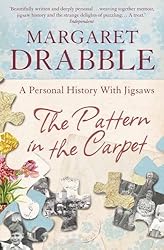
The Pattern in the Carpet by Margaret Drabble, subtitled A Personal History with Jigsaws. It’s a mix of memoir, Margaret Drabble’s own personal reflections on doing jigsaws and the history of jigsaws and of children’s games and puzzles. I’ve always loved doing jigsaws and I’m loving this book.

Death Comes As the End by Agatha Christie

I’m also in the middle of reading Death Comes as the End by Agatha Christie. This is a murder mystery set in Ancient Egypt, which despite its historical setting is a typical Agatha Christie mystery as members of a ka-priest’s family are murdered.

Then: this year I’ve been struggling to get rid of an awful cold which has turned into an irritating cough, which has meant that although I’ve still been able to read I haven’t managed to write about most of the books, including this one that I finished a few days ago:

A Month in the Country (Penguin Modern'¦

A Month in the Country by J L Carr. I love this little book set in the summer of 1920 when Tom Birkin, injured in the trenches in the First World War goes to a Yorkshire village to uncover a huge fourteenth century painting on the wall of the village church. A beautiful book! My post will follow soon.

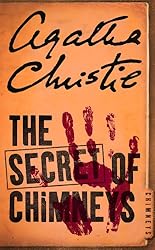
Next – I been reading my way through Agatha Christie’s crime novels and I still have one more to read – Sparkling Cyanide, so that will be my next book.

Sparkling Cyanide by Agatha Christie

Blurb:

A beautiful heiress is fatally poisoned in a West End restaurant’¦ Six people sit down to dinner at a table laid for seven. In front of the empty place is a sprig of rosemary ‘“ in solemn memory of Rosemary Barton who died at the same table exactly one year previously. No one present on that fateful night would ever forget the woman’s face, contorted beyond recognition ‘“ or what they remembered about her astonishing life.

Destination Unknown by Agatha Christie

I had no great expectations when I began reading Agatha Christie’s Destination Unknown (first published in 1954) because I’ve not been keen on her stand-alone international intrigue/spy mysteries. But I thought it started very well and I was soon drawn into the story.

It’s the early 1950s and a number of scientists have disappeared, amongst them is Thomas Betterton, a brilliant nuclear scientist, who had discovered ZE Fission. The British Secret Service suspect that he and the other missing scientists have gone beyond the Iron Curtain, either kidnapped, or tempted by money or by the dream of an ideal world, working for the good of humanity. His wife, Olive, has no idea where he is, but sets off for Morocco, ostensibly on medical advice for a complete rest. However, the plane crashes and she is killed before she gets to her destination.

Hilary Craven, whose abundant red hair is similar to Olive’s, is intent on taking her own life, but she is recruited by Jessop, a British Secret Service Agent who persuades her that if she wants to kill herself she could help her country at the same time by impersonating Olive and thus trace Betterton. In doing so it leads her to a secret scientific complex hidden in the High Atlas mountains and a terrifying discovery.

It went over the top with a string of disasters, involving a faked air disaster, radio-active pearls, a leper colony, and secret laboratories all part of a vast organisation masterminded by a wealthy and powerful fanatic. And added to the international intrigue there is also a murder which is only revealed right at the end of the book. If the plot is bizarre and rather weak, and some of the characters are stereotypes, Hilary’s character is more convincing. And as in her other spy thrillers, Agatha Christie uses it as a vehicle for her own concerns about the state of the post-war world, decrying what she saw as the attempt to impose a world order and discipline, where individuality is suppressed. Hilary thinks she:

would rather have a world of kindly, faulty human beings, than a world of superior robots who’ve said goodbye to pity and understanding and sympathy. (page 102)

It’s a dangerous world where

Once you have got into that state of mind where the taking of human lives no longer counts, then if it is simpler to put a little explosive package under a seat in a plane than to wait about at the corner on a dark night and stick a knife in someone, then the package will be left and the fact that six other people will die also is not even considered. (pages 143-144)

Just as true today as in the 1950s!

I am nearing the end of reading Agatha Christie’s full length novels and now have just 2 left to read. Although Destination Unknown is not one of my favourites I did enjoy reading it – it moves quickly and kept me interested in its twists and turns. There’s a lot going on and it’s not easy to know who is telling the truth and who to trust.

****

Added on 15th January 2016:

The edition of Destination Unknown that I read has this cover, fulfilling the cigarette/pipe category on the Golden Age Vintage Mystery Hunt card, as well as the Mount TBR Reading Challenge:

In Bitter Chill by Sarah Ward

I’ve made a great start to 2016 with the first book I’ve read this year. In Bitter Chill by Sarah Ward is her debut novel and it is excellent. I’ve been enjoying her book blog, Crimepieces, for a while now, so when I saw that she had published a book, I knew I had to read it. It will certainly be on my list of favourite books at the end of the year.

This is just the sort of book I love – excellent storytelling, moving smoothly between the past and the present as the secrets from the past gradually emerge, great characterisation and a superb location in the Derbyshire Peak District that Sarah Ward obviously knows very well. It is also a complex and puzzling mystery that kept me glued to the book.

In January 1978 two eight-year old girls, Rachel Jones and Sophie Jenkins were walking to school together when a strange woman offered them a lift in her car. Rachel is later found in Truscott Woods but Sophie was never found.  Move forward 30 years when Sophie’s mother commits suicide. Troubled by Yvonne Jenkin’s suicide, the police reopen the case – Superintendent Llewellyn who was on the original team asks DI Francis Sadler and his team, DC Connie Childs and DS Damian Palmer to see if there was anything that had been missed in 1978.

Rachel has very little memory of the kidnapping as she was drugged and she has nothing to add to the statement she made as a child. But prompted by Yvonne’s suicide she tries to remember what had happened and as she is a genealogist her research into her own family history proves to be invaluable. The questions are which child was the target, why was Rachel the only one to escape and what is the significance of her missing socks? The tension and mystery ramp up with a modern day murder, when Mrs Lander, one of the teachers at the girls’ school is found dead in the woods where Rachel was discovered 30 years earlier.

As I read I jotted down a few points that I thought were relevant. These were socks, illegitimacy, missing fathers and was Mrs Lander’s murder connected to the kidnapping and Yvonne’s suicide? It was only near the end of the book that I worked out why these points were relevant.

Connie was my favourite police officer and I liked the relationship between her and Sadler and the competition between her Sergeant Damian Palmer. I also liked the fact that although there are violent deaths in this book they are not described graphically. The weather gets colder and colder as the chilling events unfold and the devastating family secrets are revealed.

This is a powerful and well written crime fiction novel, one that I enjoyed immensely. I’m glad that there is to be a sequel, A Fragile Spring, which will be published later this year. I’m definitely looking forward to reading it.

Reading Challenges in 2016

I’ve been thinking about reading challenges. Each year I see other bloggers setting out their reading challenges and I get keen to join a lot of them.

But what is a ‘challenge’? Dictionary definitions include –

a difficult or demanding task, esp. one seen as a test of one’s abilities or character.

or – an invitation or summons to a trial or contest of any kind; a defiance.

So, I don’t need reading challenges –  reading books is not a difficult or demanding task, and I don’t want to treat my reading as a contest either with others or with myself, by reading either more books or different types of books. I already read as many books as my time allows and I love variety in my reading.

So why do I join reading challenges? It’s because I love reading and I also love making lists and ticking off the books I’ve read. I love looking through my books and seeing which ones will qualify for each challenge. I also like seeing what others are reading, books I may not have heard about. I like the camaraderie, of finding others who love the same type of books as me, of exchanging comments or recommendations.

But each year I find it can become a bind, reading to a set list and I want to branch out and read something different, books not on the lists, books that suddenly seem more enticing.

The ‘challenge’ I enjoyed the most last year was Reading Bingo 2015, that I did at the end of November. It involved looking back at the books I read during the year and fitting them into the relevant squares on the card. In other words read what you want first and then see if they meet the categories on the card.

This is why I’m cutting down on the number of challenges I join.

These are the challenges I’ll be taking part in, by reading and then slotting the books into the various categories:

  • Mount TBR hosted by Bev at My Reader’s Block –  this helps me remember to read books that I already own, which for this challenge are books I’ve owned before 1 January 2016.
  • Read Scotland hosted by Peggy Ann at Peggy Ann’s Post – I’ve taken part in this for the last two years and have found that without trying I naturally read books by Scottish authors/books set in Scotland. So for this challenge I’ll see at the end of the year how many I’ve read.
  • What’s In a Name? hosted by Charlie at The Worm Hole – I’ve done this challenge ever since it started and it would be a shame to stop now. It only involves reading 6 books and I’m going to treat it in the same way as Read Scotland by seeing at the end of the year if the books I’ve read slot into the categories.

I’ll also be taking part in Heavenali’s Virginia Woolf read-a-long, reading what I can when I can.

And because I do like making lists I’ll be doing various projects of my own reading and listing books in a variety of genres, such as historical fiction and non-fiction, as my mood and interests lead me, but not linking up to any challenges.