Classics Club Spin: Result

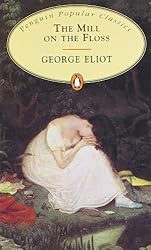
The Spin number is 8, which for me is The Mill on the Floss by George Eliot ‘“ to be read by 2 May 2016.

I’ve had this book for years, keen to read it after I’d enjoyed Middlemarch, and it has sat unread ever since. I was hoping for Framley Parsonage and have started to read it, so I probably won’t finish The Mill on the Floss by 2 May especially as it is quite long (535 pages in a small font – I think I’ll get a copy to read on my Kindle).

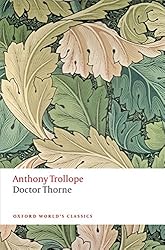
Doctor Thorne by Anthony Trollope

I’ve recently read Anthony Trollope’s Doctor Thorne, which I’d meant to read about a year ago after I finished Barchester Towers! I enjoyed it, although I think it’s a bit too drawn out – I could see where the plot was going very early in the book. The conclusion is predictable.

But that didn’t matter as it’s a book about mid nineteenth-century prosperous country life and the traditional attitudes towards the accepted codes of conduct, of the importance of birth, of wealth and above all about money, class and power. It’s about human relationships and the strength of the novel is in the portraits of its characters and their responses to matters of principle in the face of upper class idiocy and snobbishness. Trollope uses gentle satire in this novel, emphasising the absurdities of the class divisions in society and poking fun at the professions, with the names of doctors, such as Dr Fillgrave, whose name wouldn’t inspire me with confidence, parliamentary agents such as Mr Nearthewind and Mr Closerstil and lawyers called Messrs Slow and Bideawhile.

Doctor Thorne is the third in Trollope’s Barchester Towers books – the first one not set in Barchester, but in Greshambury in East Barsetshire, where the Gresham family and Doctor Thorne and his niece Mary live. As the novel opens nothing is going well for the Gresham family, they are in financial difficulties, the estate is mortgaged and they are heavily in debt. It is imperative that Frank, the son and heir to Greshambury Park and its estate, should marry money – indeed, his mother, Lady Arabella, the sister of the Earl de Courcy insists ‘He must marry money‘, a refrain that is repeated throughout the novel. But Frank has fallen in love with Mary, who has neither money or rank, and is illegitimate and as the story proceeds she is increasingly ostracised by the Gresham family, egged on by their rich relations the De Courcys.

Although the book is called Doctor Thorne, the main character to my mind is Mary Thorne, who shows great strength of character throughout. Mary had been adopted by Doctor Thorne, after her father, his brother had been murdered by her mother’s brother. Her mother had left England for America, where she had married and had a family. The brother, meanwhile had done well for himself after he left prison and made a fortune. Mary knows nothing of her background.

I particularly liked Miss Dunstable, the daughter of ‘the ointment of Lebanon man‘, who had inherited £200,000 when he had died recently. The Gresham family, or rather Lady Arabella, instruct Frank that he is to ask her to marry him – her wealth over-riding the fact that her father was a tradesman.

My only criticism of this book is that the discussions about whether Frank and Mary should or should not be allowed to marry are too drawn out and slowed down the plot too much for my liking. Apart from that I thought it was good, Trollope’s authorial comments were interesting, the dialogue was realistic and lively and the main characters came over as real people. An entertaining novel and now I’m keen to read the next Barchester Towers book, Framley Parsonage; Doctor Thorne also appears in this book!

In his Autobiography Trollope wrote that he had been trying to think up a new plot and he asked his brother to sketch one for him, which he did! He thought it was a good plot and the book was, he believed, the most popular book he had written. He was surprised by its success.

After I finished reading Doctor Thorne I realised that it was a perfect choice for the What’s in a Name? Challenge in the category of a book with a profession in the title. It’s a book I’ve had since before 1 January 2016 and fits into the Mount TRB Reading Challenge too and it’s also a book I identified for the Classics Club Challenge.

I wanted to read Doctor Thorne before the three-part adaptation of the book that starts tonight on ITV at 9 pm, so that my reaction to it wouldn’t be influenced. Now that I have read it I’m not at all sure I’ll watch the adaptation. If there are too many changes I know it will irritate me.
Classics Club Spin

The Classics ClubIt’s time for another Classics Club Spin.

The Spin rules:

  •  List any twenty books you have left to read from your Classics Club list.
  • Number them from 1 to 20.
  • On Monday the Classics Club will announce a number.
  • This is the book to read by 2nd May 2016.

My List

  1. Lorna Doone: A Romance of Exmoor by R D Blackmore
  2. Nicholas Nickleby by Charles Dickens
  3. Little Dorrit by Charles Dickens
  4. Martin Chuzzlewit by Charles Dickens
  5. Oliver Twist by Charles Dickens
  6. The Adventures of Sherlock Holmes by Arthur Conan Doyle
  7. The Count of Monte Cristo by Alexandre Dumas
  8. The Mill on the Floss by George Eliot
  9. Romola by George Eliot
  10. Parade’s End by Ford Maddox Ford
  11. The Forsyte Saga (1) by John Galsworthy
  12. Mary Barton by Elizabeth Gaskell
  13. North and South by Elizabeth Gaskell
  14. Wives and Daughters by Elizabeth Gaskell
  15. Far from the Madding Crowd by Thomas Hardy
  16. The Man Who Would Be King by Rudyard Kipling
  17. Love in the Time of Cholera by Gabriel Garcia Marquez
  18. One Hundred Years of Solitude by Gabriel Garcia Marquez
  19. Framley Parsonage by Anthony Trollope
  20. The Voyage Out by Virginia Woolf

I’d like no.19 to come out as the spin number, as I’ve recently finished reading Anthony Trollope’s Doctor Thorne, or no. 20 as that would fit in with Heavenali’s Virginia Woolf read-along, or maybe no. 15 as it’s been ages since I read anything by Thomas Hardy. But actually I’m happy to read any of these books.

February’s Books 2016

I finished reading six books in February and am in the middle of two more, both long books. Just one book from my TBR shelves this month, and no non-fiction. My unfinished books are SPQR: a History of Ancient Rome by Mary Beard and Doctor Thorne by Anthony Trollope – a three part adaptation of this novel begins on ITV on 6 March.

The six books I finished are:

  1. Too Soon a Death by Janet O’Kane (review book) – crime fiction set in the Scottish Borders featuring Dr. Kate Moreland as she is once more involved in solving a murder mystery.
  2. Six Tudor Queens: Katherine of Aragon, the True Queen by Alison Weir (review book) – as the title indicates historical fiction about Henry VIII’s first wife. A detailed fictional biography. My review is to follow.
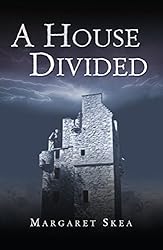
  3. A House Divided by Margaret Skea – historical fiction set in 1597 in Scotland and France, this is the most gripping story of the feuding clans of Cunninghame and Montgomerie. The historical facts blend seamlessly into the narrative, with beautiful descriptive passages.
  4. Styx and Stones by Carola Dunn – ‘cosy’ crime fiction in the Daisy Dalrymple series set in England in the 1920s – an entertaining book.
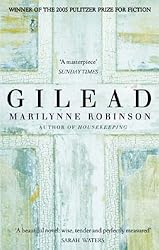
  5. Gilead by Marilynne Robinson (TBR) – fiction of a different style from the other books I read this month, one to make me think. Set in Gilead, Iowa in 1956 this is the Reverend John Ames letter to his young son.
  6. Slade House by David Mitchell (library book) – a mixture of a ghost story, science fiction and horror. Something nasty happens every nine years at the end of October at Slade House. Once I started I had to read to the end.

Although I enjoyed all the books I read in February and was fascinated by Slade House I have absolutely no doubt about my choice of book of the month – it’s the brilliant

A House Divided by Margaret Skea.

Gilead by Marilynne Robinson

This is another short post as I am still trying to catch up with writing about the books I’ve read in February. Gilead by Marilynne Robinson is one of them. It is narrated by the Reverend John Ames as he nears the end of his life. Set in Gilead, Iowa in 1956 John Ames is 76, dying of heart disease, and writing a letter to his young son aged 7 telling him the things he would have told him if he had lived to see him grow up. A letter for his son to read when he is an adult.

Ames writes stories of his brother, and his father and grandfather, including tales of what had happened in Gilead, such as the story of the horse that sank into the ground into one of the tunnels the inhabitants had made and the lengths they had gone to get it out and fill in the hole. He also wrote about his beliefs and his relationship with his friend, also a preacher, Boughton and Boughton’s son, Jack. There is a mystery surrounding Jack, what is the ‘great sin’ he committed, why he had left home, what happened to him and why he had come back. Jack is named after John, who struggles to forgive and understand Jack.

In parts I found this a bit rambling and repetitive, reflecting the fact that Ames wrote over a period of time and probably forgot he’d mentioned things before, or because he was emphasising their importance – such as the first time he met his wife, who is a lot younger than him.

I took my time reading because you do have to concentrate and not rush to find out what happened. I enjoyed it and think I would probably get even more out of it on a second reading, especially for the philosophical and religious ideas.

Reading Challenges: Mount TBR Reading Challenge ( a book I’ve owned for about 8 years).

Slade House by David Mitchell

I was in the middle of reading two books on my Kindle, Doctor Thorne by Anthony Trollope and SPQR: a History of Ancient Rome by Mary Beard, when the battery died and I know I could still have continued reading whilst it was re-charging, but I didn’t. Instead I picked up Slade House by David Mitchell, a book I’d been thinking of reading soon and once I started it I didn’t want to stop. It’s not long, just 233 pages and they just whizzed past my eyes in no time.

Apparently it began as a short story on Twitter – but I didn’t know that – and is a sort of sequel to The Bone Clocks – but I haven’t read that, and there is a character near the end who also appears in The Thousand Autumns of Jacob de Zoet – but I haven’t read that yet either!

None of that mattered. I suppose it’s the sort of book to read at Hallowe’en, but that doesn’t matter either, because I read it, devoured it I could say, yesterday and was thoroughly entertained. It’s a mixture of a ghost story, science fiction and horror. Something nasty happens every nine years at the end of October at Slade House. I read it as a fantasy, something that I couldn’t believe could ever happen (or at least, I hope not) – but that didn’t stop me enjoying it immensely.

It’s not easy to find Slade House. It’s down Slade Alley, which doesn’t normally exist and it only appears to those who have been invited, or are drawn to it. There is a door set into the right hand wall of the alley, a small black iron door with no handle or keyhole, that opens if you’re meant to enter. There you meet a stranger, are invited into the House, and find yourself in a strange and dangerous situation, and there is no way out – eventually you find yourself in a long attic at the top of the stairs – where something terrible happens to you.

The stories begin in 1979 (although in fact it begins much earlier than that) and ends in a strange and mystifying way in 2015. Each story is complete in itself; the people who enter Slade House do not seem to be connected in anyway – a young teenage boy and his mother, a recently divorced Detective Inspector, students on a Paranormal Society field trip, and then the sister of one of the students. The connection is the House and the brother and sister who occupy it – and to say what they were would be to reveal too much. Needless to say that I was hoping each time that the victims would escape their fate. I was gripped both by the individual stories and by Slade House itself, enchanting and darkly sinister. The sense of menace just grew as each victim succumbed and yet tried to warn those who followed.

Now, I’m keen to read both The Thousand Autumns of Jacob de Zoet, which I bought a few years ago and is still sitting in my TBR piles and The Bone Clocks, which I haven’t got yet. It just shows how reading one book can seriously disrupt whatever reading plans I had!