Two Inspector Morse Mysteries

I’ve got rather behind with writing about the books I’ve been reading so this post is on two of Colin Dexter’s Inspector Morse books, both are books from my TBR list. Colin Dexter wrote 13 novels in the series and I’ve been reading them out of order – just as I come across them.

22747030

The second book in the series is Last Seen Wearing, first published in 1976, in which Morse investigates a cold case. Two years previously schoolgirl Valerie Taylor had disappeared during her lunch hour from the Roger Bacon Comprehensive school. Her body had never been found and the case had been shelved but recently her parents had received a letter telling them she was ‘alright’ and they were not to worry.

Morse isn’t please when he was instructed to investigate Valerie’s disappearance but then is interested when he guesses that she is dead.  In fact he is convinced that she is dead. But throughout the novel he keeps changing his mind, coming up with theory after theory about what happened to her. Lewis meanwhile, who is assisting Morse, is sure that Valerie is still alive.

There are plenty of suspects, the headmaster of the school, the second master, the French teacher, one of her boyfriends, her mother and her stepfather all come under Morse’s scrutiny. It is a complicated investigation made even more so when the second master is found stabbed with a nine-inch kitchen knife.

I haven’t read the first book in the series, Last Bus to Woodstock, in which Morse and Lewis first work together, but this second book shows their working relationship is a good one and they have several lively discussions. Lewis whilst admiring Morse sees him clearly, noting that he always had to find a complex solution.

I was puzzled throughout and like Morse I kept changing my mind about it all and at one point I had the solution – as had Morse – but had then changed my mind. Of course, by the end of the novel Morse had it all worked out correctly.

The Dead of Jericho: An Inspector Morse Mystery 5

The Dead of Jericho is the 5th Inspector Morse book, first published in 1981. Colin Dexter wrote 13 novels in the series and I’ve been reading them out of order – just as I come across them. Years ago I watched the TV series of Morse. The Dead of Jericho was broadcast in January 1987, the first of Dexter’s books to be televised. I must have watched it but as it was so long ago I had completely forgotten the details.

Jericho is an area of Oxford, described in the book as a largely residential district consisting mainly of two-storey terraced mid nineteenth century houses and bounded by the Oxford Canal.

Morse met Anne Scott at a party and was immediately attracted to her. She gave him her address but thinking she was married he didn’t contact her until six months later when, being near where she lived, he impulsively called at her house at Canal Reach in Jericho. There was no reply, but the front door wasn’t locked and he stepped inside and after calling out Anne’s name and getting no reply, he closed the door behind him as he stepped out onto the pavement and left. Later that evening an anonymous phone call directed the police to Anne’s house where she was found dead. Apparently she had hanged herself.

Morse is assigned to the case and has to decide whether her death was suicide or murder. And when the police realise that Morse had been in the house that day he comes under suspicion for a while. There are various suspects and Morse as usual constructs theories which fit all of them, leaving Lewis to put him on the right track.

In both books Morse shows various aspects of his personality. He is clever, loves the opera,  and solving puzzles, particularly crosswords – he can do The Times crossword in under ten minutes. He is not a happy man; he is sensitive, melancholy, a loner and a pedant. His meanness comes out in the pub where he gets Lewis, on a much lower salary, to buy all their drinks. And in both books he is attracted  sexually to women.

Both books qualify for Bev’s Mount TBR Reading Challenge, being e-books I’ve had for over two years.
If Ever I Fall by S D Robertson

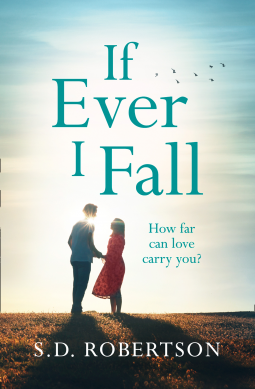
It’s always a bit of a gamble reading a book by an author you’ve never heard of before, but I thought If Ever I Fall by S D Robertson looked as though it would be a book I would like. It’s a story about a family in crisis, struggling to come to terms with a terrible tragedy. It is his second book, due to be published on 9 February 2017.

And reading the Prologue it seemed as though I was right. It begins mysteriously as a man surfaces from his dreams only to discover that he doesn’t know who he is. It appears that Miles has rescued him and tells him he had suffered a head trauma. He calls him Jack. But as I read on I became confused and struggled a bit to follow the narrative.

It’s difficult to write about this book without giving away spoilers. The structure of the novel confused me at first because the story moves between three characters’ perspectives – Maria, Dan, her husband and Jack- and between different time periods.

Maria’s side of things is told in letters to Sam moving forwards in time, whereas Dan’s story begins in the present and moves backwards in time, and Jack’s is timeless. At first I had to keep checking the chapter titles to find out what time period I was reading until I got the hang of it. It shouldn’t really have been that difficult as the style of each is different but it did take me a while to get into the story.

Maria’s letters are quite stilted – maybe that’s what they were meant to be as she is struggling to sort out and write her thoughts so that Sam will understand. Her letters are full of grief. But they are long-winded explanations of what she was thinking and feeling and they slowed down the narrative too much for me. She obsessed about her OCD, but maybe I’m being over critical and insensitive here because being obsessive is the essence of the condition after all, but it became quite dull to read. I was more interested in Dan’s story and especially in Jack’s.

It is Jack’s story that captivated me the most and each time the narrative went to Maria or Dan I wanted to get back to Jack to find out what was happening to him – because some very strange things were going on around him. He can’t work out if he can trust Miles who tells him that he is helping him to renovate a house by the sea. But Jack keeps finding that he is in other places, as a fog descends upon him, or he finds himself trapped in a tunnel unable to move, and he sees people who Miles tells him aren’t there. Whereas, Maria’s and Dan’s stories show them dealing with the same events in different ways, culminating in one tremendous tragedy  and growing increasingly apart. All three narratives are full of emotional and psychological tension.

About half way into the book I began to work out the storyline and how the three narratives linked together and was able to settle into enjoying the book, which did work out as I had anticipated.

It’s about what happens to family relationships hit by the most terrible tragedy, how grief affects us in different ways, and the psychological and emotional impact of amnesia and obsessive compulsive disorder. I think if the novel had followed the story in a straight forward chronological order it would not have had as much impact on me. It certainly gave me much to think about as I was reading it and afterwards.

My thanks to Avon Books UK and NetGalley for a review copy.

  • Format: Kindle Edition
  • File Size: 1149 KB
  • Print Length: 432 pages
  • Publisher: Avon (9 Feb. 2017)

4 *

My Week in Books: 25 January

This Week in Books is a weekly round-up hosted by Lypsyy Lost & Found, about what I’ve been reading Now, Then & Next.

IMG_1384-0

A similar meme,  WWW Wednesday is run by Taking on a World of Words.

Now: I’m reading two books, one I’ve just started – Eyes Like Mine by Sheena Kamal, which will be published on 9 February 2017.

Blurb:

It’s late. The phone rings.
The man on the other end says his daughter is missing.
Your daughter.
The baby you gave away over fifteen years ago.
What do you do?

Nora Watts isn’t sure that she wants to get involved. Troubled, messed up, and with more than enough problems of her own, Nora doesn’t want to revisit the past. But then she sees the photograph. A girl, a teenager, with her eyes. How can she turn her back on her?

But going in search of her daughter brings Nora into contact with a past that she would rather forget, a past that she has worked hard to put behind her, but which is always there, waiting for her . . .

In Eyes Like Mine, Sheena Kamal has created a kick-ass protagonist who will give Lisbeth Salander a run for her money. Intuitive, not always likeable, and deeply flawed, Nora Watts is a new heroine for our time.

The other book is The Eagle of the Ninth by Rosemary Sutcliff, which I’ve nearly finished.

The Eagle of the NinthBlurb:

The Ninth Legion marched into the mists of northern Britain ‘“ and they were never seen again. Four thousand men disappeared and their eagle standard was lost. Marcus has to find out what happened to his father, who led the Ninth Legion. So he sets out into the unknown, on a quest so hazardous that no one expects him to return ‘¦

Then: The last book I’ve read is If Ever I Fall by S D Robertson – my post will follow.


Blurb:

Dan’s life has fallen apart at the seams. He’s lost his house, his job is on the line, and now he’s going to lose his family too. All he’s ever wanted is to keep them together, but is everything beyond repair?

Maria is drowning in grief. She spends her days writing letters that will never be answered. Nights are spent trying to hold terrible memories at bay, to escape the pain that threatens to engulf her.

Jack wakes up confused and alone. He doesn’t know who he is, how he got there, or why he finds himself on a deserted clifftop, but will piecing together the past leave him a broken man?

In the face of real tragedy, can these three people find a way to reconcile their past with a new future? And is love enough to carry them through?

Next: I anticipated in last week’s post that I’d be reading The Elephant Keeper’s Children by Peter Hoeg next and I did start it. But I didn’t get very far before I decided it’s not the book for me, so I’m not sure about what predicting what I’ll read next.

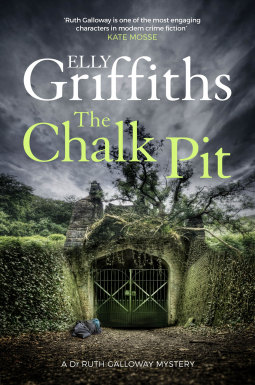
It could be The Chalk Pit by Elly Griffiths, which will be published on 23 February 2017. It’s the 9th Dr Ruth Galloway Mystery. Reading the blurb I think it’s safe to say this is the book I’ll be reading next …

Blurb:

Boiled human bones have been found in Norwich’s web of underground tunnels. When Dr Ruth Galloway discovers they were recently buried, DCI Nelson has a murder enquiry on his hands. The boiling might have been just a medieval curiosity – now it suggests a much more sinister purpose.

Meanwhile, DS Judy Johnson is investigating the disappearance of a local rough sleeper. The only trace of her is the rumour that she’s gone ‘underground’. This might be a figure of speech, but with the discovery of the bones and the rumours both Ruth and the police have heard that the network of old chalk-mining tunnels under Norwich is home to a vast community of rough sleepers, the clues point in only one direction. Local academic Martin Kellerman knows all about the tunnels and their history – but can his assertions of cannibalism and ritual killing possibly be true?

As the weather gets hotter, tensions rise. A local woman goes missing and the police are under attack. Ruth and Nelson must unravel the dark secrets of The Underground and discover just what gruesome secrets lurk at its heart – before it claims another victim.

First Chapter, First Paragraph

First chapterEvery Tuesday Diane at Bibliophile by the Sea hosts First Chapter First Paragraph Tuesday Intros to share the first paragraph sometimes two, of a book that she’s reading or planning to read soon.

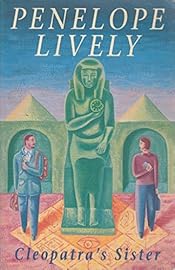
This week I’m featuring Cleopatra’s Sister by Penelope Lively.

Howard Beamish became a palaeontologist because of a rise in the interest rate when he was six years old. His father, a cautious man with a large mortgage, announced that the projected family holiday to the Costa Brava was no longer feasible. A chalet was rented on the north Somerset coast instead and thus, on a dank August afternoon, Howard picked up an ammonite on Blue Anchor Beach.

He presented it to his parents. ‘What’s this?’

It’s a stone,’ said his father, who was listening to the test match.

‘No, it isn’t,’ retorted Howard, an observant child.

‘It’s a fossil, dear,’ said his mother. ‘That’s a very old sort of stone.’

‘Why?’ persisted Howard after a few moments. The single word embraced a vast range of query, for which he did not have the language.

His mother, too, paused to consider and was also defeated, though for different reason. She evaded the issue by offering Howard a tomato sandwich, which he accepted with enthusiasm while continuing to pore over the ammonite. During the rest of the afternoon, he collected five more fossil fragments, including one embedded in a slab of rock weighing several pounds.

Penelope Lively is one of my favourite authors, so I’m expecting to enjoy this book. I’ve quoted more than the first paragraph as I loved the conversation between Howard and his parents and the description of the scene on the beach as Howard ate his tomato sandwich and collected fossils. It shows the influence of chance on our lives – and I’m also fascinated by fossils.

Blurb:

Detached and unwordly paleontologist Howard Beamish is on a journey that is to change his life. Travelling to Nairobi, his plane is forced to land in Marsopolis, the capital of Callimbia, where Cleopatra’s sister entertained Antony. Also on the flight is Lucy Faulkner, a journalist with a sketchy knowledge of Callimbia’s political turbulence. As chance throws them together, Howard and Lucy become embroiled in a revolution that is both political and personal.

‘Every sentence is a pleasure to read’ Sunday Express

‘A fluent, funny, ultimately moving romance in which lovers share centre stage with Lively’s persuasive meditations on history and fate. . .a book of great charm with a real intellectual resonance at its core’ The New York Times Book Review

What do think – would you read on?

Missing Pieces by Heather Gudenkauf

Missing Pieces is the first book by Heather Gudenkauf that I’ve read. I enjoyed it very much and will look out for her other books.

Blurb:

Everyone has secrets’¦
Sarah Quinlan’s husband, Jack, has been haunted for decades by the untimely death of his mother when he was just a teenager, her body found in the cellar of their family farm, the circumstances a mystery. The case rocked the town where Jack was raised, and for years Jack avoided returning home.

But when his beloved aunt Julia is in an accident, hospitalised in a coma, Jack and Sarah are forced to confront the past that they have long evaded.
Sarah and Jack are welcomed by the family Jack left behind all those years ago’•barely a trace of the wounds that had once devastated them all. But as facts about Julia’s accident begin to surface, Sarah realises that nothing about the Quinlans is what it seems. Caught in a flurry of unanswered questions, Sarah dives deep into the rabbit hole of Jack’s past, but the farther she climbs, the harder it is for her to get out. And soon she is faced with a hard reality she may not be prepared for.

My thoughts:

The book begins with the murder of Lydia Quinlan in 1985 by someone she knew, when her son Jack  was fifteen. Jack and his little sister Amy went to live with his aunt Julia and her husband Hal after the deaths of their parents. As soon as he was old enough Jack left his home town of Penny Gate in Iowa.

Moving to the present day Jack and Sarah have been married for 20 years, but Sarah has never met any of his family or been to his home town. But when his aunt Julia is in a coma after a fall she goes with him to Penny Gate. Whilst the family gather round Julia’s hospital bed she begins to realise that there is a lot she didn’t know about Jack and his family, including the fact that he had lied to her about how his parents had died.

The book revolves around the mystery of who killed Lydia and was Julia’s fall an accident  – and if not who was responsible and why. The story is told from Sarah’s perspective as she delves into the history of Lydia’s death. I did have a few reservations about how easily Sarah managed to persuade Margaret Dooley who works in the sheriff’s department to let her see the files and records of the investigation into Lydia’s murder but Margaret is also keen to get to the truth, particularly as she had been Jack and Amy’s babysitter as they grew up and her mother and Lydia were best friends.

I was gripped by this book, as more and more secrets are revealed and Sarah begins to gather the missing pieces of the puzzle. Her relationship with Jack deteriorates as she realises that he has told her so many lies, or omitted to tell her the truth. She cannot understand why he won’t talk to her and begins to suspect the worst. And then it becomes clear after Julia died that her death was not the result of an accident.

I liked the setting of a small town and was fascinated by the characters and their relationships, which are intense and complicated by the reasons they kept secrets from each other. It’s a fast-paced novel that held my interest to the end. At various points as I read I became convinced that first this person and then that person must have killed Lydia, but I was way off mark. And I had no idea who could have killed Julia.

My thanks to the publishers and Midas Public Relations for my copy of this book.

  • Paperback: 384 pages
  • Publisher: HQ (12 Jan. 2017)
  • Language: English
  • ISBN-10: 184845497X
  • ISBN-13: 978-1848454972

The Wild Places by Robert Macfarlane


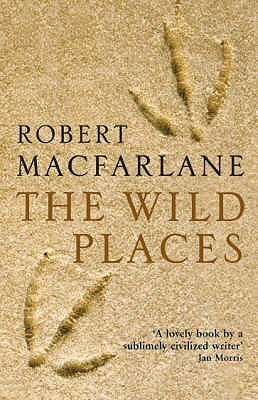
I read The Wild Places by Robert Macfarlane at the end of December. I didn’t enjoy it as much as I thought I would from reading the blurb:

The Wild Places is both an intellectual and a physical journey, and Macfarlane travels in time as well as space. Guided by monks, questers, scientists, philosophers, poets and artists, both living and dead, he explores our changing ideas of the wild. From the cliffs of Cape Wrath, to the holloways of Dorset, the storm-beaches of Norfolk, the saltmarshes and estuaries of Essex, and the moors of Rannoch and the Pennines, his journeys become the conductors of people and cultures, past and present, who have had intense relationships with these places.Certain birds, animals, trees and objects – snow-hares, falcons, beeches, crows, suns, white stones – recur, and as it progresses this densely patterned book begins to bind tighter and tighter. At once a wonder voyage, an adventure story, an exercise in visionary cartography, and a work of natural history, it is written in a style and a form as unusual as the places with which it is concerned. It also tells the story of a friendship, and of a loss. It mixes history, memory and landscape in a strange and beautiful evocation of wildness and its vital importance.

I have mixed feelings about it. It does do all those things described above and maybe that was the problem for me -it tries to do too much. It is beautifully written, sometimes overwritten and it is also repetitive. There is a map showing the places he visited that helped me  to a certain extent – vague enough if you don’t want to pinpoint the precise locations. It is a book to read in small sections, to dip into rather than to read straight through as I did. I think I would have enjoyed it more if I had taken more time to read it – but during the times I did put it down I was in no hurry to get back to it.

I was intrigued by the places where he slept out and flabbergasted by the risks he took.

For example, he went on a night walk alone in the Cumbrian mountains. By the time he reached the mountains it was late afternoon and when he reached the ridge at over 2,000 feet the snow had thickened to a blizzard and it was hard to stand up in the wind. He decided to sleep on the surface of a frozen tarn that lay between two small crags giving some shelter from the wind. First he tested it by jumping gently on its centre; it didn’t creak, so he slept there in his sleeping and bivouac bags whilst it hailed and snowed. He began

to feel cold, deep down, as though ice were forming inside me, floes of it cruising my core, pressure ridges riding up through my arms and legs, white sheaths forming around my bones. (page 198)

When he woke he did a little dance on the tarn to warm himself and then saw that where he had been lying on the tarn,

the ice had melted, so that there was a shallow indent, shaped like a sarcophagus, shadowed out by the moonlight. (page 199)

However, I did enjoy the experience of reading The Wild Places, and  I’ve decided to read Macfarlane’s The Old Ways:  a Journey on Foot, particularly as a friend told me she had enjoyed it more than The Wild Places. Macfarlane describes how he set off from his Cambridge home to follow ancient tracks, holloways, drove roads and sea paths that criss-cross the British landscape.

Robert Macfarlane  is a Reader in Literature and the Geohumanities in the Faculty of English at Cambridge University. He is well-known as a writer about landscape, nature, memory, language and travel.

  • Paperback: 352 pages
  • Publisher: Granta Books (7 July 2008)
  • Language: English
  • ISBN-10: 1847080189
  • ISBN-13: 978-1847080189
  • Source: I bought my copy