Top Ten Tuesday: Ten of the Longest Books I’ve Read

Top Ten Tuesday new

Top Ten Tuesday is a weekly meme created by The Broke and the Bookish and now hosted by Jana at That Artsy Reader Girl.

The rules are simple:

  • Each Tuesday, Jana assigns a new topic. Create your own Top Ten list that fits that topic – putting your unique spin on it if you want.
  • Everyone is welcome to join but please link back to The Artsy Reader Girl in your own Top Ten Tuesday post.
  • Add your name to the Linky widget on that day’s post so that everyone can check out other bloggers’ lists.
  • Or if you don’t have a blog, just post your answers as a comment.

This week’s topic is Ten of the Longest Books I’ve Read.

In the past I used to prefer reading long books, so most of the ones listed below are ones I read years ago. These days I tend to shy away from really long books, unless they’re e-books, as they’re usually heavy to hold or in such a small font that I find them difficult to read, or both.

In page number order(which vary according to different editions) they are:

Les Misérables

Les Misérables by Victor Hugo, 1,231 pages.

The October Horse (Masters of Rome)

The October Horse by Colleen McCullough, 1,124 pages

The Pillars of the Earth (The Pillars of the Earth, #1)

The Pillars of the Earth by Ken Follett, 1,088 pages

The Grass Crown

The Grass Crown by Colleen McCullough, 1,043 pages

The Mists of Avalon

The Mists of Avalon by Marion Bradley, 1,009 pages

Jonathan Strange & Mr Norrell

Jonathan Strange & Mr Norrell by Susanna Clarke, 1,006 pages

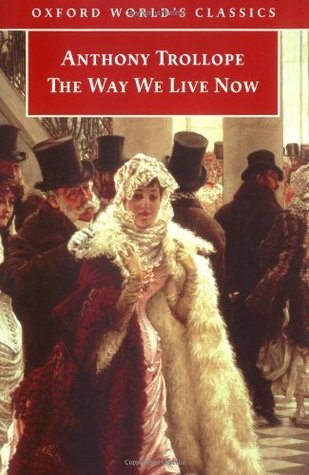
The Way We Live Now

The Way We Live Now by Anthony Trollope, 976 pages.

War and Peace

War and Peace by Leo Tolstoy, 975 pages.

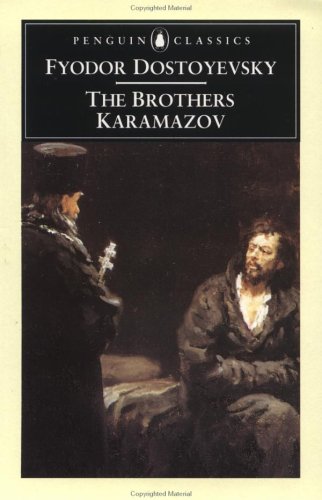
The Brothers Karamazov by Fyodor Dostoyevsky

The Brothers Karamazov by Fyodor Dostoyevsky, 960 pages.

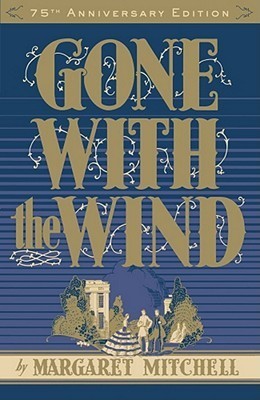
Gone With the Wind

Gone with the Wind by Margaret Mitchell, 959 pages.

My favourites of these books are Gone with the Wind and War and Peace – both of these surprised me at how much I enjoyed them.

Six Degrees of Separation: from The Outsiders to the Mill on the Floss

I love doing Six Degrees of Separation, a monthly link-up hosted by Kate at Books Are My Favourite and Best. Each month a book is chosen as a starting point and linked to six other books to form a chain. A book doesn’t need to be connected to all the other books on the list, only to the one next to it in the chain.

This month the chain begins with with The Outsiders by S E Hinton.

The Outsiders

Kate describes it as a teen classic, but it’s a book I haven’t come across before. According to Amazon it is ‘an outstanding story of teenage rebellion, written when the author was only 17 years old.’ 

The Outsider

I immediately thought my first link had to be to The Outsider (L’Etranger) by Albert Camus. Set in Algiers this is a book about Mersault, an individual who refused to conform to society, a reserved man without any sense of God, and who doesn’t show emotion but faces the world with indifference.

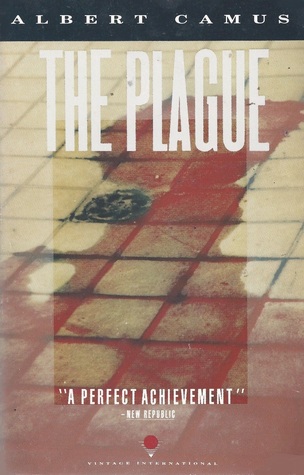
The Plague

My second link followed on naturally to another book by Albert Camus –  The Plague a book that can be read on two levels – either as a straightforward narrative about a plague in Oran in the 1940s or centred on the idea of plague as a symbol – the symbol being that of the German occupation of France (Camus was in the Resistance during the Occupation) during the Second World War.

A Journal of the Plague Year

Thinking about plague takes me to my next link – A Journal of the Plague Year by Daniel Defoe, about the Great Plague of 1664-5. Written in 1772 this is an account of the epidemic of bubonic plague, known as the Black Death, that ravaged England in 1664–1665.

The Plague Charmer

Still on the subject of plague my mind jumped to The Plague Charmer by Karen Maitland, a fascinating medieval tale full of atmosphere and superstition set  in 1361, at Porlock Weir in Somerset where a village is isolated when the Black Death spread across England.

The Western Wind

Another book about an isolated village is The Western Wind by Samantha Harvey. In this book the village is Oakham also in Somerset that was  cut off in the 15th century from the surrounding villages when the river flooded. It’s also a book full of superstitions.

The Mill on the Floss

And finally, the last link – The Mill on the Floss by George Eliot, in which the river plays a major role. Set in the early 19th century, Dorlcote Mill stands on the banks of the River Floss near a stone bridge – a noisy place as the deafening rush of water speeds on its way to the sea.

All my links apart from the first one are to historical fiction, moving from America through Algiers to England and travelling through the 14th, 15th, 17th  and 19th centuries (not in that order though). The plague and natural disasters feature strongly.

Rebus Returns! In My Friday Post

Book Beginnings Button

Every Friday Book Beginnings on Friday is hosted by Gillion at Rose City Reader where you can share the first sentence (or so) of the book you are reading, along with your initial thoughts about the sentence, impressions of the book, or anything else the opener inspires.

In a House of Lies by Ian Rankin was published yesterday. It’s the 22nd book in Rankin’s Inspector Rebus series. 

In a House of Lies (Inspector Rebus #22)

It begins:

The car was found because Ginger was jealous of his friend Jimmy.

Description (Ian Rankin’s website)

IN A HOUSE OF LIES…

Everyone has something to hide
A missing private investigator is found, locked in a car hidden deep in the woods. Worse still – both for his family and the police – is that his body was in an area that had already been searched.

Everyone has secrets
Detective Inspector Siobhan Clarke is part of a new inquiry, combing through the mistakes of the original case. There were always suspicions over how the investigation was handled and now – after a decade without answers – it’s time for the truth.

Nobody is innocent
Every officer involved must be questioned, and it seems everyone on the case has something to hide, and everything to lose. But there is one man who knows where the trail may lead – and that it could be the end of him: John Rebus.

~~~

Also every Friday there is The Friday 56, hosted by Freda at Freda’s Voice.

30879-friday2b56These are the rules:

  1. Grab a book, any book.
  2. Turn to page 56, or 56% on your eReader. If you have to improvise, that is okay.
  3. Find any sentence (or a few, just don’t spoil it) that grabs you.
  4. Post it.
  5. Add the URL to your post in the link on Freda’s most recent Friday 56 post.

I ‘m not up to 56% yet and my e-book doesn’t have page numbers, but by my reckoning page 56 is between 14-15% –  here DI Fox is talking about Rebus:

‘Rebus retired at the end of 2006. Well sort of.’

‘Sounds like you have come across him, though?’

‘John Rebus has a way of turning up. Anything in particular blot his copybook on the Bloom case?

‘He was mates with the boyfriend’s dad, a cop from Glasgow. Word was they kept meeting for a quiet drink.’ (14%)

~~~

I’ve been looking forward to reading this book as I’ve read all the previous 21 books. So, I had to start reading this as soon as it appeared on my Kindle yesterday even though I have plenty of books lined up to read next!

What about you? Does it tempt you or would you stop reading? 


WWW Wednesday: 3 October 2018

IMG_1384-0

WWW Wednesday is run by Taking on a World of Words.

The Three Ws are:

What are you currently reading?
What did you recently finish reading?
What do you think you’ll read next?

I’m currently reading:

A Perfectly Good Man by Patrick Gale. It’s not a sequel to Notes from an Exhibition, which I loved, but is set in the same area of Cornwall. I’m well into this book now and loving how the story is developing. It’s not a straightforward narrative but moves between the characters showing them at different ages in their lives.

A Perfectly Good Man

Synopsis from Goodreads:

When 20-year-old Lenny Barnes, paralysed in a rugby accident, commits suicide in the presence of Barnaby Johnson, the much-loved priest of a West Cornwall parish, the tragedy’s reverberations open up the fault-lines between Barnaby and his nearest and dearest – the gulfs of unspoken sadness that separate them all. Across this web of relations scuttles Barnaby’s repellent nemesis – a man as wicked as his prey is virtuous. Returning us to the rugged Cornish landscape of ‘Notes from an Exhibition,, Patrick Gale lays bare the lives and the thoughts of a whole community and asks us: what does it mean to be good?

I’m also reading A Discovery of Witches by Deborah Harkness – see yesterday’s post for the opening paragraph and synopsis. And I’ve also started to read 21 Lessons for the 21st Century by Yuval Noah Harari, a collection of essays. It’s a new publication (August 2018) one of a few review copies from NetGalley, that I’m behind in reading.

I’ve recently finished:  

Down to the Woods (Helen Grace #8)

Down to the Woods, the 8th DI Helen Grace thriller by M J Arlidge, crime fiction about gruesome murders in the New Forest. See this post for my review – I did want to know the outcome, but I got rather tired of all the violence and chase scenes throughout the book and was relieved to finish it.

My next book could be:

Assassin's Apprentice (Farseer Trilogy, #1)In a Dark, Dark Wood

I have all sorts of ideas about which book to read next and as usual am undecided. It could be one of my NetGalley review books such as Now We Shall Be Entirely Free by Andrew Miller, historical fiction set in 1809 in England, Scotland and Spain. It  looks very good.

Or it could be one of my TBRs that I featured in my Monday post. I’m leaning towards Assassin’s Apprentice by Robin Hobb, Book One of the Farseer Trilogy – several people commented on how much they enjoyed it.

Or one of the books I’ve borrowed from the library – In a Dark, Dark Wood by Ruth Ware. I’ve renewed this book a few times and will have to return it soon. It’s crime fiction – a weekend hen party in a remote cottage (actually a glass house) that goes from bad to worse and someone is killed.

Have you read any of these books?  Do any of them tempt you? 

First Chapter First Paragraph: A Discovery of Witches by Deborah Harkness

Every Tuesday First Chapter, First Paragraph/Intros is hosted by Vicky of I’d Rather Be at the Beach sharing the first paragraph or two of a book she’s reading or plans to read soon.

A Discovery of Witches by Deborah Harkness is one of the books I’m currently reading. It’s the first book in the All Souls Trilogy series.

A Discovery of Witches (All Souls, #1)

The leather-bound volume was nothing remarkable. To an ordinary historian, it would have looked no different from hundreds of other manuscripts in Oxford’s Bodleian Library, ancient and worn. But I knew there was something odd about it from the moment I collected it.

Blurb:

When historian Diana Bishop opens an alchemical manuscript in the Bodleian Library, it’s an unwelcome intrusion of magic into her carefully ordered life. Though Diana is a witch of impeccable lineage, the violent death of her parents while she was still a child convinced her that human fear is more potent than any witchcraft. Now Diana has unwittingly exposed herself to a world she’s kept at bay for years; one of powerful witches, creative, destructive daemons and long-lived vampires.

Sensing the significance of Diana’s discovery, the creatures gather in Oxford, among them the enigmatic Matthew Clairmont, a vampire genticist.

Diana is inexplicably drawn to Matthew and, in a shadowy world of half-truths and old enmities, ties herself to him without fully understanding the ancient line they are crossing. As they begin to unlock the secrets of the manuscript and their feelings for each other deepen, so the fragile balance of peace unravels…

What do you think? Would you keep reading?

I wasn’t at all sure that I wanted to read this book as I don’t often read books about witches or vampires, although I have read Bram Stoker’s Dracula and Elizabeth Kostova’s The Historian. It was the opening paragraph that made me decide to try it – for several years I worked in the Archives Department of a County Council, so anything to do with ancient manuscripts fascinates me. I’m up to chapter 7 and it’s slow, easy reading and Diana is as much a reluctant witch as I am a reluctant reader of vampire stories.

A-Z of TBRs: E-Books: A, B and C

Earlier this year I looked through my TBRs – the ‘real’ books – and as it did prompt me to read more of them, I’ve decided to take a fresh look at some of the TBRs on my Kindle. I have a bad habit of downloading books and then forgetting all about them – it’s as though they’ve gone into a black hole.

So here is the first instalment of my A – Z of my e-book TBRs – with a little ‘taster’ from each. I’ve picked books from different genres – fantasy fiction, crime fiction and non-fiction – a biography.
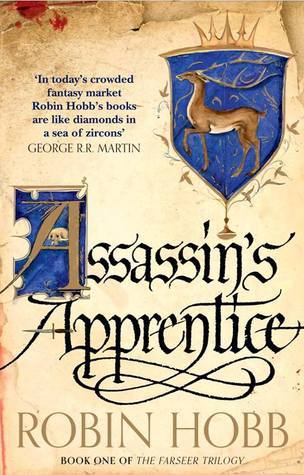
Assassin's Apprentice (Farseer Trilogy, #1)

A is for Assassin’s Apprentice by Robin Hobb, Book One of the Farseer Trilogy  (On my Kindle since September 2014.)  It’s fantasy fiction set in the  imaginary realm of the Six Duchies and tells the story of the illegitimate son of a prince, assassin FitzChivalry Farseer. He is raised in the stables, rejected by all his family apart from his uncle Chade, who trains him as an assassin.

My memories reach back to when I was six years old. Before that, there is nothing, only a black gulf no exercise of my mind has ever been able to pierce. Prior to that day at Moonseye, there is nothing. But on that day they suddenly begin, with a brightness and detail that overwhelms me. Sometimes it it seems too complete, and I wonder if it is truly mine. Am I recalling it from my own mind, or from dozens of retelling by legions of kitchen maids and ranks of scullions and herds of stable-boys as they explained my presence to each other? Perhaps I have heard the story so many times, from so many sources, that I now recall it as an actual memory of my own. (page 2)

The Big Sleep (Philip Marlowe, #1)

B is for The Big Sleep by Raymond Chandler, with an introduction by Ian Rankin. It’s been on my Kindle since July 2017. Crime fiction is one of my favourite genres – I read a lot of it, but have never read any of Chandler’s books. This is his first book featuring Philip Marlowe. Rankin writes that is ‘a story of sex, drugs, blackmail and high society narrated by a cynical tough guy, Philip Marlowe‘ and that it is ‘such fun to read that you won’t notice how clever its author is being.’

The the old man dragged his voice up from the bottom of a well and said: ‘Brandy, Norris. How do you like you like your brandy, sir?’

‘Any way at all,’ I said.

The butler went away among the aboriginal plants. The General spoke again, slowly using his strength as carefully as an out-of-work showgirl uses her last good pair of stockings.

‘I used to like mine with champagne. The champagne as cold as Valley Forge and about a third of a glass of brandy beneath it.’ (page 4)

The Churchill Factor: How One Man Made History

C is for The Churchill Factor: How One Man made History by Boris Johnson, on my Kindle since June 2016. The extract below is from the Introduction in which Boris explains why he wants to convey something of Churchill’s genius in this book, and asking what made up his character.

I knew that he had been amazingly brave as a young man, and that he had seen bloodshed at first hand, and had been fired at on four continents, and that he was one of the first men to go up in an aeroplane. I knew that he had been a bit of a runt at Harrow, and that he was only about 5 foot 7 and with a 31-inch chest, and that he had overcome his stammer and his depression and his appalling father to become the greatest living Englishman.

I gathered there was something holy and magical about him, because my grandparents kept the front page of the Daily Express from the day he died, at the age of ninety. … So it seems all the more sad and strange that today – nearly fifty years after he died – he is in danger of being forgotten or at least imperfectly remembered. (page 3)

If you’ve read any of these please let me know what you think?