Clouds of Witness by Dorothy L Sayers

Clouds of Witness by Dorothy L Sayers, is the second Lord Peter Wimsey book and one of my 20 Books of Summer. It was first published in 1926. My copy was reprinted in 1984 and I bought it secondhand four years ago.

Clouds of witness Sayers

From the back cover of my paperback:

A man is found shot, and the Duke of Denver is charged with his murder. Naturally, it is his brother, Lord Peter Wimsey, who is called in to investigate the crime. This is a family affair, for the murdered man was the fiancé of the sister of Denver and Wimsey.

Why, then, does the Duke refuse to co-operate with the investigation? Is he really guilty, or is he covering up for someone? Why is Wimsey attacked by an enraged farmer on the lonely moors? Why is an attempt made on his life in a Soho street?

My thoughts:

So many questions! And as I read even more popped into my mind – why did Lady Mary, Wimsey’s sister, leave the house at 3am on the morning of the murder? Why is she feigning illness? Whose footprints are those near the body of Denis Cathcourt (the murdered man)? What is the significance of the diamond cat charm with eyes of bright emeralds? And why won’t the Duke defend himself? Then there are the bloodstains and signs that the body had been dragged to the door of the conservatory where it was found, leading into the nearby thicket. If the Duke didn’t kill Cathcart who did and why?

The evidence against the Duke is circumstantial. So, Wimsey has his work cut out to prove his innocence and save him from the death penalty. Together with his friend, Inspector Charles Parker (who is in love with Lady Mary), and Bunter, his manservant, they look for clues and interview the family’s guests on the night of the murder. There are several strands to the story and minor characters who all manage to confuse the mystery.

There are some memorable scenes, such as Wimsey and Bunter’s escapade on the moors when they attempted to get to Grider’s Hole. The fog had come on them suddenly, blotting out their surroundings and they had no idea what direction to take. They strode forward gingerly unable to distinguish uphill from downhill – then Wimsey tripped into a bog, and found himself sinking up to his thighs. As well as struggling in the foggy bog, Wimsey also got shot and rather dramatically flew to New York in pursuit of evidence, a dangerous journey in a fragile plane as a deep depression was crossing the Atlantic bringing storms with heavy rain and sleet, rising to a gale as the plane lurched from gust to gust.

The trial scene in the House of Lords is fascinating:

The historic trial of the Duke of Denver for murder opened as soon as Parliament reassembled after the Christmas vacation. The papers had leaderettes on ‘Trial by his Peers’, by a Woman Barrister, and ‘The Privilege of Peers: should it be abolished?’ by a Student of History. The Evening Banner got into trouble for contempt by publishing an article entitled ‘The Silken Rope’ (by an Antiquarian), which was deemed to be prejudicial, and the Daily Trumpet – the Labour organ – inquired sarcastically why, when a peer was tried, the fun of seeing the show should be reserved to the few influential persons who could wangle tickets for the Royal Gallery. (pages 217 -218)

Clouds of Witness is a book of its time, there is much banter, wit and humour, and plenty of snobbery of all types clearly showing the class distinctions between the working and upper classes. It is a clever story, well told, with colourful characters and I liked the details it gives about Wimsey’s family as I’ve been reading these books totally out of order.

All in all, I enjoyed it – 4*.

Reading challenges: 20 Books of Summer, Calendar of Crime, and Mount TBR challenge 2019

The Family Upstairs by Lisa Jewell

 A house with the darkest of secrets.

Family upstairs

Random House UK Cornerstone|8 August 2019|464 pages|e-book |Review copy|5*

My Friday Post: The Seagull by Ann Cleeves

Book Beginnings Button

Every Friday Book Beginnings on Friday is hosted by Gillion at Rose City Reader where you can share the first sentence (or so) of the book you are reading, along with your initial thoughts about the sentence, impressions of the book, or anything else the opener inspires.

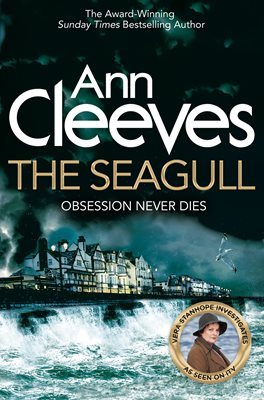
The Seagull by Ann Cleeves is one of my TBRs, that I should have read as soon as I got it – but didn’t. It’s the 8th book in her Vera series.

Seagull

Prologue

The woman could see the whole sweep of the bay despite the dark and the absence of street lights where she stood. Sometimes it felt as if her whole life had been spent on the half-light; in her dreams, she was moon-lit or she floated through the first gleam of dawn. Night was the time when she felt most awake.

I like the opening of this prologue and I’m wondering how it fits into the story that follows.

Chapter One

John watched the door from his wheelchair and wondered who’d be dragged in to speak to them today. An orderly carried through a mug of tea and left it on the floor beside him, though he must have realized it would be impossible for John to reach it from his chair.

Also every Friday there is The Friday 56, hosted by Freda at Freda’s Voice.

30879-friday2b56These are the rules:

  1. Grab a book, any book.
  2. Turn to page 56, or 56% on your eReader. If you have to improvise, that is okay.
  3. Find any sentence (or a few, just don’t spoil it) that grabs you.
  4. Post it.
  5. Add the URL to your post in the link on Freda’s most recent Friday 56 post.

Page 56:

Joe thought all that made sense. He imagined an elderly Robbie Marshall sitting in the sun on the balcony of a Spanish apartment, using a different name, his long nose even redder.

So, three extracts from The Seagull, and I’m wondering how they all fit together? Maybe the blurb will help …

Blurb:

When prison inmate and former police officer John Brace says he’s willing to give up information about a long-dead wheeler dealer in return for protection for his family, Vera knows that she has to look into his claims.

But opening up this cold case strikes much closer to home than Vera anticipates as her investigation takes her back in time to The Seagull, a once decadent and now derelict nightclub where her deceased father and his friends used to congregate.

As Vera’s past collides dangerously with the present, she will have to confront her unwanted memories and face the possibility that her father was involved in what happened. The truth is about to come out but is Vera ready for what it will reveal?

What do you think? Would you keep reading?

The Riviera Set by Mary S Lovell

Riviera Set

Little, Brown Book Group|November 2016|448 pages|Library book|3.5 rounded up to 4 on Goodreads*

When I read Cath’s review of The Riviera Set: 1920 – 1960: The Golden Years of Glamour and Excess on her blog Read Warbler I thought it sounded fascinating, so I reserved a copy at the library. I has taken me almost a month to read it, but I did enjoy it.

Mary S Lovell explains in her Introduction that this is ‘less of a biography, more the story of a house and those who peopled it between the years 1930 and 1960.‘ The book begins with Maxine Elliott, telling of her early life  – she was an American, born Jessica Dermot in Rockland, Maine in 1868. She was a most remarkable woman who became an actress, famed for her beauty and her pure speaking voice. She came over to England, had successfully entered the Edwardian social scene in 1899 and after divorcing her husband, actor Nat Goodwin in 1908 she established herself at Hartsbourne, a country house in Hertfordshire. During the First World War she bought a barge and fitted it out as a first-aid clinic and soup kitchen to help with the war relief effort, bringing food and medical supplies to thousands of displaced people in Belgium. Many of the people who socialised at Hartsbourne flocked to visit her there. 

And then in 1930 she commissioned the architect Barry Dierks to build  the Chateau de l’Horizon on the land she had bought on a narrow stretch of rocks with a small promontory between Cannes and Juan-les-Pins. This is the part of the book I enjoyed the most, first of all about Maxine herself, then the description of the construction of the Chateaux and the years that Maxine owned it and lived there. Maxine really came into her own there as a superb hostess.

chateau de l'horizon

Regular visitors included Winston Churchill, Cole Porter, Noel Coward, Somerset Maugham among many others – famous actors and actresses as well as members of the aristocracy and politicians. I was interested in Clementine Churchill’s reaction to the Riviera set – she disapproved of their behaviour and often didn’t accompany him on his visits.  She also disapproved of Winston’s gambling at the Casino. Then there were the Duke and Duchess of Windsor, who lived nearby before the Second World War – the picture painted of them is not flattering – and there was much talk about how to address Wallis and whether the women should curtsy to her. By the time the War approached Maxine had lost her sparkle, suffering from ill health and she died in March 1940.

And after her death nothing was the same – and my interest in the book began to wane. The Chateau was bought by Aly Khan, the Aga Khan’s heir presumptive at the time. There is quite a lot about his time there, his womanising, his marriage to Rita Hayworth and the social scene of the post-war period up to 1960. Nevertheless it is a fascinating and entertaining book about a pampered, luxurious and decadent world.

Reading challenge: Virtual Mount TBR as it is a library book.

Reading in July

I read nine books in July – it was a really good batch of books. I’ve written about 7 of them – click on the titles to see my reviews.

  1. The Stranger Diaries by Elly Griffiths 3*
  2. Katharina: Fortitude by Margaret Skea 5*
  3. The House by the Loch by Kirsty Wark 4*
  4. The Bear Pit by S G Maclean 5*
  5. Who Killed Ruby? by Camilla Way 3.5*
  6. Dolly by Susan Hill 5*
  7. Blood on the Tracks edited by Martin Edwards *
  8. Clouds of Witness by Dorothy L Sayers 4*
  9. The Art of Dying by Ambrose Parry 4*

I’ll be writing more about Clouds of Witness and The Art of Dying later this month, but for now here are my initial thoughts.

Clouds of witnessClouds of Witness by Dorothy L Sayers is the second Lord Peter Wimsey book. I really enjoyed this book. It has wit and humour as  as well as being a murder mystery. Lord Peter Wimsey’s brother, the Duke of Denver is accused of murder and refuses to explain or defend himself, so it’s down to Peter to get to the truth. The murder took place at the duke’s shooting lodge and Lord Peter’s sister was engaged to marry the dead man. One of the things I like about it is that it is clearly a book of its time with all the class distinctions and snobbery of the 1920s clearly on display.

Art of DyingThe Art of Dying by Ambrose Parry, anothoer book I really enjoyed is a new publication due out on 29 August this year.  It’s the sequel to Ambrose Parry’s debut novel, The Way of all Flesh. Ambrose Parry is a pseudonym for a collaboration between Chris Brookmyre and Marisa Haetzman. It’s historical fiction set in Edinburgh in 1850 as  patients are dying all across the city, with doctors finding their remedies powerless. Will Raven returns to Edinburgh as a doctor having been in Europe studying. Dr. James Simpson is being blamed for the death of a patient in suspicious circumstances, and Will and former housemaid Sarah Fisher are determined to clear his name.


Katharina: Fortitude by Margaret Skea

Katharina fortitude

Last week I wrote about Margaret Skea’s latest book, Katharina: Fortitude, historical fiction based on the life of Katharina von Bora, the escaped nun who married Martin Luther. I loved it. It is beautifully written and meticulously researched giving a vivid portrait of Katharina from the beginning of her married  life with Luther in 1525 to her death in 1552.

For the whole of August it is on sale for 99p in the UK and $0.99 in the USA – a real bargain!

Here’s the link that takes you straight to the book page, whatever country you are in:

https://books2read.com/u/meBAgA