The Marches by Rory Stewart

Marches

Vintage|September 2017|368 pages|Paperback|4*

I enjoyed reading The Marches: Border Walks With My Father by Rory Stewart. He’s been in the news here recently, having stood for leadership of the Conservative Party, and has now formally stood down from Parliament to run as an independent candidate for Mayor of London.

But none of that has anything to do with why I wanted to read his book. It’s because of the subject – walking in the borderlands between England and Scotland, in the place where I live. And it’s not just about walking – he also muses on history, memory and landscape, all topics that interest me immensely.

Blurb:

His father Brian taught Rory Stewart how to walk, and walked with him on journeys from Iran to Malaysia. Now they have chosen to do their final walk together along ‘the Marches’ – the frontier that divides their two countries, Scotland and England.

On their six-hundred-mile, thirty-day journey – with Rory on foot, and his father ‘ambushing’ him by car – the pair relive Scottish dances, reflect on Burmese honey-bears, and on the loss of human presence in the British landscape.
Travelling across mountain ridges and through housing estates they uncover a forgotten country crushed between England and Scotland: the Middleland. They discover unsettling modern lives, lodged in an ancient place, as their odyssey develops into a history of the British nationhood, a chronicle of contemporary Britain and an exuberant encounter between a father and a son.

And as the journey deepens, and the end approaches, Brian and Rory fight to match, step by step, modern voices, nationalisms and contemporary settlements to the natural beauty of the Marches, and a fierce absorption in tradition in their own unconventional lives.

My thoughts:

This is a book of three parts – Book One: The Wall about Rory Stewart’s walk along Hadrian’s Wall in 2011, with his father, then aged 89 – his father walking for the first hour or so each day. They had intended to walk the full length of the Wall, from east to west, but after they reached the fort at Bewcastle they decided to abandon their plan (his father having reached his limits) and drive back to his father’s house, Broich, near Crieff in Perthshire. He writes about the Wall, the Roman occupation of the area, his father’s career, about nationality and clans, and reminisces about his childhood and his time in Afghanistan.

Book Two: Middleland, in which he describes his walk from coast to coast, a distance of about 400 miles, taking him 26 days, walking alone from his cottage in Cumbria to the Solway Firth, then crossing and re-crossing the modern border (established in the 13th century) to Berwick-upon-Tweed and then back to Broich.

I got a bit lost in his descriptions of the route, not knowing some the places along the way. But there are maps of his route that helped me follow where he went. He describes the landscape, the geology, sheep farming and land use, the people he met, their history  and language and much, much more.

Book Three: The General Danced on the Lawn about his father, who died at the age of 93, before this book was finished. The whole book is permeated with his love and respect for his father, but this last section is all about Brian Stewart.

At the end of the Marches is a Chronology which I found very interesting, defining The Middleland before AD100 up to the present days. The Middleland is a term invented by Brian Stewart:

The geographical centre of the island of Britain. An upland landscape, whose core is the Lake District, the Peninnes, the Cheviots and the Scottish Borders, but whose fringes extend to the Humber in the south and the firths of Forth and Clyde in the north. A land naturally unified by geography and culture for two thousand years, but repeatedly divided by political frontiers. (page 339)

Six Degrees of Separation: from Alice’s Adventures in Wonderland to Strong Poison

I love doing Six Degrees of Separation, a monthly link-up hosted by Kate at Books Are My Favourite and Best. Each month a book is chosen as a starting point and linked to six other books to form a chain. A book doesn’t need to be connected to all the other books on the list, only to the one next to it in the chain.

Alice Carroll

This month the chain begins with Alice’s Adventures in Wonderland by Lewis Carroll– a book I read as a child and loved. 

I was tempted to make my first link to Through the Looking Glass, Carroll’s follow-up book, or another of the books I loved as a child, but instead I chose:

Malice in wonderland

Malice in Wonderland by Nicholas Blake. In this Golden Age mystery Wonderland is a holiday camp, set on a cliff top overlooking the sea and there are several allusions to Lewis Carroll’s Alice’s Adventures in Wonderland. The train to Wonderland plunges into a tunnel, just as Alice falls down a rabbit hole and finds herself in Wonderland. And there is a prankster in the camp, the self-styled ‘Mad Hatter’, who is playing nasty and cruel practical jokes on the holiday makers. One of the visitors is Paul Perry, a young man who calls himself a scientist, who is there taking notes for the Mass Observation project.

Our Longest days

Mass Observation is my second link.  In August 1939, with war approaching, the Organisation asked its panel to keep diaries to record their daily lives and selections from fifteen of these diaries are included in Our Longest Days: A People’s History of the Second World War edited by Sandra Koa Wing.  

Testament of youth

Diaries provide the next link – Testament of Youth by Vera Brittain is based on her diaries, telling of her life up to 1925, concentrating on the World War One years. Vera was a VAD (Voluntary Aid Detachment) during the war, nursing casualties both in Britain and France.

AC Autobiography

Agatha Christie was also a VAD member during World War One. In 1917 she worked in a hospital dispensary in Torquay and studied to take her Apothecaries Hall examination so she could dispense for a medical officer or a chemist. In her Autobiography she wrote that it was whilst she was working in the dispensary that she first thought of writing a detective story. Surrounded by poisons she decided it should be about a murder by poisoning.

Mysterious Affair at Styles

So my fifth link is to the first detective story she wrote The Mysterious Affair at Styles. It is set during the First World War I at Styles Court, a country house in Essex, owned by the very wealthy Mrs Inglethorp, who dies from strychnine poisoning. Captain Hastings enlists the help of Poirot, who is living in the village of Styles St Mary with other Belgian refugees, to investigate the matter.

Strong Poison

And my final link is Strong Poison by Dorothy L Sayers. Lord Peter Wimsey, the aristocratic amateur detective, and Harriet Vane, a crime fiction writer, first met in this murder mystery. Harriet is on trial for the murder of her former lover, Philip Boyes, who died from arsenic poisoning. Wimsey, attending the trial, is convinced she is innocent and sets out to prove it … and falls in love with her. 

My chain is linked by books about Wonderland, the Mass Observation project, diaries VADs and poison. It passes from fantasy land through the World War One years, and back into the world of fiction. It includes crime fiction and non-fiction.

Next month (December 7, 2019), we’ll begin with Jane Austen’s unfinished manuscript, Sanditon.

First Chapter First Paragraph: Christine Falls by Benjamin Black

Every Tuesday First Chapter, First Paragraph/Intros is hosted by Vicky of I’d Rather Be at the Beach sharing the first paragraph or two of a book she’s reading or plans to read soon.

Christine Falls

This week I’m featuring Christine Falls by Benjamin Black. Although I’m in the middle of other books right now I like to think about what to read next, often changing my mind before settling down to read the next one. Browsing my bookshelves recently (physical not virtual) this book caught my eye. I think I’ll read it soon.

She was glad it was the evening mailboat she was taking for she did not think she could have faced a morning departure. At the party the night before one of the medical students had found a flask of raw alcohol and mixed it with orange crush and she had drunk two glasses of it, and the inside of her mouth was still raw and there was something like a drum beating behind her forehead. She had stayed in bed all morning, still tipsy, unable to sleep and crying half the time, a hankie crushed to her mouth to stifle the sobs. She was frightened at the thought of what she had to do today, of what she had to undertake. Yes, she was frightened.

Blurb 

Quirke’s pathology department, set deep beneath the city, is his own gloomy realm: always quiet, always night, and always under his control. Until late one evening after a party he stumbles across a body that should not be there – and his brother-in-law falsifying the corpse’s cause of death.

This is the first time Quirke has encountered Christine Falls, but the investigation he decides to lead into the way she lived and died uncovers a dark secret at the heart of Dublin’s high Catholic network; one with the power to shake his own family and everything he holds dear.

~~~

Benjamin Black is a pseudonym used by John Banville (an author whose books I’ve enjoyed before). This is the first of his Quirke Mysteries. They are set in Ireland in the 1950s. I’ve read the fifth book, Vengeance, which I enjoyed, so when I saw this in a bookshop I bought it.

If you’ve read it I’d love to know what you thought of it. If you haven’t, does it tempt you too?

Nonfiction November: Week 1

nonficnov 19

Nonfiction November begins this week. Each Monday a link-up for the week’s topic will be posted at the host’s blog for you to link your posts throughout the week.

Week 1: (Oct. 28 to Nov. 1) The topic is Your Year in Nonfiction, hosted by Julie @ Julz Reads :

Take a look back at your year of nonfiction and reflect on the following questions:

What was your favourite nonfiction read of the year?
Do you have a particular topic you’ve been attracted to more this year?
What nonfiction book have you recommended the most?
What are you hoping to get out of participating in Nonfiction November?

I love reading non-fiction, but it takes me much longer to read than fiction, so it’s only been about 10% percentage of my total reading so far this year. Up to now I have read seven books but I’ve not been very good at writing about them, so I’ve only reviewed three of them, although I have started to write about a fourth book – The Marches by Rory Stewart.

I like to vary my reading but tend to lean towards reading memoirs, biographies and history.

First the books I have not written about:

  1. Great Britain’s Great War by Jeremy Paxman – The back cover describes it: ‘He tells the story of the war through the experience of those who lived it – nurses, soldiers, politicians, factory workers, journalists and children.’ I began reading this book last year and didn’t finish it until January this year! I borrowed this from the library and had to renew it to finish it.
  2. Bitter Lemons of Cyprus by Lawrence Durrell  – his account of his time in Cyprus, during the 1950s Enosis movement for freedom of the island from British colonial rule. I’ve visited Cyprus several times, but not the area Durrell wrote about in this book – Kyrenia in Northern Cyprus, where he bought a house in the Greek village of Bellapaix.  His writing is richly descriptive and made me wish I could have seen Bellapaix in the 1950s.
  3. A Life of My Own by Claire Tomalin – a book that Marina @ Finding Time To Write kindly sent to me. Claire Tomalin writes excellent biographies, so I wondered what she had to say about her own life. She began by saying that writing about herself had not been easy and querying the reliability of memory, which maybe why I found it in places rather impersonal as she related a number of tragedies she had had to cope with.
  4. The Marches: Border Walks with my Father by Rory Stewart – review to follow. I enjoyed this account of walks along part of Hadrian’s Wall, the Debatable Lands, the Cheviot Border and in the area Stewart calls the ‘Middleland’. The last part of the book is about his father, Brian, who died four days before his 93rd birthday.

The links on the titles below take you to my reviews on the books:

  1. The Immortal Life of Henrietta Lacks by Rebecca Skloot – a fascinating, but harrowing biography of Henrietta’s life and death.She died of cervical cancer in 1951. Her cancer cells  became known as HeLa cells and have formed the basis for much medical research and drug development ever since.
  2. The Adventures of Maud West, Lady Detective by Susannah Stapleton, subtitled ‘Secrets and Lies in the Golden Age of Crime‘. Maud West was a private investigator with her own detective agency, based in London in the early part of the twentieth century, from 1905 onwards. It is also about the changing society in which Maud lived.
  3. The Riviera Set1920 – 1960: The Golden Years of Glamour and Excess by Mary S Lovell about Maxine Elliott and Chateau de l’Horizon, the house she had built on a promontory between Cannes and Juan-les-Pins and those who peopled it between the years 1930 and 1960.

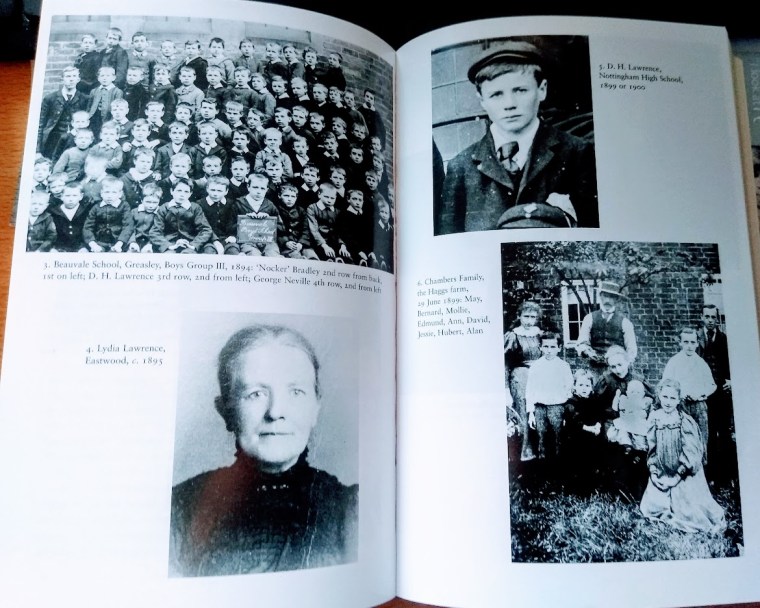
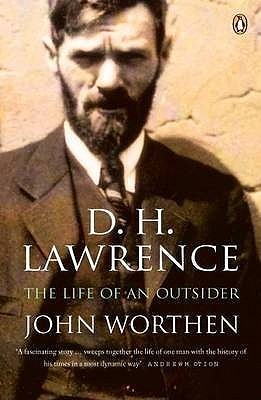
I’m also reading – very slowly – a biography of D H Lawrence by John Worthen. I began this in April and hope to finish it this year.

I enjoyed all these books for different reasons, but the book that fascinated – and surprised me the most – is The Immortal Life of Henrietta Lacks by Rebecca Skloot

By participating in Nonfiction November I’m hoping this will encourage me to read more nonfiction rather than picking up the next novel to read and I’m looking forward to seeing what others recommend.

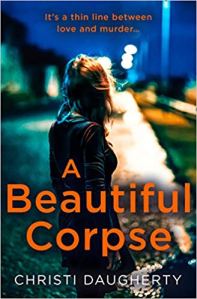
Concerto by Hannah Fielding

Concerto

London Wall Publishing|6 June 2019|560 pages|e-book via NetGalley|Review copy|2*

My Friday Post: Boris by Andrew Gimson

Book Beginnings Button

Every Friday Book Beginnings on Friday is hosted by Gillion at Rose City Reader where you can share the first sentence (or so) of the book you are reading, along with your initial thoughts about the sentence, impressions of the book, or anything else the opener inspires.

Boris

I’ve been thinking for a while of reading Boris: the Rise of Boris Johnson by Andrew Gimson, published in 2012. I bought it secondhand several years ago after Boris had been elected as Mayor of London and it is an updated version of his earlier biography to include Boris’s record in power as the Mayor of London.  I see that Gimson has since brought out  another updated edition, subtitled The Adventures of Boris Johnson, after the Brexit Referendum in 2016.  

It begins with an Introduction explaining why Gimson thought of writing a life of Boris Johnson.

In the summer of 2004, Boris’s star shone with amazing brightness. Reputable judges predicted he would be the next Conservative Prime Minister, and that June morning he was all over the newspapers, which were enthralled by a scoop he had gathered while waiting on his bike at a traffic light.

Well, he wasn’t the next Prime Minister – for that he had to wait until this year.

Then Chapter I begins:

Boris was born to British parents in New York City on 19 June 1964. His mother Charlotte, who was only twenty-two years old, relates that at his birth he had the thick yellow hair for which he was later to become so celebrated: ‘We didn’t cut it, so it turned into ringlets.

And in the photos there is one of Boris, aged one with his mother celebrating at the end of her Oxford exams and Boris is determined to have some of her champagne – his hair a mop of curls.

Also every Friday there is The Friday 56, hosted by Freda at Freda’s Voice.

30879-friday2b56These are the rules:

  1. Grab a book, any book.
  2. Turn to page 56, or 56% on your eReader. If you have to improvise, that is okay.
  3. Find any sentence (or a few, just don’t spoil it) that grabs you.
  4. Post it.
  5. Add the URL to your post in the link on Freda’s most recent Friday 56 post.

Pages 57:

At a time when many of us are still in a state of utter confusion, Boris knew where he wanted to go. A close friend said of him: ‘At the age of eighteen he set himself the target that he was going to be in the Cabinet by the age of thirty-five.’

He didn’t make that target until later in his life – and he went on to become Prime Minister in July.  But will he still be PM by the end of this year … ?

Who knows??