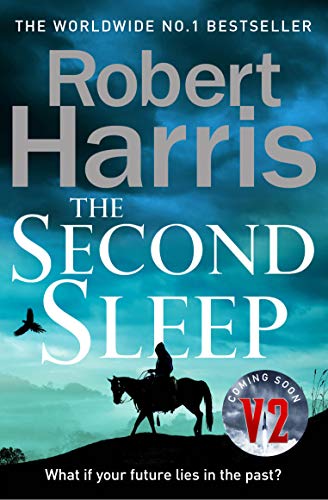
My Friday Post: The Second Sleep by Robert Harris

Every Friday Book Beginnings on Friday is hosted by Gillion at Rose City Reader where you can share the first sentence (or so) of the book you are reading, along with your initial thoughts about the sentence, impressions of the book, or anything else the opener inspires.

My choice this week is a book that I’ve just started to read – The Second Sleep by Robert Harris and it promises to be good.
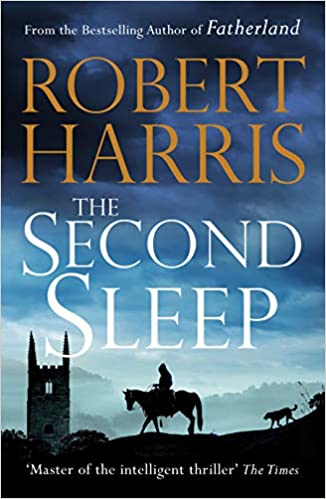
It begins:

Chapter One – The Hidden Valley

Late on in the afternoon of Tuesday the ninth of April in the Year of Our Risen Lord 1468, a solitary traveller was to be observed picking his way on horseback across the wild moorland of that ancient region of south-western England known since Saxon times as Wessex. If this young man’s expression was troubled, we may grant he had good cause.

Also every Friday there is The Friday 56, hosted by Freda at Freda’s Voice.
30879-friday2b56

These are the rules:

  1. Grab a book, any book.
  2. Turn to page 56, or 56% on your eReader. If you have to improvise, that is okay.
  3. Find any sentence (or a few, just don’t spoil it) that grabs you.
  4. Post it.
  5. Add the URL to your post in the link on Freda’s most recent Friday 56 post.

Page 56:

One letter, however, had been sealed in its own plastic wallet, and this was found to be in near-perfect condition. Mr Shadwell had made a copy, and asked permission to read it aloud to the society. His proposal was approved unanimously

Imperial College, London, 22 March 2022

Blurb:

Dusk is gathering as a young priest, Christopher Fairfax, rides across a silent land.

It’s a crime to be out after dark, and Fairfax knows he must arrive at his destination – a remote village in the wilds of Exmoor – before night falls and curfew is imposed.

He’s lost and he’s becoming anxious as he slowly picks his way across a countryside strewn with the ancient artefacts of a civilisation that seems to have ended in cataclysm.

What Fairfax cannot know is that, in the days and weeks to come, everything he believes in will be tested to destruction, as he uncovers a secret that is as dangerous as it is terrifying …

~~~

If the quotation from the Sunday Times is right, this is exactly what I want to read right now:

thoroughly absorbing, page-turning narrative in which the author, with his customary storytelling skills, pulls us ever deeper into the imaginative world he has created. It [also] poses challenging questions about the meaning of the past, the idea of progress and the stability of civilisation. It is a fine addition to Harris’s diverse body of work. Sunday Times

Top Ten Tuesday: Books on My Summer 2020 TBR

Top Ten Tuesday is a weekly meme created by The Broke and the Bookish and now hosted by Jana at That Artsy Reader Girl. For the rules see her blog. This week’s topic is Books on My Summer 2020 TBR.

As I’m taking part in the 20 Books of Summer Challenge I’ve included some of the books I’ve identified for that challenge together with a few other books. Some of these books are ones that have been on my TBR list for ages and some are more recent additions from NetGalley.

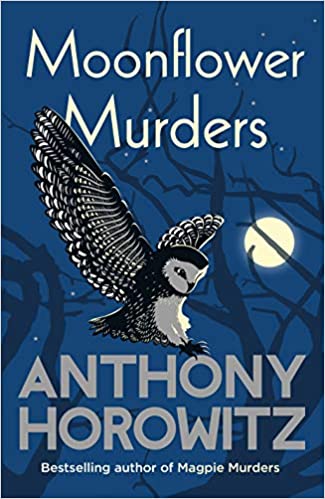
Moonflower Murders by Anthony Horowitz – The second book in the Magpie Murders series featuring literary detective Atticus Pund and Susan Ryeland, a retired publisher, as the amateur sleuth. I loved Magpie Murders, so I have high expectations of this book. It’ll be released on 20 August 2020.

Susan Ryeland is running a small hotel on a Greek island with her long-term boyfriend. But life isn’t as idyllic as it should be. So when an English couple come to visit with tales of a murder that took place in a hotel on the same day their daughter Cecily was married there, Susan can’t help but find herself fascinated.

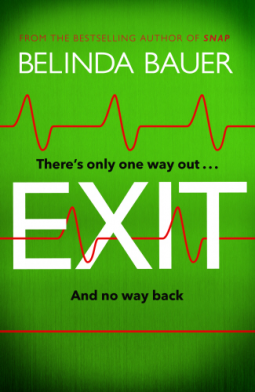
Exit by Belinda Bauer – due to be released 4 February 2021. When Felix lets himself in to Number 3 Black Lane, he’s there to perform an act of charity: to keep a dying man company as he takes his final breath . . . But just fifteen minutes later Felix is on the run from the police – after making the biggest mistake of his life.

The Butcher’s Hook by Janet Ellis – historical fiction, set in Georgian London the summer of 1763, when Anne wants to marry Fub, a butcher’s apprentice, but her parents have chosen a more suitable husband for her.

Missing Joseph: An Inspector Lynley Novel by Elizabeth George. This is the sixth in the series, telling the story of a woman’s quest to solve the mystery of the death of her friend, an Anglican priest. Deborah and her husband, Simon, turn to their old friend, Inspector Lynley.

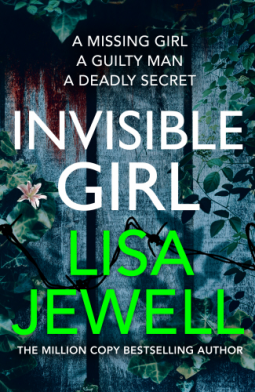
Invisible Girl by Lisa Jewell – more crime fiction, from a favourite author. A story of secrets and injustices, and of how we look in the wrong places for the bad people while the real predators walk among us in plain sight

The Silent Wife by Karin Slaughter – a new-to-me author who has written many books. This is a crime thriller. due to be released on 23 June. A woman runs alone in the woods. She convinces herself she has no reason to be afraid, but she’s wrong. A predator is stalking the women of Grant County. He lingers in the shadows, until the time is just right to snatch his victim.

How to Disappear by Gillian McAllister- a psychological-suspense thriller, to be released on 9 July. I’ve read three of her books and loved each one, so I really hope I’ll love this one too. It’s about Zara who witnessed a murder, but she becomes a target and has to disappear.

Hamnet by Maggie O’Farrell – On a summer’s day in 1596, a young girl in Stratford-upon-Avon takes to her bed with a fever. Her twin brother, Hamnet, searches everywhere for help. Why is nobody at home? This is historical fiction inspired by Hamnet, Shakespeare’s son and is a story of the bond between twins. Maggie O’Farrell is another favourite author and I am really looking forward to reading this book.

The Ghost of the Mary Celeste by Valerie Martin – more historical fiction about the mystery of the ship that was discovered in the middle of the Atlantic, headed for Gibraltar, with no one aboard. It weaves fact and fiction told from different viewpoints. This is a book I’ve had for years and it’s about time I read it.

The Second Sleep by Robert Harris – another book by one of my favourite authors. It begins in 1468 when a young priest, Christopher Fairfax, arrives in a remote Exmoor village to conduct the funeral of his predecessor. He’s lost and he’s becoming anxious as he slowly picks his way across a countryside strewn with the ancient artefacts of a civilisation that seems to have ended in cataclysm.

I was intrigued by the blurb, so this morning I began reading and the ‘ancient artefacts’ include plastic and a mobile phone. Not the 15th century then?

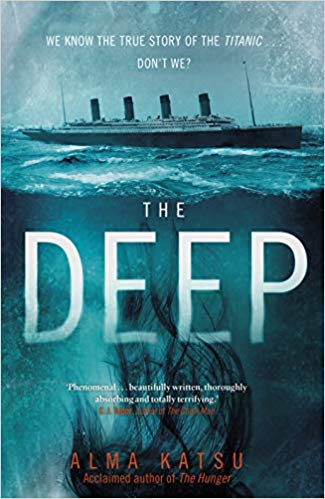
The Deep by Alma Katsu

Random House Bantam Press| 5 March 2020| 391 pages|e-book| Review copy| 3*

About the Book

Deaths and disappearances have plagued the vast liner from the moment she began her maiden voyage on 10 April 1912. Four days later, caught in what feels like an eerie, unsettling twilight zone, some passengers – including millionaire Madeleine Astor and maid Annie Hebbley – are convinced that something sinister is afoot. And then disaster strikes.

Four years later and the world is at war. Having survived that fateful night, Annie is now a nurse on board the Titanic’s sister ship, the Britannic, refitted as a hospital ship. And she is about to realise that those demons from her past and the terrors of that doomed voyage have not finished with her yet . . .

Bringing together Faustian pacts, the occult, tales of sirens and selkies, guilt and revenge, desire and destiny, The Deep offers a thrilling, tantalizing twist on one of the world’s most famous tragedies.

My thoughts

I loved The Hunger by Alma Katsu, so I was looking forward to reading The Deep. It began really well and it’s beautifully written. It’s a mix of fact and fiction. It moves between 1912 as the Titanic sets sail on its maiden voyage and 1916, as its sister ship the Britannic, converted to a hospital picks up soldiers injured in the battlefields to take them back to England. There is a large cast of characters, some are real people and others are fictional; the stories on the two ships are told from their different perspectives.

The story revolves around Annie Hebbley, a stewardess on the Titanic and a nurse on the Britannic. It begins in 1916 when she is in an asylum and receives a letter from a friend, Violet Jessop (a real person) who had been on the Titanic with her, asking her to join her as nurse on the Britannic. Annie, however, has a dark secret in her past, which is slowly revealed – most of the time I was reading I couldn’t decide how much was real and how much imaginary. She grew up in Ireland and her mind is full of the fairy stories and superstitions her grandmother had told her. And things start to go wrong as soon as she boards the Titanic.

It didn’t grip me as much as The Hunger, although it’s a very atmospheric novel and I loved the way Alma Katsu has combined fact and fiction. The scenes on the Titanic convey the splendour of the ship, the wealth of the passengers and the contrasting conditions between the different classes of passengers, and the crew. Similarly, the stark conditions on The Britannic and the suffering of its passengers are vividly portrayed. Some of the passengers are convinced that the ship is haunted and there is a genuine sense of menace, of something sinister and supernatural waiting to strike them all. However, I didn’t think the supernatural elements were as convincing later on in the novel and I found the ending confusing.

It’s not a quick read, beginning slowly and, although at first I thought this was going to be a really engrossing novel, my interest began to flag later on. I was actually relieved when I finished it. That maybe because I knew the fate of the Titanic and I didn’t empathise with Annie, the main character. As historical fiction I think it works quite well, but the main focus of the book is not the sinking of the Titanic or of the Britannic – it’s the story of the passengers and crew of both ships. The supernatural elements just confused me – especially the ending, which is so ambiguous – just who was Annie Hebbley? It’s surreal and I suppose you just have to make your own mind up. It’s been in my mind ever since I finished reading.

My thanks to the publishers and NetGalley for providing me with a review copy.

This is my first book for Cathy’s 20 Books of Summer, and my eighth book for the Historical Fiction Challenge.

Bookshelf Travelling: 13 June 2020

Judith at Reader in the Wilderness hosts Bookshelf Travelling for Insane Times. I’ve got several bookcases of unread novels and most of them are in alphabetical author order and are double shelved.

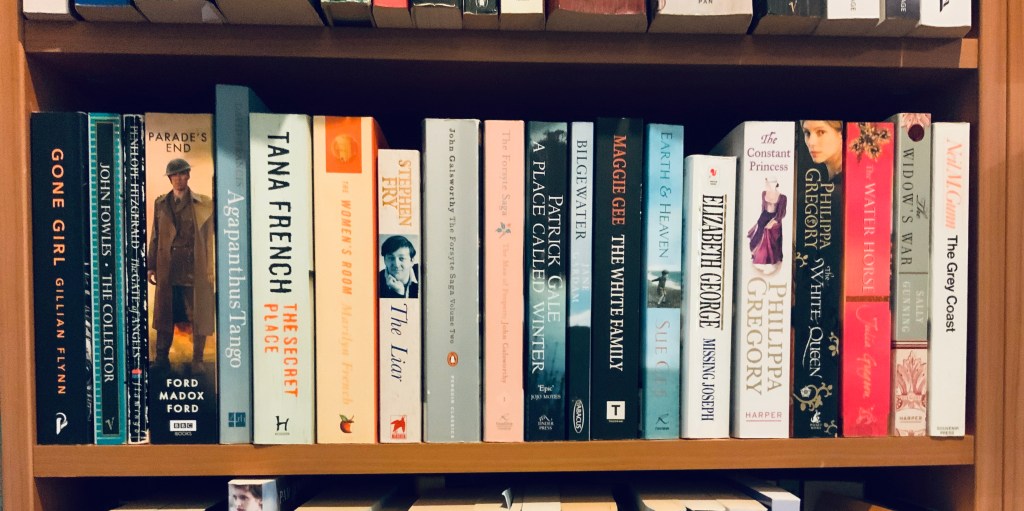
Today I’m focusing on a few of the books on the second shelf down in the photo, containing books beginning with Gone Girl by GilIan Flynn. These are the books that were at the back of the shelf. I’ve removed the front row of books and pulled these forward. They are books that I haven’t seen for some time and I’d forgotten about them.

First of all, Gone Girl. This is a secondhand book I bought 6 years ago from the local village hall when I went there to vote. It’s a book that lots of book bloggers had written about and I thought I’d like to read it – but haven’t yet!

The blurb on the back describes it as ‘The addictive No.1 US bestseller that everyone is talking about’. Nick Dunn discovered on the morning of his fifth wedding anniversary that his wife Amy had disappeared. The police suspect Nick and friends reveal that Amy was frightened of him.

Parade End by Ford Madox Ford has been on my shelves for seven years. I bought it after watching the BBC series and the front cover shows Benedict Cumberbatch as English aristocrat Christopher Tietjens. This edition of the novel includes all four parts, originally published separately between 1924 and 1928. A novel about the First World War it was based on his personal experiences of war. I loved the TV series – and I’m hoping to love the book!

The next one is The Secret Place by Tana French. I bought this five years ago at Barter Books in Alnwick (a large secondhand book shop that is run on an exchange basis) because I’ve enjoyed a couple of her books in the past. It’s crime fiction set in an exclusive girls’ boarding school in Dublin. Detective Stephen Moran investigates the death of Christopher Harper, a boy from the neighbouring boys’ school, who was found murdered on the grounds. It’s a long book in a small font, which is probably why I haven’t read it yet.

And finally, Missing Joseph: An Inspector Lynley Novel by Elizabeth George is another book I bought from Barter Books in November last year. I haven’t read any of the Inspector Lynley novels, although I’ve watched the TV adaptations. This is the sixth in the series, telling the story of a woman’s quest to solve the mystery of the death of her friend, an Anglican priest. Deborah and her husband, Simon, turn to their old friend, Inspector Lynley.

I really like the look of this book, set mainly in Lancashire and in her Aknowledgements Elizabeth George refers to Mist Over Pendle by Robert Neill, one of my favourite books. But it is very long and yet again in a small font.

I’m going to keep these books on display (moving the books that were previously in front of them to the back of the shelf) so that I don’t forget about them again. And I might focus on some of the other books on this shelf in a future Bookshelf Travelling post.

Top Ten Tuesday: Recent Additions to My TBRs

Top Ten Tuesday is a weekly meme created by The Broke and the Bookish and now hosted by Jana at That Artsy Reader Girl. For the rules see her blog. This week’s topic is Books I’ve Added to my TBR and Forgotten Why, but instead I’ve listed ten of the e-books I’ve added to my TBRs since the lockdown.

They are:

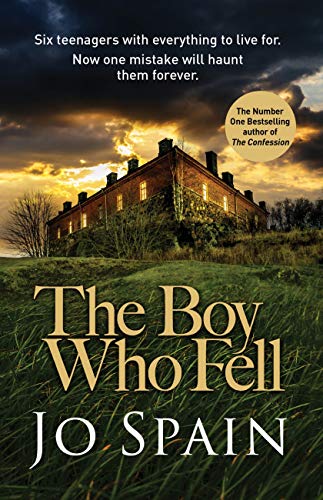
  • The Boy Who Fell by Jo Spain – An Inspector Tom Reynolds Mystery Book 5. Jo Spain is one of my favourite crime fiction writers. In this one Tom investigates the death of Luke Connolly who was found in the garden of an abandoned house.
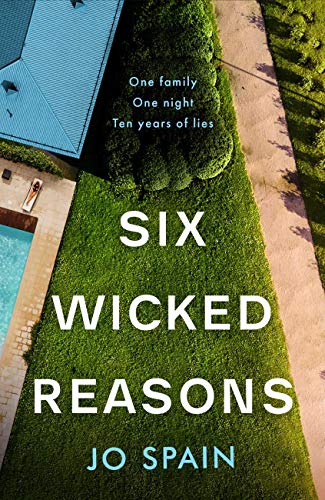
  • Six Wicked Reasons by Jo Spain – a standalone book, crime fiction, a thriller set in Wexford and Spanish Cove in Ireland about a dysfunctional family.
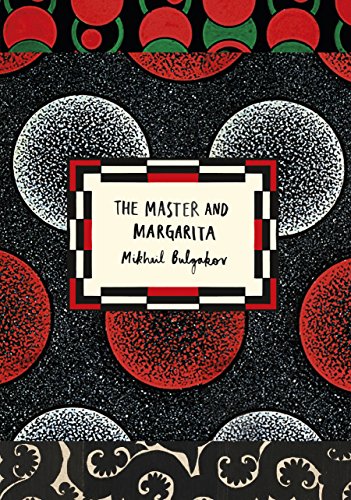
  • The Master and Margarita by Mikhail Bulgakov – a powerful picture of Stalin’s regime in this allegorical classic. I’ve seen favourable reviews on other blogs.
  • The Godfather by Mario Puzo – a story of the Mafia and the Corleone family. I’ve seen the film and want to read the book to see how it compares.
  • A Gentleman in Moscow by Amor Towles – another book other bloggers recommend. It’s historical fiction about a man who is sentenced to permanent house arrest in the luxurious Metropol Hotel in Moscow. 
  • The Second Sleep by Robert Harris – another favourite author. 1468. A young priest, Christopher Fairfax, arrives in a remote Exmoor village to conduct the funeral of his predecessor.
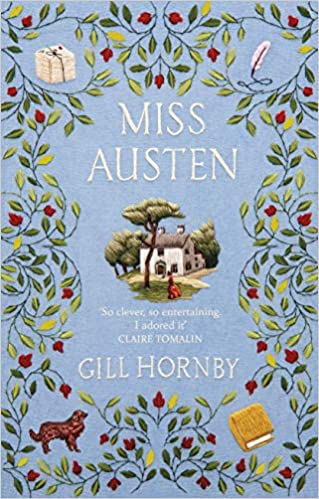
  • Miss Austen by Gill Hornby historical fiction that delves into why Cassandra burned a treasure trove of letters written by her sister, Jane Austen – an act of destruction that has troubled academics for centuries.
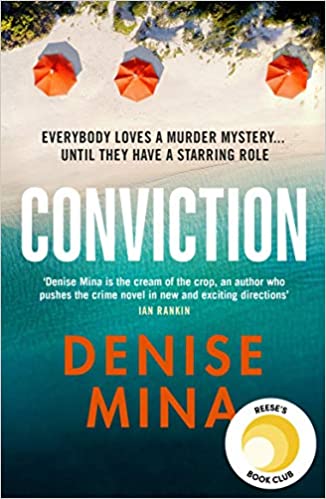
  • Conviction by Denise Mina – crime fiction, about a woman listening to a true crime podcast when she realises she knows the victim and is convinced she knows what really happened.
  • Blood Orange by Harriet Tyce – Obsession, revenge, lust and murder play out on the pages as a female barrister tries to hold her life together while her personality tries to tear it apart.
  • An Air That Kills by Andrew Taylor – the first book in the Lydmouth series. I’ve read this one already – here’s my post.

Sword by Bogdan Teodorescu

I haven’t read anything set in Romania before and so when fellow blogger Marina Sofia, who has translated Sword from Romanian, told me about this book by Bogdan Teodorescu, a journalist and political analyst, I was keen to read it. Unusually it is crime fiction in which a serial killer is on the loose, but with a difference – it’s a complex novel, a political thriller focusing on the political and social dimensions of the racial conflict between the Romanians and the Roma or ‘gypsies’. The killer is hunting down his victims from the minority Roma community. As the racial conflict continues the ethnic tension rises highlighting the corruption and manipulation by the politicians and by the mass media in particular.

The book opens with a scene in Bucharest’s Obor Market as The Fly, a con man, playing his card and shell games, is killed by a person who suddenly appeared, brandishing a sword which he then plunged into his throat. This is followed by more killings – all of them of gypsies. Despite the number and method of the murders it is not gory or too graphic.

Written in a clear, journalistic style, there is a large cast of characters, listed at the end of the book including politicians and their advisors, journalists and media moguls, victims and police. The narrative moves between them as they give speeches, discuss the situation in numerous meetings, phone calls and media broadcasts. It reveals how Romania had moved on since Ceaușescu‘s Communist reign overthrown by the 1989 Revolution. In places I found the amount of dialogue and speeches slowed the narrative down more than I preferred.

At 272 pages it is not long, but it is not a quick read, partly because of the large cast and partly because it took me a while to sort out the unfamiliar names and partly because of the number of speeches. That said, I throughly enjoyed Sword, especially the setting and the unique (for me at least) focus on the political and cultural scene in Romania – and the murder mystery.

  • Format: Kindle Edition
  • File Size: 908 KB
  • Print Length: 272 pages
  • Publisher: Corylus Books Ltd (8 May 2020)
  • Source: I bought my copy
  • My Rating: 4*