My Friday Post: The Birdwatcher by William Shaw

Every Friday Book Beginnings on Friday is hosted by Gillion at Rose City Reader where you can share the first sentence (or so) of the book you are reading, along with your initial thoughts about the sentence, impressions of the book, or anything else the opener inspires.

I bought The Birdwatcher by William Shaw this week. It’s a book I’ve been looking out for, ever since I read about Shaw’s books on Café Society’s blog. So when I saw it was a limited time deal on Kindle at 99p I knew I had to buy it. It looks really good and it’s gone to the top of my books to read next pile.
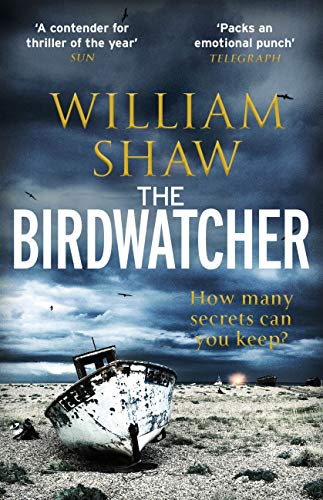
It begins:

There were two reasons why William South did not want to be on the murder team.

The first was it was October. The migrating birds had begun arriving on the coast.

The second was that, although nobody knew, he was a murderer himself.

Also every Friday there is The Friday 56, hosted by Freda at Freda’s Voice.
30879-friday2b56

These are the rules:

  1. Grab a book, any book.
  2. Turn to page 56, or 56% on your eReader. If you have to improvise, that is okay.
  3. Find any sentence (or a few, just don’t spoil it) that grabs you.
  4. Post it.
  5. Add the URL to your post in the link on Freda’s most recent Friday 56 post.

Page 56:

Ferguson said, ‘See, I don’t believe a boy like you would have just stayed in the room with his dad, like that. Not for almost an hour.

The book blurb:

Sergeant William South has always avoided investigating murder. A passionate birdwatcher and quiet man, he has few relationships and prefers it that way.

But when his only friend is found brutally beaten, South’s detachment is tested. Not only is he bereft – it seems that there’s a connection between the suspect and himself.

For South has a secret. He knows the kind of rage that killed his friend. He knows the kind of man who could do it. He knows, because Sergeant William South himself is a murderer.

Moving from the storm-lashed, bird-wheeling skies of the Kent Coast to the wordless war of the Troubles, The Birdwatcher is a crime novel of suspense, intelligence and powerful humanity about fathers and sons, grief and guilt and facing the darkness within.

~~~

I like those opening lines – letting the reader know straight away that South is a murderer and also a policeman. And he is the birdwatcher of the title. Immediately I wanted to know more.

Have read this book? Does it appeal to you?

Top Ten Tuesday: Books I’ve Read But Not Reviewed

Top Ten Tuesday is a weekly meme created by The Broke and the Bookish and now hosted by Jana at That Artsy Reader Girl. For the rules see her blog. This week’s topic is a freebie and I decided to write about – Books I’ve Read But Not Reviewed.

These are all books I read before I began blogging in 2007. I’ve linked them to their pages on the Fantastic Fiction website.

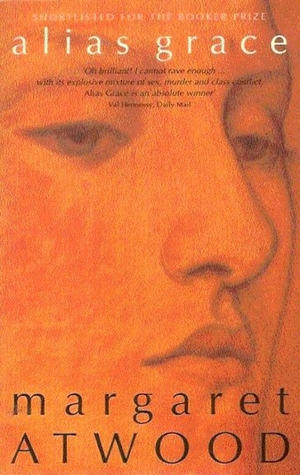
  1. Alias Grace by Margaret Atwood – Did Grace kill her employer Thomas Kinnear and his housekeeper/lover Nancy Montgomery? I couldn’t decide all the way through the book. I’ve enjoyed all of her books that I’ve read so far – this is one of my favourites.
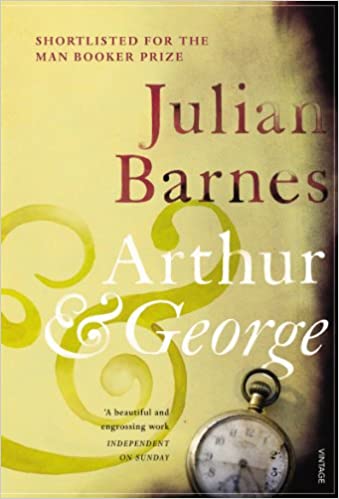
  2. Arthur and George by Julian Barnes – this is based on the true story of Arthur Conan Doyle and George Edalji, a solicitor from Birmingham. I’ve since read a few more of his books.
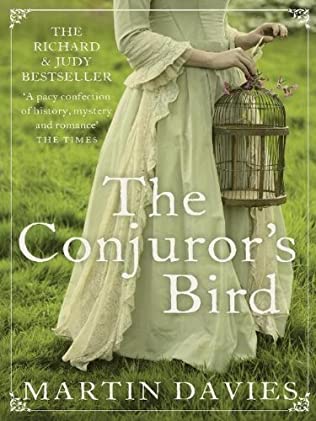
  3. The Conjuror’s Bird by Martin Davies about an extinct bird from Capt Cook’s second voyage, described on Davies’ website as a ‘novel of two narratives – one of the present day and one of the late 18th Century. As the two stories intertwine, the novel unfolds layer after layer of mystery and suspense.’
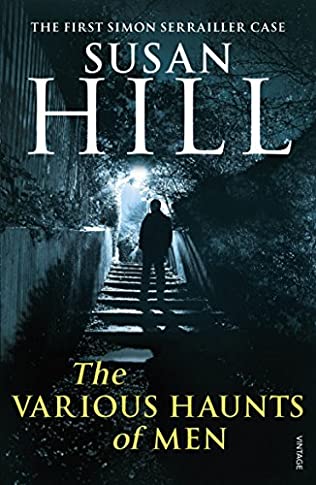
  4. The Various Haunts of Men by Susan Hill – the first book in the Simon Serrailler series. I’ve read seven books in the series – and then decided I’d have enough of them and haven’t read the later books.
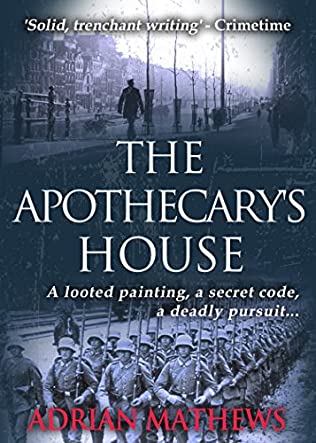
  5. The Apothecary’s House by Adrian Mathews – set in Amsterdam about the history of the piece of looted Nazi art, a painting with a disturbing wartime provenance. Archivist, Ruth Braams at the Rijks Museum, enters a series of increasingly lethal adventures as she investigates its secret symbolism.
  6. Dissolution by C J Sansom – the first in his Tudor murder mystery series featuring Matthew Shardlake. This is set in 1537 – Shardlake investigates the death of a Commissioner during the dissolution of the monasteries. I’ve read all of his subsequent Shardlake books.
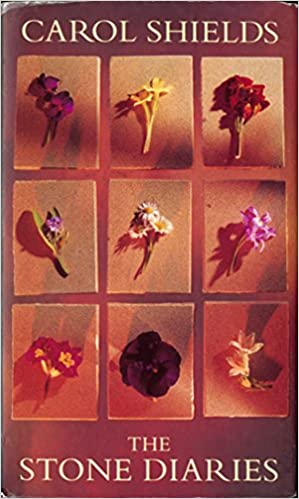
  7. The Stone Diaries by Carol Shields – the story of Daisy Goodwill, from her birth on a kitchen floor in Manitoba, Canada, to her death in a Florida nursing home nearly ninety years later.
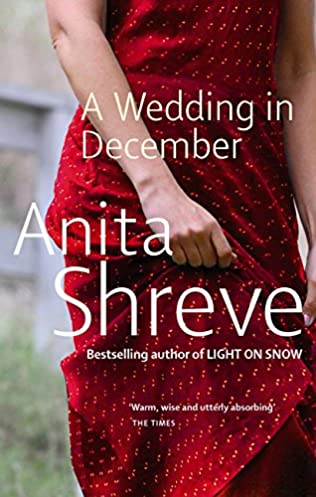
  8. A Wedding in December by Anita Shreve – at an inn in the Berkshire Mountains of western Massachusetts, seven former schoolmates gather for a wedding. It’s an astonishing weekend of revelation and recrimination, forgiveness and redemption. At one time I loved Anita Shreve’s but went off the more recent ones.
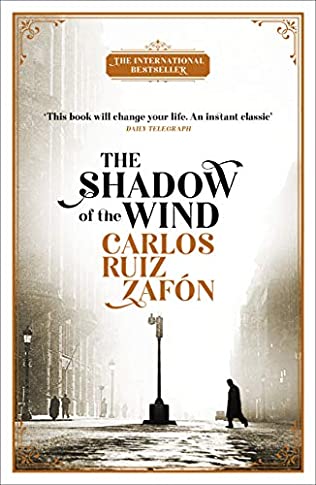
  9. The Shadow of the Wind by Carlos Ruiz Zafron – The discovery of a forgotten book leads to a hunt for an elusive author who may or may not still be alive.
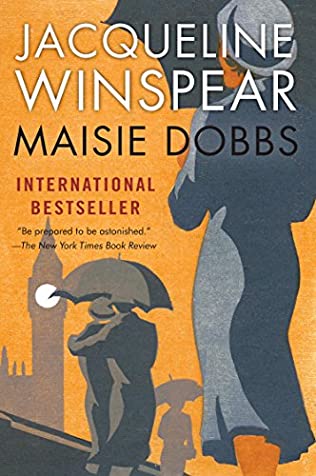
  10. Maisie Dobbs by Jacqueline Winspear – this is the first in the Maisie Dobbs series. In 1929 Maisie set herself up as a private investigator, having started as a maid to the London aristocracy, studied her way to Cambridge and served as a nurse in the Great War. I’ve read a few more of the series since I read this one.

Bookshelf Travelling: 25 July 2020

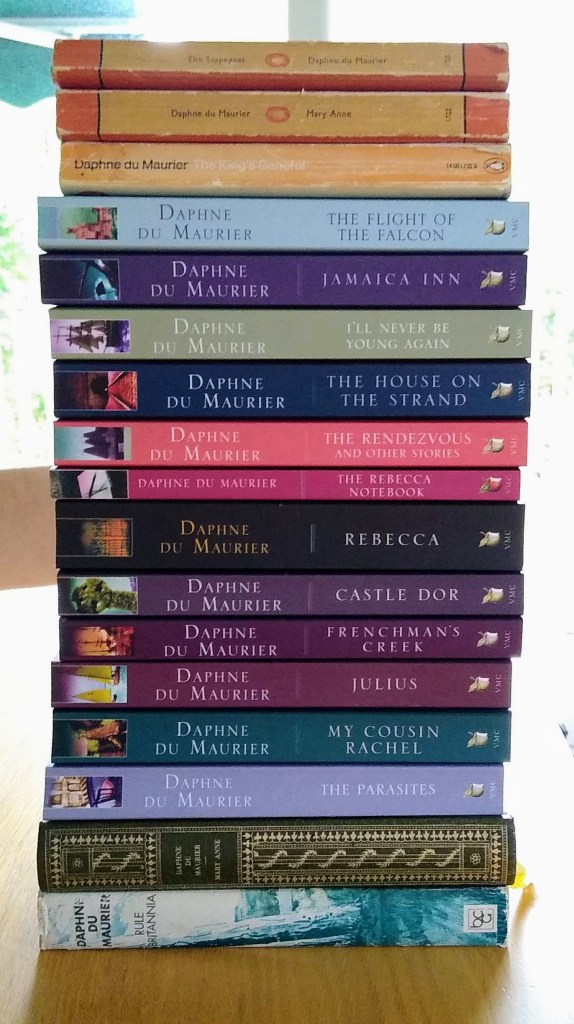
Judith at Reader in the Wilderness hosts Bookshelf Travelling for Insane Times. This week I’ve been looking at my Daphne du Maurier books. It was my mother who suggested I read Rebecca years ago. I loved it and read as many of her books that I could get my hands on. And over the years I’ve collected this pile of her books and also read her biography by Margaret Forster.

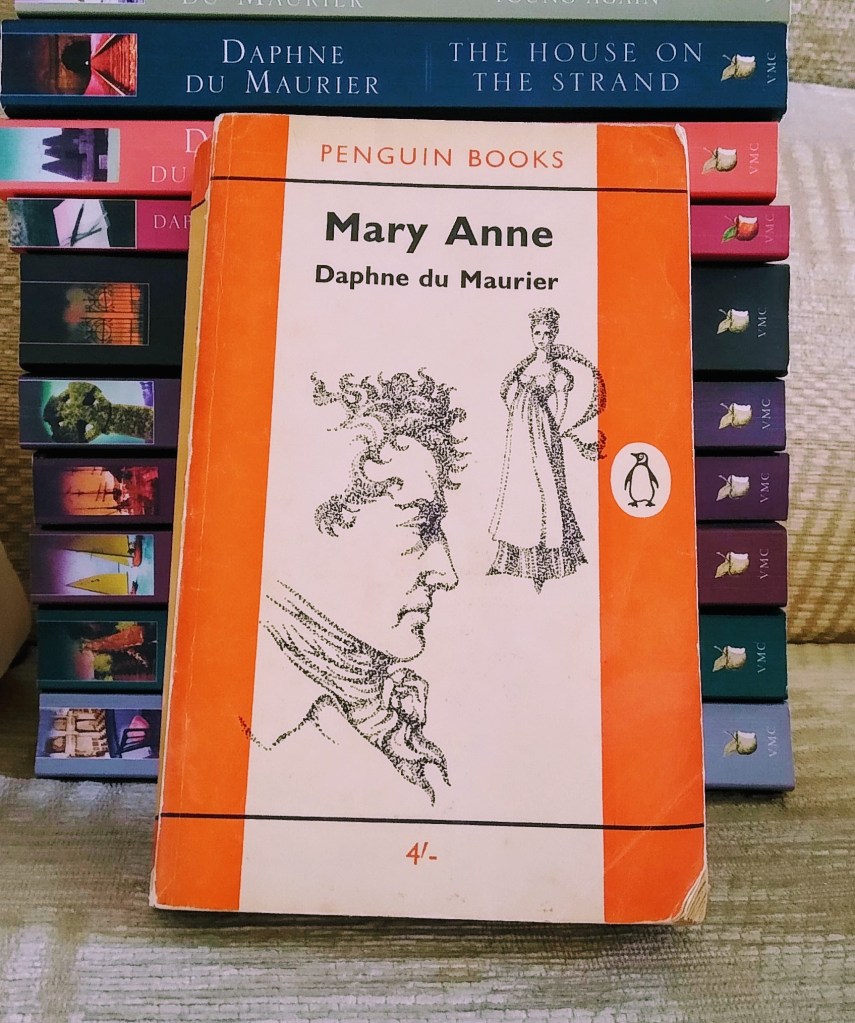
I’m only going to write about one of these books today – Mary Anne, a novel about du Maurier’s great-great-grandmother Mary Anne Clarke, a blend of fact and fiction.

I have a Penguin paperback (the second book from the top) that was published in 1962. This was the copy I read in my teens. And I also have a hardback copy published by Heron Books in 1971 (the second book from the bottom) that I bought a few years ago – it’s in much better condition than my old paperback with its brown, fragile pages.

Mary Anne (1776 – 1852) was born in poverty and became the mistress of the Duke of York, the Commander-in-Chief of the Army during the Napoleonic wars. Actually, as I last read it many years ago I don’t remember the details, just that I really enjoyed it. Looking at it today, I see that at the beginning it looks back at the people who were close to her and what they remembered about her as they came to their deaths.

I love the opening paragraphs:

Years later, when she had gone and was no longer part of their lives, the thing they remembered about her was her smile. Colouring and features were indistinct, hazy in memory. The eyes surely were blue – but they could have been green or grey. And the hair knotted in Grecian fashion or piled high on top of the head in curls, might have been chestnut or light brown. The nose was anything but Grecian – that was a certainty for it pointed to heaven; and the actual shape of the mouth had never seemed important – not at the time, or now.

The essence of what had been was in the smile. …

The rest was forgotten. Forgotten the lies, the deceits, the sudden bursts of temper. Forgotten the wild extravagance, the absurd generosity, the vitriolic tongue. Only the warmth remained, and the love of living. (page 9 in the paperback)

They all died. First her brother, Charles Thompson, followed by William Dowler, ‘faithful to her for 25 years’, a witness at the trial of the Duke of York, then the Duke of York himself, and finally Joseph Clarke her ‘drunken sot’ of a husband.

Mary Anne outlived them all:

But the owner of the smile had the laugh on them, right to the end. She was not a ghost, nor a memory, nor a figment of the imagination seen in a dream long vanished, breaking the hearts of those who had loved her unwisely and too well. At seventy-six, she sat at the window of her house in Boulogne, looking across the Channel to the England that had forgotten all about her. Her favourite daughter was dead, and the second lived in London, and the grandchildren she had nursed as babies were ashamed of her and never wrote. The son she adored had his own life to lead. The men and women she had known had passed into oblivion.

The dreams were all hers. (page 18)

I’d really like to read this book again!

Moonflower Murders by Anthony Horowitz

A labyrinth of clues. A mystery novel hiding a deadly secret. A killer with a fiendish plot: a brilliantly intricate and original thriller from the bestselling author of Magpie Murders

Random House Cornerstone| 20 August 2020| 400 pages| Review copy| 5*

Moonflower Murders is a follow up novel to Magpie Murders. It has the same format – that of a book within the book. Although I don’t think you have to read Magpie Murders first as this stands well on its own merits, I think it would help to know the background and some of the characters if you do.

Susan Ryeland, the main character, has retired as a publisher and is running a small hotel on a Greek island with her long-term boyfriend, Andreas. Their hotel is in debt, they’re in danger of going bankrupt and she is missing her literary life in London. So, when Lawrence and Pauline Trehearn, the owners of an hotel, Branlow Hall in Suffolk visit her and ask if she would investigate the disappearance of their daughter Cecily from their hotel for a fee, she decides to go – and at the same time visit London.

Before she had disappeared Cecily had read Alan Conway’s murder mystery, Atticus Pund Takes the Case, based on a murder that happened at Brownlow Hall eight years earlier. At that time, the evidence against Stefan, the general maintenance man was overwhelming and he was convicted. Cecily was convinced that there was something in the novel that proved Stefan wasn’t responsible for the crime. Unfortunately she hadn’t told anyone what had convinced her. The Trehearnes had read the book, but they couldn’t see any connection, although there are similarities – the characters are clearly based on the people at Brownlow Hall, with the same or similar names.

Susan had published Conway’s books, but thought that if he had indeed discovered that an innocent man was in prison he would have gone straight to the police and not turned it into a novel. But investigating Cecily’s disappearance, she re-reads his book and examines the evidence relating to the murder of eight years ago.

Moonflower Murders combines elements of vintage-style golden age crime novels with word-play, cryptic clues and anagrams. I thoroughly enjoyed trying to work it all out. it – Anthony Horowitz’s style of writing suits me – so easy to read, I whizzed through it, no doubt missing all the intricacies and clues along the way. But it is such an enjoyable way to read – no need to puzzle about the structure, or who is who as the characters all come across as individual people. Of course it’s not a straightforward mystery and along the way I was easily distracted by the red herrings. I thoroughly enjoyed trying to work it all out.

Many thanks to NetGalley and the publishers Cornerstone for an ARC.

WWW Wednesday: 22 July 2020

IMG_1384-0

WWW Wednesday is run by Taking on a World of Words.

The Three Ws are:

 What are you currently reading?
What did you recently finish reading?
What do you think you’ll read next?

The book descriptions are from Amazon.

Currently reading:

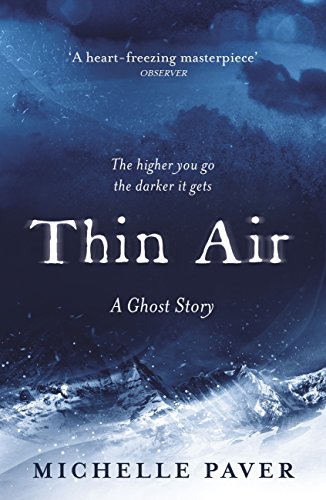
After much deliberation and starting several books from my 20 Books of Summer list I decided to read Thin Air: a Ghost Story by Michelle Paver.

Kangchenjunga. Third highest peak on earth. Greatest killer of them all.

Five Englishmen set off from Darjeeling, determined to tackle the sacred summit. But courage can only take them so far – and the mountain is not their only foe.

As mountain sickness and the horrors of extreme altitude set in, the past refuses to stay buried. And sometimes, the truth won’t set you free. . .

Recently Finished: 

I finished reading The Luminaries yesterday and am still mulling it over. I enjoyed it but I’m not sure I liked the structure, with the length of the chapters decreasing as the story progressed.

It is 1866, and young Walter Moody has come to make his fortune upon the New Zealand goldfields. On the stormy night of his arrival, he stumbles across a tense gathering of twelve local men who have met in secret to discuss a series of unexplained events: A wealthy man has vanished, a prostitute has tried to end her life, and an enormous fortune has been discovered in the home of a luckless drunk. Moody is soon drawn into the mystery: a network of fates and fortunes that is as complex and exquisitely ornate as the night sky.

Reading Next:

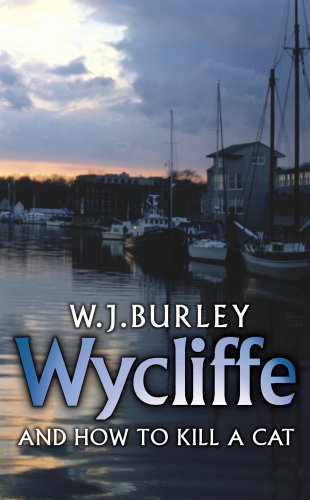
At the moment I think it could be Smallbone Deceased by Michael Gilbert. I wrote about the opening paragraph and included a quotation from page 55 in My Friday post. Ot it could be Wycliffe and How To Kill a Cat by W J Burley. But it might be a different book that takes my fancy when the time comes.

The girl was young, with auburn hair arranged on the pillow. Wycliffe could almost believe she was asleep – that is, until he saw her face. She had been strangled, and someone had brutally smashed her face – but after death, not before… She lay in a seedy hotel room down by the docks, but her luggage, her clothes and her make-up all suggested she had more class than her surroundings.

Superintendent Wycliffe was officially on holiday, but the case fascinated him. Who was the girl? Why was she lying naked in a shabby hotel room? What was she doing with a thousand pounds hidden underneath some clothing? And, above all, why had someone mutilated her after she was dead?

As Wycliffe begins to investigate, he finds there are too many suspects, too many motives – and too many lies . . .

What do you think – which one would you read next?

20 Books of Summer 2020: Update

I’m taking part in 20 Books of Summer, hosted by Cathy at 746 Books. You simply list twenty books (there are also ten and fifteen book options) and read them during the summer months, ending on 1 September.

So far I have read 6 of the books I originally listed. After I began reading The Luminaries by Eleanor Catton, which was not on my original list, I realised that as it has 853 pages there was no way I could read the rest of the books on my list before 1 September. So, I have revised my list – and I make no apologies for the fact that I have chosen books that are short rather than long. Well, The Luminaries is nearly as long as three 300 page length books!

  1. The Deep by Alma Katsu
  2. How to Disappear by Gillian McAllister
  3. The Mist by Ragnar Jonasson
  4. Maigret’s Holiday by Georges Simenon
  5. Deadheads by Reginald Hill
  6. Moonflower Murders by Anthony Horowitz – finished – review to follow
  7. The Luminaries by Eleanor Catton
  8. The Power House by John Buchan
  9. The Inheritance by Louisa May Alcott
  10. Bilgewater by Jane Gardam
  11. How to Kill a Cat by W J Burley
  12. Thin Air by Michelle Paver
  13. The Case of the Gilded Fly by Edmund Crispin
  14. Smallbone Deceased by Michael Gilbert
  15. The Silence Between Breaths by Cath Staincliffe
  16. A Thousand Moons by Sebastian Barry
  17. Giant’s Breath by Mary Westmacott (Agatha Christie)
  18. A Moment of Silence by Anna Dean
  19. Mortmain Hall by Martin Edwards
  20. The Dry by Jane Harper

There is always the possibility that I’ll swap some books later on … I am constantly bombarded by books yelling at me to read them.