which for me is Far from the Madding Crowd by Thomas Hardy. The rules of the Spin are that this is the book for me to read by 30 September, 2020.
My last Spin result was The Return of the Native, which I loved. So I am delighted this time to get another of Hardy’s books to read.
Independent and spirited Bathsheba Everdene has come to Weatherbury to take up her position as a farmer on the largest estate in the area. Her bold presence draws three very different suitors: the gentleman-farmer Boldwood, soldier-seducer Sergeant Troy and the devoted shepherd Gabriel Oak. Each, in contrasting ways, unsettles her decisions and complicates her life, and tragedy ensues, threatening the stability of the whole community. The first of his works set in the fictional county of Wessex, Hardy’s novel of swift passion and slow courtship is imbued with his evocative descriptions of rural life and landscapes, and with unflinching honesty about sexual relationships. (Goodreads)
Did you take part in the Classics Spin? What will you be reading?
As usual I am behind with writing book reviews, but whilst it is still relatively fresh in my mind I’m going to begin catching up with the latest book I read. It’s only short – 108 pages – and I enjoyed it far more than I thought I would.
⭐⭐⭐⭐⭐
Rating: 5 out of 5.
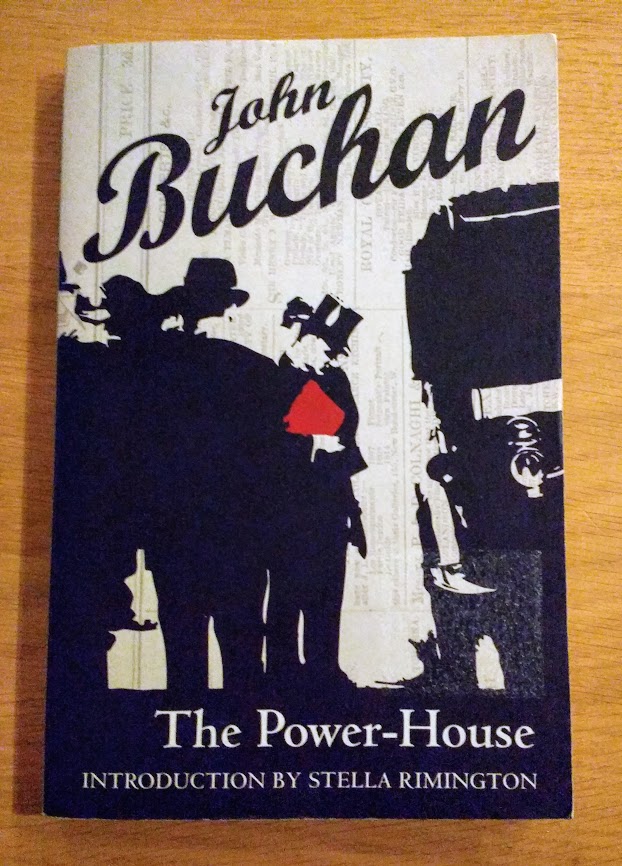
John Buchan’s The Power-House, was written in 1913 when it was serialised in Blackwood’s Magazine and then published in book form in 1916. In her Introduction to the Polygon Books edition Stella Rimington described it as:
Pure essence of Buchan – a demonstration of his magical power to weave a tale out of no materials but the threads and colours of his imagination. It does, however, possess a theme – John Bunyan’s idea, in Pilgrim’s Progress, of men of goodwill and courage struggling with an intelligent, evil power at the root of all the world’s troubles and confessions. (page vii)
The narrator is Edward Leithen, a barrister and MP. His friend and fellow MP Tommy Deloraine tells him is off to Moscow to track down one of their Oxford contemporaries, Charles Pitt-Heron, who had disappeared without letting his wife where he was going. He told her he’d be home for luncheon, but never came back. Whilst Tommy goes off in pursuit of Pitt-Heron, Leithen stays in London, but soon his curiosity draws him into the mystery, because, as he tells himself, ‘every man at the bottom of his heart believes that he is a born detective.’ And so, having collected a few items of information merely by accident and coincidence, he finds the connecting link between them in the person of Andrew Lumley, a wealthy Englishman. Lumley, an elderly man, with menacing, pale eyes, hidden behind his tinted glasses is the key to the whole mystery.
Just as Hannay in Buchan’s later novel, The Thirty-nine Steps, meets the villain Von Schwabing in the library of his country house, so Leithen meets Lumley in his gentleman’s country house, High Ashes, in his library. The two men dine together and then settle themselves in armchairs to smoke cigars and proceed to talk about many things. Leithen is perplexed by him and his speculations on the nature of civilisation, and of power.
I was struck by these thoughts: Lumley states that civilisation is a conspiracy to which Leithen responds that it is in the interests ‘of all the best brains in the world to keep up the conspiracy.‘ To which Lumley replies:
Do we really get the all the best brains working on the side of the compact? Take the business of Government. When all is said, we are ruled by amateurs and the second-rate. The methods of our departments would bring any private firm to bankruptcy. The methods of Parliament – pardon me – would disgrace any board of directors. Our rulers pretend to buy expert knowledge, but they never pay the price of it that a business man would pay, and if they get it they have not the courage to use it. (pages 33 -34)
Lumley continues in this vein and concludes that what is needed is some sort of Power-House to start the ‘age of miracles‘. Leithen is unsettled, to say the least, by his talk and his ‘eerie persuasiveness’.
From an somewhat slow start and a middle consisting mainly of conversation, the novel then picks up pace dramatically. Just as in The Thirty-nine Steps when Hannay goes on the run, fearing for his life, over the moors, so Leithen, in danger of his life, flees his pursuers through the streets of London, as he is lured in deserted buildings, taxis and a decidedly dodgy restaurant. He realises how thin the protection of civilisation is and how there were dozens of ways of spiriting him out of ‘this gay, bustling world‘, alone in a crowd with no one to help him, only his own wits.
Buchan tells a good story, even if I had little idea what the Power-House really was. It’s an international anarchist network, but who they were, what they were actually after, or how they hoped to achieve their ends was never clear to me. But I really enjoyed this book. As Stella Rimington says it has an ‘intoxicating blend of madness with scents of home and countryside.’ And
… the thinness of the crust of civilisation, whatever that may be these days, is as relevant in our time as it was when Buchan was writing in the early war-torn years of the twentieth century. (page xi)
What are you currently reading? What did you recently finish reading? What do you think you’ll read next?
Currently reading:
The Birdwatcher by William Shaw and it’s looking good so far. Police Sergeant William South is investigating the murder of his friend and neighbour Bob Rayner. It’s set in Dungeness on the Kent coast, a bleak landscape of gravel pits towered over by lighthouses and a nuclear power station and the story moves between the present day and South’s childhood. I have a strong feeling that I’ll be reading more of William Shaw’s books in the future.
Recently Finished:
I finished reading The Power-House by John Buchan yesterday. I really enjoyed it. I’ll post my review shortly.
When his friend Charles Pitt-Heron vanishes mysteriously, Sir Edward Leithen is at first only mildly concerned. But a series of strange events that follow Pitt-Heron’s disappearance convinces Leithen that he is dealing with a sinister secret society. Their codename is ‘The Power-House’. The authorities are unable to act without evidence. As he gets deeper involved with the underworld, Leithen finds himself facing the enemy alone and in terrible danger.
Reading Next:
I’m not sure at the moment. It ‘should’ be His and Hers by Alice Feeney, because it’s the book I’ve had the longest on my NetGalley shelf and it’s making me feel guilty that I haven’t read it yet.
When a woman is murdered in Blackdown village, newsreader Anna Andrews is reluctant to cover the case. Anna’s ex-husband, DCI Jack Harper, is suspicious of her involvement, until he becomes a suspect in his own murder investigation.
Someone is lying, and some secrets are worth killing to keep.
Top Ten Tuesday is a weekly meme created by The Broke and the Bookish and now hosted by Jana at That Artsy Reader Girl. For the rules see her blog. This week’s topic is
Books With Colours in the Titles.
These are all books I really enjoyed reading.
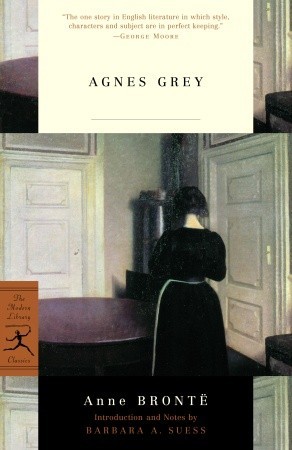
Agnes Grey by Anne Bronte like Jane Eyre, Agnes is a governess and this is the story of her experiences working for two families in Victorian England.
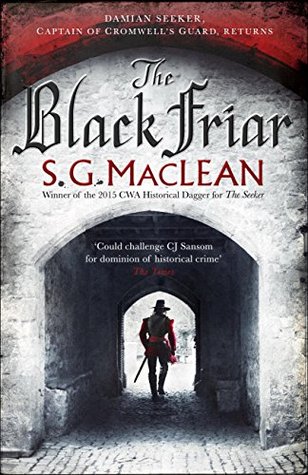
The Black Friar – the second book in the Damian Seeker series, historical crime fiction set in 1655 during the Interregnum under Oliver Cromwell, the Lord Protector. Damian Seeker is the Captain of Cromwell’s Guard.
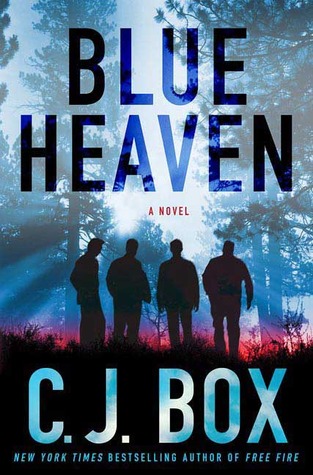
Blue Heaven by C J Box – set in North Idaho this a story about two children, Annie and William who decide to go fishing without telling their mother, Monica, and witness a murder in the woods. One of the killers sees them and they run for their lives.
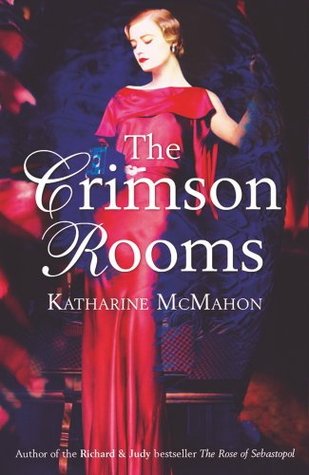
The Crimson Rooms by Katharine McMahon – set in London in 1924, Evelyn Gifford is one of the few pioneer female lawyers. It’s early days for women to be accepted as lawyers and this novel clearly shows the prejudice these women had to overcome
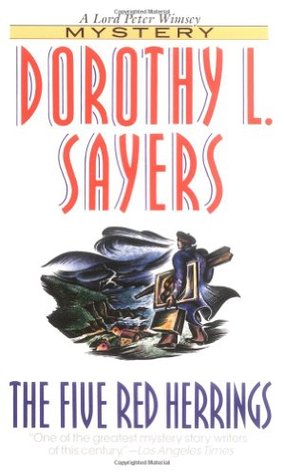
Five Red Herrings by Dorothy L Sayers – a Lord Peter Wimsey mystery in which he investigates the death of a landscape painter and fisherman who was found dead in a burn near Newton Stewart.
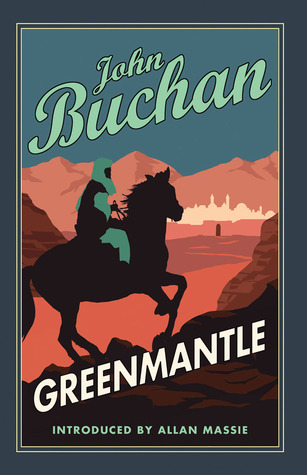
Greenmantle by John Buchan – this is basically an adventure and spy story with a highly improbable plot. It’s pure escapism.
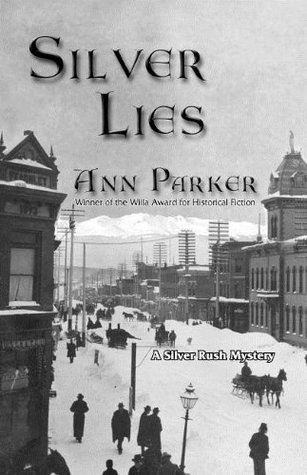
Silver Lies by Ann Parker – historical crime fiction set in 1879/80 in the silver-mining town of Leadville, Colarado in the heart of the Rocky Mountains. Joe Rose, a silver assayer, is found dead in Tiger Alley propped up behind the Silver Queen saloon.
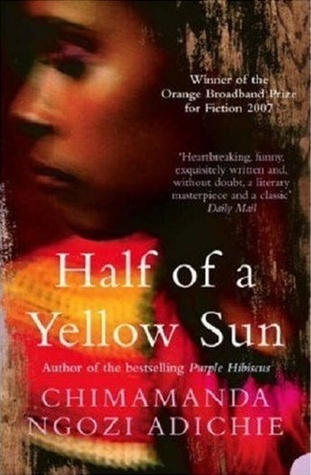
Half of a Yellow Sun by Chimamanda Ngozi Adichie, based on the Nigeria-Biafra War of 1967 – 70 this focuses on the struggle between the north and the south, the Igbo, Yoruba and Hausa people.
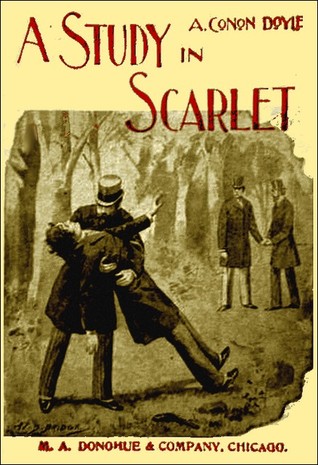
A Study in Scarlet by Arthur Conan Doyle Sherlock Holmes and Dr Watson investigate the murder of Enoch J Drebber, an American found dead in the front room of an empty house at 3 Lauriston Gardens, off the Brixton Road, with the word “RACHE” scrawled in blood on the wall beside the body. The TV version A Study in Pink in the Sherlock series, which although very different in some respects is surprisingly faithful to the book in others.
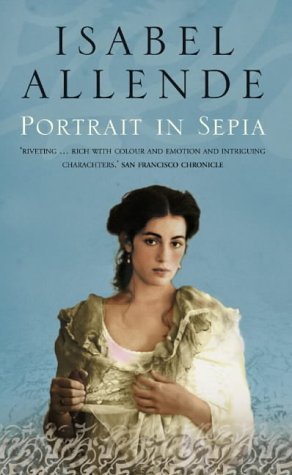
Portrait in Sepia by Isabel Allende – Aurora is the narrator and this is the story of her family. After giving details of her birth, in 1880 in San Francisco in the Chinese quarter, she goes back to 1862 beginning her story with details about her grandparents.
It’s easy. At your blog, before next Sunday 9th August 2020, create a post that lists twenty books of your choice that remain “to be read” on your Classics Club list.
This is your Spin List. You have to read one of these twenty books by the end of the spin period. On Sunday 9th August, the Classics Club will post a number from 1 through 20. The challenge is to read whatever book falls under that number on your Spin List by 30th September, 2020.
I have just 7 books left on my list, so I’ve repeated the list twice (minus the 7th book for second repeat).
8, 15 The Riddle of the Third Mile by Colin Dexter
9, 16 Little Dorrit by Charles Dickens
10, 17 Parade’s End by Ford Maddox Ford
11, 18 Far from the Madding Crowd by Thomas Hardy
12, 19 Love in the Time of Cholera by Gabriel Garcia Marquez
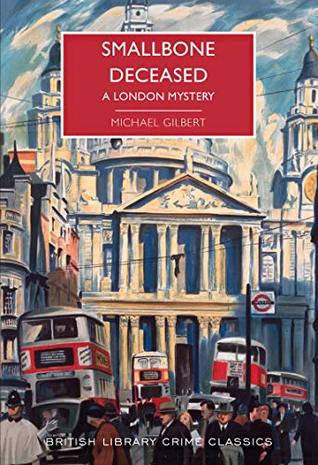
Smallbone Deceased by Michael Gilbert, first published in 1950, was his fourth Inspector Hazelrigg novel. It’s the first one I’ve read, although I have read two of his other books. There is an excellent introduction by Martin Edwards, which gives details of Gilbert’s career as a a solicitor and as a mystery writer. He wrote 30 novels and 185 short stories, as well as work for radio, television and stage.
As the title tells you Smallbone is dead. He was one of the trustees of the Ichabod Stokes Trust together with Abel Horniman, the senior partner of a London law firm, Horniman, Birley and Craine. After the recent death of Abel, whilst looking for the deeds relating to the Trust, Marcus Smallbone’s body was discovered in the Trust’s deed box, a large, hermetically sealed box.
Inspector Hazelrigg runs the police investigation. It’s obviously an inside job and with the help of Henry Bohun, a newcomer to the firm, the police investigate each of the suspects until by process of elimination the culprit is identified. Of course it’s not that straight forward, as each person’s motive, opportunity and alibi is considered and there are a number of red herrings that did baffle me a little. There is rather too much detail about the finances of the firm for my liking, but apart from that the book moves along swiftly.
The setting in the solicitors’ office after the end of the Second World War is well done and reflects the differences between the male professionals and the female admin staff with their intrigues, rivalries and flirtations. I think Bohun is the most interesting character, although they are all individually distinguishable. Bohun is not just new to the firm, but also a newly qualified solicitor. He has para-insomnia and never gets a full night’s sleep, averaging about ninety minutes a night. It doesn’t make him feel tired, but means he has lots of time to help Inspector Hazelrigg and still carry out his job, as well as doing a good deal of reading, walking the streets and even working as a night watchman. It’s written with a light touch and a sense of humour and I enjoyed it very much.
Now, I’d like to read more of Gilbert’s work, maybe starting with some of his short stories as Bohun appeared in nine short stories and also in a six-part radio thriller and Hazelrigg featured in nineteen short stories as well as in six novels.
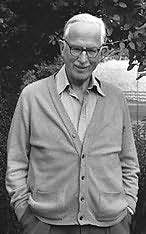
Michael Gilbert
Michael Gilbert (1912-2006) wrote thrillers, police procedurals and espionage novels that rank among the highest and most varied achievements of British crime writing in the second half of the twentieth century. A founding member of the Crime Writers’ Association, Gilbert was for many years partner in a London law firm and drew on his knowledge of the law in writing his most acclaimed novel. For more information about Michael Gilbert see this article by Martin Edwards.
Format: Kindle Edition File Size: 5145 KB Print Length: 236 pages Page Numbers Source ISBN: 0755119193 Publisher: British Library Publishing (22 Jan. 2019) Source: I bought it






 BooksPlease