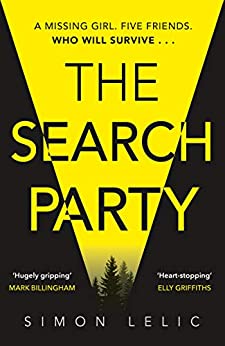
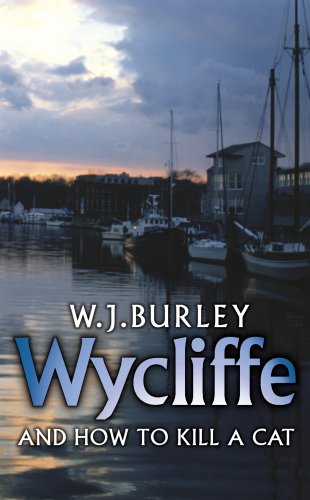
A Thousand Moons by Sebastian Barry

Faber and Faber Ltd/ 19 March 2020/ 256 pages/ Kindle edition/ 5*

Three years ago I read Sebastian Barry’s Days Without End which has to be one of the best books I’ve read, so I began reading A Thousand Moons with great anticipation of a good read. I wasn’t disappointed and I loved it. It continues the story of Thomas McNulty and John Cole, and Winona, the young Indian girl they had adopted. It really helps if you have read Days Without End first to understand the characters’ history and relationships and how they got to this stage in their lives.

Winona is a young Lakota orphan adopted by former soldiers Thomas McNulty and John Cole.
Living with Thomas and John on the farm they work in 1870s Tennessee, she is educated and loved, forging a life for herself beyond the violence and dispossession of her past. But the fragile harmony of her unlikely family unit, in the aftermath of the Civil War, is soon threatened by a further traumatic event, one which Winona struggles to confront, let alone understand.

They are living and working on a farm owned by Lige Magan in Tennessee, about seven miles from a little town called Paris. It is now the 1870s, some years after the end of the Civil War, but the town was still full of rough Union soldiers and vagabonds on every little byway. Dark skin and black hair were enough to get you beaten up – and it wasn’t a crime to beat an Indian. Life wasn’t any better for the other two workers on the farm, black ex-slaves, Rosalee Bouguereau and her brother, Tennyson. These are dangerous times not just in the town but also in the woods outside the town from Zach Petrie’s gang of ‘nightriders’.

Winona remembers little of her early life, beyond seeing in the back of her mind a ‘blackened painting’ of blood and screaming, bayonets, bullets, fire and death. But their lives are full of love at the farm; Winona is loved as a daughter by Thomas and John, who are themselves lovers. She works for lawyer Briscoe as his clerk and ventures into town for supplies, which was where she met Jas Jonski, a young man who declares he wants to marry her. At first she hopes that she might very much like to marry Jas. But, then things go disastrously wrong. First racism rears its ugly head as Jas is white and the Paris townspeople began to talk. As his employer said he thought Jas had gone mad or wicked in some way – ‘to want to go marrying something closer to a monkey than a man’ was how he put it.

And then came the dreadful day when Winona was brutally attacked so badly that she shook for two weeks and something deep within her was shaking a long time after. She can’t remember at first what had actually happened to her, except that she was plied with ‘distillery whiskey’, nor who had carried out the assault. But all the signs pointed to Jas Jonski. Then Tennyson Bouguereau was also attacked, and their peaceful happy life was shattered. Winona set out for revenge. And in so doing she began to remember more about her early life and about her mother, a strong Lakota woman, full of courage and pride.

‘A thousand moons’ was her mother’s deepest measure of time. To her time was ‘a kind of hoop or a circle not a long string and if you walked far enough she said you could find the people still living in the long ago’ – ‘a thousand years all at once’. As she sets off on her quest it is the thought of her mother’s courage that enabled Winona to find her own courage – the ‘courage of a thousand years’.

I just love everything about this book, so beautifully written, rendering the way the characters speak so that I could hear them, and describing the landscape so poetically and lyrically that the scenes unfolded before my eyes; and the characters too, all real people from the American West of the 1870s, as though I was there in their midst. It would make a superb film.

Sebastian Barry

Photo credit: ©Alan Betson, The Irish Times

Sebastian Barry was born in Dublin in 1955. His novels and plays have won, among other awards, the Kerry Group Irish Fiction Prize, the Costa Book of the Year award, the Irish Book Awards Best Novel, the Independent Booksellers Prize and the James Tait Black Memorial Prize. He also had two consecutive novels, A Long Long Way (2005) and The Secret Scripture (2008), shortlisted for the MAN Booker Prize. He lives in Wicklow with his wife and three children.

My thanks to Faber and Faber Ltd for my copy of this book, via NetGalley.

Top Ten Tuesday: Books That Should Be Made into Movies

Books That Should Be Made into Movies

The Year Without Summer: 1816 by Guinevere Glasfurd – the story of six people whose lives were affected by the volcanic eruption of Mount Tambora on Sumbawa Island in Indonesia in 1815. A disaster movie.

The Lost Man by Jane Harper. A murder mystery set in the Queensland outback, a huge and isolated territory, red earth stretching for hundreds of miles, with its unbearable heat, dust and, at times, the threat of flood. A body is found lying at the the base of the headstone of a stockman’s grave – a headstone standing alone, a metre high, facing west, towards the desert, in a land of mirages. A spectacular setting!

The Animals at Lockwood Manor by Jane Healey – this would make an good alternative World War Two movie with a strange story about taxidermy collection moved from London to a country manor house. It struck me as I was reading it that it would make an excellent film or TV drama as one after another, some of the animals go missing or are mysteriously moved from their positions in the long gallery.

The Deep by Alma Katsu – a story of the Titanic in 1912 as it sets sail on its ill-fated voyage and its sister ship the Britannic in 1916, converted to a hospital as it picks up soldiers injured in the battlefields of World War One. I think this would make an eerie, creepy film full of atmosphere of terror and disaster.

The Plague Charmer by Karen Maitland, a fascinating medieval tale full of atmosphere and superstition. It’s set in Porlock Weir in 1361 where a village is isolated by the plague when the Black Death spreads across England. It’s a tale of folklore, black magic, superstition, violence, torture, murder, and an apocalyptic cult – and also of love. There’s a colourful cast of characters from Will, a ‘fake’ dwarf, Sara, a packhorse man’s wife and her family, to Matilda, a religious zealot. It would make a terrific movie.

The Last Day by Andrew Hunter Murray – A dystopian thriller set in a world which has spun to a halt, bringing civilisation to the brink of collapse. Chaos followed, earthquakes, volcanic eruptions and gales swept the earth’s surface.

The Watchmaker of Filigree Street by Natasha Pulley – a steampunk novel set in Victorian times, both in London and Japan, with colourful characters including clockwork inventions, in particular Katsu, the clockwork octopus. I’d love to see this as a film.

See What I have Done by Sarah Schmidt – a re-imagining of the unsolved American true crime case of the Lizzie Borden murders, this would make a horror film. So terrifying I don’t know that I bear to watch it though.

The Ashes of London by Andrew Taylor – about the Great Fire of London in 1666, complete with a murder mystery. This would make a spectacular movie as the fire roared through the 17th century streets of Charles II’s London.

Another historical crime fiction series of books I’d like to see as either a TV series or a film is C J Sansom’s Shardlake novels set in the reign of Henry VIII in the 16th century. There are seven books, beginning with Dissolution set in 1537 at the time of the dissolution of the monasteries.

My Friday Post: Giant’s Bread by Mary Westmacott (Agatha Christie)

Every Friday Book Beginnings on Friday is hosted by Gillion at Rose City Reader where you can share the first sentence (or so) of the book you are reading. You can also share from a book you want to highlight just because it caught your fancy.

Giant’s Bread is by Agatha Christie, writing as Mary Westmacott. It’s one of the books on my 20 Books of Summer list. She wrote six novels under this pseudonym – Giant’s Bread was the first one, published in 1930. In the same year she also published The Mysterious Mr Quin and, Murder at the Vicarage – Miss Marple’s first book. 

It begins with a Prologue:

It was the opening night of London’s new National Opera House and consequentially an occasion. Royalty was there. The Press were there. The fashionable were there in large quantities. Even the musical, by hook or by crook, had managed to be there – mostly very high up in the final tier of seats under the roof.

They were there to see the performance of a new musical composition called Giant’s Bread.

And chapter one begins:

There were only three people of real importance in Vernon’s world: Nurse, God and Mr Green

Also every Friday there is The Friday 56, hosted by Freda at Freda’s Voice. *Grab a book, any book. *Turn to Page 56 or 56% on your  ereader . If you have to improvise, that is okay. *Find a snippet, short and sweet, but no spoilers!
These are the rules:

  1. Grab a book, any book.
  2. Turn to page 56, or 56% on your eReader. If you have to improvise, that is okay.
  3. Find any sentence (or a few, just don’t spoil it) that grabs you.
  4. Post it.
  5. Add the URL to your post in the link on Freda’s most recent Friday 56 post.
  1. Grab a book, any book.
  2. Turn to page 56, or 56% on your eReader. If you have to improvise, that is okay.
  3. Find any sentence (or a few, just don’t spoil it) that grabs you.
  4. Post it.
  5. Add the URL to your post in the link on Freda’s most recent Friday 56 post.

Page 56:

Poor Myra, She’d had a rotten deal on the whole. A fine looking creature, but he’d married her really for the sake of Abbots Puissants – and she had married him for love. That was the root of the whole trouble.

Blurb from Goodreads:

Vernon Deyre is a sensitive and brilliant musician, even a genius, tormented and driven by forces even he didn’t understand. His sheltered childhood in the home he loves has not prepared Vernon for the harsh reality of his adult years, and in order to write the great masterpiece of his life, he has to make a crucial decision with no time left to count the cost. But there is a high price to be paid for his talent, especially by his family and the two women in his lifee – the one he loves and the one who loves him.

Young Nell Vereker had always loved Vernon, loved him with a consuming passion that was alien to the proper social world in which she lived. But when Vernon sought solace in the arms of Jane Harding, a stranger and enigmatically beautiful older woman, Nell felt she could endure no greater pain. But Fate had only begun to work its dark mischief on this curious romantic triangle — for before their destinies were sealed, one would live, one would die, and one would return from the grave to be damned…

~~~

Mary was Agatha’s second name and Westmacott the name of some distant relatives. She succeeded in keeping her identity as Mary Westmacott unknown for nearly twenty years and the books, much to her pleasure, were modestly successful.

The Second Sleep by Robert Harris

Rating: 4 out of 5.

I decided to read The Second Sleep because I enjoy Robert Harris’ books and when I saw him on a TV programme talking about this book I thought it sounded interesting and a bit different. I’m glad I did because I thoroughly enjoyed most of it – it was the ending that I felt was rather flat.

I read it at the end of June and I wish I’d written about it straight away – but I didn’t, it got left because I’ve been finding it difficult to concentrate on writing reviews. So, this is one of my catching up posts that can’t do justice to the books. But, I really do think that you should go into reading this book with an open mind, without knowing too much about it.

The blurb certainly made me want to read it:

Dusk is gathering as a young priest, Christopher Fairfax, rides across a silent land.

It’s a crime to be out after dark, and Fairfax knows he must arrive at his destination – a remote village in the wilds of Exmoor – before night falls and curfew is imposed.

He’s lost and he’s becoming anxious as he slowly picks his way across a countryside strewn with the ancient artefacts of a civilisation that seems to have ended in cataclysm.

What Fairfax cannot know is that, in the days and weeks to come, everything he believes in will be tested to destruction, as he uncovers a secret that is as dangerous as it is terrifying …

As I began reading I had that feeling that this is a book I was going to enjoy – historical fiction, with a mystery to it as well. There is something not quite right about Faifax’s mission as he approaches that remote village in the dark, something menacing and dangerous. The signs are all there – a cataclysmic disaster and a terrifying secret await him when he reaches that village.

But then – all is not as it first appears and I wondered if all this is a smoke screen – what is really going on, is this really the medieval England I’ve read about in history books? And here it is – the nub of the matter – what is going on, where and when are these events taking place? This is an imagined world, a piece of speculative fiction, a bleak and brutal world under a strict authoritarian rule. It’s about progress, or lack of it, about the rule of law, and the power of knowledge.

As I expect in Harris’ novels, apart from that abrupt ending, it is paced well, as more and more information about this strange time and place are revealed the tension rises and rises. The characters became real to me and I could easily visualise all the scenes – in other words I was gripped and involved in the story. So, it was with a sense of an anti-climax that I reached the ending – was that it? I wanted to know more. Even so, I can say that this is a book I thoroughly enjoyed and I think I’d like to re-read it sometime, prepared for the ending.

I was interested in the title, the second sleep, referring to the characters’ sleep pattern of having a period of wakefulness of a couple of hours in the middle of the night and then returning to bed for a second period of sleep. I wondered if that was historical fact – these days it’s not considered to be good to have a broken sleep pattern. It was – I found this BBC article, which explains there is a wealth of historical evidence that humans used to sleep in two distinct chunks and that during the waking period people were quite active – as they are in this book. They often got up, went to the toilet or smoked tobacco and some even visited neighbours. Most people stayed in bed, read, wrote and often prayed. Countless prayer manuals from the late 15th Century offered special prayers for the hours in between sleeps.

  • Format: Kindle Edition
  • File Size: 2384 KB
  • Print Length: 330 pages
  • Publisher: Cornerstone Digital (5 Sept. 2019)
  • Source: I bought it

WWW Wednesday: 12 August 2020

IMG_1384-0

WWW Wednesday is run by Taking on a World of Words.

The Three Ws are:

 What are you currently reading?
What did you recently finish reading?
What do you think you’ll read next?

This week I’m doing this in a different order as after I finished the last book I read I haven’t been able to decide what to read next.

So this a combination of what I might read currently and in the future.

I’ve dipped into a few books these last few days:

Would you recommend any of these books?

  • Bilgewater by Jane Gardam – described on the back cover as ‘One of the funniest, most entertaining, and most unusual stories about young love.’ I loved Old Filth some years ago.
  • When Christ and His Saints Slept by Sharon Penman – the first book in the Eleanor of Aquitaine trilogy. Historical fiction about Stephen and his cousin, the Empress Maude, and the long fight to win the English throne. Penman’s The Sunne in Splendour is one of my absolute favourites.
  • For the Record by David Cameron – described in the blurb: ‘The referendum on Britain’s membership of the EU is one of the most controversial political events of our times. For the first time, the man who called that vote talks about the decision and its origins, as well as giving a candid account of his time at the top of British politics.‘ I’m not sure he’ll really be candid!
  • A Thousand Moons by Sebastian Barry – the sequel to Days Without End, which I loved. This is about Winona, a young Lakota orphan adopted by former soldiers Thomas McNulty and John Cole. I watched Barry’s talk on Sunday as part of the Borders Book Festival online. From what I’ve read so far I’m not hooked yet.
  • A Room Made of Leaves by Kate Grenville – inspired by the real life of a remarkable woman, Elizabeth Macarthur, who travelled to Australia with her husband and their infant son in 1790. I love her books.

Recently Finished: 

The last book I read was His and Hers by Alice Feeney and I posted my review on Saturday.

It’s a standalone psychological thriller. I was utterly gripped by it and compelled to read it, puzzled and amazed by the cleverness of the plot. But it’s not a comfortable read, dark and twisted with some gruesomely graphic scenes that I read very quickly!

Mortmain Hall by Martin Edwards

a perfect crime

Rating: 4 out of 4.

Mortmain Hall by Martin Edwards is the sequel to Gallows Court. Both books are set in 1930 in London and reflect Martin Edwards’ fascination with that period in history and his love of Golden Age detective fiction.

1930. A chilling encounter on London’s Necropolis Railway leads to murder and a man escapes the gallows after a witness gives sensational evidence. After this string of strange, fatal events, journalist Jacob Flint discovers that he has been framed for murder. To save himself, he flees to Mortmain Hall, a remote estate on the northern coast. There, an eccentric female criminologist hosts a gathering of eclectic people who have all escaped miscarriages of cruel justice. This strange group puts Jacob a little on edge, but they may be his only hope to clear his name.

When a body is found beneath the cliffs near the house, it seems this gathering might be an ingenious plot to get away with murder. Are these eccentrics victims or are they orchestrators of the great deception? Jacob must now set out to uncover the labyrinthine of secrets within Mortmain Hall, alongside Rachel Savernake, woman whose relentless quest for the truth might just bring down the British establishment…

This is one of those books that I find difficult to review – it is complex with several plot lines. So, I’m going to be brief. It begins most unusually with an Epilogue in which Rachel Savernake is talking to a dying man about a ‘perfect crime’ and asks him what had happened at Mortmain Hall. Then chapter one begins with this strange statement, ‘The ghost climbed out of a hackney carriage‘ and I was hooked. Rachel followed the ‘ghost’ as he entered a funeral train run by the London Necropolis Company for privileged first-class passengers. What was going on?

The novel moves on to a scene in the Old Bailey where Jacob Flint, a journalist is watching the trial of Clive Daneskin, accused of murder. After the trial he meets Leonora Dobell, a mysterious woman. Then the book gets very detailed, as more murder cases were described at length and I couldn’t see, at first, how they were connected, or how Mortmain Hall came into the story. But then I thought about the Epilogue and I realised that this is a book about ‘a perfect crime’, so I persevered and eventually it all became much clearer.

And there is further clarification when you reach the end of the book where the Epilogue, in its right place, is continued, followed by a chapter called Cluefinder, in which Martin Edwards lists 30 clues in the narrative, in the tradition of the Golden Age detective novels. Mortmain Hall is not a quick read because it is so detailed, but I did enjoy it.

Mortmain Hall was first published in the UK by Head of Zeus in April 2020 and is scheduled to be published in the US by Poisoned Pen Press on 20 September 2020. My thanks to Poisoned Press and NetGalley for a review copy.