I’m linking up today with Davida @ The Chocolate Lady’s Book Review Blog for Throwback Thursday. It takes place on the Thursday before the first Saturday of every month (i.e., the Thursday before the monthly #6Degrees post). The idea is to highlight one of your previously published book reviews and then link back to Davida’s blog.
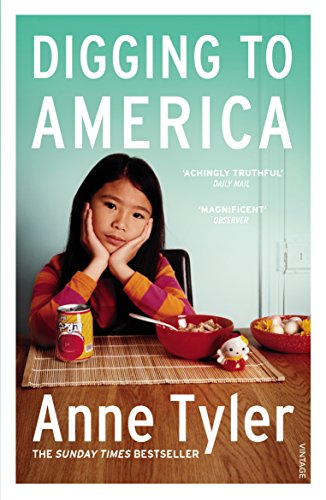
This is my first Throwback Thursday post and I’ve decided to start with one of my first book reviews – Digging to America by Anne Tyler, posted on June 20 2007.
This is the first paragraph:
I’m so glad I’ve read Digging to America. I’d been resisting reading it because when I first heard about I just didn’t like the sound of it; I think what put me off were the names of some of the characters, particularly Bitsy who came over to me as a know-it-all bossy woman. It just shows you shouldn’t make snap judgements like that.
After I read this I intended to read more of Anne Tyler’s books – but I didn’t!
There are plenty to choose from. She’s written twenty novels. In 1989 she won the Pulitzer Prize for Breathing Lessons; in 1994 she was nominated by Roddy Doyle and Nick Hornby as ‘the greatest novelist writing in English’; in 2012 she received the Sunday Times Award for Literary Excellence; and in 2015 A Spool of Blue Thread was a Sunday Times bestseller and was shortlisted for the Baileys Women’s Prize for Fiction and the Man Booker Prize. Her latest book is Redhead by the Side of the Road, which was longlisted for the Booker Prize 2020.
What are you currently reading? What did you recently finish reading? What do you think you’ll read next?
The Three Ws are:
What are you currently reading? What did you recently finish reading? What do you think you’ll read next?
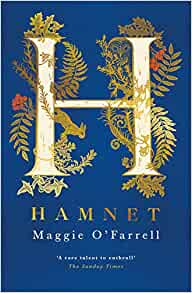
I’m currently readingHamnet by Maggie O’Farrell and am surprised that I’m not feeling enthusiastic about it; surprised because I’ve enjoyed her earlier books and Hamnet won the Women’s Prize for Fiction this year. It looks just the sort of book I usually enjoy. It’s historical fiction, set in Elizabethan England and it is beautifully written.
It has a strange, fairy-tale feel and I’m finding hard to settle into this book. I don’t feel involved. I feel I’m on the outside looking on from a distance. I think it’s O’Farrell’s use of the present tense, but I’m hoping I’ll feel more involved as I read on.
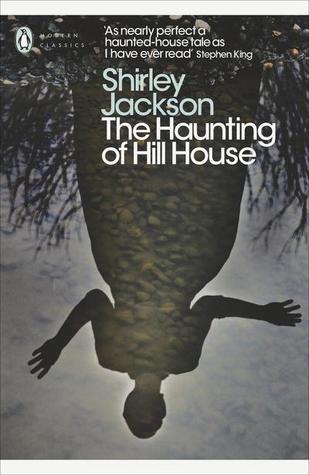
The last book I read was The Haunting of Hill House by Shirley Jackson, a disturbing novel to say the least. My review will follow. For now here is the description from Goodreads:
Four seekers have arrived at the rambling old pile known as Hill House: Dr. Montague, an occult scholar looking for solid evidence of psychic phenomena; Theodora, his lovely and lighthearted assistant; Luke, the adventurous future inheritor of the estate; and Eleanor, a friendless, fragile young woman with a dark past. As they begin to cope with chilling, even horrifying occurrences beyond their control or understanding, they cannot possibly know what lies ahead. For Hill House is gathering its powers – and soon it will choose one of them to make its own.
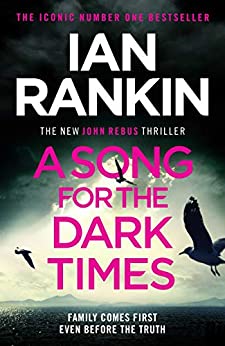
Reading Next: I’m really looking forward to reading A Song for the Dark Times by Ian Rankin, published tomorrow, his latest Rebus novel.
When his daughter Samantha calls in the dead of night, John Rebus knows it’s not good news. Her husband has been missing for two days.
Rebus fears the worst – and knows from his lifetime in the police that his daughter will be the prime suspect.
He wasn’t the best father – the job always came first – but now his daughter needs him more than ever. But is he going as a father or a detective?
As he leaves at dawn to drive to the windswept coast – and a small town with big secrets – he wonders whether this might be the first time in his life where the truth is the one thing he doesn’t want to find…
The topic this week is Favourite Book Quotes. At first I didn’t think I would tackle this topic, with so many to choose. But in the end I came up with the following quotations from just three authors.
First from Roger Deakin, Wildwood: A Journey through Trees, a book about Deakin’s journeys through a wide variety of trees and woods in various parts of the world.
“To enter a wood is to pass into a different world in which we ourselves are transformed. It is no accident that in the comedies of Shakespeare, people go into the greenwood to grow, learn and change. It is where you travel to find yourself, often, paradoxically , by getting lost. Merlin sends the future King Arthur as a boy into the greenwood to fend for himself in The Sword in the Stone. There, he falls asleep and dreams himself, like a chameleon, into the lives of the animals and the trees.”
And later in the book he writes about pencils:
“The pencil whispers across the page and is never dogmatic.‘ And this, ‘Rub your finger long enough on a soft-pencilled phrase and it will evaporate into a pale-grey cloud. In this way, pencil is close to watercolour painting.’
Thinking about trees led me on to The Woodlanders by Thomas Hardy, one of my favourites of Hardy’s books, full of beautiful descriptions of the landscape and woods. In this passage he is describing Giles Winterbourne:
“He looked and smelt like Autumn’s very brother, his face being sunburnt to wheat-colour, his eyes blue as corn-flowers, his sleeves and leggings dyed with fruit stains, his hands clammy with the sweet juice of apples, his hat sprinkled with pips, and everywhere about him that atmospheres of cider which at its first return each season has such an indescribable fascination for those who have been born and bred among the orchards.”
Next from Agatha Christie’s Autobiography:
“I am today the same person as that solemn little girl with pale flaxen sausage-curls. The house in which the spirit dwells, grows, develops instincts and tastes and emotions and intellectual capacities, but I myself, the true Agatha, am the same. I do not know the whole Agatha. The whole Agatha, so I believe, is known only to God.
So there we are, all of us, little Agatha Miller, and big Agatha Miller, and Agatha Christie and Agatha Mallowan proceeding on our way – where? That one doesn’t know – which of course makes life exciting. I have always thought life exciting and I still do.”
“Always when I woke up, I had the feeling which I am sure must be natural to all of us, a joy in being alive. I don’t say you feel it consciously – you don’t – but there you are, you are alive, and you open your eyes, and here is another day; another step as it were, on your journey to an unknown place. That very exciting journey which is your life. Not that it is necessarily going to be exciting as a life, but it will be exciting to you because it is your life. That is one of the great secrets of existence, enjoying the gift of life that has been given to you.”
“Naturally happy people can be unhappy and melancholic people enjoy themselves. But if I were taking a gift to a child at a christening that is what I would choose: a naturally happy frame of mind.”
“If I could write like Elizabeth Bowen, Muriel Spark or Graham Greene, I should jump to high heaven with delight, but I know that I can’t, and it would never occur to me to attempt to copy them. I have learnt that I am me, that I can do the things, that as one might put it, me can do, but I cannot do the things that me would like to do.”
And this is probably my favourite of all:
“I like living. I have sometimes been wildly, despairingly, acutely miserable, racked with sorrow, but through it all I still know quite certainly that just to be alive is a grand thing.”
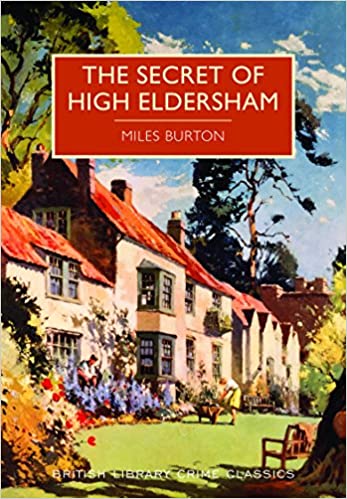
The Secret of High Eldersham by Miles Burton was first published in 1930. Miles Burton is a pseudonym. His real name was Cecil John Charles Street (1884 – 1964) and he also wrote under the names of John Rhode and Cecil Way. I like these names – variations on the word ‘street’. This edition was published by the British Library in 2016 and is one of my TBRs.
It’s not an easy book to write about. There is a murder – that of the landlord of the Rose and Crown Inn in the village of High Eldersham. He was found dead slumped in a chair, having been stabbed in the neck. The local police don’t feel able to deal with the murder so call in help from Scotland Yard.
But when Detective Inspector Young arrives he discovers that there is something very strange about the village and its inhabitants. Like a lot of small and remote villages the local people keep themselves to themselves and are very wary of strangers – they’re not made welcome and they don’t stay very long. But it’s more than that. Strange things are happening, and Young’s theory to account for the queerness of the place seemed to him (and to me) ‘soimpossible, so utterly fanciful, that to entertain it was to doubt his own sanity.’ It concerns ancient legends and customs with a supernatural element. And this is what makes it difficult to write about because to say anything more about this ‘queerness‘ would be to give away a major part of the plot.
Young decides he can’t deal with this on his own and he contacts his friend, Desmond Merrion, a brilliant individual from the intelligence branch of the Admiralty, he had met during the war. He writes to Merrion inviting him to the inquest into the Inn’s landlord death, where he meets a war-time acquaintance, Laurence Hollesley.
From that point on the novel branches into two stories – the murder mystery and a thriller full of danger, drama and pace, plus a damsel in distress and spot of smuggling thrown into the mix. I enjoyed it. It’s easy to read, even if I find it difficult to write about, with clearly identifiable characters and a good sense of location. There’s suspense and the tension rises as the mystery reaches its climax.
Merrion also appears in the one other book I have by Miles Burton – Death in the Tunnel, which I hope to read soon.
Sometimes I read books and have no desire to write about them, not because I didn’t enjoy them but because I just want to get on and read the next book. And this summer has been one of those times, so that now I’m finding difficult to remember all the details of the books I’ve read because I didn’t write about them soon after I finished reading. It’s been a strange time during this pandemic and it’s not been easy to concentrate. But I do want to keep a record of my reading and the only way now to catch up is to write some brief notes about each book, beginning with The Luminaries by Eleanor Catton, the winner of the 2013 Booker Prize,
⭐⭐⭐⭐
Rating: 4 out of 5.
I downloaded The Luminaries by Eleanor Catton 3 years ago. I read it in July. It is a long and detailed book, written with such intricate plotting and numerous characters that it bewildered me at times. It’s historical fiction set in New Zealand in the 1860s, during its gold rush and it has everything – gold fever, murder, mystery and a ghost story too.
Blurb from Goodreads:
It is 1866, and young Walter Moody has come to make his fortune upon the New Zealand goldfields. On the stormy night of his arrival, he stumbles across a tense gathering of twelve local men who have met in secret to discuss a series of unexplained events: A wealthy man has vanished, a prostitute has tried to end her life, and an enormous fortune has been discovered in the home of a luckless drunk. Moody is soon drawn into the mystery: a network of fates and fortunes that is as complex and exquisitely ornate as the night sky. Richly evoking a mid-nineteenth-century world of shipping, banking, and gold rush boom and bust, The Luminaries is a brilliantly constructed, fiendishly clever ghost story and a gripping page-turner.
I found the structure a bit of a stumbling block at first as the chapters halve in length from the very long opening chapter to the very short final chapter – so that from feeling overwhelmed by the length and detail of the opening chapters, by the time that I neared the ending I felt distinctly dissatisfied with the brevity of the concluding chapters – the early chapters are too long and the final ones are too short. And the significance of the astronomical headings completely bypassed me.
But if this sounds as though I didn’t enjoy this novel, that is wrong, because I did for the major part of the book. I loved the pictures it builds up of the setting in New Zealand, the frontier town and its residents from the prospectors to the prostitutes, and the obsessive nature of gold mining. And I did become fully absorbed in the story during the week it took me to read. it
These are the other books I read in July and August and have not yet reviewed:
The topic this week is Books On My Autumn 2020 TBR. I’ve stopped trying to plan what I’ll read next because what usually happens is that I’ll read anything except the books I’ve planned to read. So this is a list of books that I’ll read sometime soon … maybe. It includes books I own and review books from NetGalley.
Child’s Playby Reginald Hill – the 9th Dalziel and Pascoe mystery.
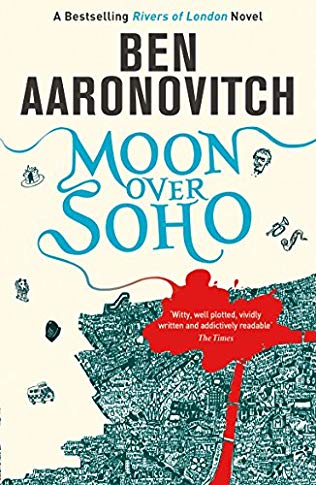
Moon Over Soho by Ben Aaronovitch – the 2nd Rivers of London novel.
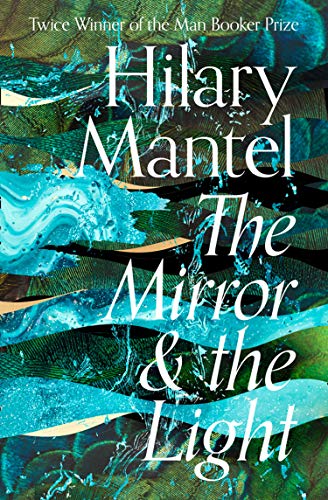
The Mirror and the Light by Hilary Mantel – book 3 of the Wolf Hall trilogy. I did start to read this book earlier in the year, but I’ll probably have to start it again.
The Haunting of H G Wells by Robert Masello – to be published 1 October 2020 – my choice from the First Reads selection this month, a novel mixing fact and fiction.
A Song for the Dark Timesby Ian Rankin – to be published 1 October 2020, the 23rd Rebus book – a ‘must read’book for me.
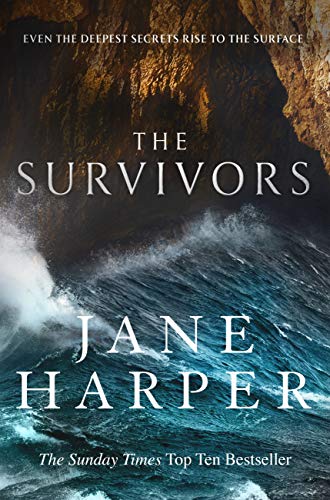
The Survivors by Jane Harper – a standalone crime fiction novel, published today 22 September 2020. I’ve just finished read her first book, The Dry, so I’m very keen to read this one soon.
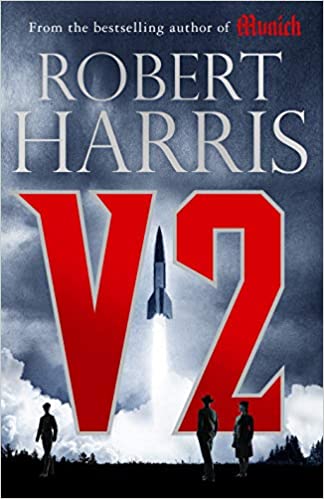
V2 by Robert Harris – a Second World War thriller.a blend of fact and fiction.
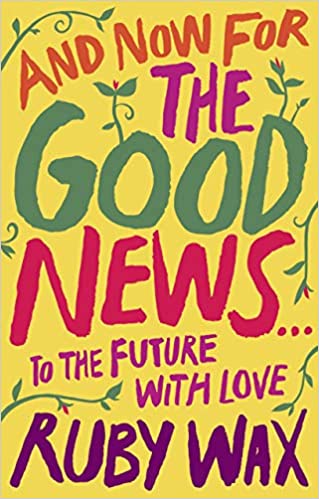
And Now for the Good News by Ruby Wax – this is the book I really must read soon – we all need some good news!
The Postscript Murders by Elly Griffiths – to be published 1 October 2020 – a literary murder mystery.






 BooksPlease