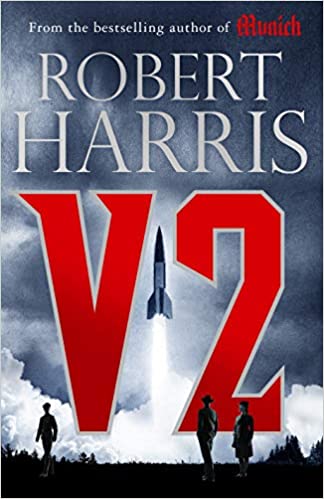
V2 by Robert Harris

Random House UK, Cornerstone| 17 September 2020| 314 pages| Kindle review copy| 5*

Description

Victory is close. Vengeance is closer.

On the brink of defeat, Hitler commissioned 10,000 V2s – ballistic rockets that carried a one-ton warhead at three times the speed of sound, which he believed would win the war.

Dr Rudi Graf who, along with his friend Werner von Braun, had once dreamt of sending a rocket to the moon, now finds himself in November 1944 in a bleak seaside town in Occupied Holland, launching V2s against London. No one understands the volatile, deadly machine better than Graf, but his disillusionment with the war leads to him being investigated for sabotage.

Kay Caton-Walsh, an officer in the WAAF, has experienced first-hand the horror of a V2 strike. When 160 Londoners, mostly women and children, are killed by a single missile, the government decides to send a team of WAAFs to newly-liberated Belgium in the hope of discovering the location of the launch sites. But not all the Germans have left and Kay finds herself in mortal danger.

As the war reaches its desperate end, their twin stories play out, interlocked and separate, until their destinies are finally forced together.

My thoughts:

V2 is historical fiction with a solid factual framework. I like to know when I’m reading historical fiction how much is history and how much is fact. So, I was pleased to find that at the end of the book Harris has included a list of the sources he consulted on the history of the V2 and how it worked, including the work of the photographic reconnaissance interpreters, before writing V2. In particular he acknowledges Eileen Younghusband’s two volumes of memoirs – Not an Ordinary Life and One Woman’s War. She had worked as a WAAF officer on the Mechelen operation, working on detecting the location of the V2 launch sites, and her memoirs had provided him with a vivid insight into her wartime life. Without them he would not have written V2.

It’s set over five days at the end of November 1944 as the Germans fired V2 missiles on London from the woods around Scheveningen on the Dutch coast. The British response was a counter-operation, including a team of WAAFs. The cast includes some historical figures such as Werner von Braun, the real-life head of the Nazi rocket programme, and SS-General Hans Kammler. It’s told in alternating chapters from two of the fictional characters’ perspectives – Dr Rudi Graf, a rocket engineer on the V2 team and Kay Caton-Walsh of the Women’s Auxiliary Air Force. Kay was part of the team based at Mechelen using radar to try to locate the V2 firing sites. Harris emphasises that his fictional character, Kay, bore no resemblance to Mrs Younghusband, apart from the fact that she worked on the Mechelen project.

I thoroughly enjoyed reading this novel, learning a lot about that period of the Second World War and about the V2. It is detailed and tense, and very readable, describing the intricate details of the launching of the V2s and Kay’s work, which became increasingly dangerous as their location became known to the Germans.

Many thanks to the publishers and NetGalley for my digital proof copy.
Top Ten Tuesday: Most Anticipated Releases for the First Half of 2021

This week’s topic is Most Anticipated Releases for the First Half of 2021. My list includes only 8 books or rather advance review copies from NetGalley. I’ve listed them in their release date order. Links from the titles will take you the book descriptions on Goodreads.

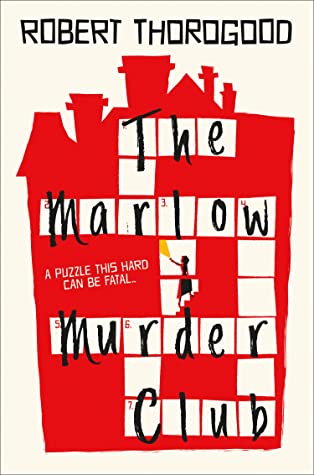
  1. The Marlow Murder Club by Robert Thorogood – 7 January. Judith, Suzie and Becks, recently retired, form the Marlow Murder Club investigating murders in Marlow, Bucks.
  2. The City of Tears by Kate Mosse – 19 January. The second historical epic in The Burning Chambers series set in France in 1572.
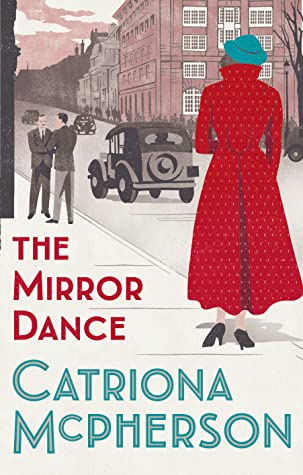
  3. The Mirror Dance by Catriona McPherson – 21 January. Something sinister is afoot in the streets of Dundee, when a puppeteer is found murdered behind his striped Punch and Judy stand, as children sit cross-legged drinking ginger beer.
  4. The Paris Library by Janet Skeslien Charles- 9 February. Based on the true Second World War story of the heroic librarians at the American Library in Paris, this is a novel of romance, friendship, family, and of heroism found in the quietest of places.
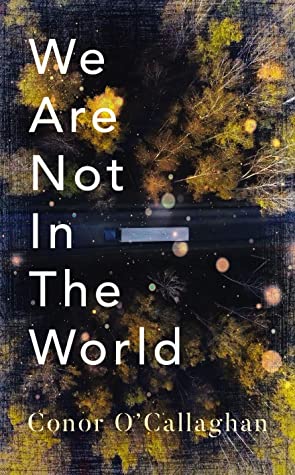
  5. We Are Not in the World by Conor O’Callaghan – 18 February. Heartbroken after a long, painful love affair, a man drives a haulage lorry from England to France. Travelling with him is a secret passenger – his daughter. Twenty-something, unkempt, off the rails.
  6. A Town Called Solace by Mary Lawson – 18 February. Set in Northern Ontario in 1972, this explores the relationships of these three people brought together by fate and the mistakes of the past. 
  7. The Girl Who Died by Ragnar Jonasson – 29 April. When Una sees an advert seeking a teacher for two girls in the tiny village of Skálar – population of ten – on the storm-battered north coast of the island, she sees it as a chance to escape.
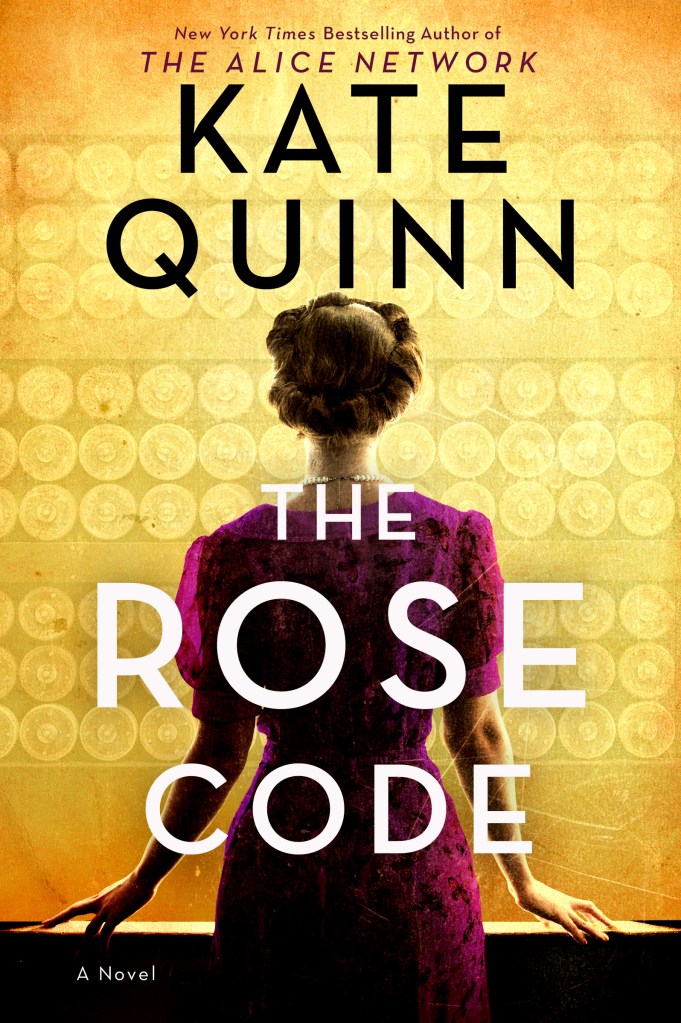
  8. The Rose Code by Kate Quinn – 18 March. A World War II story of three female code breakers at Bletchley Park and the spy they must root out after the war is over.

Mount TBR 2020 Final Checkpoint & Sign Up for Mount TBR 21

We’ve come to the end of Bev’s Mount TBR Challenge, so it’s time for the final checkpoint!

1. Tell us how many miles you made it up the mountain:

I began the year aiming for Mount Vancover – that is 36 books and I made it, ending the year by reading 38 of my TBRs.

2. The Words to the Wise According to Mount TBR: Using the titles of the books you read this year, see how many of the familiar proverbs and sayings below you can complete with a book read on your journey up the Mountain. Feel free to add/subtract a word or two to help them make sense. I have given my titles as examples:

A stitch in time…[saves] Hitler’s Secret (Rory Clements)
Don’t count your chickens…[before] Becoming Mrs Lewis (Patti Callahan)
A penny saved is…. Saving Missy (Beth Morrey)
All good things must come… (to) The Last Day (Andrew Hunter Murray)
When in Rome… [bring] Fresh Water for Flowers (Valerie Perrin)
All that glitters is not… Looking Good Dead (Peter James)
A picture is worth… The Year Without Summer (Guinivere Glasfurd)
When the going gets tough, the tough get… The Guardians (John Grisham)
Two wrongs don’t make… A Killing Kindness (Reginald Hill)
The pen is mightier than…. The Power-House (John Buchan)
The squeaky wheel gets… Yesterday’s Papers (Martin Edwards)
Hope for the best, but prepare for… Smallbone Deceased (Michael Gilbert)
Birds of a feather flock… [in] Thin Air (Michelle Paver)

My thanks to Bev for hosting Mount TBR 2020. And so on to Mount TBR 2021

Books must be owned by you prior to January 1, 2021. No library books.  Any reread may count, regardless of how long you’ve owned it prior to 2021, provided you have not counted it for a previous Mount TBR Challenge.  Audiobooks and E-books may count if they are yours and they are one of your primary sources of backlogged books. You may count “Did Not Finish” books provided they meet your own standard for such things, you do not plan to ever finish it, and you move it off your mountain [give it away, sell it, etc. OR remove it from your e-resources].

There are a number of different levels to choose from:

Pike’s Peak: Read 12 books from your TBR pile/s
Mount Blanc: Read 24 books from your TBR pile/s
Mt. Vancouver: Read 36 books from your TBR pile/s
Mt. Ararat: Read 48 books from your TBR pile/s
Mt. Kilimanjaro: Read 60 books from your TBR pile/s
El Toro*: Read 75 books from your TBR pile/s (*aka Cerro El Toro in South America)
Mt. Everest: Read 100 books from your TBR pile/s
Mount Olympus (Mars): Read 150+ books from your TBR pile/s

and for now I’m going for Mt Vancouver, which is to read 36 books and hope to move up to the higher levels if I can.

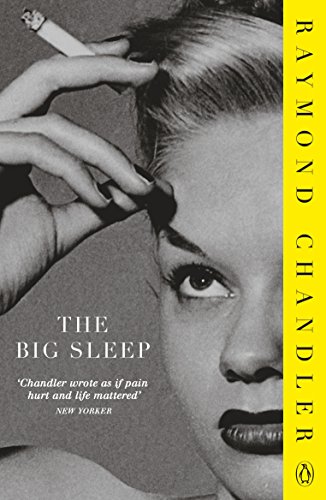
The Big Sleep by Raymond Chandler

In December I read 12 books, most of them short ones, and because I was reading them one after the other I hardly paused to write about them. Before they slip out of my memory I want to write about some of them at least. –

I particularly want to write about The Big Sleep by Raymond Chandler as it is one of those books that I’ve always heard about but have never read. It’s been on my Kindle for the last three years. It was first published in 1939 and is an excellent example of what is known as ‘hardboiled’ crime fiction, which generally featured a private eye with a whisky bottle in a filing cabinet, a femme fatale, and rich and usually corrupt clients. Female sexuality is a snare in a dangerous society where manipulative politicians and corrupt police thrive.

About the book:

Best-known as the creator of the original private eye, Philip Marlowe, Raymond Chandler was born in Chicago in 1888 and died in 1959. Many of his books have been adapted for the screen, and he is widely regarded as one of the very greatest writers of detective fiction. His books include The Big SleepThe Little SisterFarewell, My LovelyThe Long Good-byeThe Lady in the LakePlaybackKiller in the RainThe High Window and Trouble is My Business.

The Big Sleep has been adapted for film twice, in 1946 with Humphrey Bogart, Lauren Bacall, John Ridgely, Martha Vickers, and again in 1978, with Robert Mitchum, Sarah Miles, Richard Boone, Candy Clark.

My thoughts:

The novel is narrated by Philip Marlow, who describes himself as a ‘lone wolf, unmarried, getting middle-aged, and not rich.’ He’s been in jail more than once, likes liqour and women and the cops don’t like him much, although he does get on with a couple of them.

It’s not really the type of crime fiction that I like, but I did enjoy it. There are damsels in distress, gangsters, corrupt officials, and plenty of dark, violent and bloody situations. And of course there are murders – the ‘big sleep’ is death, after all. It’s fast-paced, violent, complicated and in times I found it a bit difficult to follow.

Reading the book took me back in time and place to Los Angeles in the late 1930s, a baking hot LA in which Private Investigator Marlow is hired by the paralysed millionaire General Stallwood, who is being blackmailed. His investigations are hampered by the General’s two daughters, one of whom proves to be a femme fatale, out to entrap Marlow and vindictive when her efforts fail. Chandler’s writing is sharp, snappy and richly descriptive with witty one-liners.

What’s In a Name? 2021

This year I am planning to take part in just a few Reading Challenges and this is one of them:

The What’s In A Name Challenge is being hosted again for 2021 by Andrea at Carolina Book Nook.  I didn’t take part last year, after doing it for several years, but I fancy taking part this year.

The challenge runs from 1st January 2021 to 31st December 2021. You can sign up any time, but can only count books you read between those dates. Read a book in any format (hard copy, ebook, audio) with a title that fits into each category. Don’t use the same book for more than one category. Creativity for matching the categories is not only allowed, it’s encouraged! You can choose your books as you go or make a list ahead of time.

I’ve picked out some possibilities for the categories, from my TBR books. There are others I could choose, so this is just a starting list – I may read other books instead.

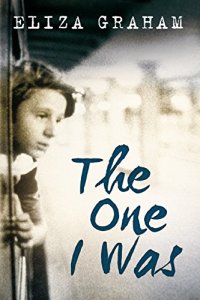
‘One’ or ‘1’                                The One I Was by Eliza Graham

Repeated word                       Sing, Jess, Sing by Tricia Coxon

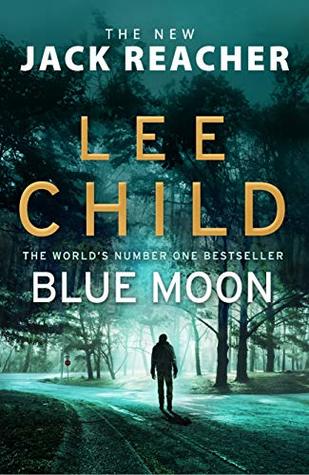
Reference to outer space    Blue Moon by Lee Child

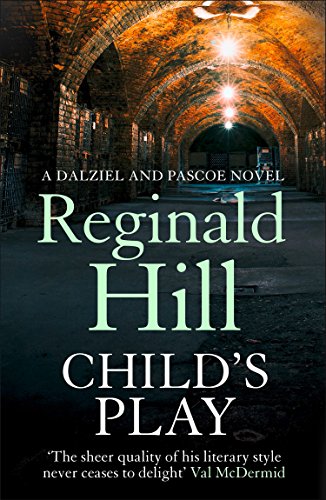
Possessive noun                     Child’s Play by Reginald Hill

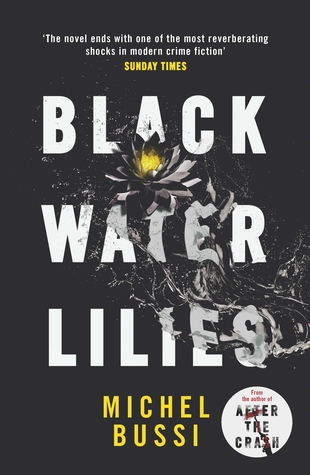
Botanical word                       Black Water Lilies by Michel Bussi

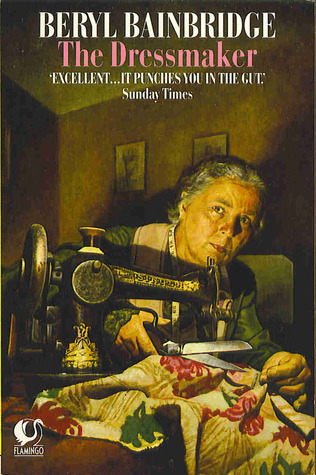
Article of clothing                 The Dressmaker by Beryl Bainbridge

Six Degrees of Separation: From Hamnet to Macbeth

It’s time again for Six Degrees of Separation, a monthly link-up hosted by Kate at Books Are My Favourite and Best. Each month a book is chosen as a starting point and linked to six other books to form a chain. A book doesn’t need to be connected to all the other books on the list, only to the one next to it in the chain.

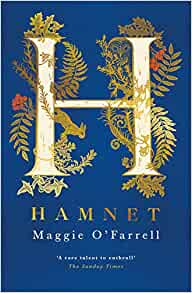
This month’s chain begins with Hamnet by Maggie O’Farrell, the winner of the 2020 Women’s Prize for Fiction. Set mainly in Stratford-on-Avon, it is historical fiction inspired by Hamnet, Shakespeare’s son. The central theme, though is the grief – the overwhelming and all consuming grief, that the whole family and in particular, Agnes, Hamnet’s mother suffered when he died at the age of eleven in 1596. It’s not my favourite book by O’Farrell but I did find it fascinating.

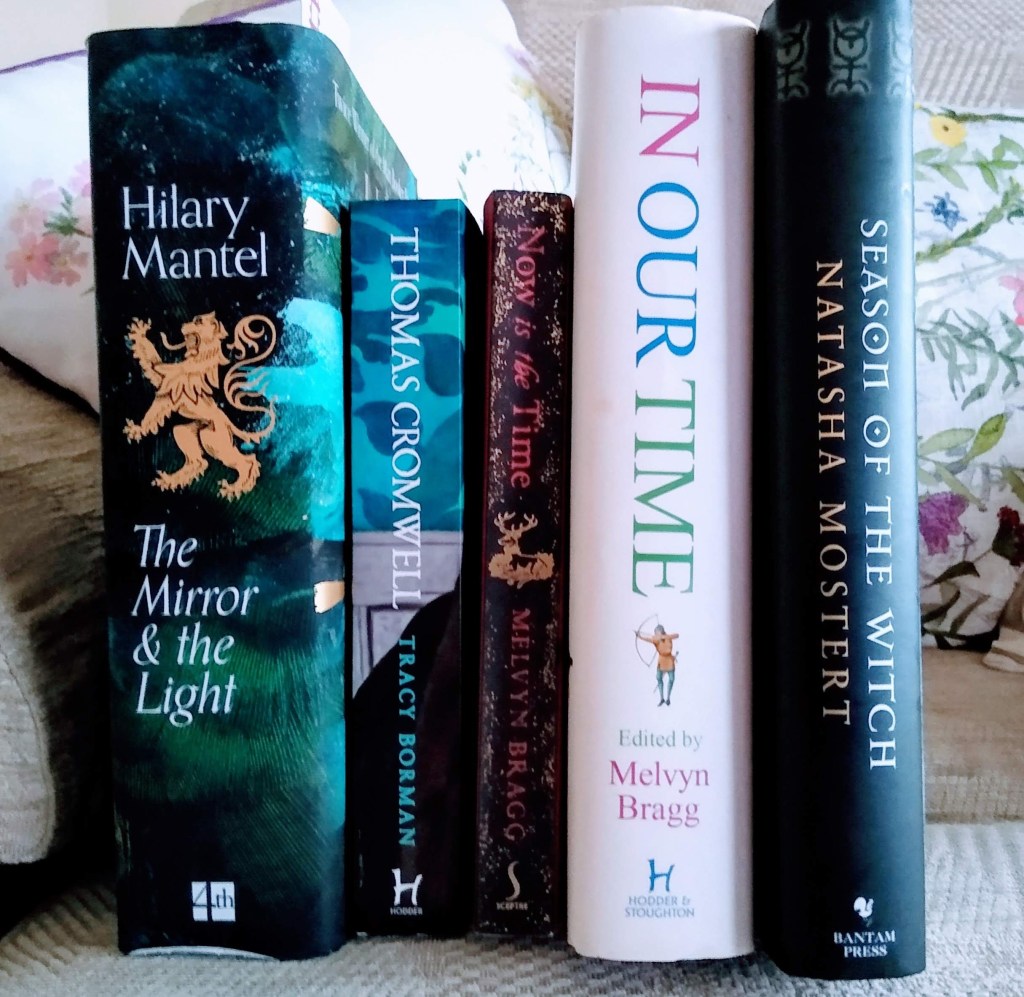
The first five books that form the links in my chain are shown in the photo below:

The first link:

Hilary Mantel’s third book in her Wolf Hall trilogy, The Mirror and the Light, which was also on the shortlist for the Women’s Prize for Fiction in 2020. I was very keen to read this book when it was first published in February, and began reading it, but for a variety of reasons I still haven’t finished it. It’s the final book in the Wolf Hall trilogy, tracing Thomas Cromwell‘s final years as he fell from power.

The second link:

A biography of Thomas Cromwell and a another book I haven’t read – Thomas Cromwell: the Untold Story of Henry VIII’s Faithful Servant by Tracy Borman. I’d like to read this and The Mirror and the Light this year, but that could easily mean another year could slip by leaving them still on the TBR piles.

The third link:

Thinking about historical figures in fiction and also books I haven’t read yet but have owned for a while (years), the next book in my chain is another of my TBRs . It is Now is the Time by Melvyn Bragg, a novel about the Peasants’ Revolt that took place during just a few weeks in May and June of 1381. The boy king Richard II was faced with a revolt led by former soldier Wat Tyler and John Ball, a preacher.

The fourth link:

is to another book by Melvyn Bragg and also with the word ‘time‘ in the title – In Our Time: a Companion to the Radio 4 series. I have read this book, which contains transcripts of 26 programmes, a selection from hundreds of programmes broadcast over eleven years, including one about the Peasant’s Revolt, and also one on witchcraft.

The fifth link:

Another book featuring witchcraft is Season of the Witch by Natasha Mostert. It’s a modern day gothic epic, mixing computer technology with witchcraft, alchemy and the power of the human mind, in the search for enlightenment.

The final link completes the chain making it into a circle by returning to the opening book – a reworking of one of Shakespeare’s plays:

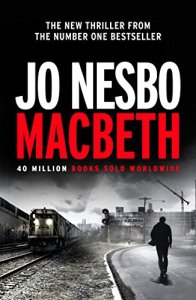
It is Macbeth by Jo Nesbo, a retelling of Shakespeare’s Macbeth. Witches in different forms appear in both the book and the play. Inspector Macbeth, an ex-drug addict is the head of the SWAT team, ruled by his passions, violent and paranoid. He is manipulated by Hecate, Shakespeare’s chief witch, here one of the drug lords, a man with a friendly smile and cold eyes.

The links in my chain are the Women’s Prize for Fiction, Thomas Cromwell, TBRs, books with the word ‘time’ in the title and witchcraft/witches.

Next month (February 6, 2021), we’ll start with Anne Tyler’s latest novel, Redhead By the Side of the Road.