Additions to My TBRs

I am missing going to an actual bookshop, but I have been book shopping online. These are all books I’ve bought this year:

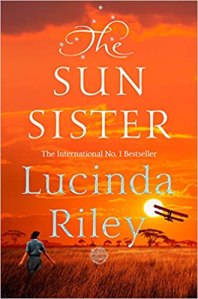
  1. The Sun Sister by Lucinda Riley – the sixth book in Lucinda Riley’s series, The Seven Sisters, which tells the story of adopted sisters and is inspired by the mythology of the famous star cluster. This one is about Electra D’Aplièse, who seems to have it all: as one of the world’s top models, she is beautiful, rich and famous.
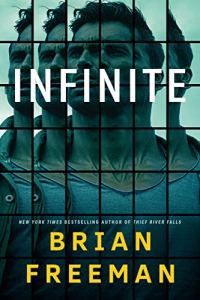
  2. Infinite by Brian Freeman – my Kindle First choice in February, a thriller about parallel universes.
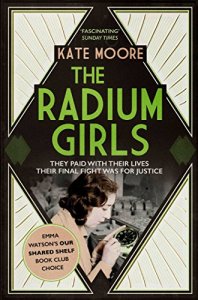
  3. The Radium Girls by Kate Moore – the true story about dial-painters, girls and women who painted the numbers on clocks, watches and other instruments using radium-infused luminous paint in the 1920s and 1930s. The girls shone brightly in the dark, covered head to toe in dust from the paint.
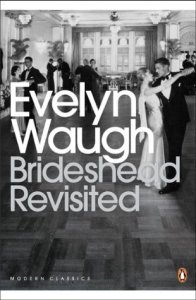
  4. Brideshead Revisited by Evelyn Waugh – the story of Charles Ryder’s infatuation with the Marchmains and the rapidly-disappearing world of privilege they inhabit. This is a book I’ve wondered about reading for years, so when I saw it was 99p on Kindle I bought it.
  5. Virginia Wolf: a Biography: 1882-1912 (vol 1) by Quentin Bell. Reading Woolf’s Orlando recently made me want to know more about her, so I bought this secondhand copy of her biography from AbeBooks.
  6. The Pembrokshire Murders by Steve Wilkins and Jonathan Hill -the true story of a brutal murderer and the detectives who worked the cold case for six years in order to bring him to justice. I bought this after watching the ITV mini series in January.

Now, the questions are –

Which one to read first?
Or should I read one of my older TBRs first?
What do you do?
And how do you decide which book to read next?

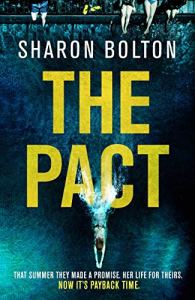
Can’t-Wait Wednesday: The Pact by Sharon Bolton

Can’t-Wait Wednesday is a weekly meme hosted by Wishful Endings, to spotlight and discuss the books we’re excited about that we have yet to read. Generally they’re books that have yet to be released.

Sharon Bolton is one of my favourite authors, so I’m delighted to see that she has a new book waiting to be published: The Pact: Release date 27 May 2021

Description

A dark and compulsive thriller about secrets, privilege and revenge.

A golden summer, and six talented friends are looking forward to the brightest of futures – until a daredevil game goes horribly wrong, and a woman and two children are killed.

18-year-old Megan takes the blame, leaving the others free to get on with their lives. In return, they each agree to a ‘favour’, payable on her release from prison.

Twenty years later Megan is free.
Let the games begin . . .

What upcoming release are you eagerly anticipating?

Two Chief Inspector Macdonald Books by E C R Lorac

E C R Lorac was a pen name of Edith Caroline Rivett (1894-1958) who was a prolific writer of crime fiction from the 1930s to the 1950s, and a member of the prestigious Detection Club. She formed her pseudonym by using her initials and for the surname, the first part of her middle name spelled backwards. She also wrote under the name of Carol Carnac.

I’ve read just a few of her Chief Inspector Robert Macdonald books., written under the name E C R Lorac – Bats in the Belfry (1937) , Fell Murder (1944), Murder by Matchlight (1945) and Fire in the Thatch (1946).

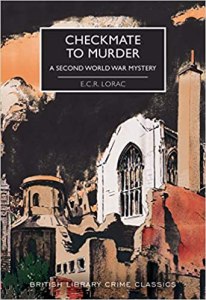
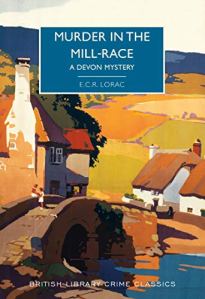
And recently I’ve read two more : Checkmate to Murder, first published in 1944 and Murder in the Mill Race, first published in 1952. These have been recently re-published by the British Library as part of the British Library Crime Classics, with introductions by Martin Edwards.

On a dismally foggy night in Hampstead, London, a curious party has gathered in an artist’s studio to weather the wartime blackout. A civil servant and a government scientist match wits in a game of chess, while Bruce Manaton paints the portrait of his characterful sitter, bedecked in Cardinal’s robes at the other end of the room. In the kitchen, Rosanne Manaton prepares tea for the charlady of Mr. Folliner, the secretive miser next door.

When the brutal murder of ‘Old Mr. F’ is discovered by his Canadian infantryman nephew, it’s not long before Inspector Macdonald of Scotland Yard is called to the scene to take the young soldier away. But even at first glance the case looks far from black-and-white. Faced with a bevy of perplexing alibis and suspicious circumstances, Macdonald and the C.I.D. set to work separating the players from the pawns to shed light on this toppling of a lonely king in the dead of night.

What I found fascinating in this book is the insight into what life was like in wartime London, complete with the London fog and the details of the blackout and although the Blitz was over there were still plenty of bangs and noise so that a gunshot wasn’t easily heard. The setting in a large studio that opens the book is a quiet scene as Bruce paints his sitter dressed as Cardinal Richelieu and two friends play a game of chess. Roseanne, Bruce’s sister is busy in the kitchen cooking their supper.Their evening is disrupted when a Special Constable bursts in with a young soldier in tow, claiming that he had killed his great-uncle in the next door building. This turns out to be more complicated than it first seemed. Even with just a limited number of suspects I couldn’t didn’t work out who the murderer was, nor how the murder had been committed. Macdonald explains it all at the end, having worked out ‘a reconstruction of the possibilities.’

~~~

When Dr Raymond Ferens moves to a practice at Milham in the Moor in North Devon, he and his wife are enchanted with the beautiful hilltop village lying so close to moor and sky. At first they see only its charm, but soon they begin to uncover its secrets – envy, hatred and malice.

Everyone says that Sister Monica, warden of a children’s home, is a saint – but is she? A few months after the Ferens’ arrival her body is found drowned in the mill race. Chief Inspector Macdonald faces one of his most difficult cases in a village determined not to betray its dark secrets to a stranger.

One of the things I think that Lorac excelled in was her settings. Each one is described so that you can easily picture the scenery and the landscape. And that is important in this book as Sister Monica drowned in the mill race, the stream leading into the water mill. She sets out through Macdonald exactly how that could have happened. She also conveys the atmosphere and the social interactions of an isolated village in Devon in the years just after the end of the Second World War. On the surface this is an idyllic village, but it is just like any other community, with a cross-section of personalities, and a mix of neighbourliness and an undercurrent of envy, hatred and malice. Sister Monica, a formidable woman, revered by some, is in charge of a children’s home, which she rules with a rod of iron and knows everything about everybody. Others regard her with caution, as the bailiff, Sanderson tells Anne Ferens, the doctor’s wife:

She is one of those people who can not only lie plausibly and with conviction, but she can tell a lie to your face without batting an eyelid, knowing that you know it’s a lie, and it’s very hard to bowl her out. (page 34)

But the village close ranks when she is found dead in the mill race and it is hard for Macdonald and Detective Inspector Reeeve to get the villagers to open up and and talk about what she was really like. It appears to be suicide, but is it?

Six Degrees of Separation: from Phosphorescence by Julia Baird to The Burry Man’s Day

It’s time again for Six Degrees of Separation, a monthly link-up hosted by Kate at Books Are My Favourite and Best. Each month a book is chosen as a starting point and linked to six other books to form a chain. A book doesn’t need to be connected to all the other books on the list, only to the one next to it in the chain.

This month the Six Degrees chain begins with Phosphorescence by Julia Baird, who is an Australian author. The book won’t be published here in the UK until 27 May. Julia Baird reflects on her encounters with phosphorescence, a luminescent phenomenon found in the natural world, and how she was able to cultivate her own ‘inner light’ in the face of suffering and illness. I think I’d like to read it.

I didn’t know where to start my chain, so I used my Search Box to see if I had used the word phosphorescence previously on my blog – and I had, just once. It’s in a passage I quoted from D H Lawrence’s Sons and Lovers, when he described Paul Morel’s grief and sadness after his mother’s death, and yet also his hope for the future:

Turning sharply, he walked towards the city’s gold phosphorescence. His fists were shut, his mouth set fast. He would not take that direction, to the darkness, to follow her. He walked towards the faintly humming, glowing town, quickly.

I read Sons and Lovers in 2007 and another book I read then is The Moon and Sixpence by W Somerset Maugham, a novel about Charles Strickland, who was a stockbroker; a boring, man. He left his wife and family after seventeen years of marriage and fled to Paris, because he wanted to paint. It is roughly based on the life of Gauguin, which reminded me I have Gauguin By Himself, a massive book that contains copies of his paintings, drawings, ceramic, sculpture and prints together with his written words.

Gaugin’s relationship with Vincent Van Gogh described in his book leads me on to Van Gogh and A S Byatt’s book, Still Life in which Alexander Wedderburn struggles to make a play about Van Gogh. The cover painting on my copy is Van Gogh’s Still Life with Coffeepot.

Another book called Still Life is Val McDermid’s latest Karen Pirie mystery. It combines a cold case investigation into the identity of a skeleton found in a campervan and a current case into the discovery of a body in the Firth of Forth.

The Burry Man’s Day is the second in Catriona McPherson’s Dandy Gilver series. It is set in South Queensferry, on the south shore of the Firth of Forth, where there is an annual Ferry Fair and the Burry Man Parade. A local man is covered from head to ankles in burrs and walks round the town, taking a nip of whisky at every stop. When Dandy visits the Parade, the Burry Man drops down dead at the end of the Parade, apparently poisoned. The list of suspects includes all those who gave him a nip of whisky.

My chain begins with awe and wonder and ends in murder, linking together sons and lovers, artists, and detectives.

Next month (April 3, 2021), we’ll start with the 2020 Booker Prize winner, Shuggie Bain by Douglas Stuart – a book I haven’t read.

My Friday Post: Checkmate to Murder by E C R Lorac

Every Friday Book Beginnings on Friday is hosted by Gillion at Rose City Reader where you can share the first sentence (or so) of the book you are reading. You can also share from a book you want to highlight just because it caught your fancy.

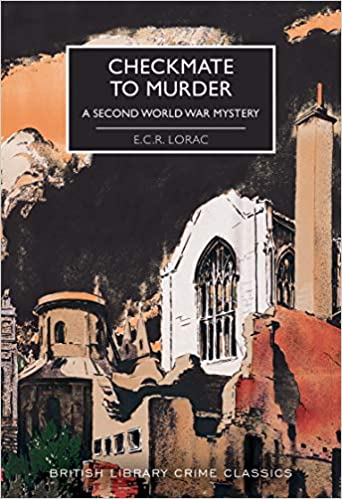
This week I’m featuring one of the books I’m currently reading, Checkmate to Murder: a Second World War Mystery by E C R Lorac, first published in 1944. One of the things I like about this book is the setting and atmosphere of wartime London, when details such as blackouts, fire-watching and air raid precautions were everyday events.

It begins:

The vast studio had two focus points of light; between two pools of radiance was a stretch of shadows, colourless, formless, empty. At one end of the long, barn-like structure, where the light was most strongly concentrated, was a model’s platform. A high-backed Spanish chair stood upon it, with a dark leather screen as background. On the chair sat a man arrayed in the superb scarlet of a Cardinal’s robe, the broad-brimmed Cardinal’s hat upon his head.

Also every Friday there is The Friday 56, hosted by Freda at Freda’s Voice. *Grab a book, any book. *Turn to Page 56 or 56% on your  ereader . If you have to improvise, that is okay. *Find a snippet, short and sweet, but no spoilers!

These are the rules:

  1. Grab a book, any book.
  2. Turn to page 56, or 56% on your eReader. If you have to improvise, that is okay.
  3. Find any sentence (or a few, just don’t spoil it) that grabs you.
  4. Post it.
  5. Add the URL to your post in the link on Freda’s most recent Friday 56 post.
  1. Grab a book, any book.
  2. Turn to page 56, or 56% on your eReader. If you have to improvise, that is okay.
  3. Find any sentence (or a few, just don’t spoil it) that grabs you.
  4. Post it.
  5. Add the URL to your post in the link on Freda’s most recent Friday 56 post.

Page 56:

“Deceased was a miser, one of the real old-fashioned storybook misers. I won’t say I haven’t met one before – I have, though they are getting less common than they used to be. D’you remember old Simple Simon, who was always getting run-in for begging on the Embankment – £525 we found under the boards in his bedroom when he died, and another fifteen pounds odd in his filthy bedding. He died of starvation at last.”

~~~

About the book:

On a dismally foggy night in Hampstead, London, a curious party has gathered in an artist’s studio to weather the wartime blackout. A civil servant and a government scientist match wits in a game of chess, while Bruce Manaton paints the portrait of his characterful sitter, bedecked in Cardinal’s robes at the other end of the room. In the kitchen, Rosanne Manaton prepares tea for the charlady of Mr. Folliner, the secretive miser next door.

When the brutal murder of ‘Old Mr. F’ is discovered by his Canadian infantryman nephew, it’s not long before Inspector Macdonald of Scotland Yard is called to the scene to take the young soldier away. But even at first glance the case looks far from black-and-white. Faced with a bevy of perplexing alibis and suspicious circumstances, Macdonald and the C.I.D. set to work separating the players from the pawns to shed light on this toppling of a lonely king in the dead of night.

What do you think – would you read this book?

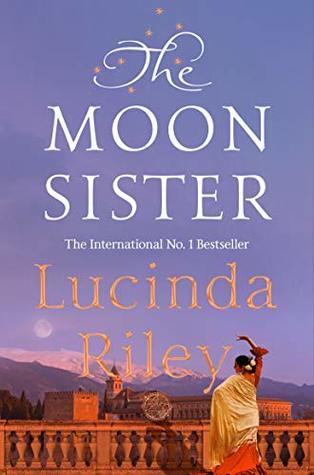
The Moon Sister by Lucinda Riley

Rating: 4 out of 5.

I’ve had this book for a while now and have just finished reading it. It is the 5th book in Lucinda Riley’s series, The Seven Sisters and as I’d only read the first book I thought I’d read the other three books first before this one, so that I could read them in order. But as the 7th book, The Missing Sister, will be published in May I thought I had better read The Moon Sister now. The books are based on the legends of The Seven Sisters of the Pleiades. Although this is just one in the series I think it reads very well as a standalone book.

I loved this book, about Tiggy D’Apilese, the fifth sister adopted by Pa Salt and brought up in their childhood home, ‘Atlantis’ – a fabulous, secluded castle situated on the shores of Lake Geneva. The sisters are all named after the stars in the Pleiades star cluster. Tiggy’s star name is Taygete. Pa Salt had died earlier in the year and had left clues for each girl so that if they want they can discover who their parents were and the circumstances of their birth. Tiggy is her nickname after the hedgehog Mrs Tiggy-winkle from the Beatrix Potter book – and because when she was born her hair stuck up in spikes.

The book description summarises this long and detailed (769 pages) book, and I don’t intend to go into much more detail about the plot. The story begins in the Scottish Highlands where Tiggy works as a wildlife consultant, then moves to Sacromente in Spain, then onto Portugal, South America and New York before moving back to the Highlands as Tiggy finds out about her birth and her family history.

Blurb:

After the death of her father – Pa Salt, an elusive billionaire who adopted his six daughters from around the globe – Tiggy D’Aplièse , trusting her instincts, moves to the remote wilds of Scotland. There she takes a job doing what she loves; caring for animals on the vast and isolated Kinnaird estate, employed by the enigmatic and troubled Laird, Charlie Kinnaird.

Her decision alters her future irrevocably when Chilly, an ancient gipsy who has lived for years on the estate, tells her that not only does she possess a sixth sense, passed down from her ancestors, but it was foretold long ago that he would be the one to send her back home to Granada in Spain . . .

In the shadow of the magnificent Alhambra, Tiggy discovers her connection to the fabled gypsy community of Sacromonte, who were forced to flee their homes during the civil war, and to ‘La Candela’ the greatest flamenco dancer of her generation.

From the Scottish Highlands and Spain, to South America and New York, Tiggy follows the trail back to her own exotic but complex past. And under the watchful eye of a gifted gypsy bruja she begins to embrace her own talent for healing.

But when fate takes a hand, Tiggy must decide whether to stay with her new-found family or return to Kinnaird, and Charlie . . .

The modern day story is interesting, about her work on the Kinnaird Estate (based on Alladale Wilderness Reserve), but I felt that her relationship with the Laird was rather naive, and at the end of the book how that was resolved felt contrived. But I loved the episodes in which Tiggy meets Chilly, and those with the deer and the white stag. Chilly is the old gypsy, who she befriended. He calls her ‘Hotchiwitchi’, Romany for hedgehog, and tells her that she has a special gift in her hands to heal animals. He also tells her that she should go to the seven caves of Sacromente, where she was born. Tiggy sees a white stag, which she calls Pegasus and tries to protect him from poachers, when news got out he was on the Estate. White stags are revered; there a several myths about them – one being that Tiggy’s mythical counterpart, Taygete, who was a companion of the Greek deity Artemis, ‘the Mistress of Animals’, was being pursued by and to protect her Artemis turned her into a doe.

But the most interesting and fascinating part of the book for me is the story of Tiggy’s , grandmother, Lucia Amaya-Albaycin, who became a famous flamenco dancer. She is the dominant character in the book, and not a particularly likeable character as she was totally self-absorbed, and obsessed with furthering her career. Flamenco dancing was her passion and took priority over everything else.

Lucia was also born in in a cave in Sacromonte, the sacred mountain just outside the eastern city walls of Granada in Andalusia, within sight of the Alhambra. She was a ‘gitano’ and lived her life to dance. She was born in poverty and her family struggled to survive. During the Spanish Civil War their neighbourhood was devastated, suffering famine and hardship – one of Lucia’s brothers was imprisoned in terrible conditions. She and her father, together with their troupe of dancers fled to Portugal and then went to Argentina and eventually on to New York, where Lucia was forced to choose between her career and the man she loved. But the spirit of the ‘duende’, possessed her as it surged up from the soles of her feet as she danced, encompassing her whole body, and soaring out of her soul.

Lucinda Riley is a wonderful storyteller and her descriptions of the grandeur and beauty of both Granada and the Scottish Highlands entranced me.They are so beautifully and vividly described that I was transported back in time and place, seeing the events unfold before my eyes.

Many thanks to the the publishers via NetGalley for my digital review copy.

  • ASIN : B07F72TKSX
  • Publisher : Macmillan (1 Nov. 2018)
  • Language : English
  • File size : 1255 KB
  • Text-to-Speech : Enabled
  • Enhanced typesetting : Enabled
  • X-Ray : Enabled
  • Word Wise : Enabled
  • Print length : 769 pages

The seven books are:

  1. The Seven Sisters (2014)
   2. The Storm Sister (2015)
   3. The Shadow Sister (2016)
   4. The Pearl Sister (2017)
   5. The Moon Sister (2018)
   6. The Sun Sister (2019)
   7. The Missing Sister (2021)