Classics Club Spin

It’s time for another Classics Club Spin. I only have 3 books left to read and although I did read my last Spin book, Little Dorrit I still haven’t written about it. For this spin I shall read one of these three books by 22 August 2021:

  1. The Count of Monte Cristo by Alexandre Dumas
  2. Love in the Time of Cholera by Gabriel Garcia Marquez
  3. Framley Parsonage by Anthony Trollop
  4. The Count of Monte Cristo by Alexandre Dumas
  5. Love in the Time of Cholera by Gabriel Garcia Marquez
  6. Framley Parsonage by Anthony Trollop
  7. The Count of Monte Cristo by Alexandre Dumas
  8. Love in the Time of Cholera by Gabriel Garcia Marquez
  9. Framley Parsonage by Anthony Trollop
  10. The Count of Monte Cristo by Alexandre Dumas
  11. Love in the Time of Cholera by Gabriel Garcia Marquez
  12. Framley Parsonage by Anthony Trollop
  13. The Count of Monte Cristo by Alexandre Dumas
  14. Love in the Time of Cholera by Gabriel Garcia Marquez
  15. Framley Parsonage by Anthony Trollope
  16. The Count of Monte Cristo by Alexandre Dumas
  17. Love in the Time of Cholera by Gabriel Garcia Marquez
  18. Framley Parsonage by Anthony Trollope
  19. The Count of Monte Cristo by Alexandre Dumas
  20. Love in the Time of Cholera by Gabriel Garcia Marquez

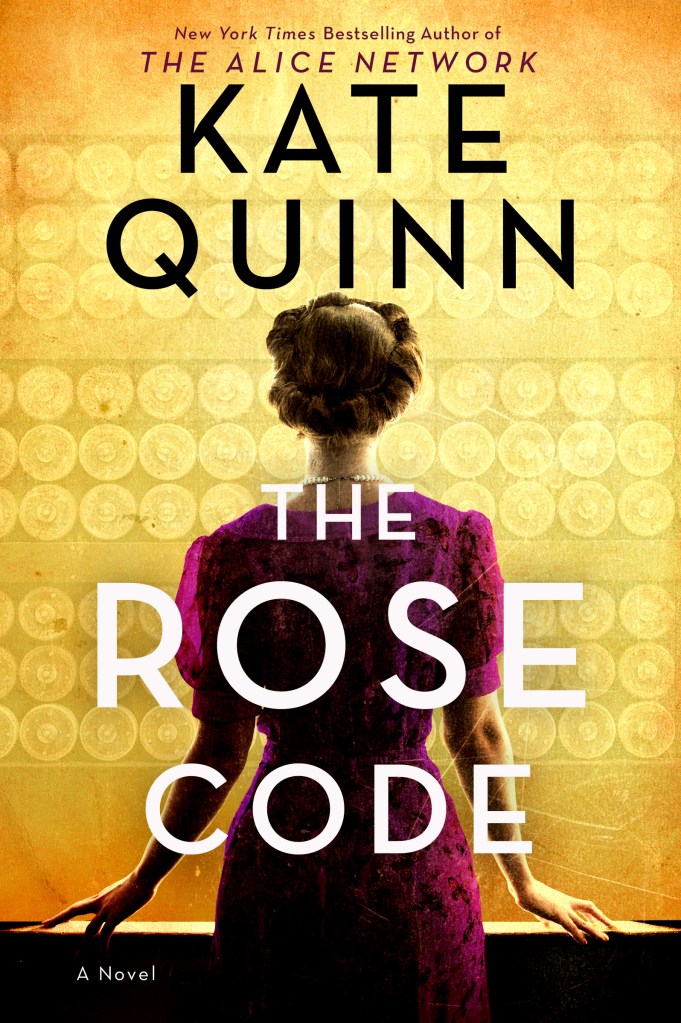
The Rose Code by Kate Quinn

Harper Collins| 18 March 2021| 645 pages| 3*

1940, Bletchley Park, Buckinghamshire.

Three very different women are recruited to the mysterious Bletchley Park, where the best minds in Britain train to break German military codes.

Vivacious debutante Osla has the dashing Prince Philip of Greece sending her roses – but she burns to prove herself as more than a society girl, working to translate decoded enemy secrets. Self-made Mab masters the legendary codebreaking machines as she conceals old wounds and the poverty of her East-End London upbringing. And shy local girl Beth is the outsider who trains as one of the Park’s few female cryptanalysts.

1947, London.

Seven years after they first meet, on the eve of the royal wedding between Princess Elizabeth and Prince Philip, disaster threatens. Osla, Mab and Beth are estranged, their friendship torn apart by secrets and betrayal. Yet now they must race against the clock to crack one final code together, before it’s too late, for them and for their country.

My Thoughts:

I have very mixed thoughts about The Rose Code. On the one hand it’s just the sort of book I love – historical fiction with a thrilling story and interesting characters that kept me wanting to read on and yet also made me want it to last as long as possible. On the other hand, it’s unevenly paced, with a slow start and a rushed ending that was somewhat of an anti-climax. My favourite character was Beth and I enjoyed reading how her character developed from a shy down trodden young woman into a brilliant cryptanalyst.

But when I first began reading it earlier this year I stopped after the opening pages and only picked it up again a couple of weeks or so ago. I initially stopped as the storyline involving Prince Philip made me very uncomfortable – Prince Philip was still alive when this book was written and when I first started to read it. He died in April this year.

The book begins in 1947 as Osla Kendall, a journalist working for the Tatler, is wondering what to wear for the Royal Wedding. She is in a ‘foul mood‘ as she wonders what to wear to the wedding of Princess Elizabeth and Lieutenant Philip Mountbatten.

Historical fiction mixes fact and fiction with both real and imaginary characters and I don’t have a problem with that. The character of Osla Kendall is based on a real person – in her Author’s Note Kate Quinn writes that she is ‘lightly fictionalized from the real-life Osla Benning, a beautiful, effervescent, Canadian-born heiress and Hut 4 translator who was Prince Philip’s long-term wartime girlfriend.‘ But by the time of the Royal Wedding Osla Benning was already married, not pining after Prince Philip. In writing their story Kate Quinn was not writing from facts but from her imagination as she put words in her characters’ mouths and described their emotions thoughts and feelings, which, of course, she could not have known.

However, I got over my dislike and read on – after all, this is fiction, not an accurate historical account. I like to know which is fact and which is fiction when I read historical fiction. So, after reading the review copy I received via NetGalley, I decided I needed to buy the published book and read the Author’s Note. And I’m glad did because I was relieved to find that Kate Quinn goes into a lot of detail to identify which characters are real and which fictional and how she has fictionalised them. She also reveals that she has also deviated from the historical records ‘to serve the story.’ I think this explains why I was uncomfortable with the book and why I don’t often read historical romances.

With thanks to NetGalley and to the publishers for my review copy.
My Friday Post: The Beekeeper’s Promise by Fiona Valpy

Every Friday Book Beginnings on Friday is hosted by Gillion at Rose City Reader where you can share the first sentence (or so) of the book you are reading. You can also share from a book you want to highlight just because it caught your fancy.

This week I’m featuring one of my library books, The Beekeeper’s Promise by Fiona Valpy.

Eliane; 2017

She knew this would be her last summer. The warm caress of the late-spring sunlight couldn’t roll back the fog-like weariness that crept through her bones these days. But then there had been so many summers. Almost a hundred.

Also every Friday there is The Friday 56, hosted by Freda at Freda’s Voice. *Grab a book, any book. *Turn to Page 56 or 56% on your  ereader . If you have to improvise, that is okay. *Find a snippet, short and sweet, but no spoilers!

Page 56:

That night, as the girls lay in their attic bedroom at the mill listening to the owls softly declaring their territory in the darkness, Mireille whispered, ‘Eliane? Are you awake?’

‘Yes,’ came the reply from across the room.

‘It’s been a good Easter, hasn’t it?’

There was a pause. ‘One of the best.’

Set in France at the Château Bellevue, this is the story of two remarkable women, generations apart, who must use adversity to their advantage and find the resilience deep within.

Top Ten Tuesday: Book Titles That Are Questions

Top Ten Tuesday is a weekly meme created by The Broke and the Bookish and now hosted by Jana at That Artsy Reader Girl. For the rules see her blog. The topic this week is Book titles that are questions.

These are all books that I own. I’ve read the first six:

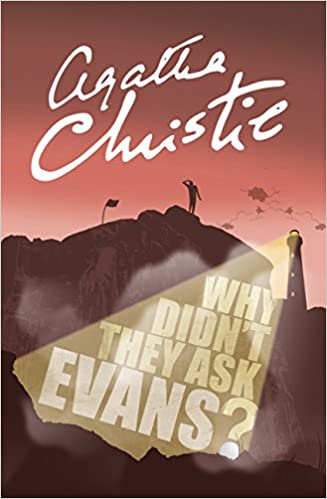
Why Didn’t They Ask Evans? by Agatha Christie, a standalone mystery about a dying man found at the bottom of a cliff whose last words were Why didn’t they ask Evans?

N or M? (Tommy and Tuppence 3) following the publication of N or M? Agatha Christie was investigated by MI5 because she had named one of the characters ‘Major Bletchley’ and MI5 suspected she had a spy in Britain’s undercover code breaking centre, Bletchley Park.

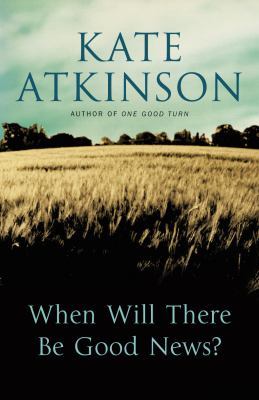
When Will There Be Good News? by  Kate Atkinson, this is a case of bad news all round, beginning when six year old Joanna witnesses the murder of her mother, older sister and baby brother.  It goes from bad to worse.

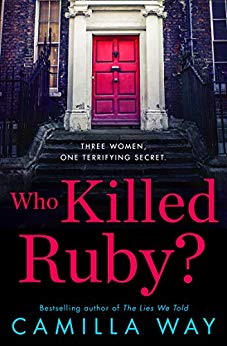
Who Killed Ruby? by Camilla Way, Ruby was murdered 32 years ago, but her killer was never found. This is a tense and emotional mystery that kept me guessing to the very end.

Did You See Melody? by Sophie Hannah, Melody was seven when she disappeared and although her body had not been discovered her parents were tried and found guilty of murdering her. But is Melody dead or not?

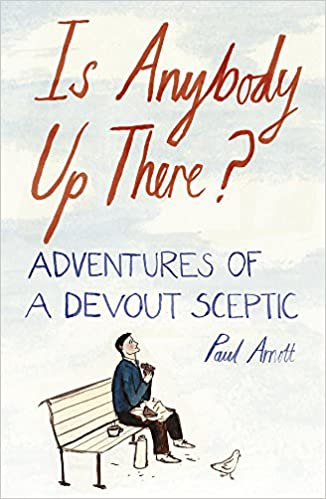
Is Anybody Up There? by Paul Arnott. This is easy reading, with information about a number of religious beliefs, but it’s not very enlightening. It’s more a biography or memoir than an exploration of why Paul Arnott calls himself a devout sceptic. 

These four books are TBRs, most of them books I’d forgotten I’d bought, and found buried deep within my Kindle:

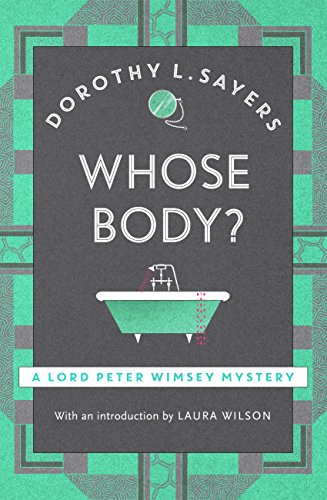
Whose Body? by Dorothy L Sayers – the first of her Lord Peter Wimsey books, first published in 1923. Wimsey investigates the mystery of the corpse in the bath.

Can You See Me? by Lynne Lee, her first psychological thriller. Julia, a doctor grieving the death of her husband, worries about her daughter’s reaction.

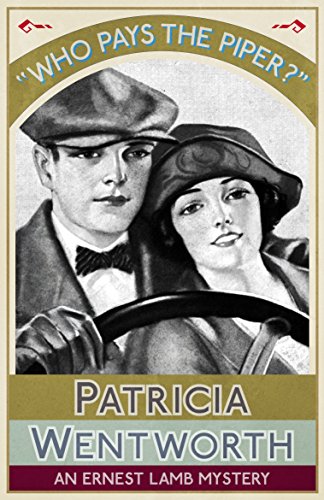
Who Pays the Piper? by Patricia Wentworth, an Inspector Ernest Lamb murder mystery in a quiet English village, first published in 1940.

You Talkin’ to Me: Rhetoric from Aristotle to Obama? by Sam Leith in which he defines rhetoric and looks its history. Along the way, he tells the stories of its heroes and villains, from Cicero and Erasmus, to Hitler, Obama – and Gyles Brandreth.

Reading Challenges Update

I’m taking part in a few reading challenges and as we’re now in the second half of the year I thought I’d take stock of where I’m up to in each one.

Back to the Classics

There are 12 categories and I have read books from 4 categories. Still a long way to go:

  1. A 19th century classic: any book first published from 1800 to 1899 – Little Dorrit by Charles Dickens 1857. Not yet reviewed.
  2. A 20th century classic: any book first published from 1900 to 1971 – Checkmate to Murder by E C R Lorac – 1944
  3. A classic by a woman author – Orlando by Virginia Woolf – 1928.
  4. A children’s classic – The Railway Children by Edith Nesbit.

Mount TBR 2021

I aiming to read 36 books and so far I’ve read 25, although I haven’t reviewed all of them, so I’m more than halfway there:

  1. The Measure of Malice edited by Martin Edwards
  2. Exit by Belinda Bauer
  3. The One I Was by Eliza Graham
  4. Cruel Acts by Jane Casey
  5. The Cutting Place by Jane Casey
  6. Orlando by Virginia Woolf
  7. English Pastoral by James Rebanks
  8. The Marlow Murder Club by Robert Thorogood
  9. Invisible Girl by Lisa Jewell
  10. For the Record by David Cameron
  11. The Moon Sister by Lucinda Riley
  12. The Salt Path by Raynor Winn
  13. We Are Not In The World by Conor O’Callaghan
  14. A Room Made of Leaves by Kate Grenville
  15. Ice Bound by Jerri Nielsen
  16. Murder in Mesopotamia by Agatha Christie
  17. The Mirror Dance by Catriona McPherson
  18. Inland by Tea Obreht
  19. Little Dorrit by Charles Dickens
  20. Coming Up For Air by Sarah Leipciger
  21. The Paris Library by Janet Skeslien Charles
  22. Katheryn Howard: the Tainted Queen by Alison Weir
  23. An Officer and a Spy by Robert Harris
  24. The Rose Code by Kate Quinn
  25. The Dressmaker by Beryl Bainbridge

Wanderlust Bingo

Complete the Wanderlust Bingo card containing 25 categories. Any type of book counts – crime, fiction, science fiction, non-fiction. A country can only appear once. I’ve read books that qualify for 8 squares, so I need to get reading more widely as so many of the books I read are located in the UK or the USA.

What’s in a Name?

I’ve read 3 of the 6 categories – so I’m doing OK:

  1. One’ or ‘1‘: The One I Was by Eliza Graham
  2. Repeated word:
  3. Reference to outer spaceThe Moon Sister by Lucinda Riley
  4. Possessive noun:
  5. Botanical word:
  6. Article of clothing: The Dressmaker by Beryl Bainbridge

20 Books of Summer

This is a challenge I don’t usually complete. This year I’ve substituted two of the books I initially chose (which is allowed in the rules) and have read 9 of them and have reviewed 5. This challenge runs from 1 June to 1 September, so I’m doing OK.

  1. The Railway Children by E Nesbit read
  2. An Officer and a Spy by Robert Harris
  3. The Dressmaker by Beryl Bainbridge
  4. The Killing Kind by Jane Casey
  5. The Paris Library by Janet Skeslien Charles
  6. Coming Up for Air by Sarah Leipciger
  7. The Rose Code by Kate Quinn
  8. Katheryn Howard, The Tainted Queen by Alison Weir
  9. The Old Man and the Sea by Ernest Hemingway

The Classics Club

This is 5 year challenge to read 50 classics books. I have just 3 books left to read!

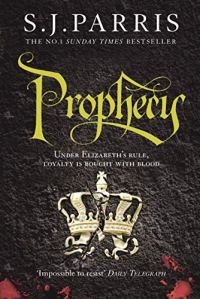
Prophecy by S J Parris

Harper Collins| 2011| 448p| Library book| 4*

Prophecy by S J Parris (a pseudonym of Stephanie Merritt) is the second book in her Giordano Bruno series of historical thrillers. Giordano Bruno was a 16th century heretic philosopher and spy. On her website Stephanie Merritt has written about how she first discovered him. Her version of Bruno is a fictional creation, though many of the situations he encounters are based on historical fact.

Bruno started out as a Dominican friar in Naples, but fled his order to escape the Inquisition, went on the run through Italy, found work as an itinerant teacher and within three years had ended up in Paris as personal tutor to the King of France. By 1583 he was in England, working for the Queen Elizabeth I’s spymaster Sir Francis Walsingham.

Prophecy begins in the autumn of 1583, when Elizabeth’s throne is in peril, threatened by Mary Stuart’s supporters scheme to usurp the rightful monarch. I wrote about the opening of the book together with an extract from page 56 in this post. After a young maid of honour is murdered, with occult symbols carved into her flesh, Bruno is assigned to infiltrate the plotters and secure the evidence that will condemn them to death.

I think this description on the Fantastic Fiction website summarises the book very well:

It is the year of the Great Conjunction, when the two most powerful planets, Jupiter and Saturn, align – an astrological phenomenon that occurs once every thousand years and heralds the death of one age and the dawn of another. The streets of London are abuzz with predictions of horrific events to come, possibly even the death of Queen Elizabeth.

When several of the queen’s maids of honor are found dead, rumors of black magic abound. Elizabeth calls upon her personal astrologer, John Dee, and Giordano Bruno to solve the crimes. While Dee turns to a mysterious medium claiming knowledge of the murders, Bruno fears that something far more sinister is at work. But even as the climate of fear at the palace intensifies, the queen refuses to believe that the killer could be someone within her own court.

Bruno must play a dangerous game: can he allow the plot to progress far enough to give the queen the proof she needs without putting her, England, or his own life in danger?

In this utterly gripping and gorgeously written novel, S. J. Parris has proven herself the new master of the historical thriller.

I thoroughly enjoyed this book. I felt I was back there in 1583, in the thick of the intrigue and danger that characterised the period. I loved all the details of the court life and the interaction between the various factions, with rivalry between Catholics and Protestants, whilst the involvement of Dr John Dee intrigued me. Bruno, himself, fascinated me and now I want to know more about him and also about Stephanie Merrick’s books as well as those written under her pen name, S J Parris.