Top Ten Tuesday: Books to Read If You Love Hilary Mantel’s Wolf Hall Trilogy

Top Ten Tuesday is a weekly meme created by The Broke and the Bookish and now hosted by Jana at That Artsy Reader Girl. For the rules see her blog.

This week’s topic is Books to Read If You Love/Loved X (X can be a genre, specific book, author, movie/TV show, etc.). The Wolf Hall Trilogy by Hilary Mantel tells the story of the rise and fall of Thomas Cromwell in the court of Henry VIII.

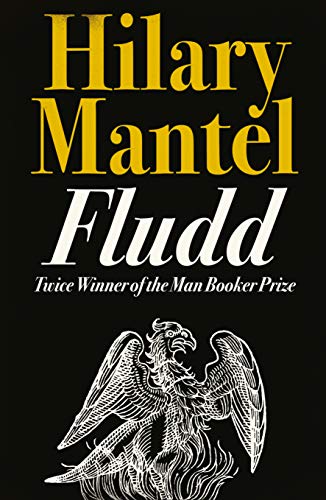
Wolf Hall – England in the 1520s as Henry VIII is seeking a divorce from Katherine of Aragon in order to marry Anne Boleyn. It tells of the rise to power of Thomas Cromwell. Bring Up the Bodies, by 1535, Anne has failed to bear a son and Henry gas fallen in love with Jane Seymour – Anne has to go. This is mainly about Cromwell’s scheming to bring about Anne’s downfall. The Mirror and the Light, the final part, which I’m still reading, set in 1536 – 1540, about Cromwell’s final years.

Here are 10 other historical fiction trilogies/series that I’ve read and loved. I’ve given brief descriptions of the first books for each with links to Goodreads for the details of the rest of the series..

Mathew Shardlake Series by C J Sansom – Mathew Shardlake is a lawyer-detective in the court of Henry VIII. Seven books – I’ve read all of them. The first one Dissolution is closest in time to the third book of Mantel’s trilogy set at the time of the dissolution of the monasteries in 1537. Thomas Cromwell’s Comissioner is found dead, his head severed from his body. Dr Shardlake is sent to uncover the truth behind what has happened.

Marwood and Lovett Series by Andrew Taylor – 17th century London during Charles II reign, who was restored to the throne in 1660 Five books – the first, The Ashes of London is set in 1666 just after the Great Fire. The fathers of both James Marwood and Cat Lovett has fought against Charles and so they are both disgraced. they become involved in investigating the murder of a man is found in the ruins of St Paul’s Cathedral.

Christopher Redmayne Series by Edward Marston – Christopher Redmayne, an architect, and Jonathan Bale, a constable in 1600s London, England. The first book, The King’s Evil is also set in 1666 just after the Great Fire and is also a murder mystery. Redmayne is an architect, working to restore London after the Fire, when he becomes involved in investigating the murder of Sir Ambrose Northcott. whose body was found in the cellars of his partly built new house.

Damian Seeker Series by S G MacLean – historical thrillers set in Oliver Cromwell’s London. Five books – the first is The Seeker, set in 1654. Damian Seeker, Captain of Cromwell’s Guard, works for John Thurloe, Cromwell’s Chief Secretary and spy master. England in 1654 is a Republic in name only, Parliament had been dissolved in 1653 and Cromwell was appointed as Lord Protector – King in all but name.

Raven, Fisher, and Simpson Mystery Series by Ambrose Parry – murder and medical experiments set in 19th century Edinburgh. Three books – the first one is The Way of All Flesh, set in 1847. It begins with the death of Evie, a prostitute in Edinburgh’s Old Town, found by Will Raven, a young medical student about to start his apprenticeship with Dr Simpson. a professor of midwifery, who discovered the anaesthetic properties of chloroform. Sarah Fisher, Dr Simpson’s housemaid is an ambitious and enterprising young woman who would love to have a career in medicine. She and Will join forces to uncover the killer in the depths of Edinburgh’s dark underworld.

Munro Scottish Saga Series by Margaret Skea – set 16th century Scotland. Three books, the first is Turn of the Tide which begins in 1586 in the Scottish Borders in the middle of the centuries-old feud between the Cunninghames and the Montgomeries, with all the drama of their battles, ambushes and schemes to further their standing with the young King James VI. It’s a tale of love, loyalty, tragedy and betrayal.

The Burning Chambers Series by Kate Mosse – 2 books, with a third book in progress. The first is The Burning Chambers, set in Languedoc in the south-west of France in 1562 during the French Wars of Religion. It’s centred on the Joubert family, Catholics living in Carcassonne and Piet Reydon, one of the Huguenot leaders. Bernard Joubert, a bookseller had been imprisoned accused of being a traitor and a heretic after he had let slip information about a secret will. It’s a complicated story of war, conspiracies, love, betrayal, forgery, torture and family secrets.

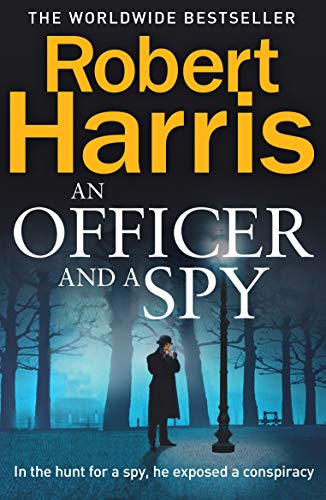
Cicero Series by Robert Harris- set in Ancient Rome – three books. The first is Imperium. Beginning in 79 BC, this book set in the Republican era is a fictional biography of Marcus Tullius Cicero by Tiro, his slave secretary. It is basically a political history, a story filled with intrigue, scheming and treachery in the search for political power as Cicero, a senator, works his way to power as one of Rome’s two consuls.

Theseus Series by Mary Renault – Two books, The King Must Die and The Bull from the Sea. I remember being captivated by these books when I first read them years ago and would so like to re-read them. They retell the life of the mythological Greek hero Theseus, following his adventures from Troizen to Eleusis, where the death in the book’s title is to take place, and from Athens to Crete, where he learns to jump bulls and is named king of the victims. In the second book Theseus defies the Gods’ and claims the throne of Athens a move that culminates in the terrible, fateful destruction of the house of Minos where he slays the Minotaur.

Alexander Seaton Series by Shona MacLean, set in 17th century Scotland. Four books, the first is The Redemption of Alexander Seaton. It is set in the town of Banff, Scotland in the 1620s. One stormy night Patrick Davidson, the local apothecary’s assistant collapses in the street. The next morning he is found dead in the school house of Alexander Seaton, a failed minister, now a schoolteacher. When one of Alexander’s few friends in the town is arrested for the murder, he sets out to prove his innocence.

Recent Loans from the Library

Guilty Creatures: A Menagerie of Mysteries edited and introduce by Martin Edwards. I like these anthologies as much, if not more, for Martin Edwards’ introductions than for the actual stories. I often find that they’re too short for my liking, but I’m hoping there will be some that will prove me wrong. This collection includes stories by Arthur Conan Doyle, G K Chesterton, Edgar Wallace, Josephine Bell and Christianna Brand, among others.

The Descent of Man by Grayson Perry. During the fist lockdown I loved watching Grayson’s Art Club, Channel 4’s documentary series hosted by him and his wife, psychotherapist Philippa Perry. In this book he is looking at masculinity, particularly examining how men dominate much of our world, how men dress and act, how men resort to crime and violence, and how men feel.

Black Sheep by Susan Hill, a novella about a brother an sister who grew up in a coal mining village and yearn to escape. Neither can break free and their decisions result in brutal consequences. It sounds a bit grim!

Rescue by Anita Shreve. The last few books by Anita Shreve I’ve read haven’t been as good as her earlier ones, so I’m hoping this one won’t be disappointing. It’s about a paramedic who rescues a troubled young woman from a car crash. They start a love affair and have a daughter. Eighteen years later he is raising the girl on his own,

Servant of Death by Sarah Hawkswood, historical murder mystery set in the 12th century, the first in the Bradcote and Catchpole mystery series. The Lord Bishop of Winchester’s clerk – is bludgeoned to death in Pershore Abbey and laid before the altar in the attitude of a penitent. Who hated him enough to murder him?

The Long Way Home by Louise Perry. I thought it looked familiar and when I got home and checked my blog I realised I’d borrowed this book before – in 2018! But I took it back unread, thinking I’d try to get the first one. It’s the 10th Chief Inspector Gamache novel – and I still haven’t read any of the previous books, so maybe I’ll read this one this time.

Short Nonfiction: Breathtaking by Rachel Clarke

Little, Brown Book Group| 26 January 2021| 154 pages| 4*

Novellas in November is hosted by Cathy and Rebecca. This week the focus is on short nonfiction.

I’ve watched TV programmes about Covid-19, seeing what it was like in a number of hospitals as the virus took hold in the UK, so a lot of the information in Rachel Clarke’s book, Breathtaking: Inside the NHS in a Time of Pandemic wasn’t new to me. But, I wanted to read this book to get an inside perspective on what it was like working in the NHS during the pandemic.

There have been so many fears that the NHS would be overwhelmed and reports criticising the way the government has dealt with the situation – and this is still the case now as winter approaches and the number of daily confirmed cases of coronavirus is still high, whilst hospital waiting lists for non-Covid-19 treatment remain high. Add to this there are now reports that doctors are saying that casualty departments are on the ‘edge of a precipice’, leading to dangerous levels of handover delays with patients forced to wait in ambulances for up to 11 hours outside hospitals. On TV I’ve seen the enormous queues of ambulances outside hospitals waiting to admit patients!

Rachel Clarke is a palliative care doctor and her book recounts her experiences during the first four months of 2020, when she worked on the Covid-19 wards in the Oxford University Hospitals system. Taken from her diary that she kept at the time it has an immediacy as she records her insomnia, her fears for her family and also the tremendous resilience, courage and empathy that she and the rest of the hospital staff had.

She tells the now familiar story about the PPE shortages, the lack of funding they experienced and criticises the government for their failure to act quickly enough – which I echo. Although it is a grim account, as I expected, it is also uplifting to know the care they took of their patients and the attentiveness to their patients’ needs despite the fact that many of the staff were not trained in intensive care and had never dealt with anything like this before.The way they had to prioritise patients is shocking, but I suppose inevitable given the lack of resources and staff.

She found that being a pandemic doctor was revelatory:

The crisis has undeniably revealed sweeping truths about social and economic inequalities, class divisions, global interconnectedness and the fact that our society’s most vital key workers were, and remain, among the lowest paid and the least empowered. Historians will dissect the issues for years to come. My revelations were about people. I learned from ward to ward, from bedside to bedside, paying meticulous attention to one human being and then another. I discovered how to distinguish what we absolutely cannot do without from what is really in the end, superfluous. (page 18)

This book is a snapshot, written at the time:

It depicts life and death, hope, fear, medicine at its most impotent and also at its finest, the courage of patients in enormous adversity, the stress of being torn between helping those patients and endangering your spouse and children, the long, fretful nights ruminating over whether the PPE you wear fits the science or the size of the government stockpile. I needed, I think, to take a stand with my pen and simply say: I was there. I have seen it, from the inside. I know what it was like. Here, with all its flaws and its inherent subjectivity, is my testimony. Make of it what you will. (pages 18-19)

Breathtaking records the compassion and kindness of numerous people, and pays tribute to both NHS staff and volunteers in dealing with such a distressing and immensely horrific situation.

Novellas in November: Short Nonfiction

Novellas in November is hosted by Cathy and Rebecca. This week the theme is short nonfiction and these are some I’ve read in previous years.
  1. Alive, Alive Oh and Other Things That Matter by Diana Athill (21 December 1917 – 23 January 2019). She was a British literary editor, novelist and memoirist who worked with some of the greatest writers of the 20th century at the London-based publishing company Andre Deutsch Ltd. This book contains her memories, thoughts and reflections on her life as she approached her 100th year, covering events from her childhood in the 1920s and 1930s, her post-war life, visits to Florence, and in the Club Mediterranee in Corfu in the 1950s, and the friends and lovers she has known upto 2009 when she moved into a home. The chapters follow on chronologically but are unconnected except for the fact that they demonstrate her love of life. And it is this love of life that is evident in her writing that makes it such a remarkable book. I loved it.
  2. Ink in the Blood: A Hospital Diary by Hilary Mantel, another short memoir. I read this in 2011 after Hilary Mantel’s talk at the Borders Book Festival at Melrose had been cancelled in the previous summer.  She had to cancel that because she wasn’t well – I didn’t know just how ill she was. Ink in the Blood reveals all – how she had surgery to remove an intestinal obstruction that ended up in a marathon operation, followed by intense pain, nightmares and hallucinations. Illness she found knocks down our defences, revealing things we should never see, needing moment by moment concentration on breathing, on not being sick and being dependent on others for your well-being. Writing was Hilary Mantel’s lifeline – it was the ink, as she wrote in her diary, that reassured her she was alive.
  3. James Herriot’s Cat Stories is a collection of ten stories clearly demonstrating his love of cats. In the introduction James writes that cats were one of the main reasons he chose a career as a vet. They have always played a large part in his life and and when he retired they were still there ‘lightening’ his days. This is a short book of 158 pages with illustrations by by Lesley Holmes.

I’ve recently read Breathtaking by Rachel Clarke and I’ll post a review later.

Nonfiction November: Week 2 Book Pairings

Week 2: (November 8-12) – Book Pairing with Katie at Doing DeweyThis week, pair up a nonfiction book with a fiction title. It can be a “If you loved this book, read this!” or just two titles that you think would go well together. Maybe it’s a historical novel and you’d like to get the real history by reading a nonfiction version of the story. 

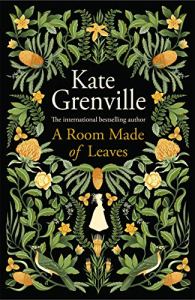
Earlier this year I read the novel A Room Made of Leaves by Kate Grenville and I’m pairing it with Elizabeth Macarthur: A Life at the Edge by Michelle Scott Tucker, which I haven’t read yet.

Kate Grenville is one of my favourite authors, so I was very keen to read A Room Made of Leaves. It’s historical fiction telling the story of the Macarthurs, Elizabeth and John Macarthur, who settled in Australia at the end of the eighteenth century. It’s based on the real lives of the Macarthurs using letters, journals and official documents of the early years of the New South Wales colony. Her writing suits me – historical fiction, with good descriptive writing setting the scenes vividly in their locations. I find her books difficult to put down and they stay in my mind long after I’ve finished reading. This one is no exception.

Whenever I read historical fiction I always want to know how much is fact and how much is fiction, how accurate it is. And so this novel intrigued me because Kate Grenville’s book begins with an editor’s note about ‘the ‘incredible discovery of Elizabeth Macarthur’s secret memoirs’ in a tin box containing old papers, revealing the real person behind the few letters she wrote home to her family and friends and a lot of ‘dull correspondence with her adult children’. Was this true, I wondered. So I turned to the back of the book to read Grenville’s Author’s Note and in that she clarifies that this is not history and, although the extracts from Elizabeth’s letters are from the letters of the real Elizabeth Macarthur, she has ‘taken some liberties in order to shape this work of fiction’. The old documents were Grenville’s ‘inspiration and guide’. In other words you have to bear in mind the epigraph, an actual quotation from one of Elizabeth’s letters: Believe not too quickly, a reminder that this is fiction.

It made me want to know more about the Macarthurs, and what was indeed their history, so I was delighted to find out that Kate Grenville references Michelle Scott Tucker’s biography: Elizabeth Macarthur: A Life at the Edge of the World as the standard biography in her Acknowledgements and I was even more delighted to see that it’s available as a ebook. So it is now in my Kindle and I’m keen to read it as soon as possible. I want to see what Michelle Scott Tucker has made of the same historical sources – history, after all, is an interpretation of the facts from the records, trying to explain what happened and why, dependent on available evidence. Fiction is more flexible and can fill in the gaps where the documentary evidence is lacking.

Six Degrees of Separation: from What Are You Going Through to The Man on a Donkey

It’s time again for Six Degrees of Separation, a monthly link-up hosted by Kate at Books Are My Favourite and Best. Each month a book is chosen as a starting point and linked to six other books to form a chain. A book doesn’t need to be connected to all the other books on the list, only to the one next to it in the chain.

The chain this month begins with  What Are You Going Through by Sigrid Nunez, a book I’ve not read. Described as a luminous, heartbreaking and life-affirming novel about choosing to die, it is a novel about a woman with terminal cancer. She asks a friend to accompany her on a holiday where she will, without warning one day, take a lethal pill to end her life on her own terms.

My first link: My first thought was to link my chain to books about cancer, beginning with The Spare Room by Helen Garner. Nicola, who is suffering from cancer goes to stay with her friend Helen whilst she undergoes alternative therapy. She refuses to accept that she is dying and Helen struggles to cope with the situation. It is a difficult book to read, not because of the style of writing, which is fluent, but because of the agonising descriptions of Nicola’s condition and the anguish and anger that hits Helen. But I’m glad I read it; it was nowhere nearly as bad as I imagined it would be.

So then I changed my mind and the rest of the chain just happened:

My second link is a bit tenuous and is via the author, Helen Garner, an Australian author, born in Geelong. In the 1959 film of Nevil Shute’s novel On the Beach the closing scenes were filmed near Barwon Heads, a suburb of Geelong. The novel is set after a world wide nuclear war has destroyed most of the globe, and the few remaining survivors in southern Australia await the radioactive cloud that is heading their way and bringing certain death to everyone in its path.

My third link is another novel with the word ‘beach’ in the title, On Chesil Beach by Ian McEwan. Edward and Florence married that morning are on honeymoon at a hotel on Chesil Beach, an 18-mile long shingle barrier beach on the Dorset coast. They are struggling to suppress their fears of their wedding night to come.

My fourth link: is the name ‘Florence’. In Deadheads by Reginald Hill old Mrs Florence Aldermann instructs her great nephew, eleven year old Patrick, how to deadhead roses and explains why it is necessary. When Patrick eventually inherits the splendid Rosemount House and gardens on the death of his aunt he is able to indulge his horticultural passions without restraint. But why do so many of his colleagues keep dropping dead?

My fifth link is to a novel with the word ‘rose’ in the title. It’s one of my favourite books, The Name of the Rose by Umberto Eco, historical fiction set in 1327. Benedictine monks in a wealthy Italian abbey are suspected of heresy, and Brother William of Baskerville arrives to investigate. He collects evidence, deciphers secret symbols and coded manuscripts, and digs into the eerie labyrinth of the abbey, where “the most interesting things happen at night.” When his delicate mission is suddenly overshadowed by seven bizarre deaths, Brother William turns detective.

My sixth link: is to The Man on a Donkey by H F M Prescott, historical fiction that features Benedictines but in this book it’s Benedictine nuns, not monks. It is set in 1536 and is about The Pilgrimage of Grace, a protest against Henry VIII‘s break with the Roman Catholic Church, the Dissolution of the Monasteries, and the policies of the King’s chief minister, Thomas Cromwell.

Beginning with stories about terminal cancer my chain travels to one about Henry VIII’s dissolution of the monasteries, via tales about survivors of a nuclear war, a couple’s fears of their wedding night, a man who loves roses accused of murder, and murders in an Italian abbey.

Next month (December 4, 2021), we’ll start with the classic novella, Ethan Frome by Edith Wharton. For a change the chain begins with a book I have read!