The Count of Monte Cristo by Alexandre Dumas

Penguin| Revised edition 2003| 1313 pages| 4*

I have had a paperback copy of The Count of Monte Cristo for many years. This year I joined in Karen’s Back to the Classics 2021 Reading Challenge, which gave me the incentive to read it now, as it meets the criteria for category five: a classic by a non-white author. It’s also a book on my Classics Club list. Dumas was born in 1802. His father was the illegitimate son of the Marquis de La Pailleterie and Marie Cessette Dumas, a black slave from Haiti. He was a prolific writer, producing 41 novels, 23 plays, 7 historical works and 6 travel books.

The Count of Monte Cristo was first serialised in a French newspaper in 18 parts in 1844 and later translated into English. There have been several translations, editions and abridged versions since then. I really had very little idea of the plot and had not watched any of the film or TV adaptations. As I found it hard to read my paperback version I read an e-book version, so much easier to see!

It begins in 1815 when Edmond Dantès, a sailor, having returned to Marseilles, and celebrating his betrothal to Mercedes is wrongly accused of being a Bonapartist and imprisoned in the Chateau d’If on the Isle of Monte Cristo, for fourteen years. His accusers were Fernand, who was also in love with Mercedes, assisted by Danglars, one of Dantès’ shipmates and Caderousse, a drunkard who went along with the others’ plot to get rid of him. The King’s Attorney, Villefort has his own reasons for condemning Dantès to conceal his father’s involvement with the Bonapartists.

I was quickly drawn into the story with the account of how Dantès survived his imprisonment after meeting the Abbé Faria, who tells him of a great hoard of treasure and offers to share it with him. He educates Dantès in languages, culture, mathematics, chemistry, medicine, and science and together they plan to escape. But the Abbé dies and Dantès ingeniously uses his death to make his own miraculous escape. Whilst in prison Dantès had vowed to get his revenge on the four men responsible for his imprisonment and the rest of the books tells how he went about it. It’s a complicated and elaborate plan that he carries out remorselessly, one that takes him several years to achieve.

It’s a great story, action-packed, and full of high drama and emotion. It’s a love story, a story of revenge and retribution, about justice, intrigue and betrayal. There’s imprisonment and a daring escape, bandits, murder, madness, and suicide. In addition there’s a female poisoner, a scene of torture, an execution, drug-induced sexual fantasies and above all a conflict between good and evil.

But it is very long (Dumas was paid by the line) and a difficult book to review as there is so much in it.There’s a wealth of characters, but the absolute star of the book is the Count of Monte Cristo himself, in his several guises. It’s a theatrical drama, melodramatic in parts, a book I found difficult to put down and it had me turning page after page as I just had to find out what would happen next. There are episodes that really beggar belief, and it has its slow moments where I just wanted Dumas to get on with the story and for Monte Cristo to get his revenge, but it all wove together to make a spectacular whole.

I loved it!

Books on My Winter 2021 To-Read List

Top Ten Tuesday is a weekly meme created by The Broke and the Bookish and now hosted by Jana at That Artsy Reader Girl. For the rules see her blog.

The topic this week is Books on My Winter 2021 To-Read List. I don’t plan what to read in advance, so these are books on my shelves that I want to read – maybe this winter, or sometime next year. They’re a mix of NetGalley books that will be published next year and books that I’ve had on my bookshelves or on Kindle for some time.

NetGalley books:

  • The Man in the Bunker by Rory Clements (pub 20 January 2022) – a Cambridge spy must find the truth behind Hitler’s death. But exactly who is the man in the bunker?
  • The Second Cut by Louise Welsh (pub 27 January 2022) – this delves into the dark side of twenty-first century Glasgow. Twenty years on from his appearance in The Cutting Room, Rilke is still walking a moral tightrope between good and bad, saint and sinner.
  • A Flicker in the Dark by Stacy Willingham (pub 3 February 2022) – Chloe Davis’ father is a serial killer. He was convicted and jailed when she was twelve but the bodies of the girls were never found, seemingly lost in the surrounding Louisiana swamps. The case became notorious and Chloe’s family was destroyed.
  • The Hiding Place by Simon Lelic (pub 5 May 2022) – DI Rob Fleet investigates a cold case when the body of a boy, who went missing over twenty years earlier whilst playing a game of hide and seek, is found.
  • The Second Sight of Zachery Cloudesley by Sean Lusk (pub 2 June 2022) – Set in the 18th century Zachary Cloudesley has grown up surrounded by strange and enchanting clockwork automata. But most extraordinary of all are the things Zachary can see in other people. At the touch of a hand, he can see the secret desires, regrets and inner workings of the people he meets. When his father disappears in Constantinople he sets out to find him.

Books from my TBRs:

  • Fire from Heaven: a novel of Alexander the Great by Mary Renault – Alexander the Great died at the age of thirty-three, leaving behind an empire that stretched from Greece to India. Fire From Heaven tells the story of the years that shaped him. 
  • Love in the Time of Cholera by Gabriel Garcia Marquez – Set on the Caribbean coast of South America, this love story brings together Fermina Daza, her distinguished husband, and a man who has secretly loved her for more than fifty years.
  • State of Wonder by Ann Patchett – Among the tangled waterways and giant anacondas of the Brazilian Rio Negro, an enigmatic scientist is developing a drug that could alter the lives of women for ever. 
  • The Honourable Schoolboy by John Le Carré – George Smiley launches a risky operation uncovering a Russian money-laundering scheme in the Far East. His aim: revenge on Karla, head of Moscow Centre and the architect of all his troubles.
  • The River Midnight by Lilian Nattel – this is set in the fictional village of Blaszka in Poland at the end of the 19th century. Myth meets history and characters come to life through the stories of women’s lives and prayers, their secrets, and the intimate details of everyday life. 

Book Beginnings & The Friday 56: Servant of Death by Sarah Hawkswood

Every Friday Book Beginnings on Friday is hosted by Gillion at Rose City Reader where you can share the first sentence (or so) of the book you are reading. You can also share from a book you want to highlight just because it caught your fancy.

Servant of Death is one of the books I’ve recently borrowed from the library. It’s historical crime fiction set in 1143 in Pershore Abbey, the first in the series of Bradecote and Catchpoll Mysteries set in the twelfth century, in Worcestershire.  

The Book Begins:

Elias of St Edmondsbury, master mason, stood with the heat of the midsummer sun on broad back and thinning pate, rivulets of sweat trickling down between his shoulder blades. The wooden scaffolding clasped the north transept of the abbey church, close as ivy.

Also every Friday there is The Friday 56, hosted by Freda at Freda’s Voice. *Grab a book, any book. *Turn to Page 56 or 56% on your  ereader . If you have to improvise, that is okay. *Find a snippet, short and sweet, but no spoilers!
These are the rules:

  1. Grab a book, any book.
  2. Turn to page 56, or 56% on your eReader. If you have to improvise, that is okay.
  3. Find any sentence (or a few, just don’t spoil it) that grabs you.
  4. Post it.
  5. Add the URL to your post in the link on Freda’s most recent Friday 56 post.

Page 56:

‘He dropped to his knees, careful to avoid the dark, sticky stain, and slid his hand beneath the corpse. Feeling around tentatively, he was relieved to find the cords of the monk’s scrip, and followed them to the leather bag, which was still full. Whoever had killed him had not had time or inclination to investigate it.

Summary:

The much-feared and hated Eudo – the Lord Bishop of Winchester’s clerk – is bludgeoned to death in Pershore Abbey and laid before the altar in the attitude of a penitent. Everyone who had contact with him had reason to dislike him, but who had reason to kill him? The Sheriff of Worcestershire’s thief taker, wily Serjeant Catchpoll, and his new and unwanted superior, Undersheriff Hugh Bradecote, have to find the answer. And as the claustrophobic walls of the Abbey close in on the suspects, the killer strikes again.

This is the first book by Sarah Hawkswood that I’ve come across.

About Sarah Hawkswood, a pen name.

Sarah Hawkswood read Modern History at Oxford University and specialised in Military History and Theory of War. She turned from writing military history to mediaeval murder mysteries set in the turmoil of The Anarchy in the mid 12thC, all located in Worcestershire, where she now lives. The Bradecote & Catchpoll series began with Servant of Death (previously published as The Lord Bishop’s Clerk) and the ninth, Wolf at the Door, was published in August 2021 with the tenth, A Taste for Killing, due out in 2022.

~~~

What have you been reading lately?
Six Degrees of Separation: from Ethan Frome to Beneath the Surface

It’s time again for Six Degrees of Separation, a monthly link-up hosted by Kate at Books Are My Favourite and Best. Each month a book is chosen as a starting point and linked to six other books to form a chain. A book doesn’t need to be connected to all the other books on the list, only to the one next to it in the chain.

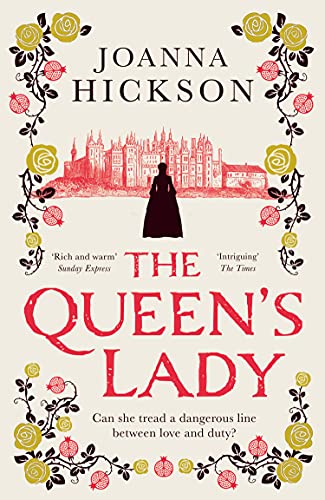
The chain this month begins with  Ethan Frome, a novella by Edith Wharton, which I have read and loved. Set in the fictitious town of Starkfield, Massachusetts, this is a tragedy about a farmer trapped in an unhappy marriage. Their lives are changed when his wife’s cousin comes to live with them to help in the house.

My first link is to another book by Edith Wharton, Xingu and other stories, one of my TBRs, There are five short stories – about jealous husbands, spinsters who have wasted away their lives, and bored ladies infatuated with money and aspirations.

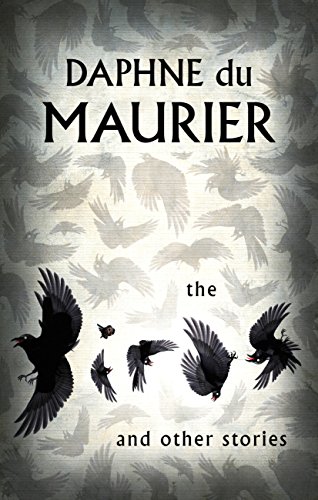
My second link is to another book of short stories, which I’m currently reading. It’s The Birds and Other Stories by Daphne du Maurier, a total of six stories. Hitchcock based his film on du Maurier’s horror story of a farmhand, his family, and his community who are attacked by flocks of birds.

My third link is Corvus: My Life with Birds by Esther Woolfson, which is part memoir and part nature study. Corvus’ is a genus of birds including jackdaws, ravens, crows, magpies and rooks. The specific birds Esther Woolfson looked after are a rook, a young crow, a cockatiel, a magpie, two small parrots and two canaries.

My fourth link is to the word ‘raven‘ in Raven Black by Ann Cleeves, the first book in her Shetland series – Inspector Perez. It begins on New Year’s Eve as Magnus Tait is seeing the new year in on his own, until two teenage girls knock on his door to wish him a Happy New Year. A few days later one of the girls is found dead in the snow not far from Magnus’s house, strangled with her own scarf.

My fifth link is to a novel that also begins on New Year’s EveThe Nine Tailors by D L Sayers,  as Lord Peter Wimsey is driving through a snow storm and ends up in a ditch near the village of Fenchurch St Paul in the Fens. He is taken in for the night by the vicar and helps the bell-ringers ring in the New Year. A few weeks later Wimsey is asked back to the village to help solve the mystery of the dead man found by the sexton whilst he was opening up Lady Thorpe’s grave to bury her husband.

My sixth link: is to Beneath the Surface by Fiona Neill, which is also set in the Fens, where Patrick and Grace Vermuyden and their two daughters, teenager Lilly and ten year old Mia, are living in badly built, damp and draughty house.This is an emotionally charged novel about the burden of keeping secrets and the effects that misunderstandings and lies can have. 

Beginning with a novella by Edith Wharton about a family tragedy my chain travels to another family in an ever decreasing spiral of disastrous events, thus making the chain into a circle and linking together short story collections, stories about birds, books beginning on New Year’s Eve and books set in the Fens.

Next month (January 4, 2022), we’ll start with a story that also begins on New Year’s Eve (what a coincidence!)– Rules of Civility by Amor Towles, a book I haven’t read.

Book Beginnings & The Friday 56: The Dogs of Riga by Henning Mankell

Every Friday Book Beginnings on Friday is hosted by Gillion at Rose City Reader where you can share the first sentence (or so) of the book you are reading. You can also share from a book you want to highlight just because it caught your fancy.

i’m still reading Hilary Mantel’s The Mirror and the Light and am stuck in the middle of the book where the narrative is so slow as Cromwell reminisces about his childhood and early adult years. I’m also reading The Count of Monte Cristo, such a long book, but it is moving along swiftly and although it’s a bit confusing with all the aliases that Dantès uses I think I’ve now got them straight in my head, and I’m really enjoying it.

But it’s time I started something new – so I picked a book at random off my bookshelves and began reading The Dogs of Riga by Henning Mankell, the second book in his Kurt Wallander series.

The Book Begins:

It started snowing shortly after 10am.

The man in the wheelhouse of the fishing boat cursed. He’d heard the forecast, but hoped they might make the Swedish coast before the storm hit.

Also every Friday there is The Friday 56, hosted by Freda at Freda’s Voice. *Grab a book, any book. *Turn to Page 56 or 56% on your  ereader . If you have to improvise, that is okay. *Find a snippet, short and sweet, but no spoilers!

These are the rules:

  1. Grab a book, any book.
  2. Turn to page 56, or 56% on your eReader. If you have to improvise, that is okay.
  3. Find any sentence (or a few, just don’t spoil it) that grabs you.
  4. Post it.
  5. Add the URL to your post in the link on Freda’s most recent Friday 56 post.

Page 56:

‘Bjork grabbed hold of the newspaper again and read aloud, “‘Soviet death patrols. The new Europe has exposed Sweden to crime with a political slant.’ What do they mean by that? Can anyone explain? Wallander?’

Summary:

Sweden, winter, 1991. Inspector Kurt Wallander and his team receive an anonymous tip-off. A few days later a life raft is washed up on a beach. In it are two men, dressed in expensive suits, shot dead.

The dead men were criminals, victims of what seems to have been a gangland hit. But what appears to be an open-and-shut case soon takes on a far more sinister aspect. Wallander travels across the Baltic Sea, to Riga in Latvia, where he is plunged into a frozen, alien world of police surveillance, scarcely veiled threats, and lies.

Doomed always to be one step behind the shadowy figures he pursues, only Wallander’s obstinate desire to see that justice is done brings the truth to light.

I read the first Wallander book, Faceless Killers several years ago and have been wanting to read more, so this book was a lucky random pick from my bookshelves this morning.

What have you been reading lately?
Throwback Thursday: The Perfect Summer

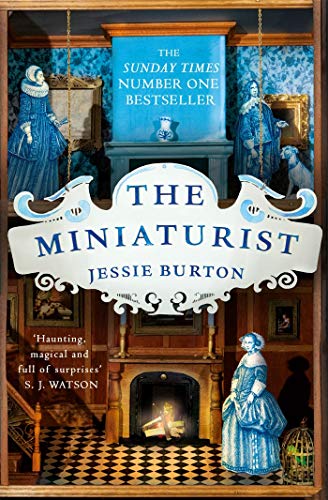
Today I’m looking back at my post on The Perfect Summer by Juliet Nicolson a book I loved. I first reviewed it on October 29, 2009. It focuses on the period from May, when King George V was crowned, to September, describing the minutiae of everyday life of both the rich and the poor. 

My review begins:

The Perfect Summer: Dancing into Shadow in 1911 by Juliet Nicolson is a fascinating look at life in Britain during the summer of George V’s Coronation year, 1911.

When I finished reading this book I decided that the summer of 1911 was not “the perfect summer”. It was one of the hottest years of the twentieth century, making life most uncomfortable at a time when most people had no means of getting out of the sweltering heat. Even a trip to the seaside for working class people meant they donned their Sunday best clothes and spent the day standing because they couldn’t afford to hire deck chairs!

Click here to read my full review

The next Throwback Thursday post is scheduled for December 30 2021.