Top Ten Tuesday is a weekly meme created by The Broke and the Bookish and now hosted by Jana at That Artsy Reader Girl. For the rules see her blog.
This week’s topic is a Hallowe’en Freebie. I’m a reluctant reader of scary stories but I have read these books, some are more scary than others.

Dracula by Bram Stoker. knew the story of Dracula from film and TV versions – with most notably Christopher Lee and later Louis Jourdan as Dracula, but steered clear of reading Bram Stoker’s book – well, it’s not like the film versions I’ve seen. The opening surprised me a little, so matter-of-fact and such attention to detail. And the narrative continues composed of letters, journal entries, newspaper articles and transcripts of phonograph diary entries, from several characters, so the story is told from several different viewpoints It’s a very scenic novel, and I could easily imagine the locations and it’s also a very sensual and melodramatic novel, full of religious references; plus it’s an adventure story with a final chase scene and a love story – and not a bit like I expected from the film versions!

Frankenstein by Mary Shelley is not like the film version with Boris Karloff as the monster created by Victor Frankenstein. It’s not scary, but it is an improbable story with some interesting ideas about what it is to be human. It is a gothic tale about a scientist whose laboratory experiments produced fantastical results. The ‘monster’ learns by observation what it is to be human, but because of the reactions of the people he meets he is spurred on to take revenge on his creator.

The Strange Case of Dr Jekyll and Mr Hyde by Robert Louis Stevenson – a novella together with Other Tales of Terror. The case of Jekyll and Hyde is well known through film and TV versions, but I think the book is much scarier. It reads at first like a mystery story as Dr Jekyll is trying to discover the identity of the evil Mr Hyde – it is only later than he discovers the truth.

The Turn of the Screw by Henry James, a dark and melodramatic tale about good and evil. There’s a story within a story, told as a ghost story to a group of people as they sit gathered round a fire in an old house. It tells of two children and their governess. She has been employed by their uncle who wants nothing to do with them. Their previous governess had died under mysterious circumstances (was it in childbirth?). There’s a dark foreboding of menace within the house where creepy, disturbing things are going on. in this dark and melodramatic tale.
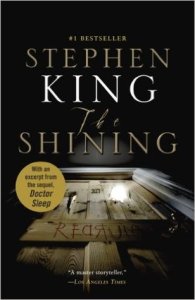
The Shining by Stephen King. I saw the film with Jack Nicolson, which is terrifying before I read the book. I remember his crazed face as he rampaged through the hotel, the sense of evil and terror, and I decided that was enough – I wouldn’t read the book. But later on I did – I don’t know why. It tells the story of Jack Torrance and his family as they move into the Overlook Hotel in the Colorada Rockies. The Overlook is closed for the winter and Jack, a recovering alcoholic is the caretaker. Just what impels him towards murder is horrifyingly revealed as the winter weather closes in on the hotel and they are cut off from the rest of the world. Having read the book there is no way I’ll ever watch the film again,

As you can see from the cover of The Shining it contains an except from the sequel, Dr Sleep. It tells what happened to Danny Torrance (Jack’s son) later on in his life, when he worked in a hospice. He was known as “Doctor Sleep” by secretly using his special abilities to comfort the dying and prepare them for the afterlife. Truly terrifying, even the cover is enough to give me nightmares – that demonic looking cat!

By the Pricking of My Thumbs by Agatha Christie, a Tommy and Tuppence story. As you would imagine from the title of the book (taken from Shakespeare’s Macbeth), ‘something wicked’ is afoot, there is evil about and Tuppence’s life is in danger. A dark and sinister tale.

The Hunger by Alma Katsu, a story about the Donner Party, comprising pioneers, people who were looking for a better life in the American West. Interwoven with hints of the supernatural and Indian myths it becomes a thrilling, spine tingling horrific tale. Many of them died of starvation, and some of them resorted to eating their animals and it is supposed, the deceased members of the group. It is a tense, menacing tale full of hope and also of desperation.

The Chalk Pit by Elly Griffiths. Something evil is waiting in the dark tunnels under Norwich, where boiled human bones have been found. The boiling might have been just a medieval curiosity – now it suggests a much more sinister purpose. The bones are found during the excavations when an underground restaurant in one of the tunnels is proposed. A homeless women, Barbara, disappears and there are rumours that she has ‘gone underground‘. Just what is the gruesome secret lurking in the tunnels?
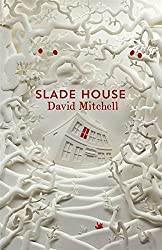
Slade House by David Mitchell, a mixture of a ghost story, science fiction and horror. Something nasty happens every nine years at the end of October at Slade House. It’s down Slade Alley, which doesn’t normally exist and it only appears to those who have been invited, or are drawn to it. There is a door set into the right hand wall of the alley, a small black iron door with no handle or keyhole, that opens if you’re meant to enter. There you meet a stranger, are invited into the House, and find yourself in a strange and dangerous situation, and there is no way out – eventually you find yourself in a long attic at the top of the stairs – where something terrible happens to you.