Top 5:Books on my TBR that intimidate me

Top 5 Tuesday was created by Shanah at Bionic Book Worm, and it is now being hosted by Meeghan at Meeghan Reads. For details of all of the latest prompts for October to December, see Meeghan’s post here.

Do you have a pile of books on your TBR that you were “going to read soon” but now it’s been like 5 years and you don’t know how to start that book any more? Maybe it’s 600 pages long. Or maybe you’ve seen some not-so-great reviews that pushed it down a bit. What books on your TBR intimidate you?

These are books I want to read but each time that I look at them I think ‘not now’ because they are so long AND as these are all either hardbacks or paperbacks they’re heavy, unwieldy and in small print!

Nicholas Nickleby by Charles Dickens (860 pages) – Nicholas Nickleby, is left penniless after his father’s death and forced to make his own way in the world. There’s an extraordinary gallery of rogues and eccentrics: Wackford Squeers, the tyrannical headmaster of Dotheboys Hall; the tragic orphan Smike, rescued by Nicholas; and the gloriously theatrical Mr and Mrs Crummle and their daughter, the ‘infant phenomenon’. Nicholas Nickleby is characterized by Dickens’s outrage at social injustice, but it also reveals his comic genius at its most unerring.

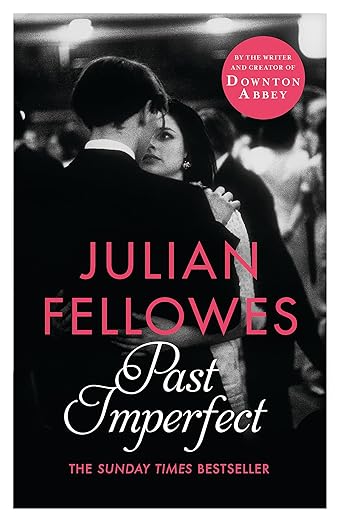
Past Imperfect by Julian Fellowship (528 pages) described on the back cover as a story that takes us back to the Debutante Season of 1968 – ‘Poignant, funny, fascinating and moving’ . Wishing to track down a past girlfriend who claims he had fathered her child, the rich and dying Damian Baxter contacts an old friend from his days at Cambridge. The search takes the narrator back to 1960s London, where everything is changing–just not always quite as expected.

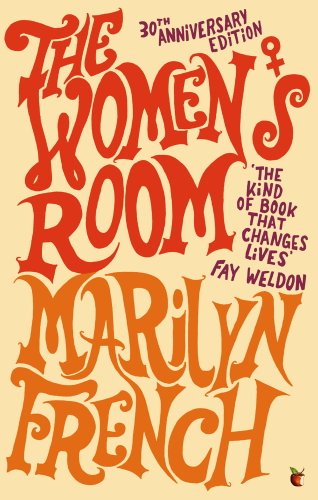
The Women’s Room by Marilyn French (544 pages), described as ‘one of the most influential novels of the modern feminist movement.’ It was first published in 1977 to a barrage of criticism. This is the story of Mira Ward, a wife of the Fifties who becomes a woman of the Seventies. From the shallow excitements of suburban cocktail parties and casual affairs through the varied nightmares of rape, madness and loneliness to the dawning awareness of the exhilaration of liberation, the experiences of Mira and her friends crystallize those of a generation of modern women.

The Wine of Angels by Phil Rickman (623 pages) – the first Merrily Watkins novel, in which the Rev Merrily Watkins tries to be accepted as the vicar (or priest-in-charge as she insists she ought to be called) in the country parish of Ledwardine in Herefordshire, steeped as it is in cider and secrets and echoes of the poet Thomas Traherne who was once based in the area.

This Thing of Darkness by Harry Thompson (750 pages) – In 1831 Charles Darwin set off in HMS Beagle under the command of Captain Robert Fitzroy on a voyage that would change the world. This is the story of a deep friendship between two men, and the twin obsessions that tear them apart, leading one to triumph, and the other to disaster.
Top 5:books to recommend for Halloween

aloweeb

Top 5 Tuesday was created by Shanah at Bionic Book Worm, and it is now being hosted by Meeghan at Meeghan Reads. For details of all of the latest prompts for October to December, see Meeghan’s post here.

It’s time to talk about Top 5 books to recommend for Halloween. It’s trick or treat time — are you going to tell us your best scary books or cutesy Halloween tales?

I’m a reluctant reader of scary stories but these are five I have read and enjoyed:

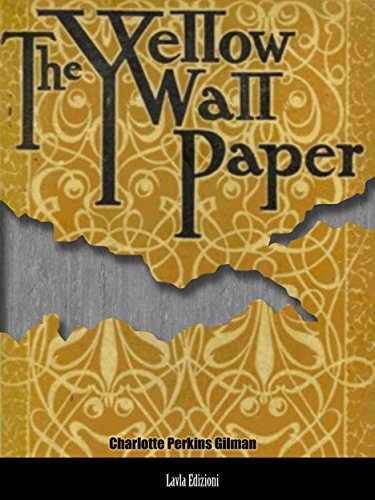
The Yellow Wallpaper by Charlotte Perkins Gilman, a suspense story of a young woman slowly but surely losing her mind – or is it a case of a woman suffering from post-natal depression most cruelly treated by her doctor husband? The un-named woman has just had a baby, which she is unable to bear to be near her. She spends most of her time in an attic bedroom, with barred windows and a bed fixed to the floor. The walls are covered in a hideous yellow wallpaper which has been torn off in places. It’s not a beautiful yellow like buttercups but it makes her think of old, foul bad yellow things – and it smells.  The pattern is tortuous and she sees a woman trapped behind the wallpaper as though behind bars, crawling and shaking the pattern attempting to escape. Definitely a creepy and disturbing story! By the end I began to question just what was real and what was imagination – it’s psychologically scary!

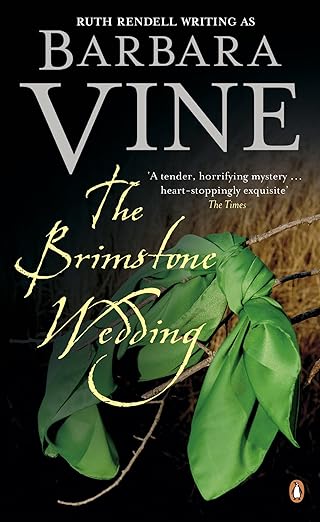
The Brimstone Wedding by Barbara Vine, a horrifying mystery. I think it is one of the best of Barbara Vine’s books that I’ve read – nearly as good as A Dark-Adapted Eye and writing under her real name, Ruth Rendell, A Judgement in Stone. Jenny Warner is a carer at a retirement home, Middleton Hall where she meets Stella Newland, who is dying of lung cancer. At first Stella never mentions her husband or her past life, but gradually she confides in Jenny, telling her things she has never said to her son and daughter – things about her life she doesn’t want them to know.  The subtle horror of what I was reading gripped me. It is indeed a ‘chilling’ book.

Broken Voices by Andrew Taylor, a ghost story set in an East Anglian cathedral city just before the First World War when two schoolboys are left at the cathedral school during the Christmas holidays. They lodge with Mr Ratcliffe, a semi-retired schoolmaster, a bachelor now in his seventies who lived with Mordred, his malevolent cat, in a grace-and-favour house granted to him by the Dean and chapter of the cathedral. An ancient tragedy is connected with the cathedral and the bell tower – the cathedral is full of shifting shadows, and the bell tower is haunted by fragments of melody, which one of the boys can hear. The story has a creepy atmosphere and a tension as the boys investigate the tower in the dead of night. It’s suitably ambiguous. It’s not spelled out and you can make your own decision – was there a ghost and was there a murder.

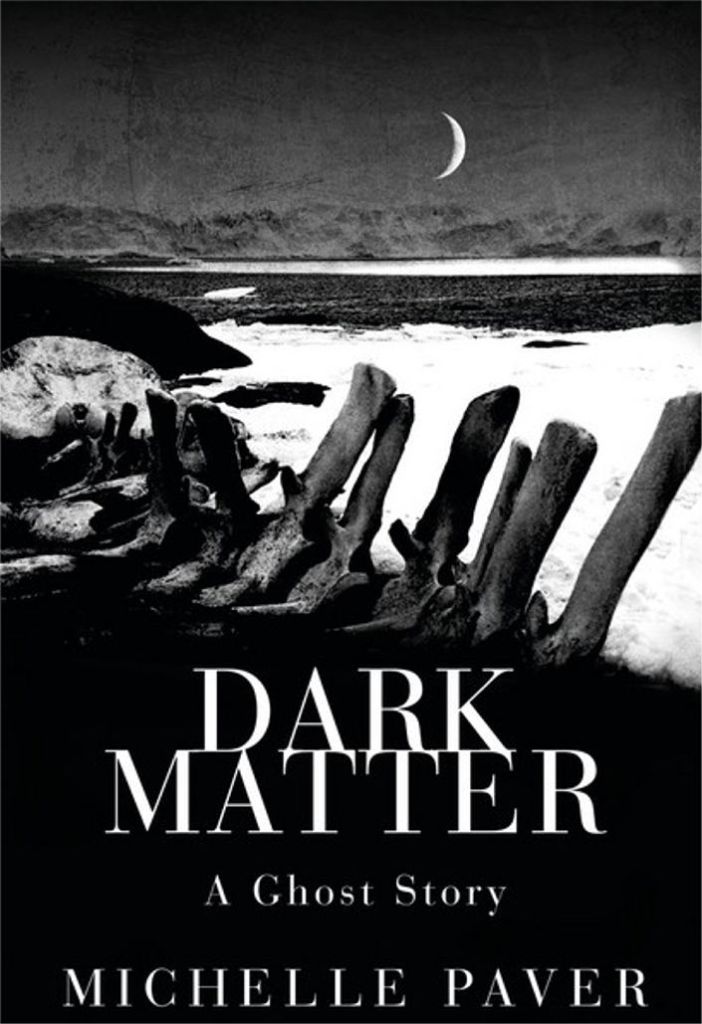
Dark Matter by Michelle Paver, a ghost story in the form of a diary – that of Jack Miller who in 1937 was part of an expedition to the High Arctic to study its biology, geology and ice dynamics and to carry out a meteorological survey. As the darkness descends, Jack is left alone at the camp and his nightmare really begins. Jack describes the ‘dark matter‘ of the title, as that part of the universe that cannot be seen or detected, but is there. It’s a chilling book, very chilling, both in the setting in the High Arctic and in atmosphere. And it is very scary! 

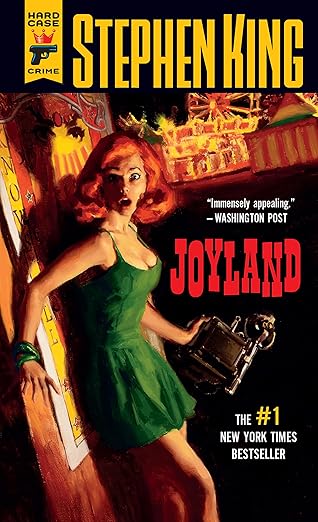
Joyland, by Stephen King, a ghost story, a love story, a story of loss and heartbreak, set in a funfair. It’s also a murder mystery and utterly compelling to read. It’s narrated by Devin Jones, looking back forty years to the time he was a student, suffering from a broken heart, as his girlfriend had just rejected him and he spent a summer working at Joyland, in North Carolina, an amusement park with ‘a little of the old-time carny flavor‘. The Horror House, is a ‘spook’ house which is said to be haunted by the ghost of Linda Gray, whose boyfriend cut her throat in the Horror House. The boyfriend had not been found and it appears he may be a serial killer as there had been four other similar murders in Georgia and the Carolinas.

It’s also a story of friendship, of Tom and Erin, of children with the ‘sight’, a young boy in a wheelchair and his mother, and Dev’s search for the killer. I loved it! King tells his tale, with just a touch of horror and the supernatural.

Top 5:non-human characters

Top 5 Tuesday was created by Shanah at Bionic Book Worm, and it is now being hosted by Meeghan at Meeghan Reads. For details of all of the latest prompts for October to December, see Meeghan’s post here.

It’s time to talk about books with non-human characters  animals or supernatural creatures… maybe even a park bench. Who are your favourite non-human characters?

This is a selection of some of the books with non-human characters that I’ve read and enjoyed. I’ve read all these books, so the links in the titles take you to my reviews.

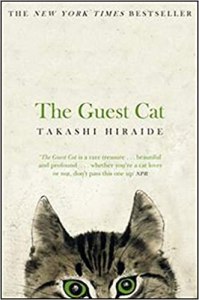
The Guest Cat by Takashi Hiraide. The main character in this book is a stray cat, Chibi, who made herself at home with a couple in their thirties who lived in a small rented house in a quiet part of Tokyo. At first the cat was cautious and just peeked inside their little house but eventually Chibi spent a lot of time with the couple coming and going as she pleased.

The Toymakers by Robert Dinsdale –  a wonderful book about Papa Jack’s Emporium in London, a toyshop extraordinaire. The toys it sells aren’t ordinary toys – they seem alive, from patchwork dogs, to flying pegasi, Russian dolls that climb out of one another, runnerless rocking horses, whales that devour ships, fire-breathing dragons and many others to the toy soldiers that wage war on each other.

The Good People by Hannah Kent is set in 1825/6, a long gone world of people living in an isolated community, a place where superstition and a belief in fairies held sway. People talk of others being ‘fairy-swept’ or ‘away with the fairies’, and kept with the music and lights, dancing under the fairy hill.This is not a fairy story, but one in which their existence is terrifyingly real to the people of the valley. The villagers believe that the fairies live in Piper’s Grave, ‘the lurking fairy fort’, at the end of the valley, a place where few people went, a neglected and wild place. People see lights there, glowing near a crooked whitethorn tree that stood in a circle of stone. Nóra is completely unable to cope with Micheál, her four-year old grandson. There is talk that he is ‘fairy-struck’.

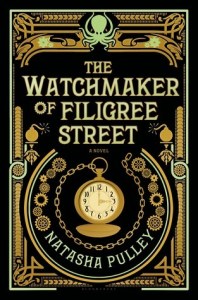
The Watchmaker of Filigree Street by Natasha Pulley, described as ‘steampunk’, this is a mixture of historical fact and fantasy set in Victorian times, both in London and Japan. The main characters are Thaniel Stapleton, who works in the telegraphy department of the Home Office in London, Keita Mori, watchmaker extraordinaire and an inventor of amazing clockwork creations and Grace Carrow, an Oxford physicist who sneaks into an Oxford library dressed as a man, desperate to prove the existence of the luminiferous ether. I loved Katsu, the clockwork octopus, which was made by Mori.

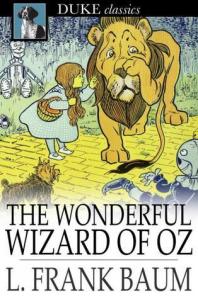
The Wonderful Wizard of Oz by L Frank Baum. I enjoyed this entertaining story, pure escapism, which I would have loved as a child, following Dorothy’s adventures in the Land of Oz after the cyclone whisked her house high in the air out of Kansas and set it down on top of the Wicked Witch of the East, thus killing her. Dorothy and her little dog, Toto, are very anxious to get back home to Kansas and they set out on the yellow brick road leading to the Emerald City to ask the Wizard of Oz to help them. On the way she meets the Scarecrow, the Tin Man and the Cowardly Lion, who go with her as they want the Wizard to give them brains, a heart and courage respectively.

Their journey is interrupted in various places and by a variety of creatures, some very dangerous indeed; as in most fairy tales, there is a fair amount of violence in the book, as Dorothy and her friends combat the Wicked Witch of the East.

Top 5 Tuesday: Top 5 Books with Bookish Villains


This week’s Top 5 Tuesday is top 5 bookish villains!!

Top 5 Tuesday was created by Shanah at Bionic Book Worm, and it is now being hosted by Meeghan at Meeghan Reads. Those dastardly villains that are so bad they’re good is our topic for today. Who are your top 5 bad guys (or girls or folx) that make you want to scream?

There are so many villains to choose from, these are just 5 of them:

Villanelle in Codename Villanelle by Luke Jennings. She is a young woman who is psychologically invulnerable – a ruthless and successful killer, experiencing neither pain nor horror and totally unaffected by the pain she inflicts on others or the murders she carries out. I read the book after I watched the TV series Killing Eve and this is one of those rare occasions when I preferred the adaptation to the book. That’s not to say I didn’t enjoy the book, because I did – just not as much as the TV version. 

Drood in Drood by Dan Simmons. It’s a novel imagining that authors Charles Dickens and Wilkie Collins join forces to hunt the individual Dickens believes to be responsible for the Staplehurst Rail Disaster in 1865: a spectral figure known only as Drood. He is portrayed in this book as horrific, a half-Egyptian fiend, who, according to Inspector Field is a serial killer.

I think it’s too long, too full of facts described in great length, and too full of hallucinatory nightmares, involving in particular a black beetle scarab.The plus points for Drood are that it does contain some vivid descriptions bringing the period to life for me – the slums of London, the train accident at Staplehurst and the fantastical “Undertown” with its miles of tunnels, catacombs, caverns and sewers are good examples. It also made me keen to read more books by Dickens and Collins and biographies of them. 

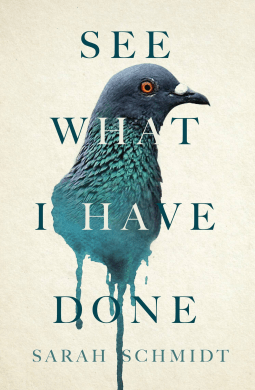
Lizzie Borden in See What I Have Done by Sarah Schmidt. On the 4 August 1892 Andrew Borden and his second wife, Abby, were brutally murdered in their home at 92 Second Street in Fall River, Massachusetts and Andrew’s daughter, Lizzie, was charged with the murders. She was tried and was acquitted in June 1893 and speculation about the murders and whether Lizzie was guilty or not continues to the present day. See What I Have Done is a work of fiction based on true events. Lizzie’s account of what happened takes you right inside her mind. She is a disturbed and unstable character to say the least and I had the most unsettling feeling as I read that I was right inside her crazy, demented mind.

Jean-Baptiste Grenouille in Pefume: the Story of a Murderer by Patrick Suskind. On the trail of an elusive but exquisite smell he tracks it down to a young girl and kills her to possess  her scent for himself.  This puts him in a state of ecstatic happiness. Quite simply this is a horror story, one that made me not want to read it and yet also want to read it to the bitter end. It’s a tale of obsession, the atmosphere Süskind evokes is tremendous, and the detail it contains adds to the realism. Maybe Grenouille is a modern Dracula.

Sword in Sword by Bogdan Teodorescu. A serial killer, nicknamed Sword, is on the loose, in this complex novel, a political thriller focusing on the political and social dimensions of the racial conflict between the Romanians and the Roma or ‘gypsies’. The killer is hunting down his victims from the minority Roma community. The book opens with a scene in Bucharest’s Obor Market as The Fly, a con man, playing his card and shell games, is killed by a person who suddenly appeared, brandishing a sword which he then plunged into his throat. This is followed by more killings – all of them of gypsies. I throughly enjoyed Sword, especially the setting and the unique (for me at least) focus on the political and cultural scene in Romania – and the murder mystery.

Top5Tuesday: Top 5 Books with Time Travel


Welcome to this week’s Top 5 Tuesday post. Top 5 Tuesday was created by Shanah at Bionic Book Worm, and it is now being hosted by Meeghan at Meeghan Reads. For details of all of the latest prompts for July to September, see Meeghan’s post here.

Meeghan writes: Ahh, the most outrageous travel of all — and the most unreal. Tell us about your fave books where the characters skip through time (or space). If you can’t think of any, a book that spans multiple eras will also do the trick.

I thought I hadn’t read many time travel books until I looked back, and found several. Here are five of them. I’ve not listed them in order of preference, nor have I included Audrey Niffenegger’s The Time Traveler’s Wife because I found it disappointing and irritating:

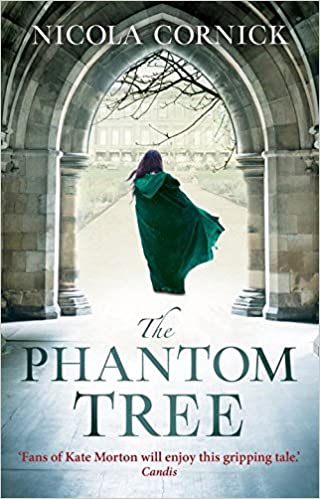
The Phantom Tree. The plot alternates between the Tudor period and the present day following the life of Alison Banestre (known as Bannister in the present day) as she moves between the centuries trying to find out what happened to Mary Seymour. It is a mystery, based on the true story of Mary Seymour, the daughter of Katherine Parr (Henry VIII’s sixth wife) and Thomas Seymour, who she married after Henry’s death.

Alison moves between the centuries, both forwards and backwards in time but then she found the gateway to the past had closed and she was trapped in the present day. She has to find another gateway where the past and the present meet, or some other means of connecting to the past.

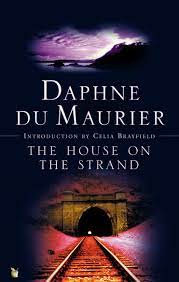
The House on the Strand. Dick Young moves between the present day and the 14th century set in Cornwall – around Par Sands and the Manor of Tywardreath. Dick is staying at Kilmarth (the house where Du Maurier lived after she was forced to leave Menabilly), the guest of his friend Magnus, a scientist researching the effect of a psychedelic drug. The drug produces hallucinations of time travel and as Dick moves in his mind to the 14th century he physically moves across the present day landscape crossed by roads and railway lines that he cannot see. The difference in the landscape plays a central part in the story.

A Wrinkle in Time by Madeleine L’Engle – The winner of the 1963 Newbery Medal this is the story of Meg and Charles Wallace Murry, searching for their father, a scientist, lost through a ‘wrinkle in time’, with wonderful characters such as Mrs  Whatsit, Mrs. Who and Mrs. Which to help them.

How to Stop Time by Matt Haig. Tom Hazard has a dangerous secret. He may look like an ordinary 41-year-old, but owing to a rare condition, he’s been alive for centuries. Tom tells his life story in flashbacks, switching back and forth in time between the present day and the past. 

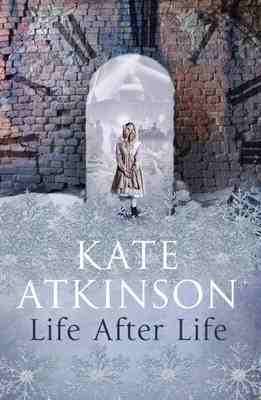
Life After Life by Kate Atkinson. Ursula Todd was born on 11 February 1910 at Fox Corner during a wild snowstorm. In the first version she was born before the doctor and the midwife arrived and she died, strangled by the umbilical cord around her neck. But in the second version the doctor had got there in time and saved her life, using a pair of small surgical scissors to snip the cord. 

During the book Ursula dies many deaths and there are several different versions that her life takes over the course of the twentieth century – through both World Wars and beyond. Each time as she approaches death she experiences a vague unease, before the darkness falls. 

Top5Tuesday: Books set in a Big City 


Welcome to this week’s Top 5 Tuesday post. Top 5 Tuesday was created by Shanah at Bionic Book Worm, and it is now being hosted by Meeghan at Meeghan Reads. For details of all of the latest prompts for July to September, see Meeghan’s post here.

This week’s theme is books that are set in a big city, think crowds and tall buildings.

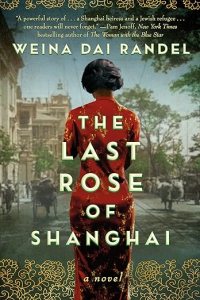
The Last Rose of Shanghai by Weina Dai Randell – historical fiction set in Japanese-occupied Shanghai, this is a World War Two romance, the story of Aiyi Shao, a young heiress and the owner of a glamorous Shanghai nightclub and Ernest Reismann, a penniless Jewish refugee who had fled from Germany. I loved the beginning of this book but the rest of the book was not so good – too much ‘telling’ and I’d have liked less focus on the romance, which to me was barely believable.

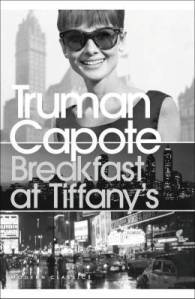
Breakfast at Tiffany’s by Truman Capote book is a quick read and very entertaining. The narrator is not named, although Holly Golightly calls him ‘Fred’ after her brother. He’s a writer and at the beginning of the book he is reminiscing about Holly with Joe Bell, who ran a bar around the corner on Lexington Avenue. They hadn’t seen or heard from Holly for over two years. She used to live in the apartment below Fred’s in a brownstone in the East Seventies in New York. Her past is almost as unknown as her present whereabouts.

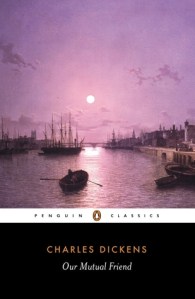
Our Mutual Friend by Charles Dickens, set in Victorian London, has a cast of wonderful characters and numerous subplots. The setting is superb, beginning with the opening chapter revealing a darkly atmospheric scene on the River Thames, a modern scene for its first readers, with a macabre story of a boatman, Gaffer Hexham and his daughter, Lizzie, searching the Thames for human corpses. Dickens highlights social injustices, the class system, the importance of money, property, greed and materialism and also highlights family relationships – in particular that of fathers and daughters and the position of women. He also concentrates on instances of violence, through drownings and physical assaults.

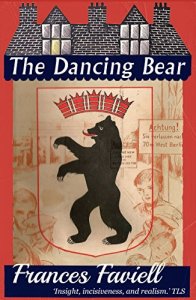
he Dancing Bear by Francis Faviell – a moving memoir of the Occupation. Set in Berlin it covers the years from autumn 1946 to autumn 1949 and is mainly about her friendship with the Altmann family. Frances is horrified by the conditions she found. There were deaths from hunger and cold as the winter approached and queues for bread, milk, cigarettes, cinemas, buses and trams. I was fascinated by it all – the people, their situations, and their morale and attitudes as well as the condition of Berlin in the aftermath of World War Two. The realities of living under occupation are clearly shown, as well as the will to survive despite all the devastation and deprivation.

The Paris Library by Janet Skeslien Charles. historical fiction, based on the true Second World War story of the librarians at the American Library in Paris. It was established in 1920 by the American Library Association with books and periodicals donated by American libraries to US soldiers serving their allies in World War I. Since then it has developed into the largest English language lending library in Europe. I liked the details about the Library, and about the work the library staff did during the War, including delivering books by hand to their Jewish subscribers in Paris after they were not allowed to enter the Library. The author had worked in the American Library in 2010 and her colleagues had told her the story of the Library during the Second World War and had given her access to documents, correspondence and contacts.