Top 5 Tuesday:Top 5 books with sizes in the titles

Top 5 Tuesday was created by Shanah at Bionic Book Worm, and it is now being hosted by Meeghan at Meeghan Reads. You can see the Top 5 Tuesday topics for the whole of 2025 here

Today the topic is top 5 books with sizes in the titles.

These are all books I’ve read with links to my posts on them:
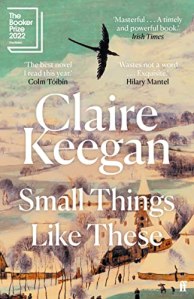
Small Things Like These by Claire Keegan. This won the 2022 Orwell Prize for Political Fiction, an award for outstanding novels and collections of short stories, first published in the UK or Ireland, that illuminate major social and political themes, present or past, through the art of narrative. It also won the Kerry Group Irish Novel of the Year 2022.

It is 1985 in a small Irish town. During the weeks leading up to Christmas, Bill Furlong, a coal merchant and family man faces into his busiest season. Early one morning, while delivering an order to the local convent, Bill makes a discovery which forces him to confront both his past and the complicit silences of a town controlled by the church.

Claire Keegan’s style of writing is a refreshing change from so many of the long and complicated books I so often read. It is precise, focused, and beautifully written bringing her characters to life – these are real, ordinary people, living ordinary lives in 1980s Ireland. And the detail is there too in all the particulars of everyday life – it packs a lot into its pages. 
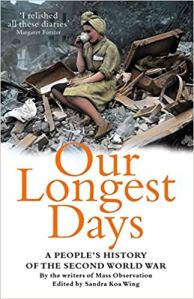
Our Longest Days: A People’s History of the Second World War by the writers of Mass Observation. For six years the people of Britain endured bombs and the threat of invasion, and more than 140,000 civilians were killed or seriously wounded. Men and women were called to serve in the armed forces in record numbers, and everyone experienced air raids and rationing. In these terrible times, volunteers of almost every age, class and occupation wrote diaries for the “Mass Observation” project, which was set up in the 1930s to collect the voices of ordinary men and women.

Using many diaries that have never been published before, this book tells the story of the war – the military conflict, and, mainly, life on the home front – through these voices. Through it all, people carry on living their lives, falling in love, longing for a good meal, complaining about office colleagues or mourning allotment potatoes destroyed by a bomb.
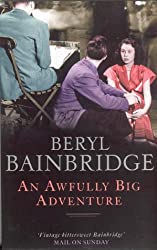
An Awfully Big Adventure by Beryl Bainbridge. First published in 1989 and shortlisted for the Booker Prize, this is set in 1950, as a Liverpool repertory theatre company are rehearsing its Christmas production of Peter Pan. The story centres around Stella, a teenager and an aspiring actress who has been taken on as the assistant stage manager.

It’s semi-autobiographical based on Beryl Bainbridge’s own experience as an assistant stage manager in a Liverpool theatre. On the face of it this is a straight forward story of the theatre company but underneath it’s packed with emotion, pathos and drama. And it’s firmly grounded in a grim post-war 1950s England, food rationing still in operation and bombed buildings still in ruins overgrown with weeds.

The title is taken from Peter Pan, the play about the boy who never grew up, whose attitude to death was ‘To die will be an awfully big adventure.’ Bainbridge’s use of Peter Pan emphasises the themes of reality versus imagination, the loss of childhood innocence, and the quest for love.
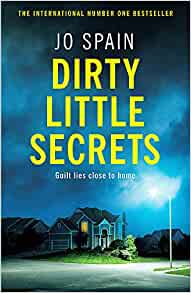
Dirty Little Secrets by Jo Spain, a psychological thriller, set in Withered Vale, a small, gated community of just seven houses, outside the small village of Marwood in Wicklow in Ireland. On the surface it is a perfect place where the wealthy live their  privileged lives and keep themselves to themselves – until a cloud of bluebottles stream out of the chimney of number 4 and Olive Collins’ dead and disintegrating body is discovered inside. She had been dead for three months and none of the neighbours had bothered to find out why she hadn’t been seen all that time. But someone must have known what had happened to her – the question being who?
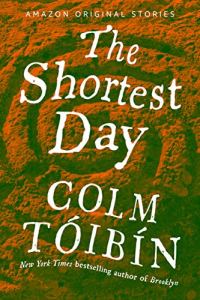
The Shortest Day by Colm Toibin, a short story about the mythical past, about the strange carvings found on certain stones, about archaeology, and about the unknown customs and rituals of our ancient past. It’s storytelling at its best – a tale of wonder and mystery.

Professor O’Kelly is writing notes about Newgrange, also called Bru na Boinne, a circular mound with a retaining wall that had a narrow passageway leading into a vaulted central chamber. There are spirals and diamond shaped designs cut into some of the stones both inside the chamber itself and outside the entrance to the passageway. It’s a burial chamber, a prehistoric monument in County Meath in Ireland, that was built around 3200 BC – older than Stonehenge and the Egyptian pyramids. It’s ringed by a stone circle, stones brought from the Mournes and Wicklow Mountains.

Meanwhile deep within the chamber there were whispers among the dead that the professor was coming again. They are concerned that he would discover the secret of the light penetrating the chamber on the winter solstice – the shortest day of the year. Some of the local inhabitants know of the secret but they never talk about it, except in whispers between themselves. When he arrives they put up a number of obstacles to prevent him from entering the chamber.
Top 5 Tuesday:Top 5 books with no pictures on the cover

Top 5 Tuesday was created by Shanah at Bionic Book Worm, and it is now being hosted by Meeghan at Meeghan Reads. For details of all of the latest prompts for April to June, see Meeghan’s post here.

Today the topic is top 5 books with no pictures on the cover. Meegan writes: I guess this one is more of an anti-scavenger hunt? Also, it’s up to you how far you take this one. Does a pattern count as a picture? What about a single line or spot of colour? Maybe you want to go completely blank with just the words. No matter, please share your top 5 books with no pictures on the cover.

These are all books I’ve read, three nonfiction and two novels.

Nonfiction:

Shakespeare’s Restless World by Neil MacGregor.

A beautiful book recreating Shakespeare’s world through examining twenty objects. It reveals so much about the people who lived then, who went to see Shakespeare’s plays in the 1590s and 1600s, and about their ideas and living conditions. Through looking at each object MacGregor explores a number of topics, including what people ate whilst watching plays, religion, medicine, the plague, magic, city life, treason, and the measuring of time. It’s all fascinating and informative, and easy to read. There are plenty of quotations from Shakespeare’s plays and puts both him and his work into context. For me, it was a new way of seeing into the past,

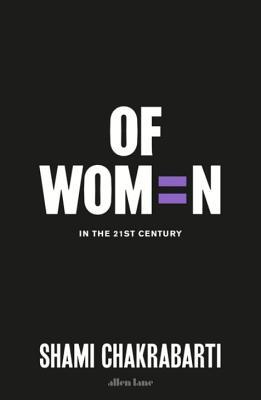
Of Women in the 21st Century by Shami Chakrabarti, a member of the House of Lords, formerly Labour’s Shadow Attorney General, and the author of On Liberty, a book about human rights violations published in 2014.

Shami Chakrabarti is passionate, and indeed angry, about the need for gender equality in her book. She examines the effects of gender injustice on a wide variety of issues in many parts of the world. In parts it reads like an academic textbook, packed full of statistics and wide ranging examples of gender injustice on a global scale. It becomes more personal however, when she writes about her own experiences her family and her background.

She covers a broad overview of many issues, rather than an in-

depth study, including violence against women, abortion, sanitary products, childcare and sex education and topics such as faith, the concept of home and displaced persons, health, wealth, education, representation, opportunity and insecurity in the 21st century. However, she remains optimistic, concluding that she believes that ‘far greater equality for women and men is realistically within our reach and well worth the stretch.’ I don’t think it is that easy and will need more than a ‘stretch’.

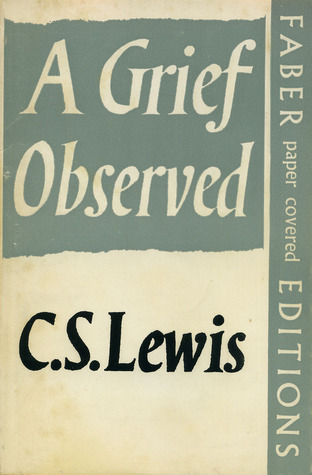
A Grief Observed by C S Lewis, another book I read before I began blogging, so no review.

Written after his wife’s tragic death as a way of surviving the “mad midnight moment,” A Grief Observed is C.S. Lewis’s honest reflection on the fundamental issues of life, death, and faith in the midst of loss. This work contains his concise, genuine reflections on that “Nothing will shake a man — or at any rate a man like me — out of his merely verbal thinking and his merely notional beliefs. He has to be knocked silly before he comes to his senses. Only torture will bring out the truth. Only under torture does he discover it himself.” This is a beautiful and unflinchingly honest record of how even a stalwart believer can lose all sense of meaning in the universe, and how he can gradually regain his bearings. (Goodreads)

Fiction:

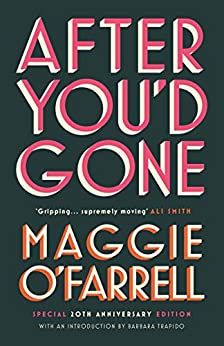
After You’d Gone by Maggie O’Farrell

Alice is in a coma after being in road accident, which may or may not have been a suicide attempt. She has been grieving the death of her husband, John.

It’s quite a complicated story, following the life stories not only of Alice, but also those of her mother, Ann (who I didn’t like much),  her grandmother, Elspeth (who I did like very much), her two sisters and of John. What was it that Alice saw at Edinburgh station that shocked her so much? You don’t find out until the end of the book, although I did have an idea before that what it meant to her and why it was so upsetting. 

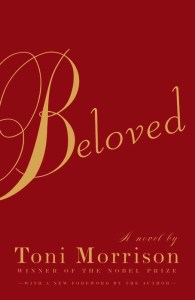
Beloved by Toni Morrison, which I read years ago before I began blogging, so I haven’t reviewed it.

Staring unflinchingly into the abyss of slavery, this spellbinding novel transforms history into a story as powerful as Exodus and as intimate as a lullaby.

Sethe, its protagonist, was born a slave and escaped to Ohio, but eighteen years later she is still not free. She has too many memories of Sweet Home, the beautiful farm where so many hideous things happened. And Sethe’s new home is haunted by the ghost of her baby, who died nameless and whose tombstone is engraved with a single word: Beloved. Filled with bitter poetry and suspense as taut as a rope, Beloved is a towering achievement by Nobel Prize laureate Toni Morrison. (Goodreads)

Top Five Tuesday:Top 5 anticipated reads for Q2 2025

Top 5 Tuesday was created by Shanah at Bionic Book Worm, and it is now being hosted by Meeghan at Meeghan Reads. For details of all of the latest prompts for January to March, see Meeghan’s post here.

Today the topic is Top 5 anticipated reads for Q2 2025. It’s time to talk about all the shiny new books coming out in April, May and June in 2025. What are the books you can’t wait to hold in your hands the most?

I’ve listed these books in date of publication order – four books by authors whose books I’ve read before and one by a new-to-me author.

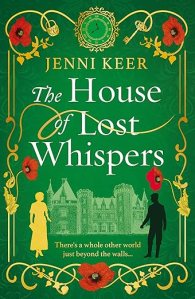
The House of Lost Whispers by Jenni Keer – 27 April, because I loved her book, The Hopes and Dreams of Lucy Baker.

On 15th April 1912, RMS Titanic sank and Olivia’s life changed forever… but what if a world existed where it hadn’t?

When the ill-fated maiden voyage of the Titanic leaves thirteen-year-old Olivia Davenport orphaned, she’s sent to live with her guardians, the Fairchilds, in their huge Jacobean mansion – Merriford Manor. But the Fairchilds have more to worry about than a grieving young girl – with war in Europe imminent and four sons to protect.

Olivia feels alone and friendless. That is, until she hears a voice from behind the wall in her tower bedroom. A voice from a man called Seth. Convinced he’s merely a product of her grieving imagination, she learns to live with him but it’s not until after the heartbreak of the war that Olivia, now a young woman of twenty, discovers that he exists in an overlapping world that is just a shudder in time away from her own. A world where the Titanic never sank… And everything since has been just slightly… different.

All Olivia wants is to find a way into his reality. And not just to see the faces of her beloved parents once again. But also to meet Seth. Who might just be the love of her life…

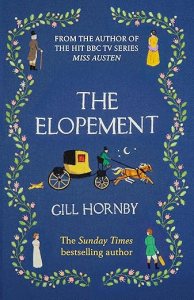
The Elopement by Gill Hornby – 22 May, because I loved her earlier books, Miss Austen and Godmersham Park.

1820. Mary Dorothea Knatchbull is living under the sole charge of her widowed father, Sir Edward – a man of strict principles and high Christian values.

But when her father marries Miss Fanny Knight of Godmersham Park, Mary’s life is suddenly changed.
Her new stepmother comes from a large, happy and sociable family and Fanny’s sisters become Mary’s first friends. Her aunt, Miss Cassandra Austen of Chawton, is especially kind. Her brothers are not only amusing, but handsome and charming.

And as Mary Dorothea starts to bloom into a beautiful young woman, she forms an especial bond with one Mr Knight in particular.

Soon, they are deeply in love and determined to marry. They expect no opposition. After all, each is from a good family and has known the other for some years.
It promises to be the most perfect match. Who would want to stand in their way?

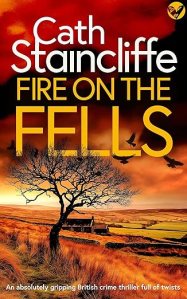
Fire on the Fells by Cath Staincliffe – 8 May, because I loved The Silence Between Breaths.

Summer can be murder, out on the sun-scorched Yorkshire Fells.

No one loves the Fells like Tyler Prasad. An eighteen-year-old dreamer who came here to join an eco-protest. But Tyler’s past followed hot on his heels. Now Tyler lies dead in a ditch. His handsome face shot to pieces in a brutal attack that baffles Detective Leo Donovan.

There’s no shortage of gunmen roving the land in search of grouse — most of them staying at luxury country-house retreat, Patefield Grange. The shooting party guests tell Detective Leo the victim’s name means nothing to them. But Leo knows a lie when he hears one.

The Grange is a hotbed of smouldering secrets. Which was worth killing for? Detective Leo and his partner Shan must solve the case before it all goes up in smoke . . .

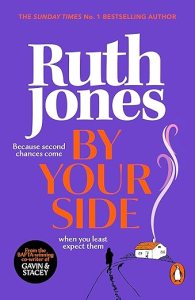
By Your Side by Ruth Jones – 22 May, because although I haven’t read anything by her before I love the TV series Gavin and Stacey that she co-wrote with James Cordon.

Linda and Levi will never meet. But they’re going to change each other’s lives.

In her role at the council’s Unclaimed Heirs Unit, Linda Standish investigates the lives of those who’ve died alone and tracks down any living relatives. She’s been a friend to the friendless for the past thirty-three years. And now she’s looking forward to an early retirement.

But before she hangs up her lanyard, Linda takes on one last case – that of Levi Norman – a Welshman who made his home on a remote Scottish island for the past five years.

What brought Levi here? And who did he leave behind? Obliged to travel (by hearse) with her arch nemesis Fergus Murray, and helped (and hindered) by local residents, Linda searches for clues to a life now lost. And in the process unexpectedly makes new friends, and discovers things about herself she never knew.

Bursting with all the heart and humour that has made Ruth’s name as a screenwriter and author, By Your Side is about finding joy in the most unlikely connections, and the importance of holding onto friendship, love and community – especially when life gets messy.

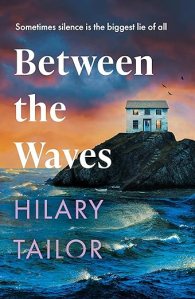
Between the Waves by Hilary Tailor – 29 May, because I loved two of her earlier books, The Vanishing Tide and Where Water Lies.

Twenty years ago, during a family holiday on the savage and remote island of Little Auger, eleven-year-old Hazel left her bed and was never seen again. The unanswered questions surrounding Hazel’s disappearance tore three families apart and the girls left behind all experience their own terrible guilt. Roz, because she broke a promise; Catrin, because it was her idea; and Nina, who slept through it all. Their friendship never recovers and all three women go on to lead vastly different lives.

Twenty years later, they each receive a phone call from Stella Cox, a true-crime podcaster, who has unearthed new evidence about Hazel’s disappearance. There is no doubt Stella has found something important but the question is, how can the women—once best friends, now strangers—trust her, or each other?

Will their return to the island finally reveal the truth, and if it does, is it something any of them are prepared to learn?

Are you interested in reading any of these? What books are you anticipating?

Top Five Tuesday:Top 5 books with an emotion in the title

Top 5 Tuesday was created by Shanah at Bionic Book Worm, and it is now being hosted by Meeghan at Meeghan Reads. For details of all of the latest prompts for January to March, see Meeghan’s post here.

Today the topic is Top 5 books with an emotion in the title. Whether it’s happy or sad, anger or excitement, any emotion is fine!

These are all books I’ve read with links to my reviews.

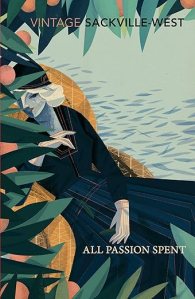
All Passion Spent by Vita Sackville-West. Lady Slane is an ageing British aristocrat. Her husband has recently died at the age of 94, leaving his family with the problem of ‘What was to be done about Mother?’ The family are four sons and two daughters. Lady Slane at 88 is still a beautiful woman and quickly but quietly asserts her independence. She ignores her children and decides to live, with her maid Genoux, in a house in Hampstead that she had first seen thirty years previously. This is a novel of contrasts, beautifully written, and expressing so many emotions in a quiet unassuming manner.

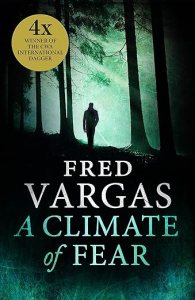
A Climate of Fear by Fred Vargas, a Commissaire Adamsberg murder mystery. I like Adamsberg; he’s original, a thinker, who doesn’t like to express his feelings, but mulls things over. He’s an expert at untangling mysteries, an invaluable skill in this, one of the most complicated and intricate mysteries I’ve read. He’d compared the investigation right from the start to a huge tangled knot of seaweed. A woman is found bleeding to death in her bath, having apparently committed suicide, there’s a secretive society studying and re-enacting scenes from the French Revolution, and two deaths ten years earlier on an isolated island off the coast of Iceland, where the afturganga, the demon who owns the island summons people to their death.

The Grapes of Wrath by John Steinbeck. Steinbeck’s writing conjures up such vivid pictures and together with his use of dialect I really felt I was there in America in the 1930s travelling with the Joad family on their epic journey from Oklahoma to California. What a long, hard journey with such high hopes of a better life and what a tragedy when they arrived to find their dreams were shattered, their illusions destroyed and their hopes denied. Throughout the book, Steinbeck shows the inhumanity of man to man and also the dignity and compassion, the essential goodness and perseverance of individuals against such appalling conditions and inhumane treatment. 

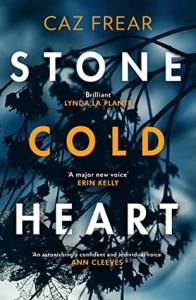
Stone Cold Heart by Caz Frear, a police procedural written in the first person present tense narrated by DC Cat Kinsella who is part of the Murder Investigation Team 4. Naomi Lockhart, a young Australian woman was murdered and at first it looked as though her flatmate had killed her. It’s a most convoluted and tangled tale, filled with secrets and lies, most of which are complete red herrings.  Alongside the murder mystery, the book follows the story of DC Cat Kinsella’s family and the mystery surrounding Maryanne Doyle that was told in Sweet Little Lies – you really do need to read that book first to understand what is going on in her family life in this book. Cat is a conflicted character to say the least and although other readers have found her a warm and likeable character I found her one of the most irritating fictional detectives in crime fiction.

Cruel Acts by Jane Casey. A year ago, Leo Stone was convicted of murdering two women and sentenced to life in prison. Now he’s been freed on a technicality, and he’s protesting his innocence. DS Maeve Kerrigan and DI Josh Derwent are determined to put Stone back behind bars where he belongs, but the more Maeve digs, the less convinced she is that he did it. Then another woman disappears in similar circumstances. Is there a copycat killer, or have they been wrong about Stone from the start?

Top Five Tuesday:Top 5 books with a place in the title

Top 5 Tuesday was created by Shanah at Bionic Book Worm, and it is now being hosted by Meeghan at Meeghan Reads. For details of all of the latest prompts for January to March, see Meeghan’s post here.

Today the topic is Top 5 books with a place in the title – any location or place in a title is fine. I decided to feature books in different countries than my own (UK) – namely Italy, Japan, Greece, Russia and France.

These are all books I’ve read with links to my reviews.

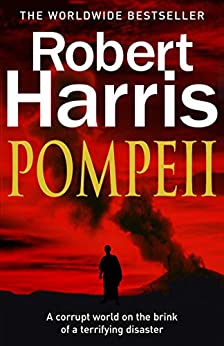
Pompeii by Robert Harris – one of my favourite books. Vesuvius erupts destroying the town of Pompeii and killing its inhabitants as they tried to flee the pumice, ash, searing heat and flames. The story begins just two days before the eruption of Mount Vesuvius and builds up to a climax. 

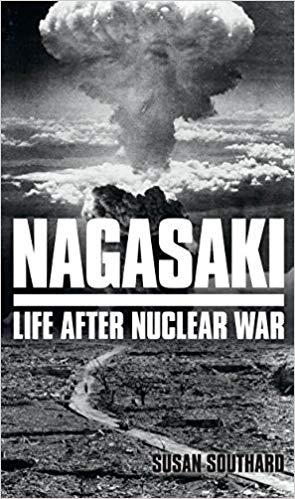
Nagasaki : Life After Nuclear War by Susan Southard, nonfiction, an amazing, heart-wrenching book. On August 9th 1945, two days after the atomic bombing of Hiroshima, a five-ton plutonium bomb was dropped on the small coastal town of Nagasaki. The effects were cataclysmic. It follows the lives of five of the survivors from then to the present day. 

This must be one of the most devastatingly sad and depressing books I’ve read and yet also one of the most uplifting, detailing the dropping of the bomb, which killed 74,000 people and injured another 75,000. 

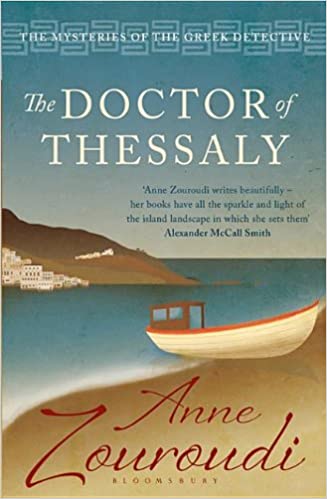
The Doctor of Thessaly by Anne Zouroudi, the third in the series of her Mysteries of the Greek Detective, about Hermes Diaktoros, a mysterious fat man. I was never sure who he worked for, or how he knew of the mystery to solve. Each of the books in the series features one of the Seven Deadly Sins – in this one it is envy, a tale of revenge and retribution.

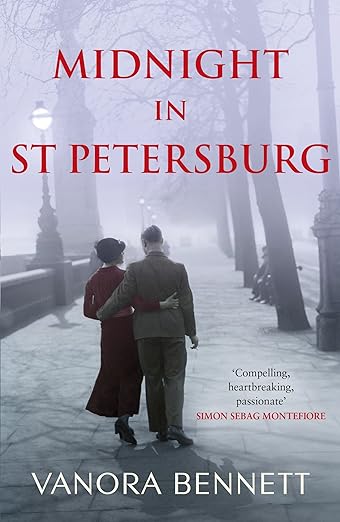
Midnight in St Petersburg by Vanora Bennett. It begins in 1911 in pre-revolutionary Russia with Inna Feldman travelling by train to St Petersburg to escape the pogroms in Kiev hoping to stay with her distant cousin, Yasha Kagan. The book is split into three sections – September – December 1911, 1916-17 and 1918-19 as Russia enters the First World War and is plunged into Revolution and life becomes increasingly dangerous for them all.

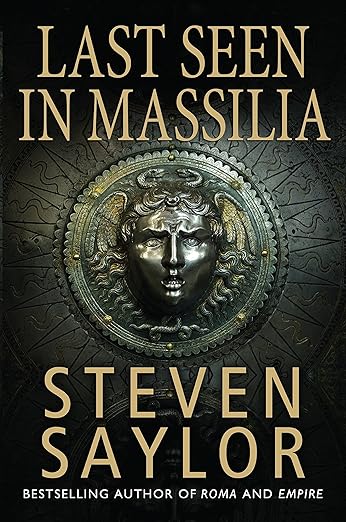
Last Seen in Massilia by Steven Saylor, historical crime fiction set in in Massilia – modern day Marseilles. It’s 49BC during Caesar’s siege of the city., featuring an investigator called Gordianus the Finder. I really liked all the details about Massilia – how it was governed – the hierarchy of the Timouchoi its ruling officials, its relationship to Rome, its traditions and customs. This is the 8th book in Saylor’s Roma Sub Rosa series set in ancient Rome.

Top Five Tuesday:Top 5 books with a pronoun in the title

Top 5 Tuesday was created by Shanah at Bionic Book Worm, and it is now being hosted by Meeghan at Meeghan Reads. For details of all of the latest prompts for January to March, see Meeghan’s post here.

Today the topic is Top 5 books with a pronoun in the title – Find all of your he, she, they, we or you books and then shout them from the rooftops!! Or just on your blog page.

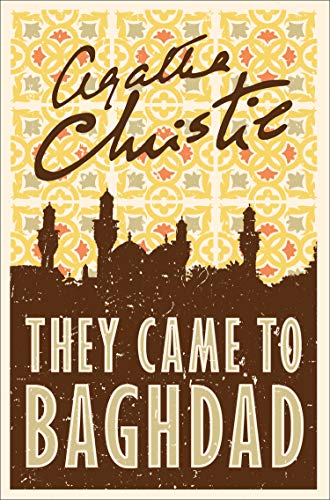
They Came to Baghdad by Agatha Christie. This is not one of Agatha Christie’s detective novels – no Miss Marple or Hercule Poirot –  just Victoria Jones, a short-hand typist, a courageous girl with a ‘natural leaning towards adventure’ and a tendency to tell lies. Set in 1950 this is a story about international espionage and conspiracy. 

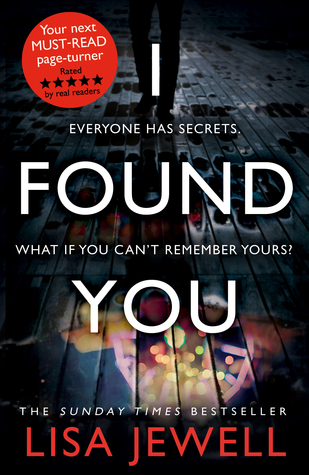
I Found You by Lisa Jewell. This is the mystery of the identity of the man Alice Lake found sitting on the beach at Ridinghouse Bay (a fictional seaside resort) in the pouring rain. He can’t remember who he is, or how or why he is sitting there. 

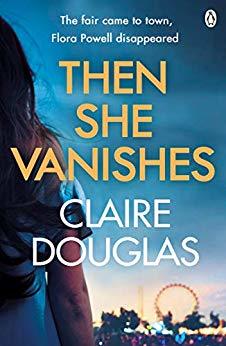
Then She Vanishes by Claire Douglas. The opening is dramatic as a killer calmly and coolly considers which house harbours the victim and then enters and shoots first a man and then an older woman. Who are they and why were they killed in cold blood?

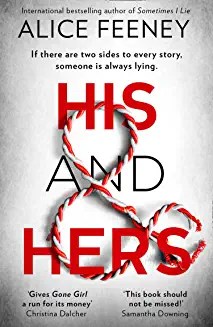
His and Hers by Alice Feeney. When a woman is murdered in Blackdown village, newsreader Anna Andrews is reluctant to cover the case. Anna’s ex-husband, DCI Jack Harper, is suspicious of her involvement, until he becomes a suspect in his own murder investigation.

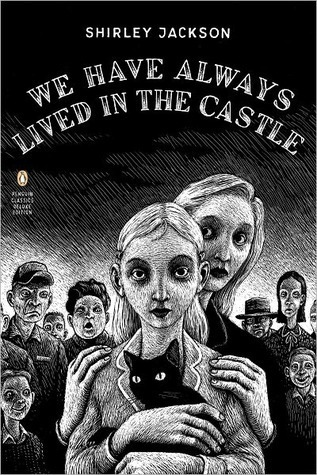
We Have Always Lived in the Castle by Shirley Jackson, a weirdly wonderful book. Mary Katherine Blackwood is nicknamed Merricat. But she is anything but merry and as the book opens she is eighteen, living with her sister Constance. Everyone else in her family is dead. How they died is explored in the rest of the book. It’s a macabre tale, with its portrayal of fear, resentment, hostility and the persecution of its disturbed and damaged characters.