Cécile is Dead by Georges Simenon

Cécile is Dead by Georges Simenon, translated by Anthea Bell, an Inspector Maigret novel.

Synopsis (Amazon)

Poor Cécile! And yet she was still young. Maigret had seen her papers: barely twenty-eight years old. But it would be difficult to look more like an old maid, to move less gracefully, in spite of the care she took to be friendly and pleasant. Those black dresses that she must make for herself from bad paper patterns, that ridiculous green hat!

In the dreary suburbs of Paris, the merciless greed of a seemingly respectable woman is unearthed by her long suffering niece, and Maigret discovers the far-reaching consequences of their actions.

This novel has been published in a previous translation as Maigret and the Spinster.


My thoughts:

This is one of the best Maigret books I’ve read – and it is complicated, remarkably so in a novella of just 151 pages. At first it seems quite straight forward. Cécile has been wanting to see Detective Chief Inspector Maigret for months, sitting patiently in the ‘Aquarium’, as the waiting room at the Police Judiciaire in Paris, is known. She was convinced that someone had been breaking into her aunt’s apartment. But no one takes her seriously and Maigret is always busy, until one day he decides to see her. But she had left the waiting room, so he goes to the apartment where she lives with her elderly aunt, Juliette Boynet, the owner of the apartment building. She wasn’t there, but her aunt was – lying dead on the floor, strangled. Cécile was missing and the title tells you why – she was indeed dead.

And from then on, the mystery became more complex, with several suspects with a variety of motives. Juliette was very wealthy, but also miserly. She had a large family, mostly estranged from her and at odds with each other. They all turn up for her funeral, arguing about who should take precedence in the funeral cortège, and about who should inherit her money and property.

Maigret has to sort it out in his own way – musing over the details and feeling bad that he hadn’t spoken to Cécile earlier, thinking her worry over an intruder who just moved things around the apartment without taking anything was trivial. We see more of how he thinks and works when later in the investigation he is accompanied by an American, a Mr Spencer Oates from the Institute of Criminology of Philadelphia, who had asked if he could study Maigret’s methods.

This is the second time I’ve read Cécile is Dead. I first read it in 2018, but didn’t write about it at that time. Reading it for the second time, I realised I had forgotten all the details – it was like reading a new book. I thoroughly enjoyed it. It is either the 20th or the 22nd Maigret novel – Amazon records it as the 20th, whereas Goodreads has it as the 22nd! Whichever it is, it is a good read.

  • ASIN ‏ : ‎ B00SSKM6OC
  • Publisher ‏ : ‎ Penguin (4 Jun. 2015)
  • Print length ‏ : ‎ 151 pages
  • Source: I bought the e-book
  • My Rating: 4*

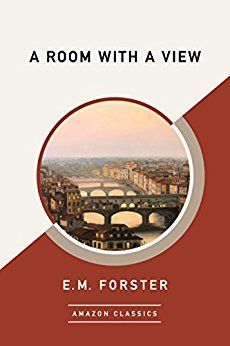
A Room with a View by E M Forster

A Room with a View by E M Forster is an early twentieth century comedy of manners, satirising the manners and social conventions of Vistorian/Edwardian society. It is Forster’s third novel, first published in 1908, a short novel of 161 pages and is light reading with some humorous dialogue.

Rating: 4 out of 5.

Lucy has her rigid, middle-class life mapped out for her, until she visits Florence with her uptight cousin Charlotte, and finds her neatly ordered existence thrown off balance. Her eyes are opened by the unconventional characters she meets at the Pension Bertolini: flamboyant romantic novelist Eleanor Lavish, the Cockney Signora, curious Mr Emerson and, most of all, his passionate son George.

Lucy finds herself torn between the intensity of life in Italy and the repressed morals of Edwardian England, personified in her terminally dull fiancé Cecil Vyse. Will she ever learn to follow her own heart? (Goodreads)

My thoughts:

I enjoyed Forster’s A Passage to India years ago and was looking forward to reading A Room with a View. Overall I enjoyed it, although I was rather underwhelmed by it and even in parts bored, especially near the end of the book, where there are some philosophical paragraphs that left me thinking I didn’t really understand them. It is about a young woman, Lucy Honeychurch, and her journey to self-discovery as she breaks out of the restrained culture of Edwardian England. It’s also a romance. The writing is ambiguous at times, so that you have to read between the lines in places.

It begins in Florence where Lucy is staying at the Pensione Bertolini, with her older cousin and chaperone Charlotte Bartlett. At dinner, they were complaining that their rooms didn’t have views over the River Arno as they had been promised.They were rather taken aback by two other guests, a Mr Emerson and his son George who offered to swap rooms with them. The Emersons are not bound by the conventions of the day and Charlotte considers they are ill-bred. But Lucy is attracted by the Emersons’ free thinking ideas. They spend time in Florence visiting various locations including the Santa Croce church, the Piazza Della Signoria and the San Miniato church, with its beautiful facade, and take a trip into the hills. Lucy finds herself in a little open terrace, covered in violets:

From her feet the ground sloped sharply into view, and violets ran down in rivulets and streams and cataracts, irrigating the hillside with blue, eddying round the tree stems collecting into pools in the hollows, covering the grass with spots of azure foam.

And it is there on that terrace that she comes across George and she is shocked and delighted, I think, when he kisses her. Charlotte witnesses the scene and urges/persuades Lucy to move to Rome where she meets Cecil Vyse, a most boring and priggish young man, whom she knew in England. The second half of the book takes place in England at Lucy’s home at Windy Corner where we meet the rest of her family and Lucy has to decide between the insufferable Cecil and the unconventional George. Will she give into convention or will she choose George, despite opposition from her family?

E M Forster from Goodreads:

Edward Morgan Forster, generally published as E.M. Forster, was an novelist, essayist, and short story writer. He is known best for his ironic and well-plotted novels examining class difference and hypocrisy in early 20th-century British society. His humanistic impulse toward understanding and sympathy may be aptly summed up in the epigraph to his 1910 novel Howards End: “Only connect”.

He had five novels published in his lifetime, achieving his greatest success with A Passage to India (1924) which takes as its subject the relationship between East and West, seen through the lens of India in the later days of the British Raj.

Forster’s views as a secular humanist are at the heart of his work, which often depicts the pursuit of personal connections in spite of the restrictions of contemporary society. He is noted for his use of symbolism as a technique in his novels, and he has been criticised for his attachment to mysticism. His other works include Where Angels Fear to Tread (1905), The Longest Journey (1907), A Room with a View (1908) and Maurice (1971), his posthumously published novel which tells of the coming of age of an explicitly gay male character.

A Room with a View was my Classics Club Spin book to read between 20th March and the 30th April. It is on my Classics Club list and it counts toward the Back to the Classics Challenge (as a 20th century classic).

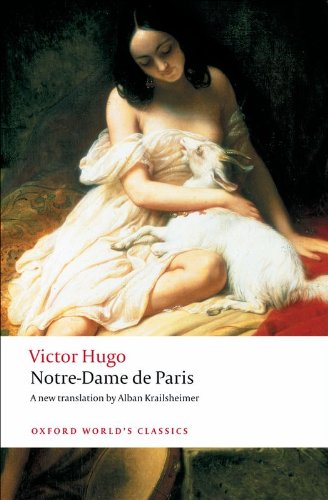
Notre-Dame de Paris by Victor Hugo

I have an old hardback copy of The Hunchback of Notre Dame (first published in 1831) in a very small font, too small for my eyes to cope with these days and a 49p e-book that I downloaded years ago when first got a Kindle. But I didn’t start reading it until a few months ago when FictionFan mentioned she was intending to read it and hold a Review-Along on her blog. I knew next to nothing about the book, not having seen any of the many films or TV versions, but I had read Victor Hugo’s Les Misérables back in 2008 and enjoyed it very much. So, I had high expectations that I would enjoy this one too.

But when I began reading my e-bookI was so disappointed – I thought it was so boring and it was hard to read, the sentences stilted and stumbling and obtuse with no flow. I was tempted to abandon it, after all it is a long book, and there are plenty of other books I want to read. However, I persevered, thinking surely it would get better. It didn’t, so then I wondered if it was me or the translation and began to look for another edition and I ended up with the Oxford World Classics edition, translated and with an introduction by Alban Krailsheimer, Notre-Dame de Paris, which is so much better, so much easier to read!

Rating: 3 out of 5.

The English title is so misleading – this book is not just about the hunchback Quasimodo, the bell-ringer of Notre-Dame, it is historical fiction on a grand scale, with a large cast of characters. It revolves around four main characters – the beautiful gypsy dancer, Esmeralda who fell hopelessly in love with the handsome womaniser, Captain Phoebus de Châteaupers, who has no intentions of marrying her. She in turn is loved by Frollo, the Archdeacon of Notre-Dame and by Quasimodo, the deformed and deaf bell-ringer of the cathedral of Notre-Dame.

But that is not all – it is also the story of the cathedral itself, Notre-Dame de Paris, and Hugo describes it at great length, focusing on the Gothic architectural elements of its structure, particularly its use of the pointed arch and including its flying buttresses, clerestory windows, and stained glass. He was a great advocate for the preservation of its Gothic architecture and was also extremely upset about the changes to the cathedral, the repairs and additions that had been done over the years. And it is not just the cathedral, Hugo also devotes many pages to describing Paris, seeing it from a bird’s eye view and also to the invention of the printing press and its effect on culture, described by Hugo as ‘the greatest event in history’. These digressions were not what I expected to read – I just wanted to get on with the story. I was impatient with the digressions, but looking back at Les Mis, that is exactly what he had done in that book too, so I shouldn’t have been surprised.

The story of the main characters’ relationships is told in a complicated way, going forward and backward in time, filling in the background of the characters, whilst revolving around the events of 1482, during the reign of Louis XI (who makes an appearance in the book). And it is melodramatic, playing on all our emotions. Quasimodo was so named because he was found, abandoned on Quasimodo Sunday (that is the second Sunday after Easter) when he was four years old. He was ‘adopted’ by the sinister Archdeacon, Claude Frollo, and grew up in the cathedral, isolated by his deafness caused by all the years he’d spent ringing the bells, and feared because of his hideous appearance.

This book has everything! It is by turns a farcical comedy, a tale of obsessions and unrequited passions, of love and lust, of a terrible miscarriage of justice, of outsiders, of violent mobs, of cruelty, arrogant men, silly women, of monsters, of alchemy, of intolerance, of prejudice, jealousy, fury, torture, corruption and above all of tragedy. And it has a cast of colourful and distinct characters, that I either despised, loved or hated, including Esmeralda’s little goat Djali, who could dance and do tricks and spells (I loved Djali). It is difficult for me to love the book and equally as hard to dislike it as a whole, set firmly in its medieval time frame, against the dramatic backdrop of the cathedral (even though I grew impatient with all the architectural details). But I was convinced by the end of the book that Hugo had successfully brought the place and the people of 1482 dramatically to life for me.

My apologies to FictionFan for being nearly a week late to her Review-Along and thanks for nudging me into reading Notre-Dame de Paris at long last. I am glad I read it even if I can’t give it more than 3 stars – I  liked it, a good, enjoyable book.

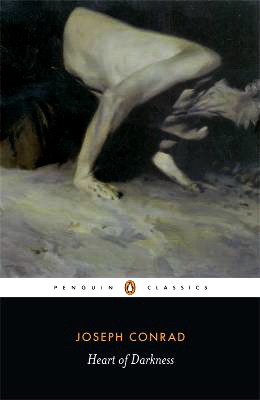
Heart of Darkness by Joseph Conrad

Rating: 3 out of 5.

Heart of Darkness, a novella by Joseph Conrad, was originally a three-part series in Blackwood’s Magazine in 1899. Although a gripping story, this was not an enjoyable book for me. But then, I suppose, it is not meant to be. Conrad was writing about the inhumanity of the way the native population in Africa was treated; the greed and cruelty of the Europeans to gain property, business, trade and profit, draining Africa of its natural resources. It paints an appalling picture.

It is a story within a story and has an inner core of mystery. It relates the story told by Charlie Marlow to his friends on a cruising yawl on the Thames as the day ended and dusk fell. He began by saying ‘this also … has been one of the dark places of the earth.‘ He was referring to the Roman invasion of the British Isles centuries earlier, feeling the utter savagery that closed around them as they set out to conquer the land.

Then he went on to tell them about another ‘dark place‘ where he worked as the skipper of a river steamboat, travelling up and down an unnamed mighty African river (assumed to be the Congo) between the stations of an ivory trading business. He hears about the mysterious Mr Kurtz, the ivory trading company’s agent in the interior. He was said to have supernatural powers. What happened to Kurtz, or rather, what Kurtz did, and what he became, were the questions I pondered as I read on. Marlow set out to find Kurtz, which took him deep into the jungle, and also deeper into the heart of the ‘Dark Continent’ and into the darkness of the human soul. Nothing is what it seems, and the mystery surrounding Kurtz has a feverish and nightmare atmosphere. The ambiguity and the vagueness left me feeling puzzled as well as horrified at what was implied. I think it is all the more horrific for not being crystal clear.

It is an horrific tale that I think shows the darkest depths of human behaviour. In doing so Conrad highlights the prejudices and the cruelty and shows how it was at that time – the graphic reality of what happened. It is a powerful criticism of colonialism at its worst, and full of imagery, casting a spotlight on the barbarity of the so-called civilised Westerners. These few words, uttered by Kurtz concisely summarise the whole story: ‘The horror! The horror!’

Book Beginnings & The Friday 56: A Room with a View by E M Forster

Every Friday Book Beginnings on Friday is hosted by Gillion at Rose City Reader where you can share the first sentence (or so) of the book you are reading. You can also share from a book you want to highlight just because it caught your fancy.

This week I’ve started to look at A Room with a View as this is the book I’ll be reading next for the Classics Club Spin. It was first published in 1908, set in Italy and England about a young woman, Florence and was E M Forster’s third book.

The Book Begins in Florence:

‘The Signora had no business to do it, said Miss Bartlett, ‘no business at all. She promised us south rooms with a view close together, instead of which here are north rooms, looking onto a courtyard, and a long way apart. Oh, Lucy!’

Also every Friday there is The Friday 56, hosted by Freda at Freda’s Voice, where you grab a book and turn to page 56 (or 56% of an eBook), find one or more interesting sentences (no spoilers), and post them.

Page 56:

The well-known world had broken up, and there emerged Florence, a magic city where people thought and did the most extraordinary things. Murder, accusations of murder, a lady clinging to one man and being rude to another – were these the daily incidents of her streets?

Synopsis from Goodreads:

Set in freewheeling Florence, Italy, and sober Surrey, England, E. M. Forster’s beloved third novel follows young Lucy Honeychurch’s journey to self-discovery at a transitional moment in British society. As Lucy is exposed to opportunities previously not afforded to women, her mind – and heart – must open. Before long, she’s in love with an “unsuitable” man and is faced with an impossible choice: follow her heart or be pressured into propriety.

A challenge to persistent Victorian ideals as well as a moving love story, A Room with a View has been celebrated for both its prescient view of women’s independence and its reminder to live an honest, authentic life.

I think I’m going to enjoy this book.

The Classics Club Spin Result

The spin number in The Classics Club Spin is number …

which for me is A Room with a View by E M Forster. The rules of the Spin are that this is the book for me to read by 30th April, 2022.

This has been on my Classics Club List for ages, so it’s time I read it – I think I saw the film years ago.

Set in freewheeling Florence, Italy, and sober Surrey, England, E. M. Forster’s beloved third novel follows young Lucy Honeychurch’s journey to self-discovery at a transitional moment in British society. As Lucy is exposed to opportunities previously not afforded to women, her mind – and heart – must open. Before long, she’s in love with an “unsuitable” man and is faced with an impossible choice: follow her heart or be pressured into propriety.

A challenge to persistent Victorian ideals as well as a moving love story, A Room with a View has been celebrated for both its prescient view of women’s independence and its reminder to live an honest, authentic life. (Goodreads)

Did you take part in the Classics Spin? What will you be reading?