Every Friday Book Beginnings on Friday is hosted by Gillion at Rose City Readerwhere you can share the first sentence (or so) of the book you are reading. You can also share from a book you want to highlight just because it caught your fancy.
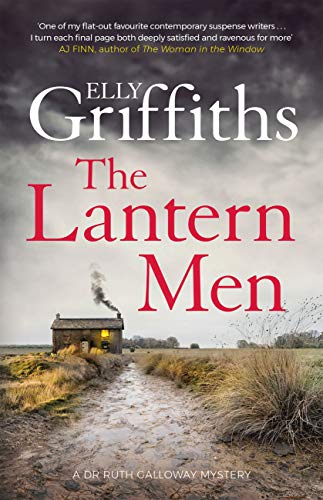
I’ve been looking through my TBR books on my Kindle and came across The Lantern Men by Elly Griffiths, the 12th in her Ruth Galloway series. I’ve read most of the series, so, I think I’ll read this next.
It begins with a Prologue:
10 July 2007
She has been walking for a long time. It’s funny but she hadn’t thought that there was so much space in England.
Also every Friday there is The Friday 56, hosted by Freda at Freda’s Voice. *Grab a book, any book. *Turn to Page 56 or 56% on your ereader . If you have to improvise, that is okay. *Find a snippet, short and sweet, but no spoilers!
These are the rules:
Grab a book, any book.
Turn to page 56, or 56% on your eReader. If you have to improvise, that is okay.
Find any sentence (or a few, just don’t spoil it) that grabs you.
Post it.
Add the URL to your post in the link on Freda’s most recent Friday 56 post.
Page 56:
It’s a note, scrawled on a folded piece of lined A4 paper.
‘If you want to know more about Ivor March meet me at The Hanged Man on Newnham Rd tonite at 7.30. Ask for John.’
Blurb:
Everything has changed for Dr Ruth Galloway.
She has a new job, home and partner, and is no longer North Norfolk police’s resident forensic archaeologist. That is, until convicted murderer Ivor March offers to make DCI Nelson a deal. Nelson was always sure that March killed more women than he was charged with. Now March confirms this, and offers to show Nelson where the other bodies are buried – but only if Ruth will do the digging.
Curious, but wary, Ruth agrees. March tells Ruth that he killed four more women and that their bodies are buried near a village bordering the fens, said to be haunted by the Lantern Men, mysterious figures holding lights that lure travellers to their deaths.
Is Ivor March himself a lantern man, luring Ruth back to Norfolk? What is his plan, and why is she so crucial to it? And are the killings really over?
Headline Review| 20 August 2020| 479 pages| Review copy| 2*
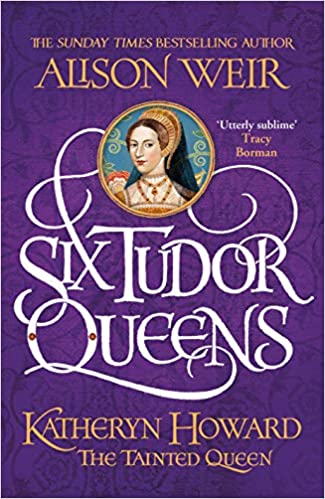
I wanted to read this book because I knew very little about Henry VIII’s 5th wife, except that she was beheaded on the grounds that she had committed adultery and treason.
Description
A NAIVE YOUNG WOMAN AT THE MERCY OF HER AMBITIOUS FAMILY.
At just nineteen, Katheryn Howard is quick to trust and fall in love.
She comes to court. She sings, she dances. She captures the heart of the King.
But Henry knows nothing of Katheryn’s past – one that comes back increasingly to haunt her. For those who share her secrets are waiting in the shadows, whispering words of love… and blackmail.
Having read it, I don’t think I know much more, except that Katheryn Howard comes across as a very shallow character, obsessed with sex, with luxury in all its forms, naive and easily manipulated. Alison Weir excels in her descriptive writing, bringing the Tudor court to life in all of its settings, locations, clothes and jewellery.
It has glowing reviews on Amazon full of praise and it is based on extensive research. Clearly other people love this book, but I didn’t. For me it came across as a romance novel, primarily focused on Katheryn’s imagined thoughts, emotions, and sexual encounters. It is simply written, but with too many cliches and modernised text.
Alison Weir’s Author’s Note is much more interesting than her novel, in which she acknowledges her sources, including Dr. Nicola Tallis’ unpublished DPhil thesis, All the Queen’s Jewels, 1445 – 1548, and a number of biographies of Katheryn Howard. She refers to original sources she used as the basis of the book – contemporary writers and wills, portraits showing her rich clothes and jewellery – jewels that have been tentatively identified in Katheryn Howard’s inventory.
She used these sources for the narrative of the book, weaving them into the dialogue and modernising the speech ‘where Tudor English looks out of place in a modern text.’ She states that ‘apart from fictionalising the historical record’ she has invented very little.’ There is also a Dramatis Personae, usefully indicating which characters are fictional and a Timeline, which is also very useful.
I think the Author’s Note is the best part of the book. There is rather too much of ‘fictionalising the historical record’ for me in the novel. I don’t like writing about a book I didn’t enjoy when I know so much work has gone into it and clearly other people have loved it. But this is just my opinion, for what it is worth.
With thanks to NetGalley and to the publishers for my review copy.
Two Roads| 9th February 2021| 369 pages| Review copy| 3*
Before I read the summary of the book the title led me to think this was about the Bibliothèque Nationale de France, located in Paris. It’s not, it’s about the American Library in Paris.
PARIS, 1939 Odile Souchet is obsessed with books, and her new job at the American Library in Paris – with its thriving community of students, writers and book lovers – is a dream come true. When war is declared, the Library is determined to remain open. But then the Nazis invade Paris, and everything changes. In Occupied Paris, choices as black and white as the words on a page become a murky shade of grey – choices that will put many on the wrong side of history, and the consequences of which will echo for decades to come.
MONTANA, 1983 Lily is a lonely teenager desperate to escape small-town Montana. She grows close to her neighbour Odile, discovering they share the same love of language, the same longings. But as Lily uncovers more about Odile’s mysterious past, she discovers a dark secret, closely guarded and long hidden.
As an ex-librarian I had high hopes that I would love The Paris Library. It’s historical fiction, based on the true Second World War story of the librarians at the American Library in Paris. It was established in 1920 by the American Library Association with books and periodicals donated by American libraries to US soldiers serving their allies in World War I. Since then it has developed into the largest English language lending library in Europe.
I liked the details about the Library, and about the work the library staff did during the War, including delivering books by hand to their Jewish subscribers in Paris after they were not allowed to enter the Library.
Charles’ helpful Author’s Note gives a fascinating insight into the background to the novel and explains that she had spent several years researching it. She had worked in the American Library in 2010 and her colleagues had told her the story of the Library during the Second World War and had given her access to documents, correspondence and contacts. She met with some of the staff who had worked there and was able to bring their stories up to date. Odile and Lily are both fictional characters.
Although I enjoyed the factual elements of the novel and the wartime storyline, I didn’t enjoy it as much as I had hoped. I was disappointed with the fictional stories, in particular Lily’s story in Montana in the 1980s. I really didn’t see the point of introducing her character simply to show what happened to Odile after the end of the War. Her story took the novel into the genres of YA and romantic fiction, neither of which hold much appeal for me. Overall I thought it was slow going and towards the end of the book my interest flagged making it a struggle to finish it.
With thanks to NetGalley and to the publishers, Two Roads for my review copy.
On the banks of the River Seine in 1899, a young woman takes her final breath before plunging into the icy water. Although she does not know it, her decision will set in motion an astonishing chain of events. It will lead to 1950s Norway, where a grieving toy-maker is on the cusp of a transformative invention, all the way to present-day Canada where a journalist, battling a terrible disease, risks everything for one last chance to live.
Taking inspiration from a remarkable true story, Coming Up for Air is a bold, richly imagined novel about the transcendent power of storytelling and the immeasurable impact of every human life.
Coming Up For Air is Sarah Leipciger’s second novel. It is a beautiful novel, a story of three people living in different countries and in different times. How their stories connect is gradually revealed as the novel progresses. As the author explains at the end of the novel is is a mix of fact and fiction and has its basis in truth. There is grief and loss and despair in each story, but above all, it is about love, and the desire to live.
Each story was compelling and, for once in a book that alternates between the characters, I thought the changes were just at the right moment in each one.
It begins with the unknown young woman in Paris, L’Inconnue, telling the story of her life that led to her suicide. Her death in the Seine is vividly described. As she fell in the cold water, initially she discovered the desire to live, as her body thrashed about not wanting to drown, her lungs fighting for air, for oxygen. It’s poignant and moving, set at the end of the 19th century bringing the city to life, where she lives as a lady’s companion to an old friend of her grandmother’s.
The second story is that of Norwegian, Pieter Akkrehamn, beginning in 1921, when he used to spend his summers with his grandparents on Karmoy Island. He went swimming in the North Sea, diving down several metres, holding his breath for over a minute in the freezing cold water, as the cold reached his chest, squeezing his lungs. His story is revealed, as he grieves for his little son. He is a toymaker, bored with making wooden toys, who turned to soft plastics and began making dolls with soft faces and bendable knees. What he eventually developed was truly remarkable.
The vital importance of being able to breathe comes to the fore in the third story – that of Anouk, a journalist in Canada. Anouk has cystic fibrosis and is on the list for a lung transplant. Her story is one of how she and her parents dealt with her illness, enabling her to combine her love for water and swimming with managing her cystic fibrosis, all the time struggling to breathe.
I think Sarah Leipciger is a great storyteller. It is an inspiring book, beautifully written, which emphasises the importance of the air we breathe and the desire to live. I loved it so much that I hope to read her first novel, The Mountain Can Wait.
With my thanks to NetGalley and to Random House for my review copy.
Publisher : Random House UK Transworld Digital (19 Mar. 2020)
Top Ten Tuesday is a weekly meme created by The Broke and the Bookish and now hosted by Jana at That Artsy Reader Girl. For the rules see her blog. The topic this week is Books On My Summer 2021 To Read List.
Some of these books are ones that have been on my shelves for ages and some are more recent additions from NetGalley.
TheMouse Trap and Selected Plays by Agatha Christie – the world’s longest running play, plus three other thrillers adapted from the novels (which I have read) – And Then There Were None, The Hollow and Appointment with Death. I haven’t seen The Mouse Trap, and doubt I ever will, so the next best thing is to read it.
Set in an manor house a number of people are isolated from the outside world by a blizzard and faced with the reality that one of them is a killer.
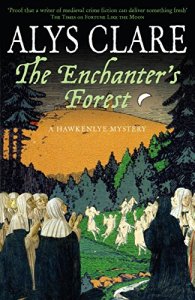
The Enchanter’s Forest by Alys Clare – historical fiction set in Midsummer 1195. A ruthlessly ambitious man has fallen deeply into debt, his desperate situation made even more difficult by the contribution he has had to pay towards King Richard’s ransom. To make matters worse the beautiful wife he tricked into marriage has tired of him and her mother hates his guts.
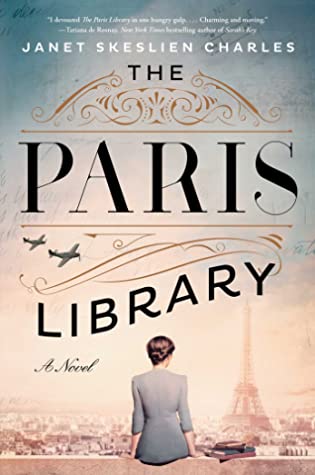
The Paris Library by Janet Skeslien Charles set in Paris in 1939. Odile Souchet is obsessed with books, and her new job at the American Library in Paris is a dream come true. When war is declared, the Library is determined to remain open. But then the Nazis invade Paris, and everything changes.
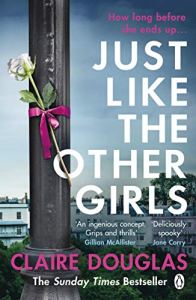
Just Like the Other Girlsby Claire Douglas – standalone psychological thriller. Una Richardson’s heart is broken after the death of her mother. Seeking a place to heal, she responds to an advertisement and steps into the rich, comforting world of Elspeth McKenzie. But Elspeth’s home is not as safe as it seems.
The Gate of Angels by Penelope Fitzgerald – In 1912, rational Fred Fairly, one of Cambridge’s best and brightest, crashes his bike and wakes up in bed with a stranger – fellow casualty Daisy Saunders, a charming, pretty, generous working-class nurse. So begins a series of complications – not only of the heart but also of the head – as Fred and Daisy take up each other’s education and turn each other’s philosophies upside down.
The House on Bellevue Gardens by Rachel Hore – Bellevue Gardens is a tranquil London square, tucked away behind a busy street. You might pass it without knowing it’s there. Here, through the imposing front door of Number 11, is a place of peace, of sanctuary and of secrets. It is home to Leonie; once a model in the sixties, she came to the house to escape a destructive marriage and now, out of gratitude, she opens her house to others in need.
After her father’s tragic suicide, Una is desperate to get away from Reykjavik. So when an advert appears for a teaching position in a remote, northern Icelandic village, she seizes her chance. But with unfriendly residents, bleak weather and a population of just ten, it is far from what Una knows. And then, just before midwinter, a young girl from the village is found dead. Now there are only nine villagers left. And Una fears that one of them has blood on their hands . . .
The Music Shop by Rachel Joyce – 1988. Frank owns a music shop. It is jam-packed with records of every speed, size and genre. Classical, jazz, punk – as long as it’s vinyl he sells it. Day after day Frank finds his customers the music they need. Then into his life walks Ilse Brauchmann. Ilse asks Frank to teach her about music. His instinct is to turn and run. And yet he is drawn to this strangely still, mysterious woman with her pea-green coat and her eyes as black as vinyl. But Ilse is not what she seems. And Frank has old wounds that threaten to re-open and a past he will never leave behind …
True Crime Story by Joseph Knox – a standalone murder mystery told as a true crime story. In the early hours of Saturday 17 December 2011, Zoe Nolan, a nineteen-year-old Manchester University student, walked out of a party taking place in the shared accommodation where she had been living for three months.
She was never seen again. Seven years after her disappearance, struggling writer Evelyn Mitchell finds herself drawn into the mystery. Through interviews with Zoe’s closest friends and family, she begins piecing together what really happened in 2011. .
The Silence Between Breaths by Cath Staincliffe passengers boarding the 10.35 train from Manchester Piccadilly to London Euston are bound for work, reunions, holidays and new starts, with no idea that the journey is about to change their lives for ever, as one of the passengers, sitting in the middle of the carriage is Saheel, carrying a deadly rucksack . . .
In the aftermath, amidst the destruction and desolation, new bonds are formed, new friendships made… and we find hope in the most unlikely of places and among the most unlikely people.
On Tuesday I went Barter Books in Alnwick (this is a secondhand bookshop where you can ‘swap’ books for credit that you can then use to get more books from the Barter Books shelves). The last time I went there was in January 2020. Since the pandemic began I’ve only been out to a few places and not been around many people at all, so I was a bit nervous.
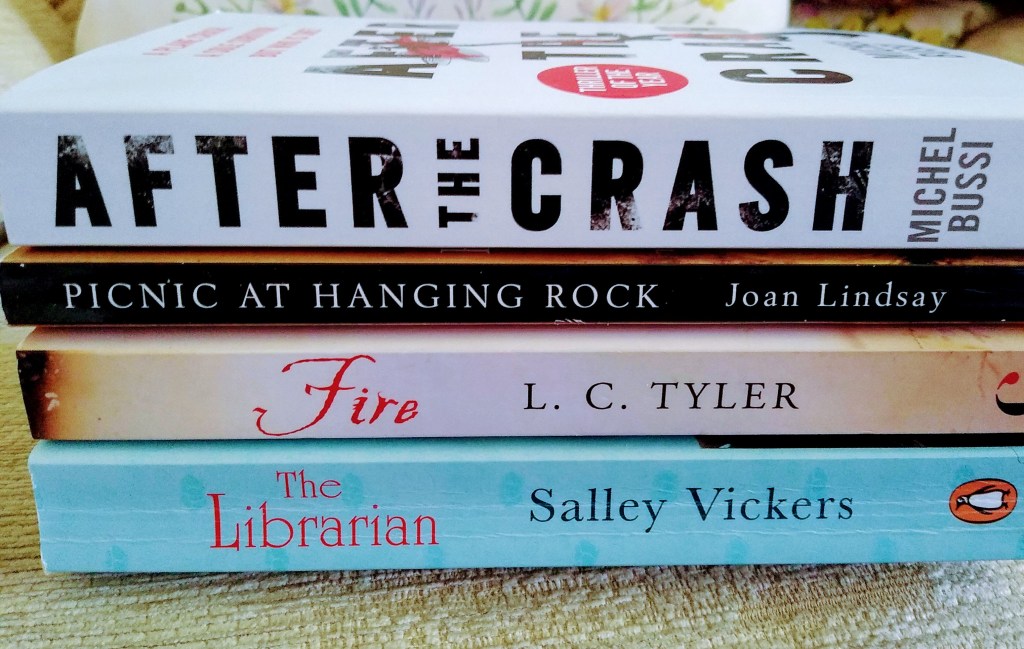
These are the books I got (the descriptions are from Amazon):
On the night of 22 December 1980, a plane crashes on the Franco-Swiss border and is engulfed in flames. 168 out of 169 passengers are killed instantly. The miraculous sole survivor is a three-month-old baby girl. Two families, one rich, the other poor, step forward to claim her, sparking an investigation that will last for almost two decades. Is she Lyse-Rose or Emilie?
Eighteen years later, having failed to discover the truth, private detective Crédule Grand-Duc plans to take his own life, but not before placing an account of his investigation in the girl’s hands. But, as he sits at his desk about to pull the trigger, he uncovers a secret that changes everything – then is killed before he can breathe a word of it to anyone . . .
It was a cloudless summer day in the year nineteen hundred.
Everyone at Appleyard College for Young Ladies agreed it was just right for a picnic at Hanging Rock. After lunch, a group of three of the girls climbed into the blaze of the afternoon sun, pressing on through the scrub into the shadows of Hanging Rock. Further, higher, till at last they disappeared.
They never returned.
Whether Picnic at Hanging Rock is fact or fiction the reader must decide for themselves.
Fire by L C Tyler – I’ve never read any of his books. I chose it because I like historical fiction and I’m interested in the Restoration period, having read Andrew Taylor’s Marwood and Lovett series also set in the same period. Fire is the fourth book in the John Grey Historical Mystery series.
1666. London has been destroyed by fire and its citizens are looking for somebody, preferable foreign, to blame. Only the royal Court, with its strong Catholic sympathies, is trying to dampen down the post-conflaguration hysteria. Then, inconveniently, a Frenchman admits to having started it together with an accomplice, whom he says he has subsequently killed.
John Grey is tasked by Secretary of State, Lord Arlington, with proving conclusively that the self-confessed fire-raiser is lying. Though Grey agrees with Arlington that the Frenchman must be mad, he is increasingly perplexed at how much he knows. And a body has been discovered that appears in every way to match the description of the dead accomplice.
Grey’s investigations take him and his companion, Lady Pole, into the dangerous and still smoking ruins of the old City. And somebody out there – somebody at the very centre of power in England – would prefer it if they didn’t live long enough to conclude their work…
In 1958, Sylvia Blackwell, fresh from one of the new post-war Library Schools, takes up a job as children’s librarian in a run down library in the market town of East Mole.
Her mission is to fire the enthusiasm of the children of East Mole for reading. But her love affair with the local married GP, and her befriending of his precious daughter, her neighbour’s son and her landlady’s neglected grandchild, ignite the prejudices of the town, threatening her job and the very existence of the library with dramatic consequences for them all.
The Librarian is a moving testament to the joy of reading and the power of books to change and inspire us all.
There was a queue outside when I got there as entry to the bookshop is limited to a maximum of about sixty people at a time to ensure enough space for social distancing. Although I was pleased to be able to go to Barter Books again, there were too many people there for me, especially around the counter and the crime fiction bookcases near the counter. So I didn’t linger and went to back of the main hall, which is the largest room in the shop where there were only a few people browsing the shelves. Even so I felt nervous, so once I’d found four books I decided it was time for me to leave. I’ve never been comfortable in crowds, even before the pandemic.







 BooksPlease