The Moon Sister by Lucinda Riley

Rating: 4 out of 5.

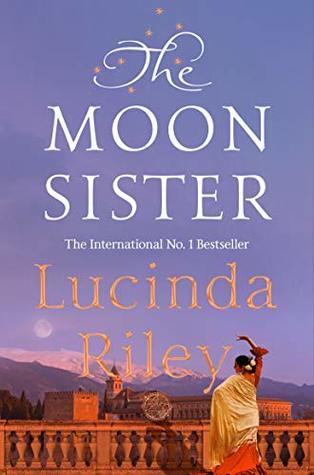
I’ve had this book for a while now and have just finished reading it. It is the 5th book in Lucinda Riley’s series, The Seven Sisters and as I’d only read the first book I thought I’d read the other three books first before this one, so that I could read them in order. But as the 7th book, The Missing Sister, will be published in May I thought I had better read The Moon Sister now. The books are based on the legends of The Seven Sisters of the Pleiades. Although this is just one in the series I think it reads very well as a standalone book.

I loved this book, about Tiggy D’Apilese, the fifth sister adopted by Pa Salt and brought up in their childhood home, ‘Atlantis’ – a fabulous, secluded castle situated on the shores of Lake Geneva. The sisters are all named after the stars in the Pleiades star cluster. Tiggy’s star name is Taygete. Pa Salt had died earlier in the year and had left clues for each girl so that if they want they can discover who their parents were and the circumstances of their birth. Tiggy is her nickname after the hedgehog Mrs Tiggy-winkle from the Beatrix Potter book – and because when she was born her hair stuck up in spikes.

The book description summarises this long and detailed (769 pages) book, and I don’t intend to go into much more detail about the plot. The story begins in the Scottish Highlands where Tiggy works as a wildlife consultant, then moves to Sacromente in Spain, then onto Portugal, South America and New York before moving back to the Highlands as Tiggy finds out about her birth and her family history.

Blurb:

After the death of her father – Pa Salt, an elusive billionaire who adopted his six daughters from around the globe – Tiggy D’Aplièse , trusting her instincts, moves to the remote wilds of Scotland. There she takes a job doing what she loves; caring for animals on the vast and isolated Kinnaird estate, employed by the enigmatic and troubled Laird, Charlie Kinnaird.

Her decision alters her future irrevocably when Chilly, an ancient gipsy who has lived for years on the estate, tells her that not only does she possess a sixth sense, passed down from her ancestors, but it was foretold long ago that he would be the one to send her back home to Granada in Spain . . .

In the shadow of the magnificent Alhambra, Tiggy discovers her connection to the fabled gypsy community of Sacromonte, who were forced to flee their homes during the civil war, and to ‘La Candela’ the greatest flamenco dancer of her generation.

From the Scottish Highlands and Spain, to South America and New York, Tiggy follows the trail back to her own exotic but complex past. And under the watchful eye of a gifted gypsy bruja she begins to embrace her own talent for healing.

But when fate takes a hand, Tiggy must decide whether to stay with her new-found family or return to Kinnaird, and Charlie . . .

The modern day story is interesting, about her work on the Kinnaird Estate (based on Alladale Wilderness Reserve), but I felt that her relationship with the Laird was rather naive, and at the end of the book how that was resolved felt contrived. But I loved the episodes in which Tiggy meets Chilly, and those with the deer and the white stag. Chilly is the old gypsy, who she befriended. He calls her ‘Hotchiwitchi’, Romany for hedgehog, and tells her that she has a special gift in her hands to heal animals. He also tells her that she should go to the seven caves of Sacromente, where she was born. Tiggy sees a white stag, which she calls Pegasus and tries to protect him from poachers, when news got out he was on the Estate. White stags are revered; there a several myths about them – one being that Tiggy’s mythical counterpart, Taygete, who was a companion of the Greek deity Artemis, ‘the Mistress of Animals’, was being pursued by and to protect her Artemis turned her into a doe.

But the most interesting and fascinating part of the book for me is the story of Tiggy’s , grandmother, Lucia Amaya-Albaycin, who became a famous flamenco dancer. She is the dominant character in the book, and not a particularly likeable character as she was totally self-absorbed, and obsessed with furthering her career. Flamenco dancing was her passion and took priority over everything else.

Lucia was also born in in a cave in Sacromonte, the sacred mountain just outside the eastern city walls of Granada in Andalusia, within sight of the Alhambra. She was a ‘gitano’ and lived her life to dance. She was born in poverty and her family struggled to survive. During the Spanish Civil War their neighbourhood was devastated, suffering famine and hardship – one of Lucia’s brothers was imprisoned in terrible conditions. She and her father, together with their troupe of dancers fled to Portugal and then went to Argentina and eventually on to New York, where Lucia was forced to choose between her career and the man she loved. But the spirit of the ‘duende’, possessed her as it surged up from the soles of her feet as she danced, encompassing her whole body, and soaring out of her soul.

Lucinda Riley is a wonderful storyteller and her descriptions of the grandeur and beauty of both Granada and the Scottish Highlands entranced me.They are so beautifully and vividly described that I was transported back in time and place, seeing the events unfold before my eyes.

Many thanks to the the publishers via NetGalley for my digital review copy.

  • ASIN : B07F72TKSX
  • Publisher : Macmillan (1 Nov. 2018)
  • Language : English
  • File size : 1255 KB
  • Text-to-Speech : Enabled
  • Enhanced typesetting : Enabled
  • X-Ray : Enabled
  • Word Wise : Enabled
  • Print length : 769 pages

The seven books are:

  1. The Seven Sisters (2014)
   2. The Storm Sister (2015)
   3. The Shadow Sister (2016)
   4. The Pearl Sister (2017)
   5. The Moon Sister (2018)
   6. The Sun Sister (2019)
   7. The Missing Sister (2021)

Invisible Girl by Lisa Jewell

Random House UK, Cornerstone| 6 August 2020|407 pages| Kindle review copy via NetGalley

Lisa Jewell is one of my favourite authors and yet I struggled to read Invisible Girl. I struggled to get interested in it at first and at about 25% I nearly gave up. But I can’t give up on a book by a favourite author, so I carried on.

The book description below is what made me want to read it:

It is nearly midnight, and very cold. Yet in this dark place of long grass and tall trees where cats hunt and foxes shriek, a girl is waiting…

When Saffyre Maddox was ten something terrible happened and she’s carried the pain of it around with her ever since. The man who she thought was going to heal her didn’t, and now she hides from him, invisible in the shadows, learning his secrets; secrets she could use to blow his safe, cosy world apart.

Owen Pick is invisible too. He’s thirty-three years old and he’s never had a girlfriend, he’s never even had a friend. Nobody sees him. Nobody cares about him. But when Saffyre Maddox disappears from opposite his house on Valentine’s night, suddenly the whole world is looking at him. Accusing him. Holding him responsible. Because he’s just the type, isn’t he? A bit creepy?

I struggled because it is slow-going, the narrative jumps around between Saffyre, Owen and Cate (the long suffering wife of Roan, a child psychologist) and also between the present and the past tenses. I was never really sure where the story was going.

The blurb tells you the the bare bones of the plot. It’s a mystery revolving around secrets – what was the terrible thing that happened to Saffyre, what are the characters hiding, why does everybody shun Owen and are they all unreliable narrators? I was never really sure and didn’t trust any of them. It certainly doesn’t hold back on some of the most unsavoury aspects of life – sexual harassment, abuse, self-harm, in-celibates, on-line forums and so on. It’s the slow pace that made it drag for me and lessened any sense of tension about what was going to happen. All is explained by the end – apart, that is, from one final thread that is left hanging.

Lisa Jewell’s Acknowledgements are interesting, in that she explains how she writes. Until she has finished a book she writes it is ‘just me and my (three) typing fingers and my weird imaginary world.’ She doesn’t do research because it puts her off her stride and she doesn’t like editorial input when she is writing. But when she has finished then, as she describes it, all these magical people appear and fix her imaginary world. Of course, then she thanks all those people, her editors, sales and marketing and publicity teams.

Her methods have worked enormously well in all the other books of hers that I’ve read and I’ve been enthralled, mystified and captivated by them – but just not this one, I’m sorry to say.

My thanks to the publishers and to NetGalley for my copy and I wish I could have been more engaged and enthusiastic about this book.

The Marlow Murder Club by Robert Thorogood

HQ| 7 January 2021|347 pages| Kindle review copy via Netgalley| 3*

I hadn’t read any of Robert Thorogood’s books, but I thought I’d enjoy The Marlow Murder Club based on the blurb. It begins well. Seventy-seven year old Judith Potts is happy with her life, living in an Arts and Crafts mansion on the River Thames, although there are hints that there is something in her past she wants to forget. It’s the height of summer, in the grip of a heatwave, and Judith decides to take all her clothes off and go for swim in the Thames. She was enjoying herself when she hears a shout from her neighbour’s house on the opposite riverbank, followed by a gunshot. Later, when she goes to investigate, she finds him, dead in the river, with a bullet hole in the centre of his forehead.

It’s set in Marlow, which is what attracted me to the book as it’s a place I know quite well. The main characters are Judith, Suzie and Becks, who together discover who killed Stefan. They’re all quirky personalities with secrets they’re keeping hidden. Detective Sergeant Tanika Malika leads the police team and eventually when more bodies turn up she agrees that the three woman can help with the official investigation.

The Marlow Club Murder is a ‘cosy’ murder mystery, easy to read and fast paced. Judith is a crossword compiler, who writes cryptic clues so I really enjoyed that aspect of the book, and the relationship between her, Suzie and Becks is well-drawn. But there is quite a lot of repetition as Judith and her friends go over the evidence that they’ve gathered several times and the solution to the murder mystery is easy to predict. The ending is very rushed and let down by convenient coincidences. Overall, I think it’s light, easy reading that is quite entertaining, and the relationship between the three women is what kept me reading to the end of the book.

My thanks to the publishers and NetGalley for my review copy.

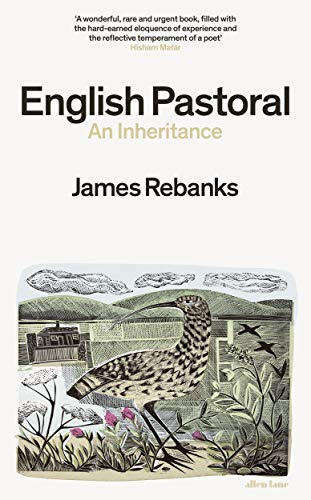
English Pastoral by James Rebanks

Penguin| 3 September 2020| 283 pages| Kindle review copy via Netgalley| 5*

English Pastoral: An Inheritance by James Rebanks is an absolutely marvellous book, the best book I’ve read this year and although it’s still February I can’t imagine that I’ll read a better book all year.

About the book:

As a boy, James Rebanks’s grandfather taught him to work the land the old way. Their family farm in the Lake District hills was part of an ancient agricultural landscape: a patchwork of crops and meadows, of pastures grazed with livestock, and hedgerows teeming with wildlife. And yet, by the time James inherited the farm, it was barely recognisable. The men and women had vanished from the fields; the old stone barns had crumbled; the skies had emptied of birds and their wind-blown song.

English Pastoral is the story of an inheritance: one that affects us all. It tells of how rural landscapes around the world were brought close to collapse, and the age-old rhythms of work, weather, community and wild things were lost. And yet this elegy from the northern fells is also a song of hope: of how, guided by the past, one farmer began to salvage a tiny corner of England that was now his, doing his best to restore the life that had vanished and to leave a legacy for the future.

This is a book about what it means to have love and pride in a place, and how, against all the odds, it may still be possible to build a new pastoral: not a utopia, but somewhere decent for us all.

It is inspirational as well as informative and it is beautifully written. I enjoyed his account of his childhood and his nostalgia at looking back at how his grandfather farmed the land. And I was enlightened about current farming practices and the effects they have on the land, depleting the soil of nutrients.

But all is not doom and gloom as Rebanks also explains what can be done to put things right, how we can achieve a balance of farmed and wild landscapes, by limiting use of some of the technological tools we’ve used over the last 50 years so that methods based on mixed farming and rotation can be re-established. By encouraging more diverse farm habitats, rotational grazing and other practices that mimic natural processes we can transform rural Britain.

I loved this book and came away with much to think about and also hope for the future.

My thanks to the publishers and NetGalley for the review copy, and as it is such an excellent book, after reading the review copy, I bought the e-book.

Exit by Belinda Bauer

Random House UK, Cornerstone| 21 January 2021| 336 pages| Kindle review copy| 4*

I wasn’t at all sure about Exit by Belinda Bauer when I first started to read it a few months ago, so put it to one side and only picked it up again a few days ago. What initially put me off was the opening chapter, which sets the scene for the work of the Exiteers, a group of people who provide support for people with a terminal illness to end their lives. Their role is ostensibly passive, just to be there to keep the dying company as they take their final breaths. But they do provide the means! And one assignment for John (real name Felix Pink) and Amanda goes wrong when they discover they have ‘helped’ the wrong man.

But I read on and what at first looks like a novel considering the ethics of assisted suicide turns into crime fiction as Felix and Amanda realise they have become murder suspects. It’s all mayhem after that as Felix, overcome with remorse, tries to put things right and to discover how and why the wrong man had died.

Far from being a ‘thriller’ it becomes a borderline ‘cosy’ murder mystery, verging on farce in places and I was amused by the wry humour and surreal scenes. It’s a comedy of errors, interspersed with poignant scenes as we learn about Felix’s grief over the deaths of his wife, Margaret and son James. His thoughts always end up with wondering what Margaret would do in the same situation.

It gets off to a slow start, the pace only gradually picking up in the later chapters, when the multiple twists kept me engaged and keen to know how it would end. There are quite a lot of characters in the book, which I found a bit confusing at first, although the main characters, Felix and Acting DC Calvin Bridges are clearly defined and distinctive characters. Some of the minor characters, such as old Greybeard and other clients in the betting shop, are clearly quirky and their actions absurd. And I particularly liked old Skipper, Albert’s father. But underneath the comedy there is a tragedy, as Felix discovers how he has been deceived all along. And the ending is bitter sweet. I began not sure I really wanted to read Exit and ended it feeling I’m glad I did. It’s unlike anything else I’ve read!

Thanks to the publishers and NetGalley for my proof copy.

Measure of Malice: Scientific Detection Stories edited by Martin Edwards

The Measure of Malice edited by Martin Edwards is one of the more enjoyable short story collections that I’ve read. It contains 14 stories in which scientific/technological methods are used in the detection of crime. There is an excellent introduction by Martin Edwards with information about the authors, five of whom were doctors, two were engineers and one was an academic chemist.

As always with short story collections some stories are better than others. I’m highlighting a few of the better ones here:

The Boscombe Valley Mystery by A Conan Doyle was originally published in the Strand Magazine in October 1891, and is the first short story to feature Inspector Lestrade. It’s a solid story, solved by Sherlock Holmes by inspecting and analysing the footprints and signs at the scene of the crime.

The Horror of Studley Grange by L T Meade and Clifford Halifax (1894), from Stories for the Diary of a Doctor, originally published in the Strand Magazine. I enjoyed this one although it was pretty easy to predict. Ostensibly a ghost story, the solution involves the use of a laryngoscope.

After Death the Doctor by J J Connington, a Scottish professor of chemistry. This one was first published in 1934, involving a contemporary scientific gadget. The doctor in question is Doctor Shefford who together with Sergeant Longridge, investigate the murder of old Barnaby Leadburn, found dead with his throat cut.

The next two are the ones I enjoyed the most:

The Broken Toad by H C Bailey, first published in 1934, featuring the surgeon and Home Office Consultant, Reggie Fortune as he considers the death of a police constable from poisoning. I enjoyed all the detailed complications and Bailey’s literary mannered style of storytelling.

In the Teeth of the Evidence by Dorothy L Sayers, first published in 1939, about forensic dentistry, which starts as Lord Peter Wimsey is sitting in his dentist’s chair. The police had just visited the surgery, wanting to see his predecessor’s records to identify the victim of a burnt out garage. An upper right incisor crown and the filling in a molar provided the clues to his death. Gory if you actually visualise what is involved!

  • Publisher : Poisoned Pen Press (4 Feb. 2020)
  • Language: : English
  • Paperback : 336 pages
  • ISBN-10 : 1492699624
  • ISBN-13 : 978-1492699620
  • Source: The Poisoned Pen Press via NetGalley
  • My Rating: 3.5*