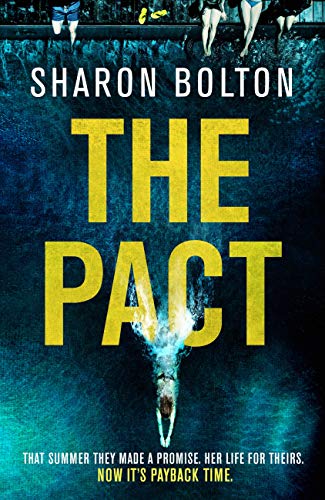
The Pact by Sharon Bolton

Trapeze | May 2021| 355 pages| e book| Review copy| 4 stars

I was completely gripped by The Pact. It’s a fast-paced novel about a group of five teenagers. It’s summer and they are waiting for their A level exam results. It’s the night before the results come out, the night before all their lives were changed for ever. They were all expecting to get the grades they need to go on to university and to have the brilliant careers they envisaged. But that night was the last carefree night for all of them as it ended in disaster.

For Felix, Talitha, Amber, Daniel and Megan the summer had been glorious – they gone to festivals, lazed around Talitha’s parents’ pool, drinking and enjoying life. That night they decided that Daniel should take the rite of passage the other four had already done that summer. And so it was that they were driving at 80 miles an hour in darkness the wrong way down the M40. The others had had heart-stopping near misses, although Megan had proved to be the coolest of them all. Daniel’s drive was the worst. He drove badly and out of the darkness another car appeared headed towards them and they crashed. A mother and her two young daughters were killed.

What happened next took my breath away. – they drove back to Talitha’s house and after a lengthy discussion when they realised the consequences of what they had done Megan announced that she would take the blame, on the condition that they agree that they owe her a ‘favour’, once she has been released from prison. The ‘favour’ is to do whatever she asks them individually and if they renege she will tell the truth about what had happened that night.

Twenty years later she is released from prison and the time for the calling in her favours begins. The other four have all done well for themselves and hope Megan’s experiences in prison have blotted out her memory about the ‘favours’ they owe her. But Megan is out for revenge and has no mercy for the ‘friends’ who had left her to rot in prison and is determined that they should pay. And so their nightmares begin.

This is a book full of suspense and tension, that just kept building as I read on. It is compelling reading but I didn’t like any of the characters, and I don’t think you are meant to. At times I did feel sorry for Megan – up to a certain point. All the way through I couldn’t understand why Megan had taken the blame. She was from a different background than the others. Their families were privileged, rich and successful, whereas she was from a poor single-parent family. She was a scholarship girl at their private school. She saw it as a token appointment from a posh school declaring its progressive credentials. The others saw her as not really one of them, but she was the head girl and the cleverest of them all. I didn’t think it could be for the power she held over them, surely that wouldn’t compensate for spending time in prison?

It is not my favourite of Sharon Bolton’s books. The ending felt rushed and surprised me and I think it wasn’t really believable, but then I found the plot as a whole difficult to accept. Even so, I just couldn’t stop reading it and managed to suspend my disbelief enough to enjoy it.

My thanks to the publishers and NetGalley for my review copy.

The Royal Secret by Andrew Taylor

Harper Collins UK| 29 April 2021| 476 pages| e-book| Review copy| 4*

Description:

From the No.1 bestselling author of The Last Protector and The Ashes of London comes the next book in the phenomenally successful series following James Marwood and Cat Lovett during the time of King Charles II.

Two young girls plot a murder by witchcraft. Soon afterwards a government clerk dies painfully in mysterious circumstances. His colleague James Marwood is asked to investigate – but the task brings unexpected dangers.
 
Meanwhile, architect Cat Hakesby is working for a merchant who lives on Slaughter Street, where the air smells of blood and a captive Barbary lion prowls the stables. Then a prestigious new commission arrives. Cat must design a Poultry House for the woman that the King loves most in all the world.
 
Unbeknownst to all, at the heart of this lies a royal secret so explosive that it could not only rip apart England but change the entire face of Europe

My thoughts:

I’ve read all of the previous Marwood and Lovett books, set in 17th century England, and thoroughly enjoyed each one, so I was delighted when Rachel Quin at HarperCollins asked me if I’d like a proof copy of  The Royal Secret to review. It is the 5th book in the series and although it does work as a stand-alone book I do think it’s best to read them in sequence to get the full background of the Restoration period and the relationship between James Marwood and Cat Hakesbury (formerly Lovatt).

The year is 1670, two years have passed since the end of the previous book, The Last Protector. Cat Hakesby’s work as an architect continues after her husband’s death and after designing a poultry house for the young daughter of Lord Arlington, the Secretary of State, she gains a commission to design one for Charles II’s sister, ‘Minette,’ the Duchess of Orléans. Meanwhile Marwood is a government clerk clerk to Joseph Williamson and also working for Lord Arlington. They find themselves involved in a complicated situation that is full of danger.

Marwood is instructed to investigate the mysterious death of Richard Abbott, one of Lord Arlington’s men, and retrieve some confidential papers from the victim’s home. Abbott’s step-daughter, Maria and the maid, Hannah have been dabbling in witchcraft and Maria believes she is responsible for his death. Marwood’s investigation brings him into contact with a merchant, Mr Fanshawe (also one of Cat’s clients) and through him with a mysterious Dutch gentleman, Henryke Van Riebeeck. Van Riebeeck just happens to be Anna Abbott’s brother, and Fanshawe’s son was Anna Abbott’s first husband and the father of Maria. After Abbott’s death she and Maria together with Hannah had gone to live in Fanshawe’s house. Fanshawe is an interesting character, who has recently bought a lion, who he named Caliban, a mangy bad-tempered beast that he keeps in the stables at his house in Slaughter Street.

So, Cat and Marwood are both involved with the same people, although in different circumstances. Their relationship is somewhat ambiguous. She is a strong-minded woman, a widow who values her independence in a society where women, although used to running households and dealing with their families’ financial matters, were only just beginning to find a place in society outside the home. And she doesn’t welcome Marwood’s interference in her life. That the two of them are attracted to each other is not acknowledged by either of them – especially, in this book, when Cat finds herself drawn romantically to Van Riebeeck. Her work takes her to the Royal Court in Paris to discuss her designs for the poultry house, although Minette seems more concerned with political matters and Cat wonders what the real reason for her visit is.

This is a well researched historical novel, mixing fact and fiction, bringing the streets of London and the royal court in Paris to life. At the same time it presents a mystery full of political intrigue, danger and conspiracy, involving witchcraft, poisonings, and tricky international relationships. It is only towards the end of the book that the royal secret is revealed – and I had had no idea until then what it was. I do hope there will be a sixth book for Marwood and Lovatt.

My thanks to the publishers and NetGalley for my review copy.

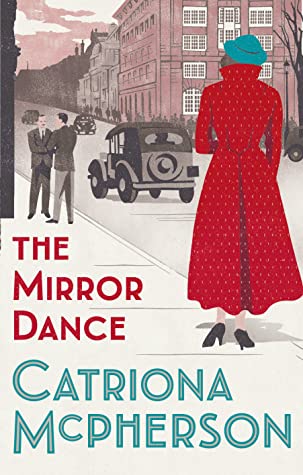
The Mirror Dance by Catriona McPherson

Hodder and Stoughton| 21 January 2021| 259 pages| e-book| Review copy| 3*

Description:

Something sinister is afoot in the streets of Dundee, when a puppeteer is found murdered behind his striped Punch and Judy stand, as children sit cross-legged drinking ginger beer. At once, Dandy Gilver’s semmingly-innocuous investigation into plagiarism takes a darker turn. The gruesome death seems to be inextricably bound to the gloomy offices of Doig’s Publishers, its secrets hidden in the real stories behind their girls’ magazines The Rosie Cheek and The Freckle.

On meeting a mysterious professor from St Andrews, Dandy and her faithful colleague Alex Osbourne are flung into the worlds of academia, the theatre and publishing. Nothing is quite as it seems, and behind the cheerful facades of puppets and comic books, is a troubled history has begun to repeat itself.

My thoughts:

I’ve read some of the Dandy Gilver mysteries by Catriona McPherson, set in the 1920s and 1930s Scotland. The Mirror Dance is the 15th book. The last one I read was the 6th, a few years ago now, so when I saw it on NetGalley I requested it. I was pleased to find, that although I’d missed so many of the books in the series, it’s easy to read as a standalone.

It begins on an August Bank Holiday weekend in 1937, when Dandy (short for Dandelion Dahlia!), a private detective, receives a phone call from Miss Sandy Bissett, a magazine publisher in Dundee. She asks Dandy to go to Dudhope Park to warn the Punch and Judy man there that he is infringing copyrighted property as he is using two of the magazine’s cartoon characters, Rosie Cheeke and Freckles in his show. So, the next day, Bank Holiday Monday, together with her female staff, Grant, her lady’s maid, Becky her housemaid and Mrs Tilling, her cook, Dandy goes to Dundee to see the puppet show, looking out for the appearance of the magazine characters.

But during the show, the puppet Scaramouche extended his neck upwards, unfolding from pleats like an accordion and then stayed still like a tableau. The children lost interest and the adults were grumbling. When Dandy and Grant went to the back of the Punch and Judy tent they found the puppeteer slumped dead behind the scene, with his throat cut. The police are called but Dandy and her partner, Alec take it upon themselves to investigate the murder, an apparently impossible murder, with no signs of the murderer, and no one knew the puppeteer’s name.

I liked the setting. There is a good sense of location in Dundee in the 1930s, when the effects of the First World War were still lingering and the threat of another war was on the horizon. This is a convoluted murder mystery, where there is more than meets the eye. There is a lot of detail about the publishing industry and the theatrical world of the time which was interesting, but overall the amount of detail of everyday life, with all its sights and smells, slowed the book down too much for me.

There are several complications, red herrings and apparent impossibilities and I was puzzled about the relevance of a murder 50 years earlier in the same park, of an earlier Punch and Judy man. I became a bit lost in the detail about the number of women suspects Dandy and Alec consider – there were two, and then perhaps there were three. Who were they and what was the motive for the murder? Gradually that became clear, but I got exasperated at the number of times Dandy and the others went over and over what was happening, working out how it could have happened and why. Although some of it is confusing and I hadn’t worked out the identity of the murderer some of it seemed so obvious to me that I couldn’t see why it took them so long to work it out. So, although I enjoyed the actual murder mystery and the mirror dance aspect, where everything is turned on its head, I did not enjoy how it was told.

My thanks to the publishers and NetGalley for my review copy.

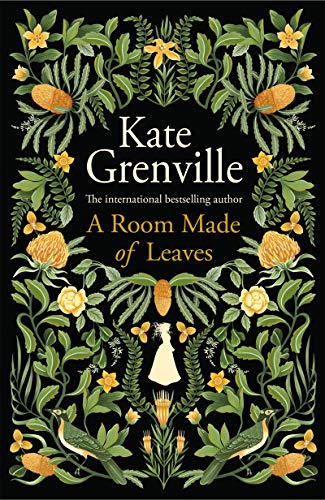
A Room Made of Leaves by Kate Grenville

Canongate| 6 August 2020| 325 pages| e-book| Review copy| 4*

I’m late getting round to reading A Room Made of Leaves, because I am behind with reviewing my NetGalley books. But it was well worth the wait. It’s historical fiction telling the story of the Macarthurs, Elizabeth and John Macarthur, who settled in Australia at the end of the eighteenth century. It’s based on the real lives of the Macarthurs using letters, journals and official documents of the early years of the New South Wales colony. But, although based on fact this is not history, it is fiction, as Kate Grenville makes clear in her Author’s Note at the end of the book (which I read after I read the opening paragraphs of the Editor’s Note at the start of the book).

Description

It is 1788. Twenty-one-year-old Elizabeth is hungry for life but, as the ward of a Devon clergyman, knows she has few prospects. When a soldier, John Macarthur promises her the earth one midsummer’s night, she believes him and with a baby on the way she marries him. Only then he tells her he is to take up a position as Lieutenant in a New South Wales penal colony and she has no choice but to go. Sailing for six months to the far side of the globe with a child growing inside her, she arrives to find Sydney Town a brutal, dusty, hungry place of makeshift shelters, failing crops, scheming and rumours.

All her life she has learned to be obliging, to fold herself up small. Now, in the vast landscapes of an unknown continent, Elizabeth has to discover a strength she never imagined, and passions she could never express. 

Inspired by the real life of a remarkable woman, this is an extraordinarily rich, beautifully wrought novel of resilience, courage and the mystery of human desire.

My thoughts:

I’ve enjoyed all of the books by Kate Grenville that I’ve read so far. Her writing suits me – historical fiction, straight-forward story-telling, with good descriptive writing setting the scenes vividly in their locations. I find her books difficult to put down and they stay in my mind long after I’ve finished reading. This one is no exception.

It begins in Devon where Elizabeth was born and grew up, first with her parents and then after her father died on her grandfather’s sheep farm and then with the local vicar’s family, whose daughter, Bridie is her friend. There she meets John Macarthur, an ensign. When she becomes pregnant they marry and then he tells her he has signed on as a lieutenant in the New South Wales Corps in the penal colony at Sydney Cove. But their married life is not a happy one. John was rash, impulsive, changeable, self-deceiving, and given to embarking on grandiose schemes. He was quick to take offence and was dangerously unbalanced. Over the course of their marriage he was forced to return to England twice, at first for four years and later for nine. During that time Elizabeth made the best of life, carrying on with their sheep farm at Parramatta, where she improved the flock, and helped to establish New South Wales as a reliable supplier of quality wool.

One of the outstanding parts of the book for me is her relationship with William Dawes, an astronomer with the Corps, who was mapping the night sky. He had an observatory near Elizabeth’s farm and it was there that she met some of the local inhabitants and learned a bit of their language and about their ways of life. And it is with William that Elizabeth learns to appreciate not just the night sky, but also the landscape and its flora and fauna and in particular the ‘room made of leaves’ – a private space enclosed on three sides by greenery, a place where you could simply be yourself.

This is a book that captivated me from the opening paragraphs, and there is so much more in it than I have mentioned in this post. It gave me much to think about, in particular bearing in mind the epigraph, an actual quotation from one of Elizabeth’s letters: Believe not too quickly, reminding me that this is a work of fiction. I enjoyed it immensely. And it makes me want to know more about the Macarthurs. I came across Michelle Scott Tucker’s biography: Elizabeth Macarthur: A Life at the Edge of the World and I was delighted to see that Kate Grenville references this book as the standard biography in her Acknowledgements. It is now on my wishlist!

Many thanks to the publishers and NetGalley for my review copy.

We Are Not In The World by Conor O’Callaghan

Transworld Publishers| 18 February 2021 |272 pages | Kindle review copy via NetGalley/ 2*

Heartbroken after a long, painful love affair, a man drives a haulage lorry from England to France. Travelling with him is a secret passenger – his daughter. Twenty-something, unkempt, off the rails.

With a week on the road together, father and daughter must restore themselves and each other, and repair a relationship that is at once fiercely loving and deeply scarred.

As they journey south, down the motorways, through the service stations, a devastating picture reveals itself: a story of grief, of shame, and of love in all its complex, dark and glorious manifestations.

My thoughts:

A strange, confusing and depressing book that I read as though I was in fog, never really getting to grips with the plot. It meanders and drifts through the characters, shifting between the past, the near past and the present, and from place to place, as Paddy drives the lorry from England down to the south of France. I was often not sure what was happening, when or where it was happening and to whom it was happening. It’s a stream of consciousness, as the various characters move in and out of focus.

There were times when I wondered why I was reading this, it was like a dream where the scenes move randomly through a number of sequences, and you wake up with that fearful feeling that something dreadful has been going on inside your head that was disturbing, and unsettling. There’s a sense of timelessness and of detachment from the day to day reality – they are not in the world. And yet I was compelled to read on, if only just to get to the end and see if my suspicions about what had actually happened were right. They were, although there is a little twist at the very end that I hadn’t expected.

The fairy tale of Oisin, a tale Paddy tells his daughter, interests me. Oisin was a warrior who fell in love with a fairy named Niamh. He takes her home to Tir na nOg, where they will stay forever young, but he can never return home. After three years he is homesick and returns on a magic horse, on the condition that he has to stay on the horse on pain of death. But three hundred years have actually gone by, not three, and everyone he knew is dead. He meets an old man who knew his father and moving to help him he slips off the horse, touches the ground and dies in an instant. He repeats this story several times to his daughter as they travel through France. It links with Tir na nOg, the name of his family home, now neglected and empty after his mother’s death three years earlier.

This is not an easy read, as you have to concentrate on all the different strands. Paddy’s life is a complete mess, he has lost everything: his family, his home and his sense of belonging. He looks back at the broken relationships with his parents, his brother, ex-wife, daughter, and ex-lover. It’s told in fragments and you have to read between the lines to understand it. I didn’t enjoy the book, and found it difficult to follow. It is too vague, and as soon as I thought I’d begun to understand it, it drifted away into obscurity. and I was left floundering.

My thanks to the publishers and to NetGalley for my advance review copy.

  • ASINB08119RXD6
  • Publisher : Transworld Digital (18 Feb. 2021)
  • Language : English
  • Print length : 264 pages
  • Page numbers source ISBN : 0857526855
  • Source: Review copy
  • My rating: 2*

Girl in the Walls by A J Gnuse

Fourth Estate | 18 March 2021 |323 pages | Kindle review copy via NetGalley/ 4*

Description:

She doesn’t exist. She can’t exist.

‘A uniquely gothic tale about grief, belonging and hiding in plain sight’ Jess Kidd, author of Things in Jars

Those who live in the walls must adjust, must twist themselves around in their home,
stretching themselves until they’re as thin as air. Not everyone can do what they can.
But soon enough, they can’t help themselves. Signs of their presence remain in a house.
Eventually, every hidden thing is found.’

Elise knows every inch of the house. She knows which boards will creak. She knows where the gaps are in the walls. She knows which parts can take her in, hide her away. It’s home, after all. The home her parents made for her. And home is where you stay, no matter what.

Eddie calls the same house his home. Eddie is almost a teenager now. He must no longer believe in the girl he sometimes sees from the corner of his eye. He needs her to disappear. But when his older brother senses her, too, they are faced with a question: how do they get rid of someone they aren’t sure even exists?

And, if they cast her out, what other threats might they invite in?

My thoughts:

Set in south Louisiana, Girl in the Walls wasn’t quite what I expected from the book description, but I did enjoy its sense of strangeness and ‘the other’. It’s set in an old house that’s full of strange creaks and scary noises as though someone or some thing is creeping around. It’s a house like no other that I know or have read about. It’s a balloon frame house – that is a house with a timber frame within its outer walls, so there are spaces between the inner and outer walls, beneath the floor and in the attic. Spaces where a young person can crawl and exist. So, Elise is not a ghost but a real eleven year old girl, who lives in these spaces, only coming out when the Masons, the family who live in the house, are asleep or out of the house. And she manages to keep her presence in the house a secret, at least for a while.

Elise is an orphan and has returned to her family home, having escaped from the foster care system. At first, Eddie, the younger son, is the only one of the Masons who senses her presence, feeling that he is being watched and almost catching glimpses of Elise out of the corner of his eye. Eventually his older brother, Marshall too feels that there is some one else in the house, raiding the pantry, taking things and moving things and they decide they have to do something about it. First of all they can’t believe she is actually real and fear what they will find. Elise fears that they will find her.

Their fear is intense as the story takes a terrifying turn, and to make matters worse it is the hurricane season. From a slow start it builds up to a intense nightmare scenario. I think that to say much more would spoil the plot. The characterisation is good, the house is integral to the plot and the setting is brilliantly described. But you do have to suspend your disbelief to enjoy this book – I did!

This is a story about loss, and grief, about safety and security, intermingled with the strange beauty of the landscape and the fears and hopes we all experience. I loved the references to Norse mythology and legends that Elise reads about – Odin, the One-Eyed and how he became the wisest of the gods and about his sons, Thor and Loki.

A J Gnuse explains at the end of the book that he was inspired to write this story after talking to a friend about the strange noises his friend had heard in his apartment and remembered that he had spent much of his childhood in an old creaky house wondering whether someone was sneaking around at night, feeling scared and vulnerable. The house in the book is based on his parents’ house in South Louisiana, where he grew up, where the sea levels are rising as the coast is eroding and the coast is hit by hurricanes,

I wasn’t surprised that he lists Charles Dickens as one of the authors who have influenced his work – there is one particular character in his book who I haven’t mentioned, the monstrous villain who is larger than life and very scary, who wouldn’t have been out of place in a Dickens’ novel. He also lists other authors including, Daphne du Maurier and the Bronte sisters whose descriptive writing captured the eerie beauty of an old house.

Girl in the Walls is described as a ‘gothic’ tale. Gnuse explains that he has been influenced by the literary tradition of the Southern Gothic novel – which is largely unknown to me – referring to writers like Flannery O’Connor – describing its ‘uniquely Gothic sense of the strangeness of decay, of the past latched onto people like vines grown around their legs.‘ I think I need to find out more about this genre of fiction.

My thanks to the publishers and to NetGalley for my advance review copy.