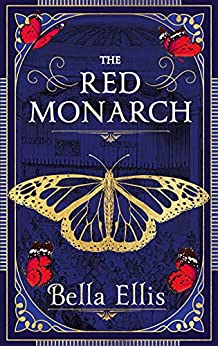
The Red Monarch by Bella Ellis

Hodder and Stoughton| 18 November 2021| 326 pages| e-book| Review copy| 3*

Blurb

The Brontë sisters’ first poetry collection has just been published, potentially marking an end to their careers as amateur detectors, when Anne receives a letter from her former pupil Lydia Robinson.

Lydia has eloped with a young actor, Harry Roxby, and following her disinheritance, the couple been living in poverty in London. Harry has become embroiled with a criminal gang and is in terrible danger after allegedly losing something very valuable that he was meant to deliver to their leader. The desperate and heavily pregnant Lydia has a week to return what her husband supposedly stole, or he will be killed. She knows there are few people who she can turn to in this time of need, but the sisters agree to help Lydia, beginning a race against time to save Harry’s life.

In doing so, our intrepid sisters come face to face with a terrifying adversary whom even the toughest of the slum-dwellers are afraid of . . . The Red Monarch.


The Red Monarch is the third Brontë Mystery book in which the main characters are the three Brontë sisters, Charlotte, Emily and Anne and their brother Branwell. I’ve read the first two and enjoyed them. But when I came across the first book I wasn’t at all sure I wanted to read it, as I’m never very keen on books that use real people as fictional characters. So, I was delighted to find that I thoroughly enjoyed the books even though, of course, the stories about the Brontës being ‘detectors’, or amateur sleuths, are pure imagination. The setting in the Yorkshire Moors is superb, the characters came across as ‘real’ and the books are well plotted.

And so, I was looking forward to reading The Red Monarch and it began well in Haworth in August 1852 as Charlotte is trying to write Villette. She is in despair after the deaths of her siblings – Emily and Branwell in 1848, and Anne in 1849. Instead of writing she reads a little notebook containing Emily’s poems and one particular poem brought back to her the dreadful events that had taken place and the terrors and cruelties they had seen, on their excursion to London. It had all taken place just after the Brontë sisters’ first poetry collection had been published – in 1846.

It was at this point, right at the beginning of the story about their time in London, that I thought I was reading a completely different type of mystery from the earlier books – not only is in not set in Yorkshire this book is a gothic melodrama. In a terrifying attack on Lydia and her husband Harry, a gang of thieves and murderers, led by Noose, had burst into Harry and Lydia’s bedroom. They had seized Harry and threatened to kill him unless Lydia brought them the jewel that Harry had been ordered to collect. Lydia, who was pregnant, had seven days to save their lives. But it is the Red Monarch, who was in control of the gang, and who held them all under his control – a most villainous and fearsome gangster. In desperation Lydia wrote to Anne for help.

The story is melodramatic, sensational and fast-paced. It is told through each of the sisters’ eyes, each one clearly distinctive, whilst Emily (once more) is the standout character. They are all independent women, strong-willed and determined and as Victorian women, vastly underestimated by the men. But, I had a hard time accepting the Brontë sisters in this story. Whereas in the two previous books I could believe that the Brontë family were just as Bella Ellis has described them, in this book I couldn’t.

The descriptions of mid 19th century London are vivid, clearly depicting the filthy living conditions of the poor, the sights and foul smells. The details of the Brontës’ search for Harry and the missing jewel test their strength, courage and skill in detection.

There are a few other real people who play a minor role, notably Charles Dickens, who is dismissive when Charlotte, somewhat in awe of him, asks for his advice as a writer, telling her to abandon any ideas of being a novelist and to marry, or teach. His companion, Mrs Catherine Crowe, another real author who wrote supernatural tales, was much more approachable and friendly, contacting her spirit friends to help with Charlotte’s search as well as giving her useful advice as a writer. Another character, with a larger role, is Louis Parensell, who develops a passion for Emily. He was not a real person, but Virginia Moore, a Brontë biographer, misread the handwritten title of Emily’s poem ‘Love’s Farewell’ as ‘Louis Parensell’, and developed the theory that Louis was Emily’s secret lover.

As the novel reached its dramatic climax, Emily in particular is in danger of losing her life as she dared to challenge the Red Monarch. I was most interested in the identity of The Red Monarch – was he in fact a real person, or totally fictitious? There various references to him throughout the novel, what was the origin of his name, and what was the meaning of his insignia? It seemed to be two capital Rs back to back topped with a crown and contained within a five-pointed star of pentagram. Anne had first discovered them and she felt sure they carried a secret meaning to those in know. When the identity of the Red Monarch is finally revealed I was surprised – but it is appropriate in that the real person has been described as a maniacal, controlling man.

I enjoyed this book, but I think the two previous books are much better and seem more authentic, aided by being set in the Brontës’ Yorkshire. They were out of place in London. It all seems to me to be over dramatic and unbelievable. The fictional element far outweighs the historical.

~~~

‘Bella Ellis’ is the Brontë-inspired pen name for the author Rowan Coleman, who has been a Brontë devotee for most of her life. As well as writing the Brontë Mysteries she is the .author of sixteen novels including the Richard and Judy pick The Memory Book and the Zoe Ball bookclub choice, The Summer of Impossible Things.

My thanks to Hodder Stoughton for a review copy via NetGalley
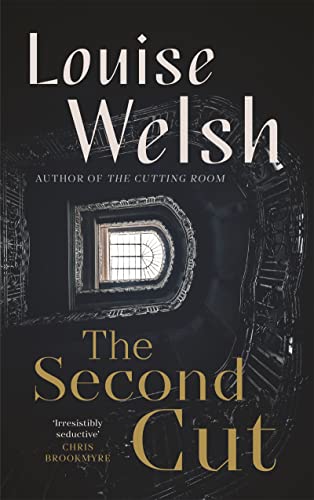
The Second Cut by Louise Welsh

Canongate Books| 27 January 2022| 372 pages| e-book| review copy via NetGalley| 3.5*

Synopsis:

Auctioneer Rilke has been trying to stay out of trouble, keeping his life more or less respectable. Business has been slow at Bowery Auctions, so when an old friend, Jojo, gives Rilke a tip-off for a house clearance, life seems to be looking up. The next day Jojo washes up dead.

Jojo liked Grindr hook-ups and recreational drugs – is that the reason the police won’t investigate? And if Rilke doesn’t find out what happened to Jojo, who will?

Thrilling and atmospheric, The Second Cut delves into the dark side of twenty-first century Glasgow. Twenty years on from his appearance in The Cutting Room, Rilke is still walking a moral tightrope between good and bad, saint and sinner.(Amazon UK)

I enjoyed reading Louise Welsh’s debut novel, The Cutting Room back in 2005, even though it was not the usual type of book that I read, and was way out of my comfort zone. I remember that its dark, edgy atmosphere made it compelling reading about Rilke an auctioneer who discovered a collection of violent and highly disturbing photographs. So when I saw that she’d written another novel, about, Rilke, The Second Cut I was keen to read it. I had forgotten most of the detail in The Cutting Room, but that didn’t matter as this book reads well as a standalone.

Twenty years have passed since the first book was published and much has changed in the world, but Rilke at forty seven years old, is now only four years older in this second book, still an auctioneer at Glasgow’s Bowery Auctions and ‘too tall, too thin and too cadaverous to look like anything other than a vampire on the make’. I found this somewhat confusing as The Second Cut is clearly set in the present day, with all the changes that have taken place in the last twenty years regarding the rights of LBGTQ+ people, and the references to Covid.

Just like The Cutting Room, I found this compelling reading, but not always comfortable reading, particularly about the darker side of Glasgow’s violent underworld and gay scene. The characters are vividly drawn and from start to end the pace is fast, and the details about the auction house are fascinating. There are two main threads – the first is Rilke’s determination to find out how and why his old acquaintance Jojo turned up dead on a doorstep.

Aand the second follows his suspicions about the truth behind the house clearance of Ballantyne House, a neglected Georgian house in Galloway, less than two hours from Glasgow. It was crammed with many valuable items along with the dross. It was owned by Mrs Forrest, an old lady who had been a concert pianist but was now suffering from dementia, so her son and nephew were dealing with the sale of the property and its contents. I read a lot of crime fiction, so I soon guessed what had happened to Mrs Forrest, and similarly I was immediately suspicious about what was going on in the polytunnels.

But it’s the gay scene that is the main focus of the book and in her Afterword Louise Welsh explains that she had written The Cutting Room twenty years ago in a white-hot rage about the intensity of the hostile environment against LBGTQ+ people. Although much has changed since then with equal marriages, increased visibility, access to hate laws, improved awareness of queer and trans rights, with a general consensus that violence and prejudice against LBGTQ+ people is wrong, outrages still occur. She writes that the Glasgow she inhabits is largely better, in terms of sexuality, than it was twenty years ago. I have to say that some of the scenes in The Second Cut seem to be stuck in the past – or have I got that wrong?

Many thanks to Canongate Books for a review copy via NetGalley

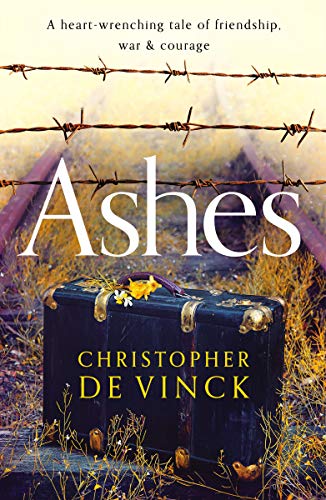
Ashes by Christopher de Vinck

Rating: 3 out of 5.

Harper Inspire| 18 August 2020| 332 pages| e-book| review copy via NetGalley| 3 stars

This is a book that has lingered on my NetGalley shelf for a while. There are some books that I find hard to review and this is one of them, mainly because I couldn’t get really involved in the story.

Synopsis:

Belgium, July 1939: Simone Lyon is the daughter of a Belgium national hero, the famous General Joseph Lyon. Her best friend Hava Daniels, is the eldest daughter of a devout Jewish family. Despite growing up in different worlds, they are inseparable.But when, in the spring of 1940, Nazi planes and tanks begin bombing Brussels, their resilience and strength are tested. Hava and Simone find themselves caught in the advancing onslaught and are forced to flee.

In an emotionally-charged race for survival, even the most harrowing horrors cannot break their bonds of love and friendship. The two teenage girls, will see their innocence fall, against the ugly backdrop of a war dictating that theirs was a friendship that should never have been.

Ashes by Christopher de Vinck is historical fiction set in World War Two in Belgium, following the lives of two eighteen year old girls. It’s a mix of fact and fiction, based on the evacuation of Belgian refugees trying to outrun the Nazi invasion of 10 May 1940. Each chapter begins with either a quotation in italics either from a speech by a country’s leader such as Woodrow Wilson, Churchill or Hitler, or information about the progress of the war or extracts or memories recorded in the war journal of Major General Joseph Henri Kestens, the author’s grandfather. I found these extracts, particularly from Hitler’s speeches that illustrated the hatred and horror that Hitler inflicted on the Jewish and Polish people, the most interesting and chilling parts of the novel.

It’s narrated by Simone in short chapters that kept the action moving quite quickly as the two girls react to the Nazi invasion of their country. The friendship between Simone and Hava is poignant in the context of the war, even though I found it hard to believe that they were eighteen years old. I thought they came across as younger and the novel has the feel of a YA novel. But that was only a minor distraction for me. I also appreciated the detail about the Jewish religion and traditions. I think that gives more depth to the novel, but overall, I think the storytelling aspect was a bit too matter of fact for me, which lessened its impact.

My thanks to Harper Inspire for a review copy via NetGalley.

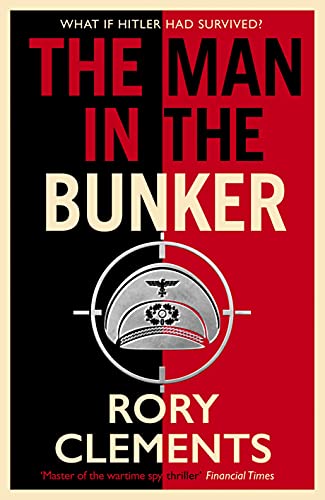
The Man in the Bunker by Rory Clements

Rating: 5 out of 5.

Bonnier Books UK Zaffre| 22 January 2022| 453 pages| e-book| review copy via NetGalley| 5 stars

I’ve read two of Rory Clements’ books in his Tom Wilde series, the first one, Corpus and the fourth Hitler’s Secret, both of which I loved. So I was looking forward to reading more of his books – The Man in the Bunker is the sixth book in the series, but fortunately they all read perfectly as standalone books.

This is a complicated novel and I am not going to attempt to describe all the details. In August 1945 an American and professor of history, Tom Wilde is preparing for the Michaelmas term at his Cambridge University college. He had spent most of the last three years in a senior advisory role with the Office of Strategic Services, America’s wartime intelligence outfit. He has quit the OSS and wants to put the war behind him, so when he sees a big American car parked outside his home where he lives with his wife and young son, he is not at all pleased. His three visitors bring news that there’s reason to believe that Hitler is alive and hiding out in Bavaria – and they want Wilde to find him.

The rumour that Hitler didn’t die in the Berlin bunker has always interested me, especially as his body was never found. I remember seeing a TV documentary about it, so I wondered what Clements would make of it and what his conclusion would be. Did Hitler live on after the war or not? His version of events is thrilling and dramatic as Wilde travels across the continent, mainly in Germany and Austria, seeing the devastation the War had brought both to places and to people. There were millions of people without homes – refugees, some living in displaced persons camps dotted around Europe. Some had been slave labourers interned in concentration camps, others were survivors of the death camps.

Wilde was accompanied by a young lieutenant, Mozes Heck, a Dutch Jew who had escaped to England and joined the British Army. Heck is desperate to find out what had happened to his family, loathes the Nazis and Hitler, and he is set on revenge. He is both headstrong and dangerous. They were both co-opted to the US Counter Intelligence Corps in Garmisch, an Alpine town in Bavaria. Wilde has a difficult job restraining Heck, but eventually they work well together in tense and extremely dangerous situations.

I thoroughly enjoyed it. The search for Hitler across Germany and Austria is fast paced, full of action, danger, and violence. Needless to say really, but I was gripped by this novel and I just had to find out what had happened, whether Hitler had died in the bunker – or did Wilde find him in hiding somewhere in the Alps? I’m not telling – you’ll have to read the book to find out.

Many thanks to Bonnier Books for a review copy via NetGalley.

The Chalet by Catherine Cooper

3*

The Chalet, by Catherine Cooper, is a fast-paced murder mystery, set mainly in La Madière, a fictional ski resort in the French Alps. It is her first published full-length novel, though she has also written several (unpublished) thrillers for teens and a (what used to be called) chick lit novel set in TV production.

Synopsis

French Alps, 1998 -Two young men ski into a blizzard… but only one returns.

20 years later – Four people connected to the missing man find themselves in that same resort. Each has a secret. Two may have blood on their hands. One is a killer-in-waiting. Someone knows what really happened that day.

And somebody will pay.

The Chalet is Catherine Cooper’s first published full-length novel, though she has also written several (unpublished) thrillers for teens and a (what used to be called) chick lit novel set in TV production.

I read The Chalet quickly. It’s well written, easy reading, with a beautiful setting in the French Alps. It began well and I was quickly drawn into the drama of the story. The narrative moves between 1998, and 2020 and is told from several of the characters’ perspectives. None of the characters are particularly likeable and they all seem to have something to hide.

It’s a story of revenge, stemming from the events in 1998 when two brothers go skiing with their girlfriends and only one of the brothers returns. The weather conditions were bad and on a difficult off-piste route they lost contact with their guides and only one of them was found, but he couldn’t remember anything about what had happened. The body of the other brother was only found 20 years later after an avalanche hit the resort.

In 2020 a group of people, four couples mixing business with pleasure are staying at the same resort in a luxury chalet. The atmosphere is a difficult one as the couples’ relationships begin to breakdown, particularly when the weather worsens and a storm sets in, leaving them somewhat isolated. Various past events became clearer as secrets are revealed. Although there are plenty of twists and turns, it really wasn’t hard to work out what had happened and who was seeking revenge. An entertaining read, but maybe a bit too predictable by the latter half of the book. The last paragraph promises there is more to come in this story – I’ll be interested to see what happens next, if there is a sequel.

  • ASIN: ‎ B086JJ2TK1
  • Publisher: ‎ HarperCollins (31 Oct. 2020)
  • X-Ray: ‎ Enabled
  • Print length: ‎391 pages
  • My Rating: 3*

My thanks to NetGalley and Harper Collins, the publishers for a review copy.

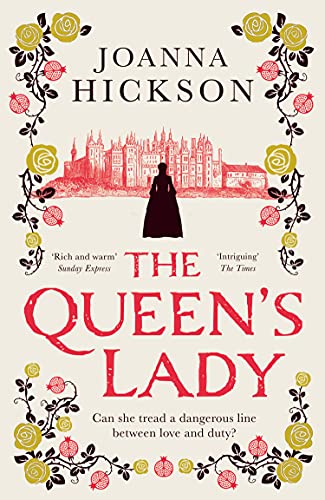
The Queen’s Lady by Joanna Hickson

Harper Collins|20 January 2022|451 pages|e-book via NetGalley|Review copy|4*

Publishers’ Description:

As lady-in-waiting and confidante to Queen Elizabeth, wife of Henry VII, Joan understands royal patronage is vital if she and her husband, Sir Richard, are to thrive in the volatile atmosphere of court life.

But Tudor England is in mourning following the death of the Prince of Wales, and within a year, the queen herself. With Prince Henry now heir to the throne, the court murmurs with the sound of conspiracy. Is the entire Tudor project now at stake or can young Henry secure the dynasty?

Drawn into the heart of the crisis, Joan’s own life is in turmoil, and her future far from secure. She faces a stark choice – be true to her heart and risk everything, or play the dutiful servant and watch her dreams wither and die. For Joan, and for Henry’s Kingdom, everything is at stake…

My thoughts:

I enjoyed reading Joanne Hickson’s first book in her Queens of the Tower series, The Lady of the Ravens (my review), so I was keen to read the sequel, The Queen’s Lady, continuing the story of Joan Vaux, Lady Guildford. She was a lady in waiting to Queen Elizabeth, the wife of Henry VII and had became a good friend and confidante of Elizabeth. Her son Henry, known as Hal, had also became a good friend to the young Prince Henry.

It begins one evening at the Tower of London in April 1502. There’s strange atmosphere, as the ravens sit hunched in silence in the trees around the White Tower, Joan thought, as if awaiting some sad event, sensing death. One of the things I had particularly enjoyed in The Lady of the Ravens was Joan’s fascination for and care of the ravens of the Tower of London firmly believing in the legend that should the ravens leave the Tower for good then the crown would fall and ruin would return to the nation.

1502 had begun with pageantry and the New Year celebrations for the wedding of Prince Arthur, the heir to the throne, and Katharine of Aragon. It looks as if the ravens had indeed sensed death because in April he became seriously ill and died. It was Joan who had to break the news to Elizabeth and help console her in her grief. His death left Prince Henry as the heir to the throne.

In addition King Henry’s agents had uncovered a new Yorkist plot against the throne. Joan’s husband, Sir Richard Guildford is a Privy Councillor and loyal to Henry, but Henry is persuaded that he could be guilty of treason and he is imprisoned. Joan’s life is suddenly turned upside down. What happens next is fascinating to read covering Joan’s involvement in both national affairs and in her personal life.

I thoroughly enjoyed this novel. It is beautifully written, grounded in its historical context, full of colour and life. At the end of the book there’s a Glossary of words and terms that are not commonly in use today, which I wish I’d realised was there earlier. Intriguingly, Joanna Hickson promises in her Author’s Note that she has ‘more fascinating fifteenth century lives in sight’. I’m looking forward to see what she writes next.

The Author:

Joanna Hickson became fascinated with history when she studied Shakespeare’s history plays at school. However, having taken a degree in Politics and English she took up a career in broadcast journalism with the BBC, presenting and producing news, current affairs and arts programmes on both television and radio. Now she writes full time.

My thanks to the publishers for my review copy via NetGalley.